
A Look Ahead: Development in Twentynine Palms
Growth, uncertainty, and big questions for 2026

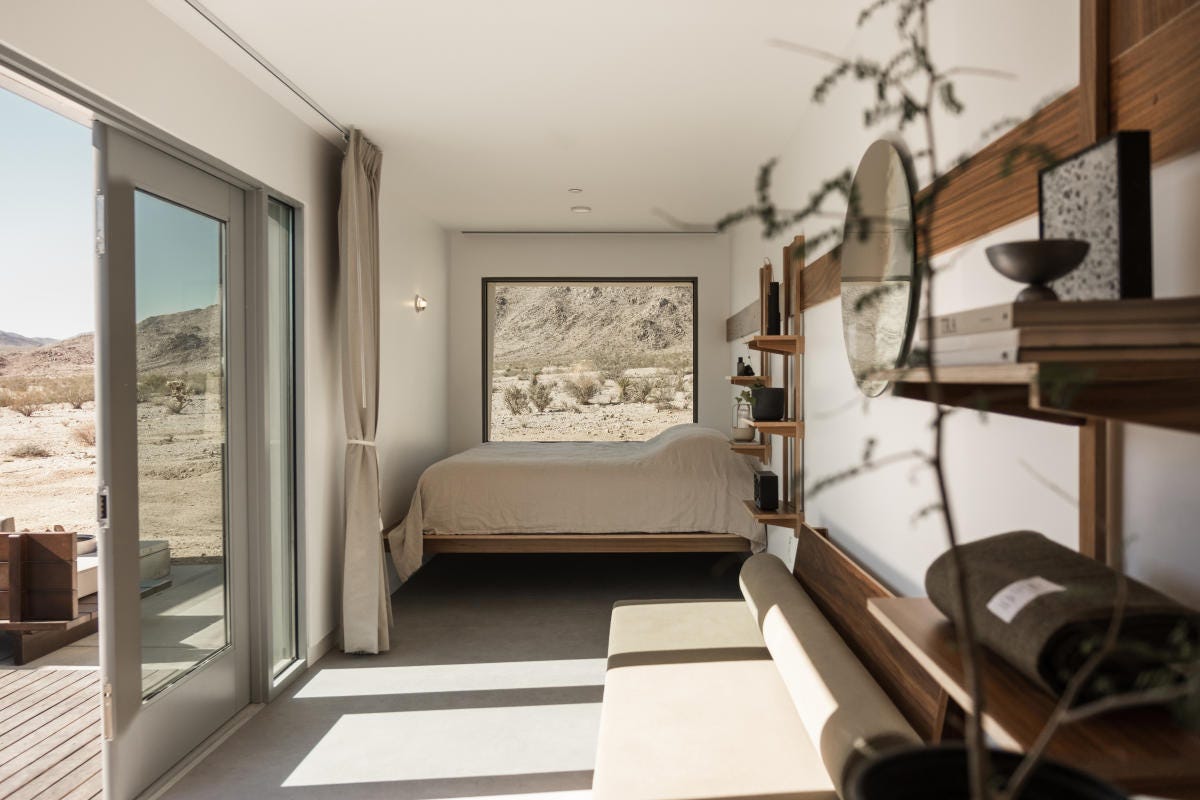
As Twentynine Palms moves into 2026, the City finds itself at a crossroads. New resorts, housing permits, solar projects, tourism trends, and boosterism from City officials all point to revenue opportunities for Twentynine Palms and its residents. At the same time, economic uncertainty, legal challenges, and questions about sustainability continue to shape how residents and City staff think about development.
Threats to this growth include an economic climate complicated by actions taken by the federal government. Will there be enough workers skilled in the building trades to construct new resorts and housing? Fears of ICE enforcement and immigration-related actions have already begun affecting the broader construction industry in Southern California. USC’s Lusk Center for Real Estate, has reported that 41% of the state’s workers are foreign-born. Richard Green, director of the Center, noted: “It’s been hard for a while to find construction labor. The raids don’t help.”
In addition, supply-chain volatility and tariffs have led to higher costs of lumber, steel and aluminum, and furnishings, with wood products imported from Canada rising 10 to 15% in cost.
Earlier this month, the Desert Trumpet looked at development in the Morongo Basin in 2025. This overview examines where Twentynine Palms stands today including what is being built, what is being debated, and what it could mean for the community in the year ahead.
HOTELS AND RESORTS
Tourism remains one of Twentynine Palms’ strongest drivers of development. Last year the Reset Hotel opened, and it was the first hotel built from the ground up in the City in fifteen years. The Amboy and Ofland resorts could also have a significant impact if built.
According to Tourism Business Improvement District (TBID) Marketing Director Breanne Dusastre at the December 18 TBID meeting (reported here), the city collected $75,295 in Transient Occupancy Tax (TOT) during the last quarter of fiscal year 2025, which ended September 30. That figure exceeded seasonal expectations and marked a 9% increase over the same period the year before.
The growth was not evenly spread across all types of lodging. Hotels and RV parks led the way, showing 16% growth, while vacation rentals increased by only 1.45% during the same period. Dusastre attributed the strong numbers largely to new hotels coming online, notable the Reset Hotel and Hotel Wren.
When considering the TBID 2024-2025 fiscal year, however, the picture became more mixed. TBID year-end assessment revenue totaled $368,356, a slight 0.35% decline year over year. Hotels and RV parks still grew, up 3.4%, but vacation rentals fell 4.4% percent.
Adding more uncertainty, there is still no clear data on how last fall’s federal government shutdown—which took place after the end of fiscal year 2025—affected visitation to Joshua Tree National Park or nearby communities. Data for the end of the first quarter of FY 26, which was December 31, should be available soon.
A looming question for 2026 is how higher national park entrance fees for international visitors (now $250 for non-US resident visitors) may affect their travel decisions in the coming years. Neither Joshua Tree National Park nor TBID track this statistic. All this is to say that tourism trends are always extremely volatile, but especially so now.
The Amboy Resort and 3D-Printed Cabins
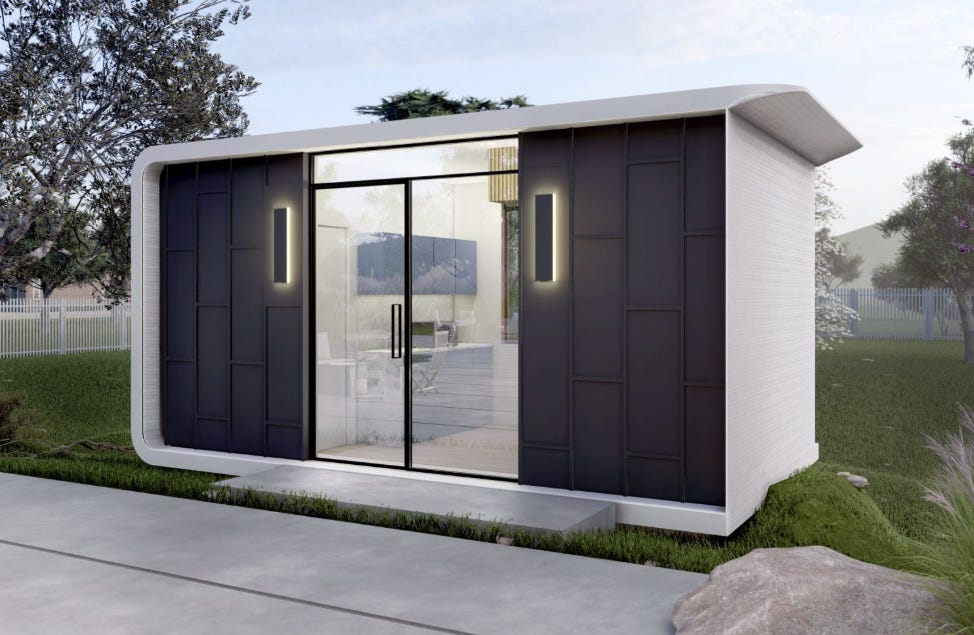
A new project approved in 2025 is a so-called eco-resort along Amboy Road. At its October 21 meeting, the Twentynine Palms Planning Commission approved a conditional use permit for a 30-unit resort known in city documents as Envoy Resort.
The project is notable for its construction method. All 30 guest cabins—each about 200 square feet—will be 3D-printed using recycled plastic and fiberglass. According to the developers, this would make the Amboy resort the first resort of its kind in the region and possibly the state.
The resort is planned on a 10-acre parcel east of Adobe Road and west of Desert Knoll Avenue. Only the southern five acres, zoned Commercial Tourist (CT), will be developed. The northern half, zoned Residential Single-Family (RS-2) and largely made up of sand dunes, will remain untouched.
No date has been set for the beginning of construction or completion of this project.
Ofland Resort
The litigation against the Ofland Resort is ongoing. In August, the Center for Biological Diversity and Indian Cove Neighbors filed a lawsuit in the San Bernardino County Superior Court against the City of Twentynine Palms over the City Council’s approval of the proposed Ofland resort project without a full environmental review. Desert Trumpet reporter Eleanor Whitney goes into greater depth here.
We covered the City Council’s decision to approve the Mitigated Negative Declaration (MND) and zoning and General Plan changes that would allow construction of the resort to move forward here. This decision to approve the resort required conversion of a residentially zoned area to a tourist-commercial and open space conservation designation.
Ofland was also briefly named in the city’s draft Strategic Plan under a goal to strengthen hospitality infrastructure. It was removed due to objections from other hospitality providers before approval of the plan at the City Council’s December 9 meeting.
SHORT-TERM RENTALS
Short-term rentals (STRs) remain a major topic in the Morongo Basin, but the market appears to be changing, at least in Twentynine Palms.
As of August 18, 2025, City data showed 345 active STR permits, with eight pending applications. That is down from 363 active permits in April, still well below the citywide cap of 500 permits.
According to Planning Commission Chair Jessica Cure, as profiled in the Desert Trumpet, demand is strongest at the high end of the market. Luxury desert properties continue to perform relatively well, while more modest vacation rentals are seeing weaker demand. This is to be expected in the current “K-shaped” economy, one that sees growth in higher-income groups and sectors, while growth for those with lower incomes stagnates.
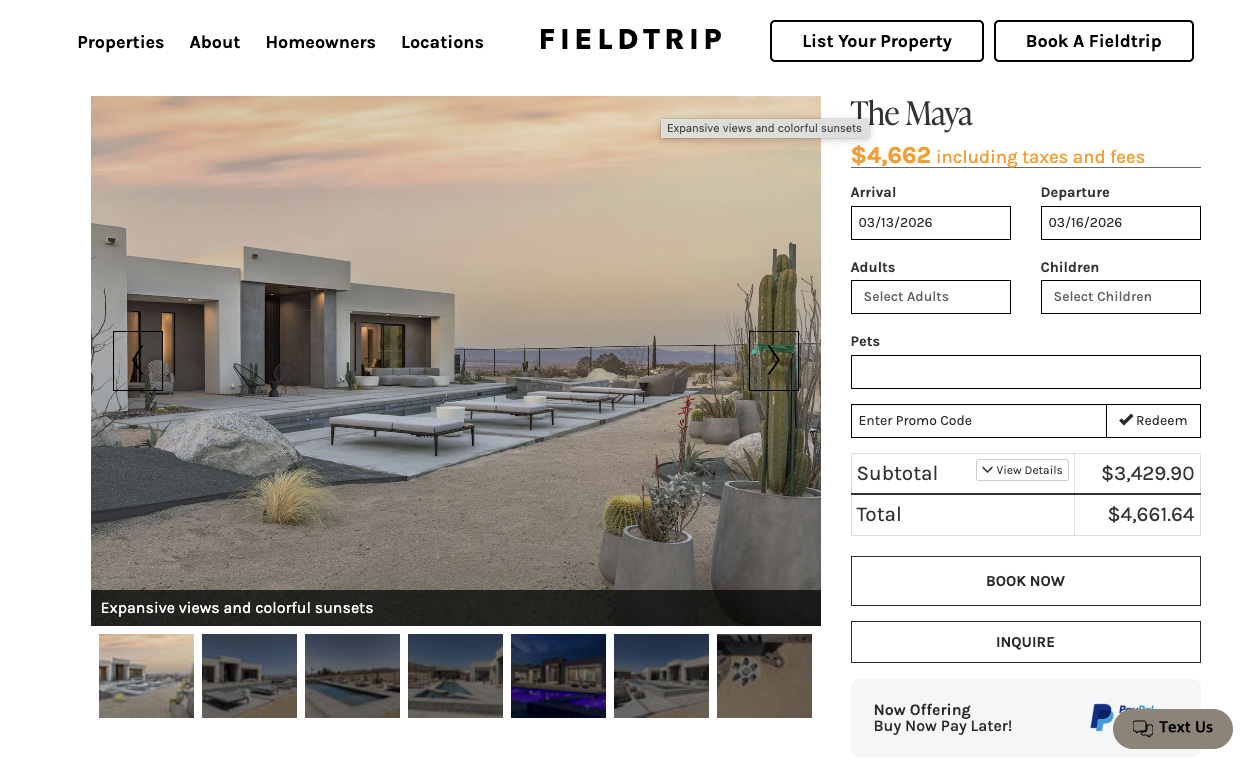
At the same time, Planning Commission Chair Cure cited a noticeable shift back toward long-term rentals. This shift could help stabilize neighborhoods that have seen high turnover from short-term rentals in recent years.
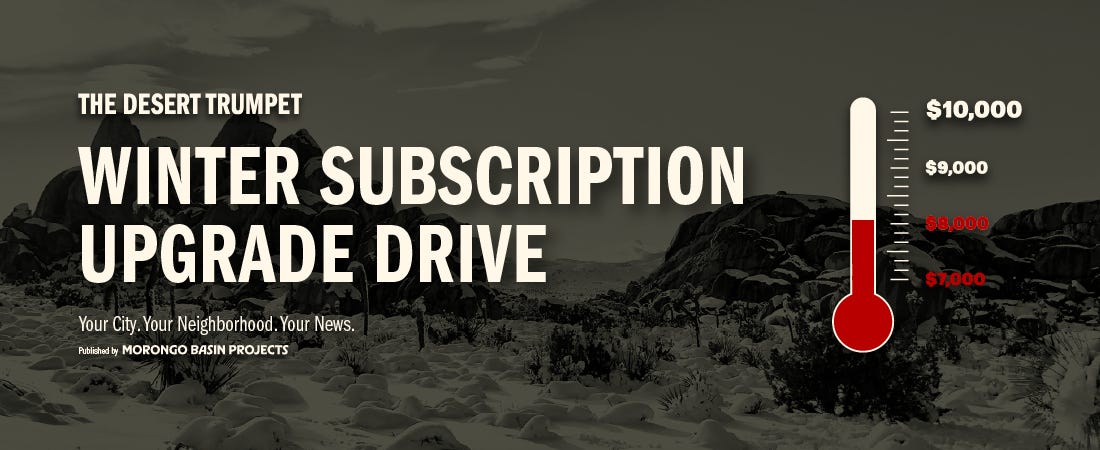
Going into the 2026 elections, Desert Trumpet has sustained a potential 50% cut in funding. Help us provide the coverage you’ve come to expect by becoming a paid subscriber or upgrading your paid subscription today!
HOUSING
New housing in Twentynine Palms lags behind hotel and resort development but is showing signs of progress.
City staff reported to the City Council in October 2025 that 39 residential building permits had been issued to date. These included:
29 single-family homes
5 multi-family units
5 accessory dwelling units (ADUs)
An additional 22 housing applications were under review at that time.
Later in the year, updated figures shared by city officials indicated permits had been issued for 51 new dwelling units, suggesting housing production is improving compared to recent years.
One of the most significant housing policy efforts underway involves accessory dwelling units (ADUs). City staff and consultants are developing a set of pre-approved, architect-vetted ADU plans that homeowners can use “off the shelf.”
The goal is to reduce costs, shorten permitting timelines, and make it easier for residents—especially those who are not professional developers—to add small housing units on their property. Council members broadly supported the effort, noting that state law already requires cities to allow ADUs and for pre-approved plans to be available, as seen in this handbook from the California Department of Housing and Community Developoment.
City officials say the plan responds directly to common barriers, including high design costs and long review times, and could modestly increase housing supply without changing neighborhood character.
E-GROUP PS SOLAR PROJECT
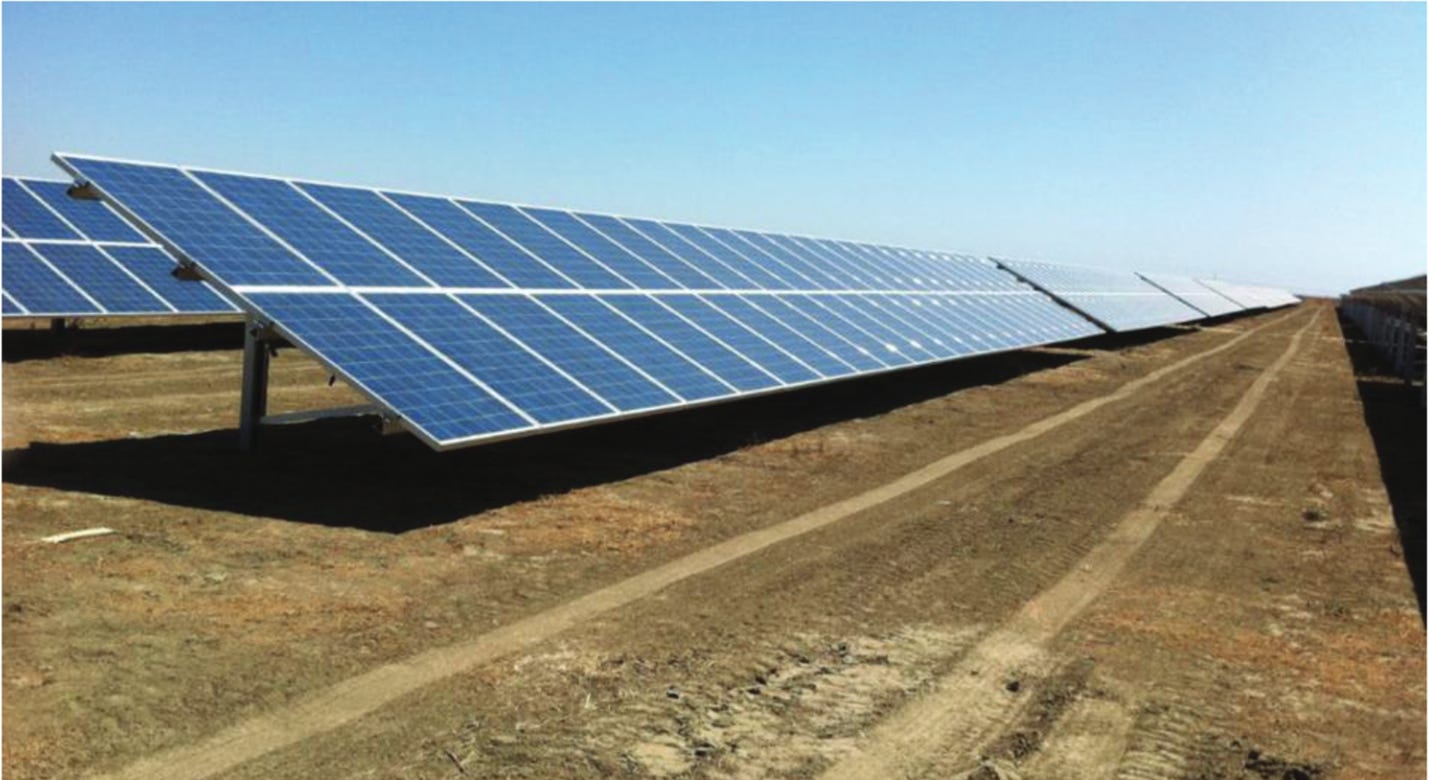
Energy development is also part of the local conversation. A public comment period is currently open for the E-Group PS Solar Project in Twentynine Palms. The Desert Trumpet covered recent developments on this project here. The 45-day public review period is open until January 22, 2026. During that time, both individuals and public agencies are able to submit written comments on the draft to Community Development Director Keith Gardner at Twentynine Palms City Hall at kgardner@29palms.org or the City of Twentynine Palms, 6136 Adobe Road, Twentynine Palms, CA 92277.
This comes as California prepares for the closure of the Ivanpah Solar Power Facility, located near the Nevada border. Ivanpah, which used concentrated solar power technology, is scheduled to shut down in 2026 after years of underperformance and high operating costs. Utilities ended long-term contracts that were no longer competitive compared to cheaper photovoltaic solar.1
Despite political headwinds at the federal level and reduced support for renewable energy subsidies, industrial-scale solar likely remains financially viable in California. However, the economics have changed. New projects increasingly include batteries to store excess daytime power and deliver electricity during evening hours when demand is higher.
For communities like Twentynine Palms, large solar projects raise familiar questions about land use, environmental impacts, and long-term benefits versus short-term disruption.
Opponents of the project note that impacts of the solar projects include:
Mass grading: The developers have misrepresented this site as “flat. Now the DEIR discloses ~528,000 cubic yards of earth moved — roughly 50,000 dump trucks of soil. with this level of earthmoving the desert cannot be restored to its natural desert condition.
Desert tortoise: The DEIR identifies the site as occupied desert tortoise habitat. Mass grading and the other planned industrial-scale changes threaten tortoises in this important piece of occupied habitat.
Dust & health: Twentynine Palms is windy. Mass grading can create fugitive dust (including fine particles) during construction and potentially for years during operation/maintenance and later decommissioning. Dust storms could be more frequent and severe.
LOOKING AHEAD
Taken together, the development picture in Twentynine Palms is mixed. Tourism remains strong, though vulnerable to outside forces. New resorts in residential zoning spark controversy. Housing growth is slow but supported by targeted policy changes. Solar energy projects point toward the future, even as past experiments wind down. Residents and visitors are quick to point out the many derelict structures along the Hwy 62 corridor and throughout the City.
As economic uncertainty continues into 2026, the key challenge for the city will be balance: encouraging investment while protecting the desert landscape and quality of life that make Twentynine Palms unique.
For residents, these decisions will shape not just what gets built, but what kind of community Twentynine Palms becomes in the years ahead.
NOTE: Desert Trumpet staff members Cindy Bernard, Kat Talley-Jones, and Heidi Heard live in the Indian Cove neighborhood, adjacent to this proposed development project, and are on the organizing committees of Indian Cove Neighbors and Say No to Ofland. Read our policy for covering Ofland here.
Thanks to our new paid subscribers, we are at $8305 in subscriptions, just $1695 short of our $10,000 goal. Upgrade your subscription from free to paid today for just $50 per year or $5 per month.
Are you able to give more than $100? Donate via Paypal!
Leave your thoughts in the comments below. Please note that we do not allow anonymous comments. Please be sure your first and last name is on your profile prior to commenting. Anonymous comments will be deleted.
Feel free to share this article!
Thank you for this. I live in Yucca and am really (awestruck in the best way) about how 29 has developed but still remained true to its roots.
Your work is important. Please keep on keeping on!