
California State Assembly Districts 34 and 47 Primary Preview 2026
District 34 candidates Charles Hughes and Randall Putz and District 47 Candidates Jason Byors and Leila Namvar respond to our candidate questions about issues facing the Morongo Basin.

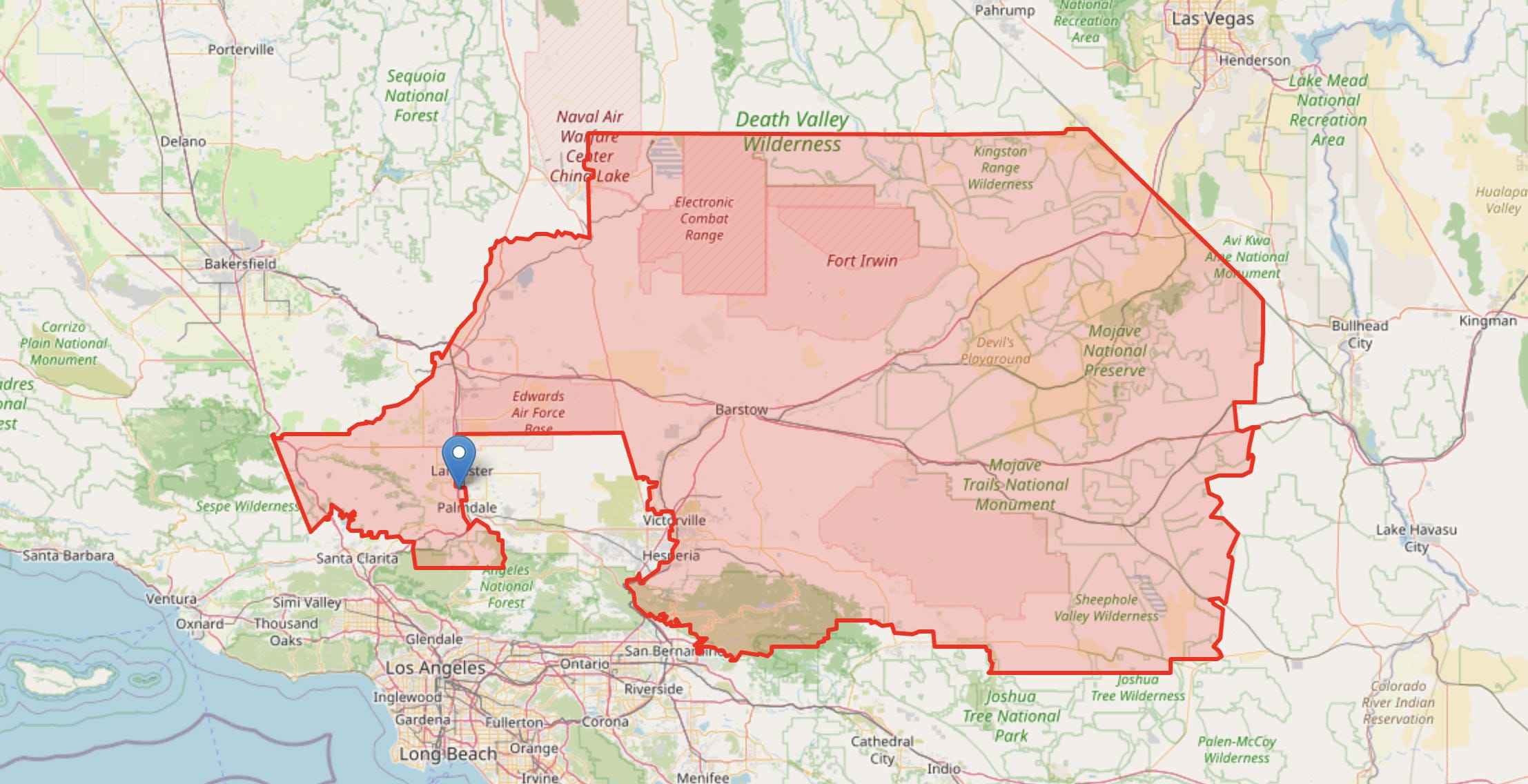
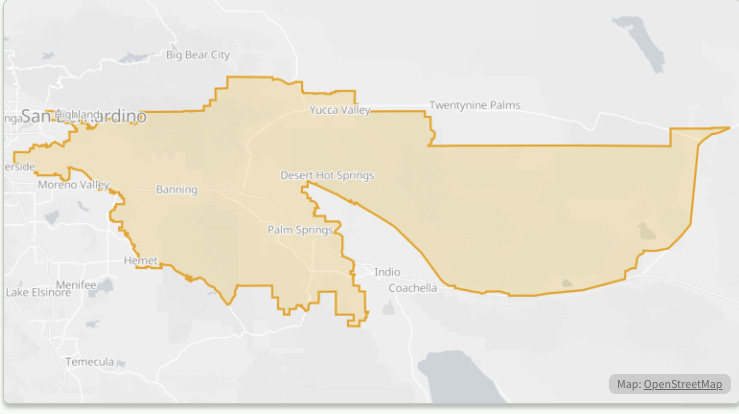
Last week, the Desert Trumpet covered the U.S. congressional races, which we reported on here. Now it’s time to look at the State assembly races. The Morongo Basin is divided into two districts. District 34 covers Twentynine Palms and Landers. District 47 covers Joshua Tree and Yucca Valley. You can look up which district you are in using the CalMatters website. The site is dated 2022 but don’t worry, scroll down the page and you’ll see updated information.
State Assembly is one of two chambers in the California legislature; the Morongo Basin’s State Senate representative is Rosilicie Ochoa Bogh, and there is no race taking place for this seat this year. Assembly members take part in creating laws and establishing the state budget, introducing, debating, and voting on bills that become law if approved by the legislature and signed by the governor. Residents in the Morongo Basin depend on state funding for schools, roads, healthcare access, and emergency preparedness.
Voting Information and Resources
You should have already received your voter guides and mail ballot. To check your voter registration status, register to vote, find your polling place and other election information, use the following links:
Check if you’re registered to vote, find your polling place, and get election information on the California Secretary of State’s website.
Voter registration closed on May 18. If you miss the deadline, you must complete same day voter registration when you go vote.
For more detailed information, CalMatters also produced a comprehensive guide of voting FAQs and resources.
California holds an open primary, meaning that you can vote for a candidate of any party, and the top two candidates receiving the most votes will move on to the general election.
Voting deadlines
The following deadlines apply to the primary election, which takes place on June 2:
May 4: Mail ballots were sent. Voters may pick up a ballot or vote early at an early voting site.
May 5: Secure ballot boxes opened. Here is a link to ballot box locations.
May 18: Last day to register to vote online. After that, you must complete same day voter registration.
May 28: Vote centers open for early in-person voting. The County Registrar lists these locations here. The closest location is 6171 Sunburst St. in Joshua Tree. Voting takes place in this location from May 28 to June 2, 10 am to 6 pm.
June 2: Primary Election, mail-in-ballots must be postmarked on or before election day.
District 34 Candidates
District 34 covers a large, wide-ranging area in Kern, Los Angeles, and San Bernardino Counties. In the Morongo Basin, it includes Twentynine Palms and Landers. Incumbent Tom Lackey, a Republican who has represented the district since 2016, is term-limited and not running in 2026. Four candidates are running to replace him:
Charles Hughes (Republican) Navy veteran, retired law enforcement lieutenant, and small business owner. Currently serves as Antelope Valley Union High School District board trustee and has served two terms as Board President. Active with Antelope Valley Boosters and hosts a weekly Coffee4Vets breakfast for veterans. His campaign priorities center on reducing regulations, cutting taxes for the middle class, supporting law enforcement, expanding school choice, and protecting parental rights in education.
Randall Putz (Democrat) Small business owner and longtime Big Bear Lake official who has called the region home for 25 years. Served nearly two decades as a school board trustee for Big Bear Lake, fire authority director, city council member, and three-time Mayor of Big Bear Lake. His campaign focuses on affordable housing, healthcare access, stronger schools, and good local jobs, with an emphasis on working across party lines.
Steve Fox and Manny Lin (Republicans) did not respond to our questionnaire.
District 47 Candidates
District 47 covers Yucaipa, Banning, Palm Springs, Palm Desert, Yucca Valley, Desert Hot Springs, and surrounding communities. Republican Greg Wallis has held the seat since narrowly defeating Democrat Christy Holstege in 2022 by just 85 votes, then winning a rematch in 2024. Two candidates are challenging for the seat in 2026.
Greg Wallis (Republican, Incumbent) Did not respond to our questionnaire.
Jason Byors (Democrat) Jason Byors grew up in a working-class family, where his mother worked multiple jobs to make ends meet. That experience drives his lifelong advocacy for working families and the underserved. After graduating Summa Cum Laude from Babson College, in Wellesley, MA, Jason moved to southern California and built a career in software engineering with Fortune 500 companies including Sony Pictures, Toyota, and Twentieth Century Fox, and with the cities of Los Angeles and Santa Monica. He now runs his own software consulting business. He and his partner JR live in Palm Springs.
Leila Namvar (Democrat) Working mom, labor leader, and public servant based in Indio. Born in Iran, she has worked since 2005 for the City of Indio, rising from Planning Technician to Public Arts Program Analyst. She previously served as Chapter President of SEIU 721 at the City of Indio, leading contract negotiations three times. Her campaign focuses on working families, affordable housing, good-paying jobs, and expanded access to education and healthcare.
CANDIDATE RESPONSES ON ISSUES AFFECTING THE MORONGO BASIN
All candidates regardless of party were sent a questionnaire with the same questions pertaining to how they would approach issues impacting Morongo Basin residents. We received responses from Charles Hughes (Republican) and Randall Putz (Democrat), running in District 34, and from Leila Namvar and Jason Byors, both Democrats running in District 47. Incumbent Greg Wallis (Republican) did not respond. We are publishing the answers as we received them, with edits to spelling or grammar as needed. If we receive additional responses, we will include them here. Election coverage is produced independently without candidate review or editorial endorsement.


Assembly District 34: Candidate Responses
1. Quality of Life. Twentynine Palms and much of the Morongo Basin rank in the bottom quartile of California’s Healthy Places Index. California has tools — funding, grants, and legislation — to help struggling communities. What specific state programs or bills would you pursue or recommend to local governments to improve quality of life here?
Charles Hughes (R) Twentynine Palms and the Morongo Basin need state government to pay attention to communities that are too often overlooked. I would work with local leaders to pursue funding through programs focused on infrastructure, public safety, parks, broadband, water, and community health.
That includes making sure rural desert communities are competitive for state grants, not pushed aside by larger cities with bigger staff and more resources. I would also support legislation that cuts red tape and gives local governments more flexibility to address their own needs.
Randall Putz (D) People in the Morongo Basin know what it feels like to be overlooked. We pay taxes like everyone else, but too often our communities are at the back of the line when it comes to infrastructure, healthcare, economic investment, and basic services. I think the state needs to do a much better job recognizing the unique challenges rural desert communities face.
One thing I would push for is more direct technical and grant-writing support for smaller communities that don’t always have the staffing to chase complicated state funding opportunities. Whether it’s broadband, parks, roads, healthcare facilities, or economic development, there are programs out there, but too many rural communities struggle to access them. I also think state funding formulas should better account for places facing persistent health and economic disparities so we’re not constantly competing at a disadvantage.
2. Affordable Housing. California’s housing crisis hits rural desert communities hard. Residents and local politicians feel that red tape, high permit costs, and lack of funding slow construction in places like Twentynine Palms. What state-level reforms such as streamlining permitting, expanding tax credits, or increasing affordable housing funds would you champion to get more homes built here?
Charles Hughes (R) California needs more housing, but Sacramento’s one-size-fits-all mandates are not working for rural communities. I would support reforms that reduce permitting delays, lower fees, expand infrastructure funding, and make it easier to build housing that actually fits the needs of communities like Twentynine Palms.
I would also support expanding access to affordable housing funds, tax credits, and workforce housing programs for rural areas, while protecting local control so communities can grow responsibly.
Randall Putz (D) Housing is one of the biggest issues facing our region. Teachers, healthcare workers, young families, service workers, and seniors are all struggling to find housing they can afford. I support reducing unnecessary red tape, speeding up permitting where it makes sense, and expanding funding for workforce and affordable housing.
At the same time, I’ve spent years on the front lines where state mandates collide with local realities, and I think both sides sometimes get it wrong. Sacramento can be too rigid, but some local governments also resist any responsibility to help solve the housing crisis. I believe in a balanced approach that combines flexibility, incentives, and accountability. Rural communities should have a voice in shaping growth, but we also have to recognize that doing nothing is not a solution either.
3. Healthcare & Mental Health Access. Many Morongo Basin residents lack nearby medical and mental health services and depend on Medi-Cal. California has invested billions in mental health reform. How would you work to expand access to physical and behavioral healthcare in rural, underserved communities like ours?
Charles Hughes (R) Rural communities need better access to doctors, mental health providers, and emergency care. I would work to expand telehealth, support mobile clinics, recruit providers to underserved areas, and ensure Medi-Cal patients can actually access care close to home.
Proposition 1 created the Behavioral Health Services Act and a $6.4 billion bond for behavioral health treatment and housing infrastructure, and rural communities should receive their fair share of those resources.
Randall Putz (D) Healthcare access is one of the biggest quality-of-life issues in the Morongo Basin. Too many people are driving long distances just to see a doctor or get mental health support, and for many families that delay in care becomes a much bigger problem later.
I support expanding rural healthcare infrastructure, strengthening telehealth, and creating stronger incentives for doctors, nurses, and mental health professionals to work in underserved communities. We also need more local behavioral health services and crisis response resources. People should be able to get help close to home before situations spiral into emergencies. In rural communities especially, healthcare access can’t depend on your zip code.
4. Road Safety & Transportation. Highways 62 and 247 — two main arteries through the Morongo Basin — have been cited as three times more deadly than the average California road. Residents also lack reliable public transit. What will you do at the state level to make these highways safer and improve transportation options in our region?
Charles Hughes (R) Highways 62 and 247 need serious attention from the state. I would push Caltrans to prioritize safety improvements such as better lighting, turn lanes, signage, shoulder improvements, passing lanes where appropriate, and targeted enforcement in dangerous corridors.
I would also support local efforts to compete for Highway Safety Improvement Program funding, which is designed to reduce fatalities and serious injuries through data-driven road safety projects.
Randall Putz (D) Anyone who regularly drives Highways 62 or 247 knows how dangerous they can be. We’ve all seen too many serious accidents and too many lives lost. Improving safety on those roads needs to be a much bigger priority for the state. That means practical investments like safer intersections, better lighting, passing lanes, shoulder improvements, and stronger coordination between Caltrans and local communities.
But transportation is also about mobility and access. Seniors, workers, students, and veterans in the Morongo Basin often have very limited transportation options. We need more creative rural transit solutions that actually fit the realities of large desert communities.
5. Renewable Energy & Neighborhoods. California is pushing hard for renewable energy, but large solar projects are proposed on desert land adjacent to existing neighborhoods and wildlife habitat in Twentynine Palms and in adjacent unincorporated areas. How do you balance the state’s clean energy goals with protecting desert communities, ecosystems, and the economic value of residential parcels from industrial projects?
Charles Hughes (R) I support energy reliability and responsible renewable energy development, but desert communities should not be treated like dumping grounds for industrial projects.
Large solar projects must be reviewed carefully to protect neighborhoods, property values, wildlife habitat, and the character of the desert. Local residents deserve a real voice in these decisions, and projects should be placed where they make sense, not forced next to existing homes.
Randall Putz (D) I support renewable energy, but I also believe desert communities should not be treated as sacrifice zones. The desert is not empty land. It’s home to people, wildlife, recreation, cultural resources, and entire neighborhoods whose quality of life matters. I think California needs a more thoughtful approach that prioritizes already disturbed lands and involves communities earlier in the process. Projects should provide real local benefits and avoid unnecessary impacts on residents and habitat whenever possible. We can move toward clean energy without steamrolling the people and places that make the desert special.
6. Climate & Extreme Weather. California faces more frequent extreme weather — including the severe flash floods that damaged homes and closed Adobe Road in Twentynine Palms. What state investments in flood control, emergency preparedness, and climate resilience would you prioritize for the Hi-Desert?
Charles Hughes (R) The Hi-Desert needs stronger investment in flood control, drainage, emergency response, and road resilience. The flash flooding that damaged homes and closed Adobe Road showed how vulnerable rural communities can be when infrastructure is not prepared for extreme weather.
I would prioritize funding for stormwater systems, road repairs, emergency communications, evacuation planning, and local disaster preparedness so communities are not left waiting after damage is already done.
Randall Putz (D) The flooding that damaged Adobe Road and impacted homes in Twentynine Palms was a reminder that extreme weather is becoming more common and more disruptive. Rural desert communities need more support before disasters happen, not just after. I’d push for more investment in flood control, drainage systems, emergency communications, road resilience, and wildfire mitigation. Smaller communities often struggle to compete for state funding even when the needs are obvious. Climate resilience planning also has to reflect the realities of desert communities, where infrastructure is spread out and resources are more limited.
7. Education & Youth Opportunity. Twentynine Palms is an economically disadvantaged community with limited local job prospects. California contributes to school funding and workforce training programs. How will you ensure that Morongo Basin students have access to quality education, vocational training, and career pathways that allow them to build a future here?
Charles Hughes (R) Students in the Morongo Basin deserve the same opportunities as students anywhere else in California. I would support stronger career and technical education, partnerships with local employers, apprenticeship programs, and workforce training tied to real jobs in the region.
That includes pathways in public safety, healthcare, construction, skilled trades, aviation, logistics, tourism, and military-adjacent careers connected to the Marine base.
Randall Putz (D) As a former school board member, I care deeply about making sure young people in the Morongo Basin have real opportunity. Too often students feel like they have to leave the area to build a future, and I think we can do better than that. I support expanding career technical education, apprenticeships, dual-enrollment opportunities, and partnerships with community colleges, healthcare providers, local businesses, skilled trades, and the Marine base. We should be creating stronger pathways into good-paying careers right here in the region. I also think we need continued investment in counselors, support staff, and broadband access so students are fully supported both academically and personally.
8. Jobs & Economic Development. The Morongo Basin’s economy depends heavily on tourism and the Marine base, leaving it vulnerable. California has economic development tools — grants, small business support, and workforce programs — that many rural areas never see. What concrete steps would you take to bring stable, well-paying jobs to our region?
Charles Hughes (R) The Morongo Basin needs a broader economic base. Tourism and the Marine base are important, but families also need stable, good-paying jobs outside of those sectors.
I would work to bring state economic development tools to rural communities, including small business grants, workforce programs, infrastructure investment, and incentives for employers to locate or expand in the region. The goal should be simple: help local businesses grow, attract new employers, and make sure people can build a future here without having to leave.
Randall Putz (D) The Morongo Basin has incredible potential, but the economy needs to become more diversified and resilient. Tourism and the Marine base are important anchors, but we also need to grow opportunities in healthcare, construction trades, clean energy, outdoor recreation, remote work infrastructure, and small business development.
One thing I’ve seen over the years is that many state economic development programs are designed with large urban areas in mind. Rural communities often don’t have the same capacity to compete for grants or attract investment. I want to make sure desert communities are not overlooked and that we’re bringing resources here that help create stable, year-round jobs people can actually build a life around.
Assembly District 47: Candidate Responses


1. Quality of Life. Twentynine Palms and much of the Morongo Basin rank in the bottom quartile of California’s Healthy Places Index. California has tools — funding, grants, and legislation — to help struggling communities. What specific state programs or bills would you pursue or recommend to local governments to improve quality of life here?
Jason Byors (D) First, I will prioritize improving access to healthcare. That means making sure seniors, veterans, Medi-Cal recipients, and working families can get timely, affordable care without unnecessary barriers. I will work to sponsor and pass CalCare, which will make healthcare a human right in California.
Secondly, I will focus on affordability and building an economy that works for everyone. Too many people are struggling with the rising cost of living and are worried about whether they can afford to stay in their communities. I will support policies that create good-paying jobs, encourage responsible economic growth, and ease the financial burden on working families. This includes small business grants, tax cuts for small businesses, and helping push investment by sustainable industries to the region.
Additionally, I will be bringing back funding from the state to the region. Our incumbent Republican Assemblymember has brought no resources back to our region. Democratic Assemblymembers have supported my campaign because they want to work with me to bring resources back to our communities. Local mayors and city council members have also endorsed me because they trust me to bring funding back locally.
Leila Namvar (D) California already has tools to address health and quality-of-life disparities like those seen in Twentynine Palms and much of the Morongo Basin, but rural and frontier communities often struggle to access them. The challenge is not a lack of funding or policy; it is ensuring these resources consistently reach the communities with the greatest need, as identified by the Healthy Places Index.
Health care is a human right and non-negotiable. In a state that is the fourth largest economy in the world, California has both the capacity and responsibility to ensure that access to care is not determined by geography or income. That means fully funding and prioritizing systems that expand mental health care, substance use treatment, primary care, and emergency services in underserved rural regions, including through stronger incentives for providers to work and remain in high-need desert communities.
We also need better support for rural health infrastructure and workforce development, including expanding telehealth capacity, stabilizing small clinics and hospitals, and creating long-term pipelines to recruit and retain medical professionals in places like the Morongo Basin.
At the same time, quality of life depends on basic infrastructure. Safe water systems, reliable wastewater services, and stable housing are essential public health foundations, and state investments must be better coordinated to ensure these needs are met in disadvantaged rural communities.
Finally, I support strengthening the role of the Healthy Places Index so that it is not just advisory but directly guides how housing, health, and infrastructure dollars are allocated, so that communities like Twentynine Palms consistently receive their fair share of investment.
2. Affordable Housing. California’s housing crisis hits rural desert communities hard. Residents and local politicians feel that red tape, high permit costs, and lack of funding slow construction in places like Twentynine Palms. What state-level reforms such as streamlining permitting, expanding tax credits, or increasing affordable housing funds would you champion to get more homes built here?
Jason Byors (D) We have to address the housing shortage that continues to drive costs up. I support policies that streamline the approval process, establish clear timelines for permitting, and hold agencies accountable. Delays and uncertainty increase costs and discourage development. The state should create stronger incentives for cities to produce housing, especially near jobs and transit, and tie funding to meeting those goals. Encouraging a mix of housing types at different income levels is also critical so communities can grow without pushing current residents out.
Additionally, we must make sure we keep current homeowners in their homes. We should look at targeted relief programs that help people stay current on mortgages and property taxes, especially during periods of economic uncertainty.
Leila Namvar (D) California’s housing crisis shows up differently in rural desert communities, but the impact is just as severe — high costs, limited supply, and a permitting system that often assumes more staffing and administrative capacity than small jurisdictions actually have.
California’s housing shortage is at the root of both the affordability crisis and the homelessness crisis. We need to build more housing, but we need to build it faster, smarter, and with accountability. First, I would streamline the approval process. Too many projects are delayed for years due to bureaucracy and litigation. We can maintain environmental protections while cutting unnecessary red tape that slows housing production, especially for projects that already comply with zoning and planning standards.
Second, we need to take Regional Housing Needs Allocation (RHNA) targets seriously. Too often, cities and counties treat them as advisory rather than binding. I would support stronger accountability so jurisdictions that fail to meet their obligations face real consequences, while those that meet them are supported and rewarded.
Third, I support increasing density in appropriate areas, especially near existing infrastructure, services, and employment centers. Fourth, we need to better align state housing incentives and funding with rural construction realities. Many programs are designed around urban development models and do not adequately account for higher per-unit costs or limited local financing capacity in places like the Morongo Basin.
We also need to expand incentives that make it financially viable to build affordable housing, including public-private partnerships and tax tools that support mixed-income developments. In addition, we must invest in workforce housing — the “missing middle” — for teachers, healthcare workers, and essential employees who are increasingly priced out of the communities they serve. Finally, local governments should be given not just housing goals, but also the technical assistance and tools needed to meet them.
3. Healthcare & Mental Health Access. Many Morongo Basin residents lack nearby medical and mental health services and depend on Medi-Cal. California has invested billions in mental health reform. How would you work to expand access to physical and behavioral healthcare in rural, underserved communities like ours?
Jason Byors (D) I stand with the 86% of Californians surveyed in a recent poll that support CalCare, a system of universal healthcare here in California. 42 percent of voters surveyed say it’s gotten harder to afford health care in the past several years, and 33 percent have skipped or delayed care due to cost. That is unacceptable. We must move to a system where all Californians who want healthcare can receive healthcare, while those who want to remain with their private insurance can choose to do so. Healthcare is a human right, and universal healthcare would allow healthcare access to all Californians, regardless of economic status.
We must additionally address access to healthcare in rural, underserved communities. I will sponsor legislation that will financially incentivize healthcare workers to work and live in underserved areas. Additionally, I will help create funding specifically for healthcare providers that serve rural areas so that they don’t go out of business.
Leila Namvar (D) Access to both physical and mental health care in rural communities like the Morongo Basin is a basic equity issue. Distance, provider shortages, and limited transportation mean that even residents with Medi-Cal coverage can struggle to actually use the care they are entitled to. Expanding access requires not just more funding, but better distribution of services and stronger incentives for providers to practice in underserved areas.
First, I would prioritize expanding community-based care in rural regions: smaller clinics, mobile health units, and integrated care models that combine primary care, behavioral health, and substance use treatment in one setting. In places where population density does not support large facilities, care has to come to the patient rather than the other way around.
Second, we need to fully leverage and expand telehealth as a permanent part of the health system, not just a supplement. That means investing in broadband reliability, ensuring parity in reimbursement for virtual visits, and supporting providers who build long-term telehealth capacity for rural patients.
Third, workforce shortages are one of the biggest barriers. I would support stronger incentives, loan forgiveness, housing assistance, and targeted recruitment to attract and retain doctors, nurses, therapists, and psychiatric providers in rural and frontier communities. Without a stable workforce, funding alone will not translate into access.
Fourth, behavioral health must be treated as core health care, not a separate system. That includes expanding crisis response services, outpatient treatment, and early intervention programs so that people are not forced into emergency rooms or jail systems when they are in crisis. Finally, Medi-Cal should function as a true access guarantee, not just coverage on paper. That means improving provider participation, reducing administrative barriers, and ensuring reimbursement rates are sufficient to make rural participation viable.
4. Road Safety & Transportation. Highways 62 and 247 — two main arteries through the Morongo Basin — have been cited as three times more deadly than the average California road. Residents also lack reliable public transit. What will you do at the state level to make these highways safer and improve transportation options in our region?
Jason Byors (D) We need targeted safety upgrades through Caltrans and the State Highway Safety Improvement Program. I will work on adding proven, life-saving infrastructure: centerline rumble strips to prevent head-on collisions, better lighting in high-risk segments, more passing lanes to reduce dangerous overtaking, and protected left-turn pockets.
To protect pedestrians, I’d advocate for a “Complete Streets” approach on state highways that pass through communities. We should add safe pedestrian crossings, shoulders for cyclists, and traffic-calming measures in town centers like Yucca Valley and Twentynine Palms so people aren’t risking their lives just to cross the street.
I also highly value public transit. We have to expand transportation options — because safety improves when people have alternatives to driving long distances. I’d fight to bring more state funding to expand regional transit connections, including partnerships with agencies like SunLine Transit Agency to extend service into the Morongo Basin.
Leila Namvar (D) Highways 62 and 247 are essential lifelines for the Morongo Basin, but the high fatality rates reflect a serious mismatch between road design, traffic volume, and regional need. Improving safety and mobility requires both immediate engineering fixes and longer-term investment in transportation alternatives.
First, I would prioritize state funding for targeted safety improvements on these corridors: improved lighting, rumble strips, wider shoulders, passing lanes where appropriate, and clearer signage. In higher-risk intersections, we should also evaluate replacing stop-controlled intersections with traffic signal lights or other controlled signal systems where traffic volumes and crash patterns justify it. In some locations, roundabouts or redesigned intersections may also significantly reduce severe collisions.
Second, we need a stronger focus on enforcement and technology in high-risk stretches, including enhanced patrol presence, speed management strategies, and data-driven identification of crash hotspots so resources are deployed where they will have the greatest impact.
Third, long-term safety depends on reducing dependence on high-speed highway travel for everyday needs. That means expanding regional public transit options, including more frequent and reliable bus service connecting towns within the Morongo Basin and linking residents to job centers, schools, and healthcare services.
Fourth, I would support state investment in rural mobility solutions beyond traditional transit, such as on-demand shuttle services, rideshare subsidies for low-income residents, and coordinated transportation for medical and essential trips, especially for seniors and people with disabilities.
5. Renewable Energy & Neighborhoods. California is pushing hard for renewable energy, but large solar projects are proposed on desert land adjacent to existing neighborhoods and wildlife habitat in Twentynine Palms and in adjacent unincorporated areas. How do you balance the state’s clean energy goals with protecting desert communities, ecosystems, and the economic value of residential parcels from industrial projects?
Jason Byors (D) This is a complicated issue that involves many moving parts, but I will work on three major avenues.
First, we must avoid intact habitat and neighborhood edges. The state should steer projects away from sensitive desert ecosystems and homes from the outset. Second, we should prioritize disturbed land — brownfields, retired ag land, landfills, and highway corridors — using tools like the California Energy Commission Desert Renewable Energy Conservation Plan to pre-screen low-conflict zones. Third, let’s expand the use of distributed solar: rooftops, warehouses, and parking canopies. This reduces pressure to industrialize open desert while delivering power closer to where it’s used.
Leila Namvar (D) California absolutely needs to meet its clean energy goals, but how we build matters just as much as how much we build. In the Mojave Desert, including areas around Twentynine Palms, we are already seeing the tension between utility-scale renewable projects, sensitive ecosystems, and nearby residential communities.
First, I support a clear “right project, right place” approach. That means prioritizing renewable development on already-disturbed lands — such as brownfields, former agricultural sites, degraded lands, and existing transmission corridors — before moving into intact desert habitat or areas adjacent to established neighborhoods.
Second, we need stronger early-stage community input that actually shapes siting decisions, not just comments after projects are largely defined. Third, cumulative impact analysis needs to be taken more seriously. It is not enough to evaluate projects one at a time when multiple large-scale developments can collectively transform landscapes, strain infrastructure, and affect property values. Fourth, we should encourage a more diversified clean energy strategy, including rooftop solar, community solar, and distributed storage.
Finally, we need to ensure that communities hosting energy infrastructure see real benefits — whether through local investment, infrastructure improvements, or long-term community compensation agreements — so that rural regions are partners in the transition, not just the footprint for it.
6. Climate & Extreme Weather. California faces more frequent extreme weather — including the severe flash floods that damaged homes and closed Adobe Road in Twentynine Palms. What state investments in flood control, emergency preparedness, and climate resilience would you prioritize for the Hi-Desert?
Jason Byors (D) First, we must make sure that homeowners insurance providers serve our area in case there is an emergency. We currently have a homeowners insurance crisis, and I will work to make sure these insurance companies work with Californians.
To help prevent flooding, culverts, washes, and bridges need to be upgraded and expanded so we can deal with extreme weather conditions. Additionally, I will fight for state funding for communities like Yucca Valley and Twentynine Palms to install green infrastructure to help mitigate runoff.
Leila Namvar (D) The Hi-Desert is increasingly experiencing extreme weather events — flash flooding, heat waves, and wind-driven storms — that strain infrastructure that was never designed for this level of climate volatility. The Adobe Road flooding is a clear example of how vulnerable rural desert communities are when drainage systems, road design, and emergency response capacity are not built for modern climate conditions.
First, I would prioritize state investment in regional flood control and stormwater infrastructure. That includes upgrading and expanding drainage systems along key corridors like Adobe Road and other wash-prone areas, improving culverts and channels, and ensuring road designs account for the intensity of modern storm events rather than historical rainfall patterns.
Second, we need better early warning systems and local emergency preparedness capacity. That means improving real-time weather monitoring, evacuation communication systems, and ensuring that rural fire and emergency services have the staffing, equipment, and coordination support they need during fast-moving events.
Third, I would support investments in “climate-resilient infrastructure standards” for rural counties, so roads, drainage, and public facilities are built or retrofitted with future climate conditions in mind. Fourth, wildfire and post-fire flood risk must be addressed together. Burn scars and surrounding desert terrain can dramatically increase runoff risk, so mitigation planning should integrate vegetation management, watershed stabilization, and erosion control as part of a unified strategy.
Finally, resilience planning must include funding flexibility for small and rural jurisdictions. Many local governments simply do not have the engineering staff or capital reserves to design and build these upgrades without sustained state partnership.
7. Education & Youth Opportunity. Twentynine Palms is an economically disadvantaged community with limited local job prospects. California contributes to school funding and workforce training programs. How will you ensure that Morongo Basin students have access to quality education, vocational training, and career pathways that allow them to build a future here?
Jason Byors (D) Again, this is a funding issue that our incumbent Republican Assemblymember isn’t addressing. Local school board members have endorsed me because they know I will fight to bring back funding for our school districts from the state. I will ensure there is funding set aside for rural communities so that all students can thrive.
Additionally, I will work with our labor union leaders to make sure there is vocation training and apprenticeship programs locally. Labor union workers have endorsed my campaign because they trust me to get this job done.
Leila Namvar (D) Twentynine Palms and the broader Morongo Basin face a dual challenge: schools are asked to serve high-need student populations while local economies offer relatively limited pathways for young people to stay, work, and build a future. Education policy has to connect directly to opportunity, or we continue losing talent to larger metropolitan areas.
First, I would support strengthening funding formulas so that high-poverty and rural districts receive stable, predictable resources that reflect real student needs, especially for counseling, special education, and English learner support.
Second, we need to expand career technical education (CTE) and vocational training that is actually tied to regional workforce demand. That includes healthcare, emergency services, renewable energy, skilled trades, logistics, and public sector careers. These programs should not be add-ons; they should be fully integrated pathways that allow students to graduate with both a diploma and a marketable credential.
Third, I would prioritize stronger partnerships between schools, community colleges, local employers, and state agencies to create clear “pipeline” programs. Students should be able to see a direct line from classroom to apprenticeship, internship, or job placement without leaving the region.
Fourth, we need to invest in broadband access and digital learning infrastructure so rural students are not at a structural disadvantage when it comes to advanced coursework, college preparation, or remote career opportunities.
Fifth, teacher recruitment and retention in rural areas must be addressed more aggressively, including housing support, incentive programs, and professional development pathways that make it sustainable for educators to stay in communities like the Morongo Basin long-term.
8. Jobs & Economic Development. The Morongo Basin’s economy depends heavily on tourism and the Marine base, leaving it vulnerable. California has economic development tools — grants, small business support, and workforce programs — that many rural areas never see. What concrete steps would you take to bring stable, well-paying jobs to our region?
Jason Byors (D) As previously stated, I will support policies that create good-paying jobs, encourage responsible economic growth, and ease the financial burden on working families. This includes small business grants, tax cuts for small businesses, and helping push investment by sustainable industries to the region.
But more directly, we need a fighter for our rural communities. I don’t just talk the talk; I walk the talk. Even though myself and all three candidates for this seat live in the Palm Springs/Cathedral City area, I have personally been out to the Morongo Basin, Yucca Valley, Twentynine Palms, and other rural communities in the area dozens of times on the campaign trail. I’ve listened to community members’ needs. And I promise you — I will fight for you in Sacramento.
Leila Namvar (D) The Morongo Basin’s economy is resilient, but it is also overexposed to a narrow set of drivers — tourism and the Marine Corps base — both of which are outside local control. Long-term stability requires deliberately diversifying the economic base so that residents have multiple pathways to stable, well-paying work without leaving the region.
First, I would focus on expanding targeted small business development support for rural communities. That includes simplifying access to state grants and technical assistance, reducing administrative barriers, and helping local entrepreneurs navigate permitting, financing, and procurement systems that are often designed for larger urban firms.
Second, workforce development should be tightly aligned with industries that can realistically grow in the Hi-Desert: healthcare, behavioral health services, renewable energy construction and maintenance, logistics, public safety, and skilled trades. Training programs should not be abstract; they should connect directly to apprenticeships, certifications, and local hiring commitments.
Third, I would prioritize attracting state-supported investment in infrastructure that enables job growth, especially broadband expansion and transportation improvements. Reliable internet access is now foundational for remote work, small business growth, and modern education and training programs.
Fourth, we should actively leverage state and federal incentives to encourage clean energy manufacturing, maintenance, and supply-chain activity to locate in suitable areas of the inland desert region, while ensuring siting respects environmental and community boundaries.
Fifth, I support stronger regional economic planning that treats rural areas as intentional investment zones rather than afterthoughts. Finally, public-private partnerships can play a larger role in creating stable employment pipelines, especially in sectors like healthcare systems, renewable energy operators, and infrastructure maintenance, where long-term contracts can anchor good jobs in the region.
Hi, new subscribers! Desert Trumpet understands you might not be interested in all of our coverage. That’s why it’s divided into separate newsletters allowing you to opt out of reporting that’s not important to you. For instance, you may want our Education news but not City Hall 29.
Here’s how to opt out: go to your Substack settings, scroll down to “subscriptions,” and select “Edit” for the Desert Trumpet. Simply uncheck the box next to the newsletters you don’t want to receive in your email inbox. You’ll still be able to access all coverage online if you change your mind.
Thanks to you, Desert Trumpet met our $10,000 paid subscription goal!!!
Not a paid subscriber yet? Did you know that paid subscribers receive discounts on our DT Social events and invites to DT Front Porch, intimate discussions featuring local officials and notable residents?
Upgrade to a $50+ paid subscription for a 10% discount.
Upgrade to $100+ for a 25% discount.
Sustaining subscribers at the $250+ level and above receive complementary tickets
Leave your thoughts in the comments below. Please note that we do not allow anonymous comments. Please be sure your first and last name is on your profile prior to commenting. Anonymous comments will be deleted.
This coverage is free - please share!