

June marks the return of summer skies in Joshua Tree. Warm nights and later sunsets mean stargazing starts a little later, but the reward is worth the wait. The Milky Way begins reclaiming the sky, bright planets linger after sunset, and some of the richest regions of the heavens rise back into view.
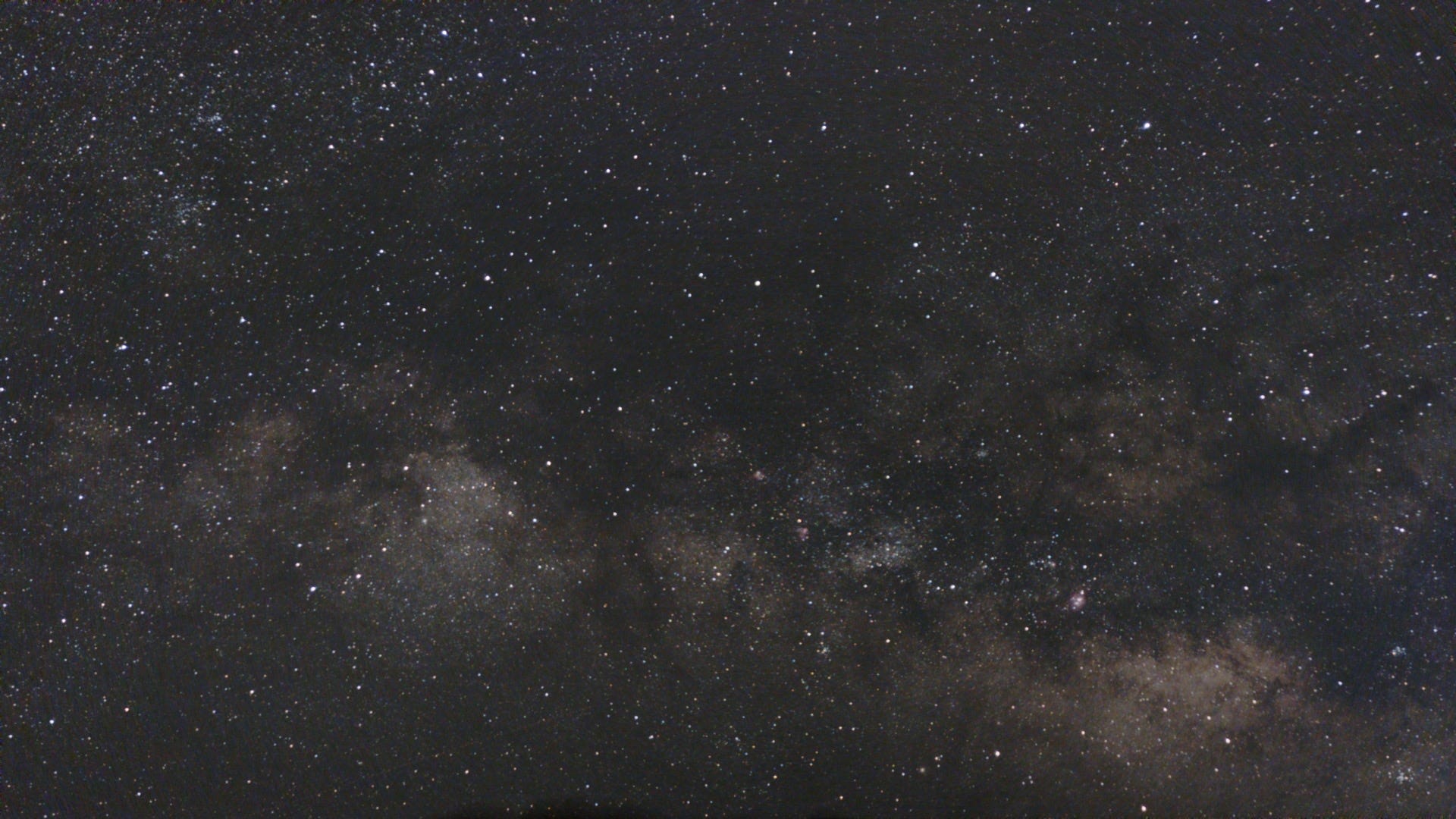
This is the month where the desert sky starts to feel big again.
The Milky Way Returns
By late evening, the first bright stretches of the Milky Way begin climbing above the southeastern horizon. We’re starting to turn back toward the dense star fields near Scorpius and Sagittarius, home to the central regions of our galaxy.
In June, the Milky Way is still low early in the night, but it grows more dramatic as the hours pass. Under Joshua Tree’s dark skies, it appears as a soft river of light cutting through the darkness. Binoculars transform that glow into dense fields of individual stars.
The southern sky becomes especially rich this month. The curved tail of Scorpius rises clearly into view, anchored by the reddish star Antares, often called the “heart of the scorpion.”
Summer Constellations Begin Rising
While spring constellations still linger overhead, the stars of summer begin taking over the eastern sky.
Look for Scorpius low in the southeast, Sagittarius following behind and marking the direction of the Milky Way’s core. Cygnus the Swan rises later in the night, and Lyra, home to Vega, one of the brightest stars of summer, climbs high in the northeast.
June is also when the Summer Triangle, an asterism formed of the brightest stars in the summer sky, begins assembling itself. Vega rises first, followed later by Deneb and Altair as the season progresses.
Planet Watch
Venus continues to dominate the western sky after sunset, shining brilliantly during twilight and remaining one of the easiest objects to spot.
Jupiter is now dropping lower in the west each evening and becomes harder to catch as the month progresses. Early June offers your best chance to spot it before it disappears into sunset glare later in the summer.
Saturn rises much earlier now, becoming a prominent late-night and predawn object. By the end of June, it’s climbing into view around 1 am, giving night owls a better chance to catch it.
June’s Full Moon: The Strawberry Moon
The full moon rises on June 29, traditionally known as the Strawberry Moon, named for the short strawberry harvest season observed by Indigenous communities and early farmers.
Like all summer full moons, it stays relatively low in the sky from our perspective, giving it a warm golden appearance when near the horizon. Moonrise in Joshua Tree can be especially beautiful this time of year, with long shadows stretching across the desert floor.
Deep-Sky and Binocular Highlights
June is one of the best months of the year for binocular observing.
M6 and M7, two bright open-star clusters near Scorpius, rise low in the south and are stunning through binoculars.
Lagoon Nebula (M8) begins becoming visible in Sagittarius later in the evening.
The Milky Way star clouds themselves become major observing targets, especially under dark skies.
Sometimes the best approach in June is simply to slowly sweep binoculars through the Milky Way and see what appears.
Stargazing Tips for June
Plan for later observing sessions. Astronomical darkness arrives much later this time of year
Use the New Moon period around June 14 for the darkest Milky Way skies
Bring binoculars. June skies reward wide-field observing
Take about 20 minutes to let your eyes adjust fully before viewing the Milky Way
Stay hydrated, even at night. Summer desert air is dry
June marks the beginning of the desert’s true Milky Way season. The sky grows richer each week, with dense star fields, nebulae, and summer constellations rising higher every night.
Stay out late enough, and the galaxy starts to take over.
Thanks to you, Desert Trumpet met our $10,000 paid subscription goal!!!
Not a paid subscriber yet? Did you know that paid subscribers receive discounts on our DT Social events and invites to DT Front Porch, intimate discussions featuring local officials and notable residents?
Upgrade to a $50+ paid subscription for a 10% discount.
Upgrade to $100+ for a 25% discount.
Sustaining subscribers at the $250+ level and above receive complementary tickets
Leave your thoughts in the comments below. Please note that we do not allow anonymous comments. Please be sure your first and last name is on your profile prior to commenting. Anonymous comments will be deleted.
This coverage is free - please share!