
Emergency Preparedness: Are You Ready for the Big One(s)?
Earthquakes, floods, extreme heat, and fires all affect the Morongo Basin. Here’s how to get ready before the ground shakes, the wash floods, or the hills catch fire.

Summer in the Hi-Desert means monsoon clouds over the mountains, wildfire risk increases, and a reminder that we live in one of the most seismically active corners of the country. Although it’s a coincidence that the two largest earthquakes to hit southern California in the last 50 years happened in the summer,1 it’s still a good time to freshen up your earthquake kit, dig out your sandbags, and make sure your home is safe from wildfires.
Here’s what you need to know about the Morongo Basin’s three big hazards, and what you can actually do about each one.
EARTHQUAKES: Yes, we’re overdue. No, that doesn’t mean tomorrow.
You may have seen recent headlines saying a major earthquake on the San Andreas or San Jacinto fault is overdue. While this is true, seismologists are not getting new signals from our biggest faults but taking a fresh look at old data.
Using tree rings and buried sediment layers, scientists built a computer model tracking how stress builds on a fault over time. Their conclusion: the southern San Andreas and San Jacinto faults are more stressed than at any point in the last 1,000 years, because neither fault has produced a major rupture in southern California since 1857.
That doesn’t mean a quake is coming next week or next year; earthquakes can’t be predicted that precisely. One spot scientists are watching closely is the Cajon Pass, the narrow gap between the San Gabriel and San Bernardino mountains. Researchers call it an “earthquake gate,” a point that can either stop a rupture or let it jump from one fault to another, spreading damage across the Coachella Valley and San Bernardino County.
If you’ve lived in the Basin a while, you’ve probably experienced major earthquakes.
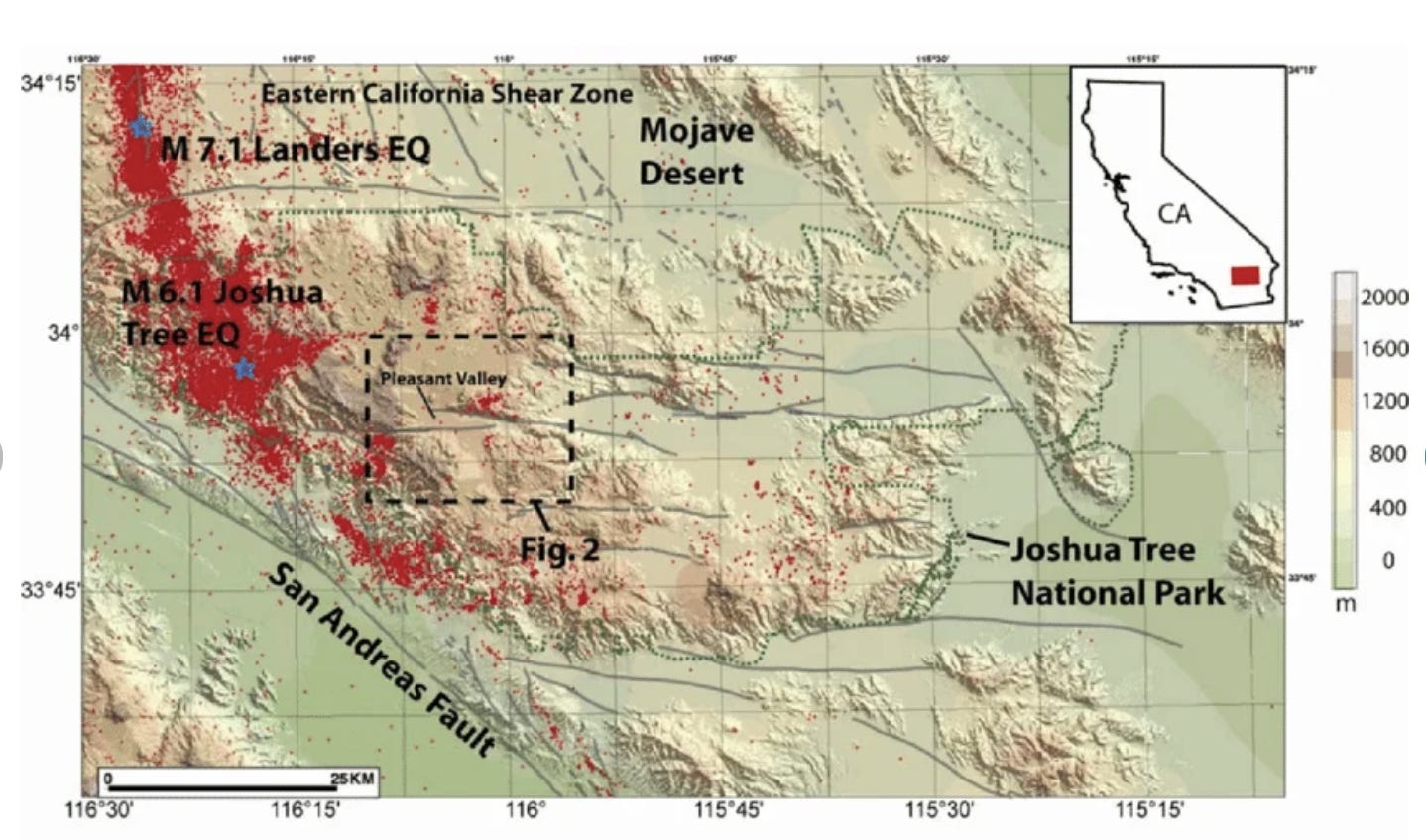
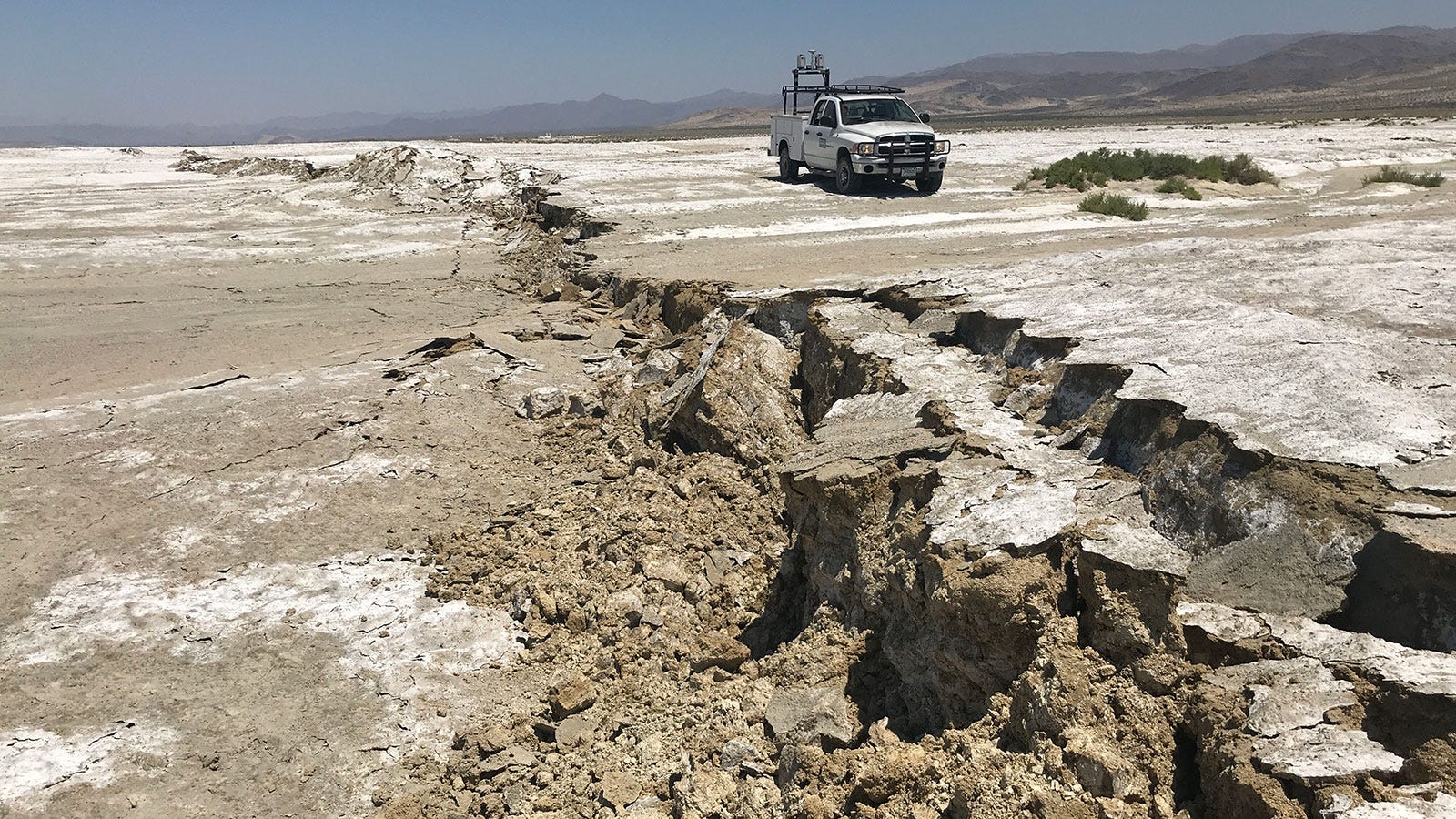
On June 28, 1992, the M7.3 Landers earthquake ruptured through the Mojave Desert, the largest earthquake to hit the lower 48 states in 40 years. It was part of a sequence: a M6.1 foreshock near Joshua Tree, the M7.3 Landers mainshock, and a M6.3 aftershock near Big Bear. Because the epicenter sat in what was at that time sparsely populated desert, damage was lighter than the magnitude suggested, but local communities felt very strong shaking, and the quake tragically killed a child when a stone fireplace collapsed. The region stayed active: the M7.1 Hector Mine quake struck in 1999, and in July 2019 the Ridgecrest sequence brought a M6.4 quake followed a day later by a M7.1.
What to actually do about it?
Per the USGS/Earthquake Country Alliance guide “Staying Safe Where the Earth Shakes”:
Secure your space. Strap your water heater to wall studs (about $20 in parts), anchor top-heavy furniture, and hang mirrors on closed hooks. Move heavy items off high shelves and away from beds and couches.
Make a household plan. Pick a meeting spot, keep emergency contacts handy, and choose an out-of-area contact everyone can check in with. Long-distance connections often come back faster than local ones. Know where your gas shutoff and breaker panel are and keep a wrench nearby in case you need to shut off gas.
Build a kit. Store at least one gallon of water per person (and pet) per day, for at least three days, ideally up to two weeks and longer if you’re remote, like many homes in the area. Keep a grab-and-go backpack with document copies, medication, snacks, and a phone charger.
When shaking starts: Drop, Cover, and Hold On. Drop onto your hands and knees, cover your head and neck under a sturdy table, and hold on until it stops. If you’re in bed, stay there and cover your head. Most injuries happen when people get up and move through broken glass or trip over fallen objects in the dark.2
You can practice this every October with millions of people during the Great ShakeOut.
FLOODING: A strong El Niño is coming, and the Basin knows what flash floods can do.
The National Oceanic and Atmospheric Administration confirms that El Niño, the warm-water Pacific pattern that tends to bring wetter Southern California winters, has formed and is strengthening, with NOAA’s July models suggesting it could become one of the strongest events in decades, peaking around late fall or early winter.3 Three of the last four “very strong” El Niño winters brought above-average rain to southern California.
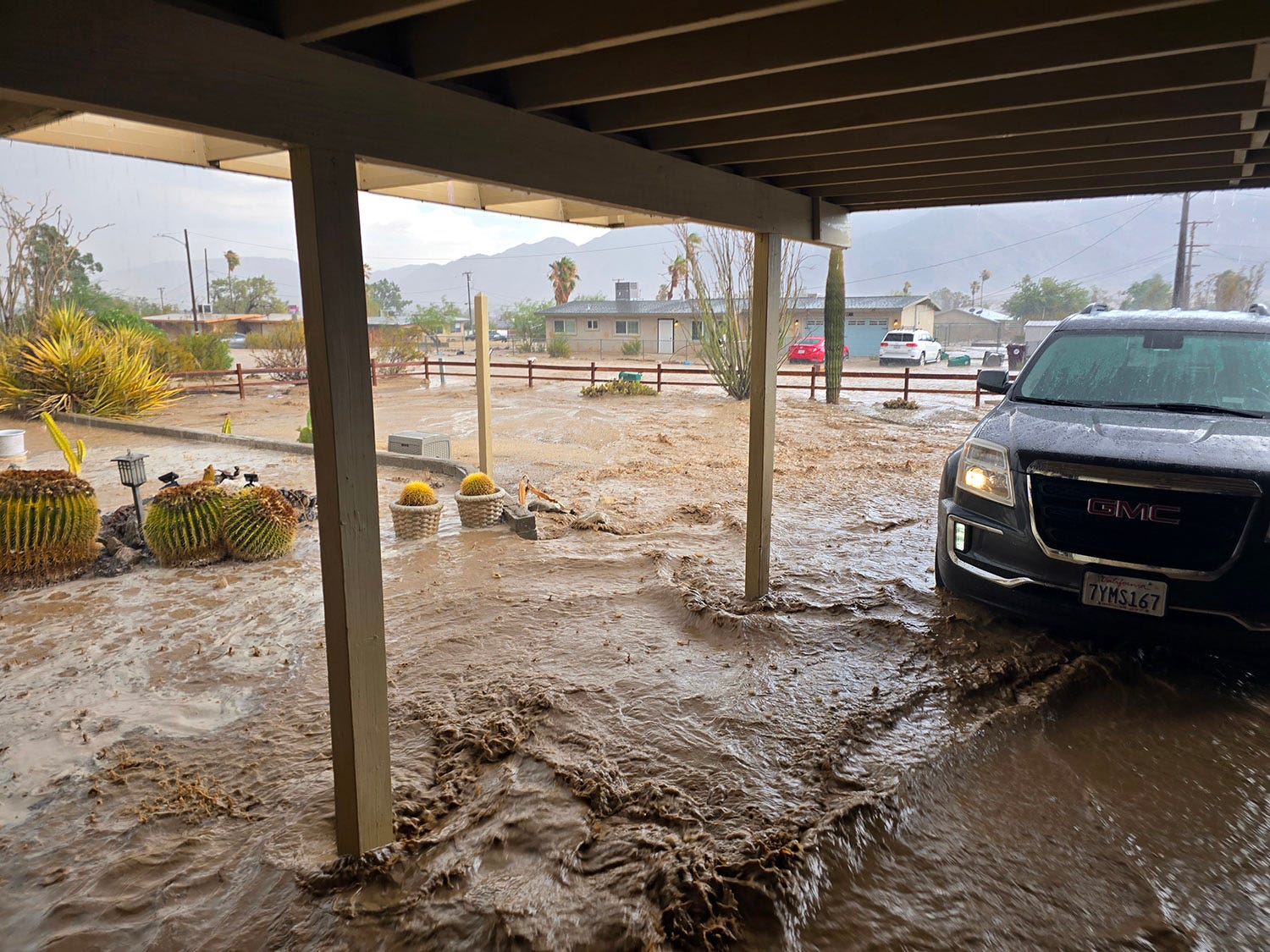
Our hard-packed desert ground doesn’t absorb rain well and heavy storms run straight downhill into washes. Flash floods move fast. Twentynine Palms residents have not forgotten that on July 14, 2024, a flash flood triggered a 15-car swift-water rescue on Highway 62 and flooded homes across town. City crews got the flash flood alert at 1:52 p.m. and responded within 20 minutes, but public works still had to move over 1,000 cubic yards of sand afterward, roughly 100 dump truck loads. Some residents flooded more than once that year. The region has a history of flooding, including fatal flash floods in 1999 and 2003.
How to get ready before the next storm:
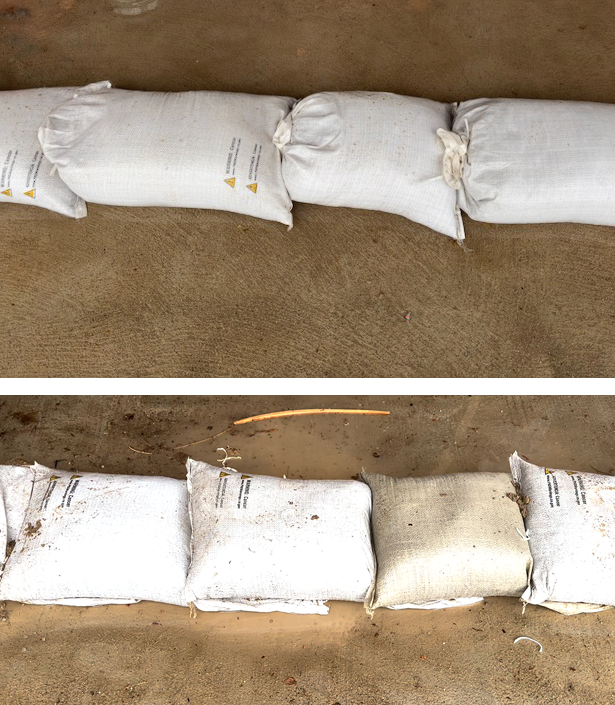
Get sandbags early, available at Twentynine Palms City Hall and County Fire Station 44. Team Rubicon, a veteran-led disaster response nonprofit that has worked directly with Basin residents, recommends folding bags shut rather than tying them, and stacking overlapping rows instead of one loose pile. Remember, do not overfill the bag! It is also effective to overlap bags, as you can see in the “correct” illustration below. Tucking the empty end of the bag that lies below the filled end creates an especially tight fit.
Consider a “burrito wrap” for serious protection: wrap plastic sheeting around your home’s base, staple it at the top, and weigh the bottom down with sandbags. This keeps water from pushing through vents and door gaps — common weak points.
Protect your roof, too. Team Rubicon’s advice: don’t just throw a tarp over a hole. “Think like a raindrop,” says Rubicon’s Kevin Kothlow. The tarp needs to go over the roof’s peak and down both sides so water actually sheds away from the structure. Check for soft spots and failing flashing around vents and skylights before climbing up. Keep a heavy-duty tarp (bigger than you think you need), furring strips, nails, a staple gun, and duct tape on hand.
Know whom to call. If your home takes on 18+ inches of water (less for mobile homes), the Red Cross can help with cleanup funds and replacing essentials. Report dangerously rushing water to the Twentynine Palms Water District’s hotline (760-367-7546).
The Desert Trumpet attended a Project Rubicon workshop in 2024 and published step-by-step instructions on deploying sandbags and floodproofing your home:
“When the Clouds Open: Team Rubicon’s Guide to Diverting Water and Protecting Your Home”
“Think Like a Raindrop: Floodproofing Your Home”
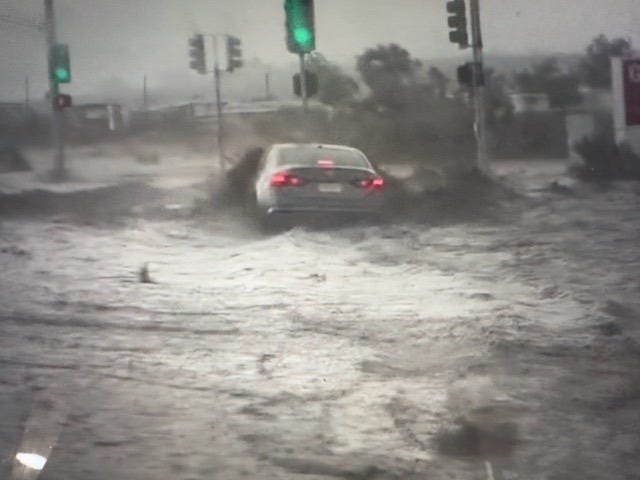
And when driving during a storm, be safe: Turn around. Don’t drown.
FIRE: Lightning starts most of our wildfires, but people start plenty too.
Monsoon season brings lightning along with the rain, and lightning is the biggest natural cause of wildfire here. Joshua Tree National Park’s fire records go back to 1945: about 74 percent of recorded fires were lightning-caused, the rest human-caused. Fire has always been part of this desert, and they usually stayed small because desert plants are spread out.
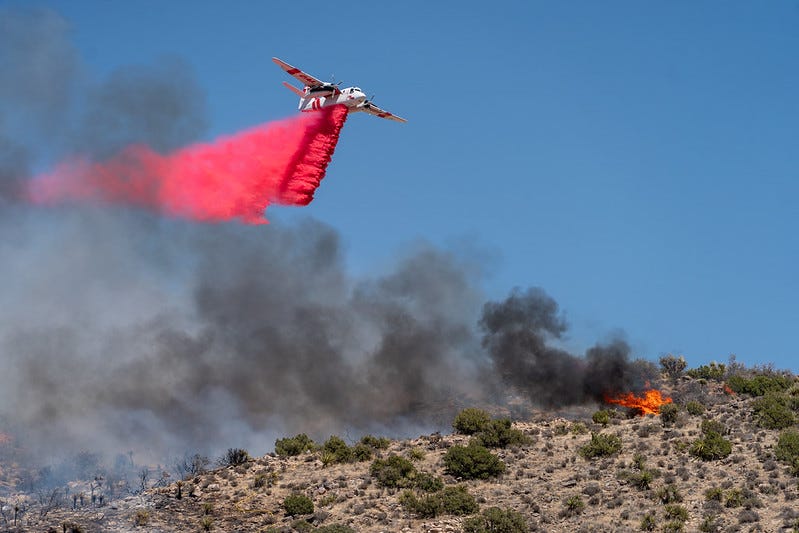
That’s changing. Before 1965, most lightning fires burned under a quarter acre; since then, fires have gotten bigger. The 1999 Juniper Complex fire, the largest in park history, burned nearly 14,000 acres of junipers, pinyon pines, and Joshua trees, which take decades to recover. Unlike coastal California, this is not a fire ecology where desert plants need to burn to germinate. Invasive grasses filling the gaps between desert shrubs are part of the problem. When they dry out, they act as fuel that lets fire spread faster and burn hotter.
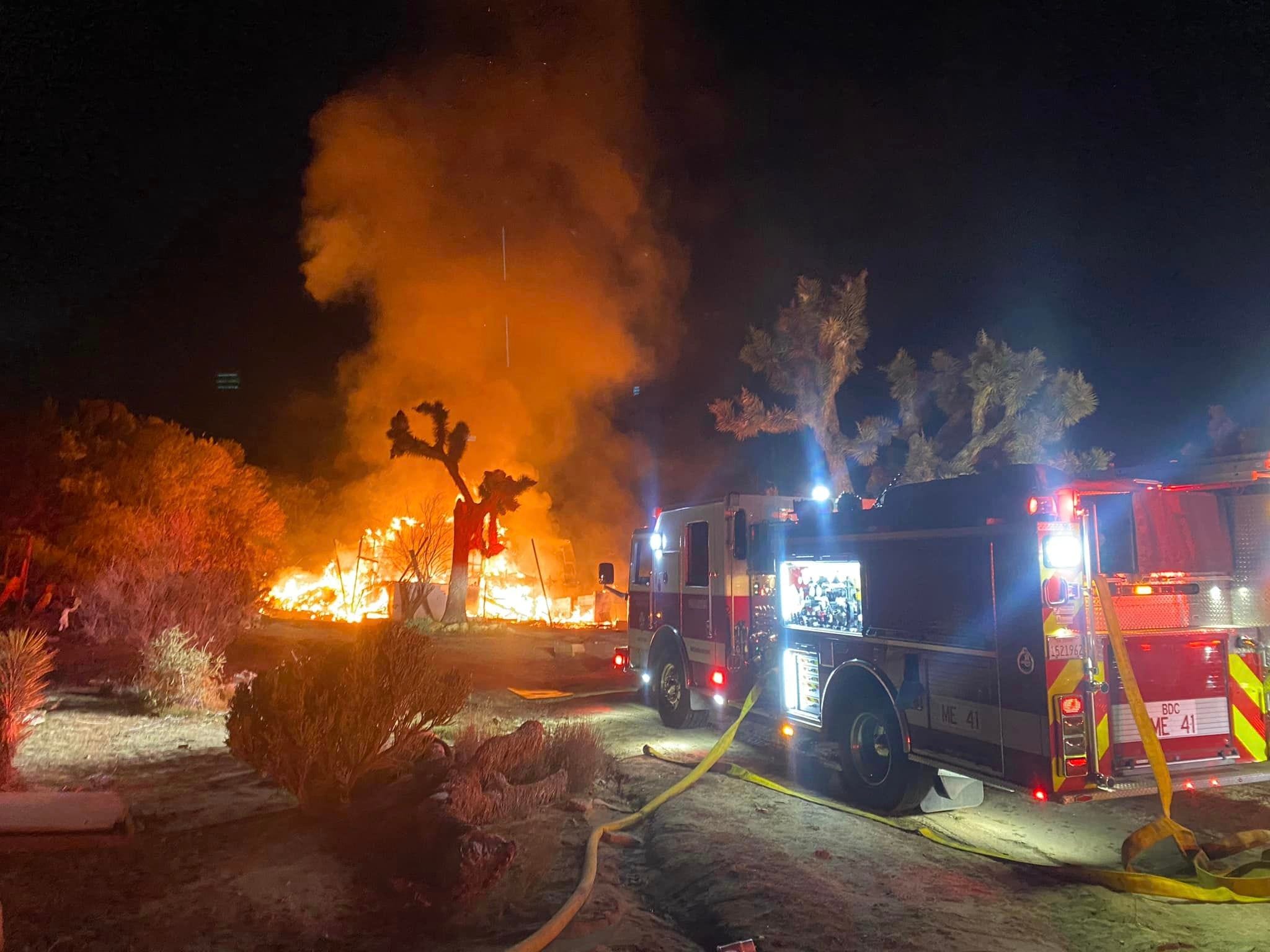
The Town of Yucca Valley’s Wildfire Guide says clearing flammable vegetation can cut your risk of losing a structure by as much as 70 percent:
Build a defensible space of at least 30 feet around your home. Clear more on a hillside, since fire moves fast uphill.
Clear dead leaves and brush and thin tree canopies to 15 feet between crowns.
Keep a 10-foot clearance around propane tanks and barbecues. If you have a lawn, which can’t be very many people in the Morongo Basin, mow it regularly.
Install hose spigots on at least two sides of the house, and keep a garden hose long enough to reach anywhere fire could start. A portable gas-powered water pump helps if the power goes out and hydrant pressure drops.
Keep basic tools ready: a ladder as tall as your roofline, a rake, axe or chainsaw, shovel, and buckets.
EXTREME HEAT: Know where the cooling center is.
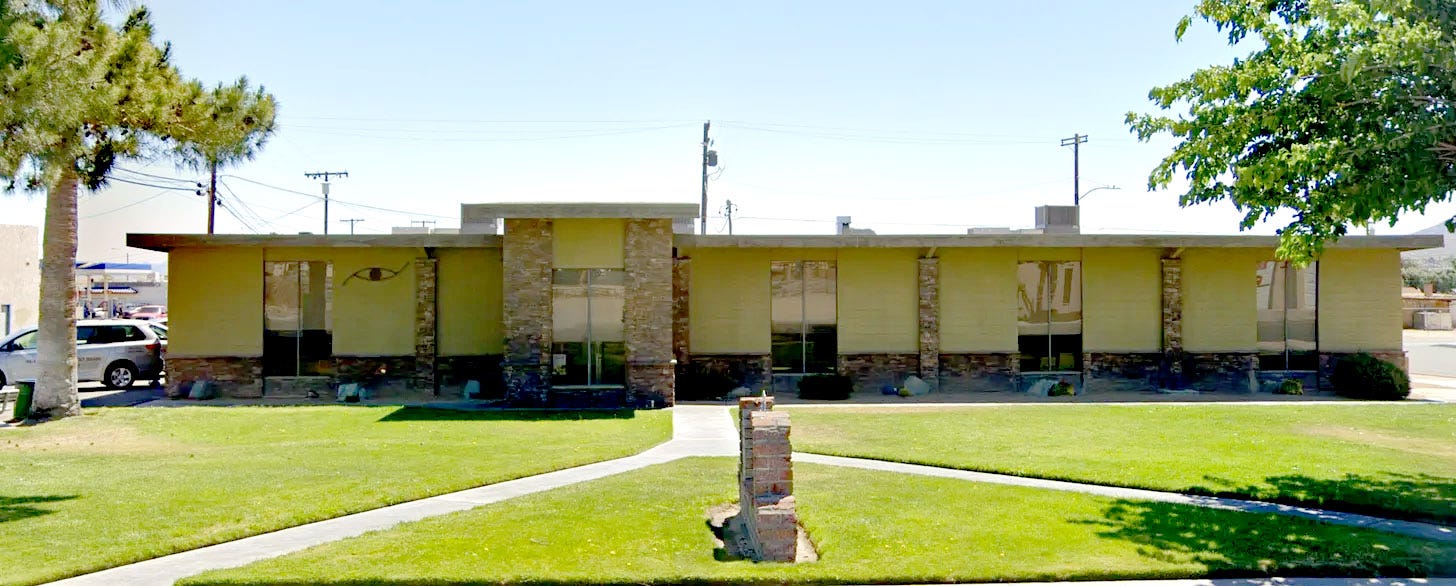
Triple-digit days aren’t rare during our summers, but they’re still dangerous. Twentynine Palms City Manager Kevin Cole says the city’s cooling center, at the Senior Center on 6539 Adobe Road, opens once the heat index hits 110 degrees, which is lower than the 115 threshold used in past years. Cole notes the city relies on National Weather Service readings, not your phone’s app, to determine whether to open the cooling center, so check NWS directly if you’re unsure whether it’s open.
THE BOTTOM LINE
None of these hazards are new to the Morongo Basin, and none are going away. Earthquake fault stress has been building on the San Andreas Fault for more than 150 years. El Niño is strengthening into what could be an intense monsoon and wet winter. Dry lightning during monsoon season is not unusual. It’s summer. It gets hot. The good news: most of this prep takes an afternoon and doesn’t cost a fortune. Secure your furniture, stock your water, keep sandbags on hand, clear your brush, maintain your swamp cooler and your air conditioner, and you’ll be in good shape.
Like I did after the Northridge earthquake in 1994.
Michael Rogers and Brett Trimper of the Facebook group Morongo Basin Traffic Reports and Weather Guys are an excellent source of local weather information and forecasts.
Thanks to you, Desert Trumpet exceeded our $10,000 paid subscription goal!!!
Not a paid subscriber yet? Did you know that paid subscribers receive discounts on our DT Social events and invites to DT Front Porch, intimate discussions featuring local officials and notable residents?
Upgrade to a $50+ paid subscription for a 10% discount.
Upgrade to $100+ for a 25% discount.
Sustaining subscribers at the $250+ level and above receive complementary tickets.
Share your thoughts in the comments below. Please note that we do not allow anonymous comments. Please be sure your first and last name is on your profile prior to commenting. Anonymous comments will be deleted.
Share this post—it’s free!