

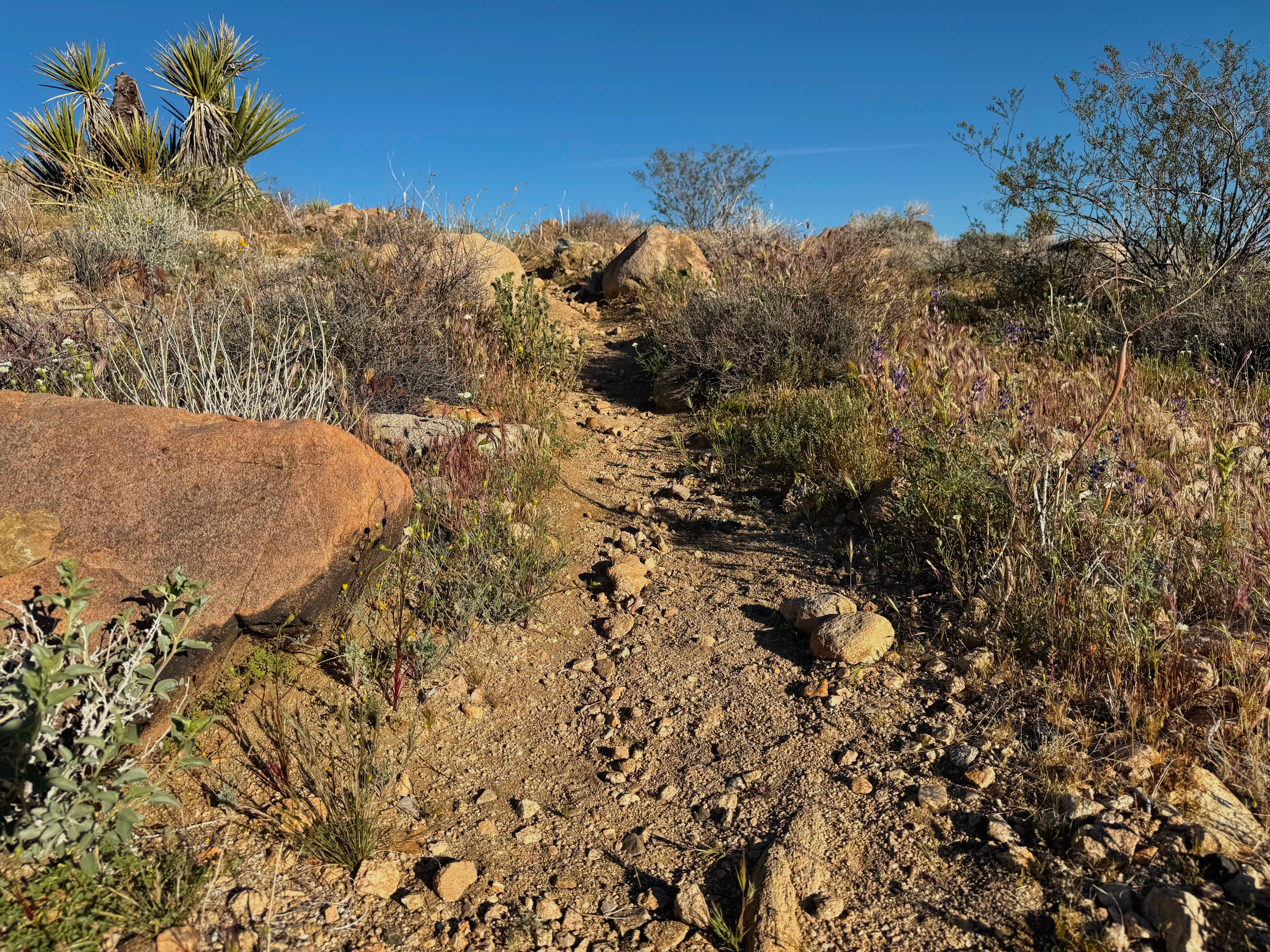
To appreciate wild things, one can climb every mountain and ford every stream. Or, as is my personal habit, simply traverse the same trail daily to brood about minuscule shifts in the landscape and note differences over time. It’s ablaze out there with familiar wildflowers, vibrating with colors that Candy Crush could only wish for.

But by digging below the surface, literally right down into the ground, one uncovers a special group of plants that are really on a high this season, and Wild Hyacinth, Wild Rhubarb, and Desert Death Camas are three of the more elusive beauties on parade. They’re geophytes - translated from the ancient Greek of botany as Earth Plants. Spending a good part of their lives hidden asleep in the soil, they bide their time in dormancy until roused by favorable conditions. Broadly put, geophytes are storage vessels that hold plant life in suspended animation underground, sheltered from adversity such as drought and fire. These cagey soil-dwellers paint a picture of resilience, stubbornness, and even danger.
Corms: Wild Hyacinth
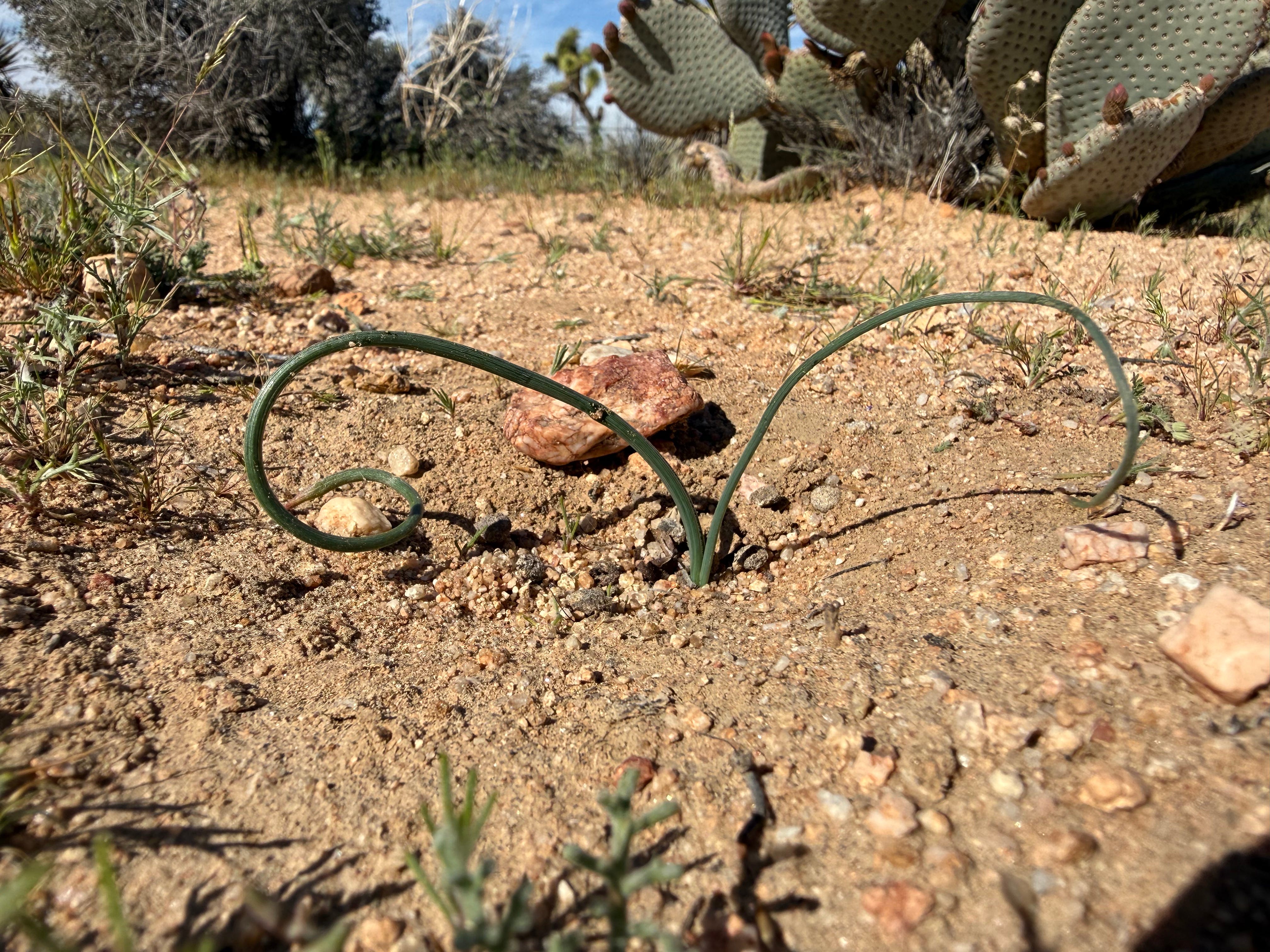
It takes great care to avoid trampling the low-growing tubular coils that line the shoulder of my trail. They reveal buried corms1 belonging to Wild Hyacinth (Dipterostemon capitatus). Most commonly known as—yes, Blue Dicks—these periwinkle-colored blooms emerge from the dense starchy bulbotubers2, which are beloved by wildlife as little nutrient bombs. Why would a plant evolve to attract herbivory instead of repelling it? Well, to serve our old friend species dispersal, which we looked at last fall. Bears, deer, and rodents prize the heart of a Wild Hyacinth, and they’re surprisingly wasteful in the eating of it, breaking apart its segmented body and leaving behind a trail of crumbs.
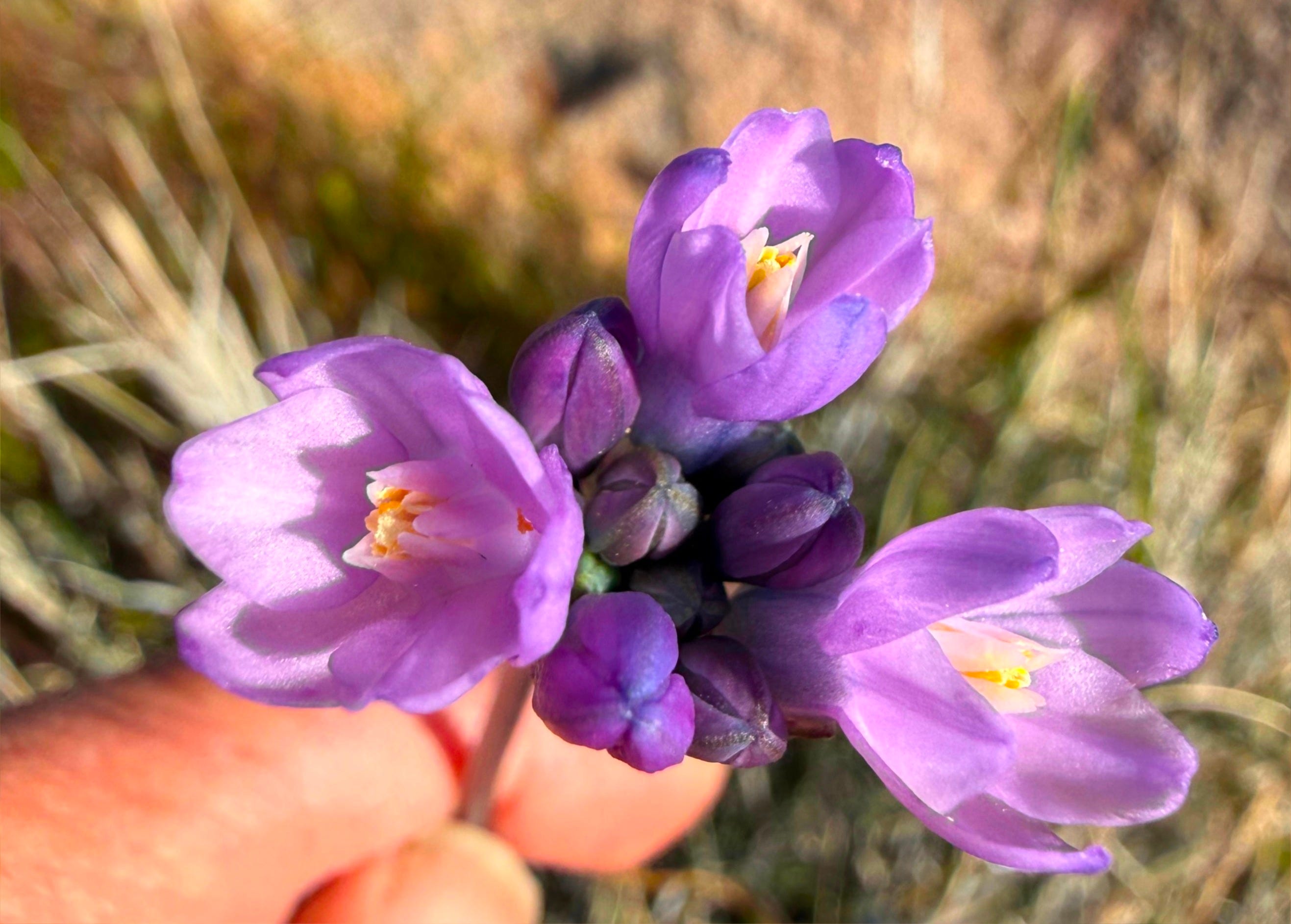
There’s method behind this un-thrifty madness, since corms produce numerous cormlets or cormels, each with the capacity to detach and form a new plant. Trad gardeners know that dividing gladiolis enhances the vitality of the original plant while providing new cormlets as incentives for bargain-loving humans to make new plants for free. By being delectable to critters, Wild Hyacinths trick furry litterbugs into doing the same.
Tuberous Roots: Wild Rhubarb
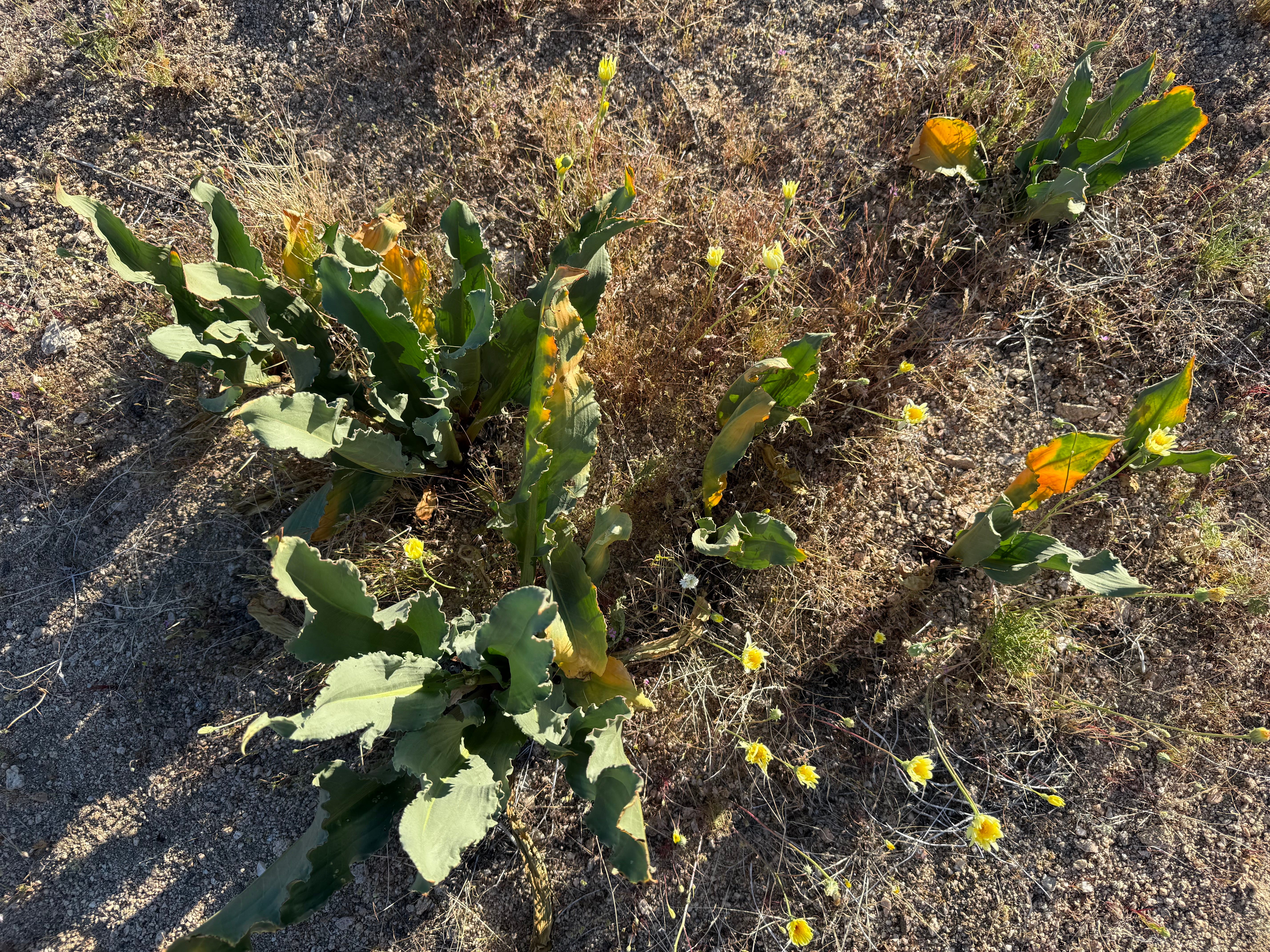
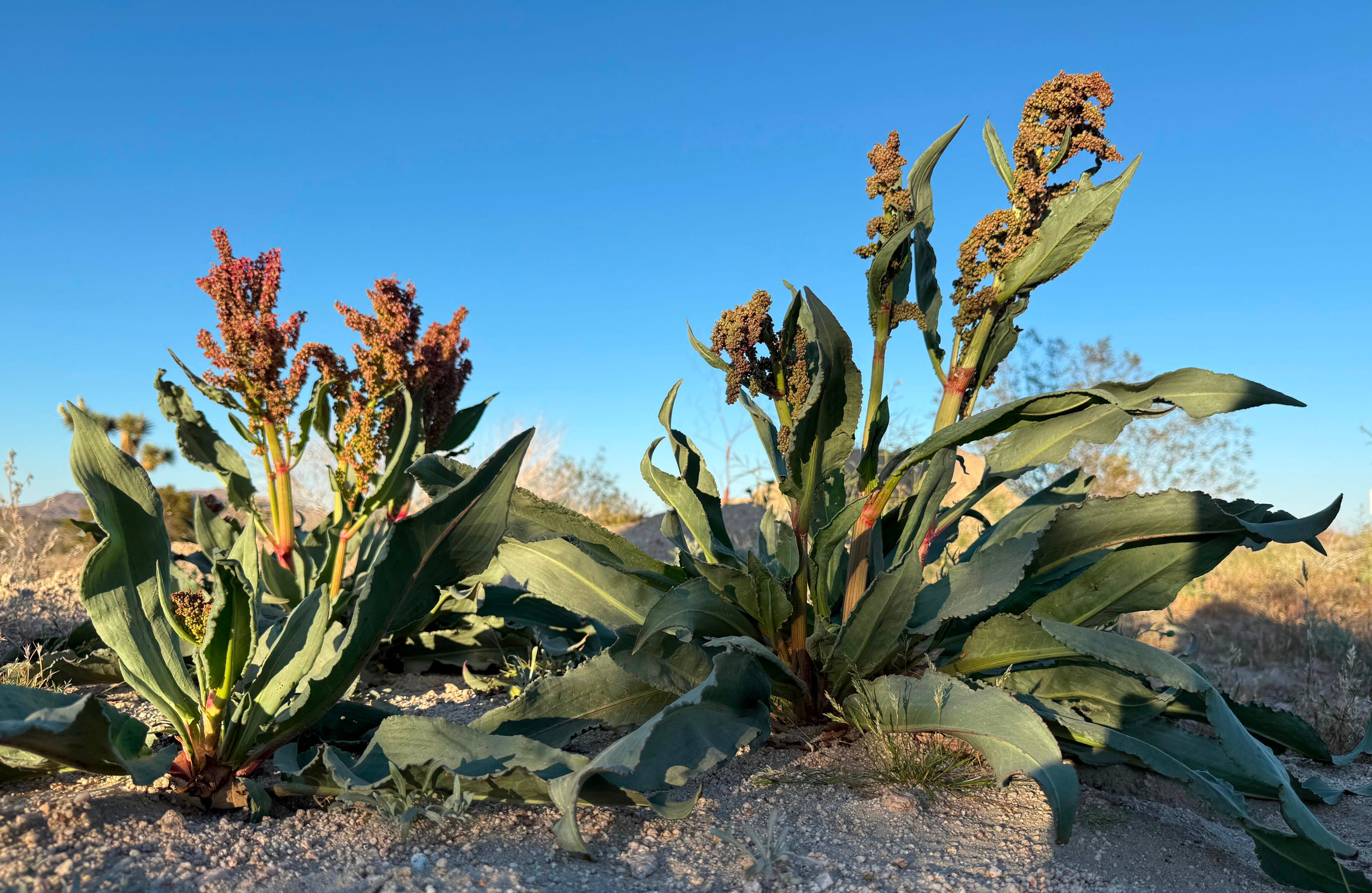
Another geophyte currently bursting into daylight is Wild Rhubarb or Canaigre or Tanner’s Dock (Rumex hymenosepalus). Like a showgirl’s headdress, statuesque mauve inflorescences ascend one or two feet off a bed of fat, waxy leaves. By summer, blushing flowers morph into many faceted plumes of reddish-brown seed heads, betraying Wild Rhubarb’s lineage as a member of the buckwheat family.
Height is a bonus for any wind-pollinated plant3 but this one has extra reproductive backstops. Below the pomp and circumstance lies its tuberous roots made up of multiple storage roots attached in a tangle. Numerous plants are often seen clustered together sharing a single root system, making the younger plants genetically identical clones that offset vegetatively4. While we’re on a vocabulary spree, this plant is also a hermaphroditic perennial with the ability to self-fertilize.
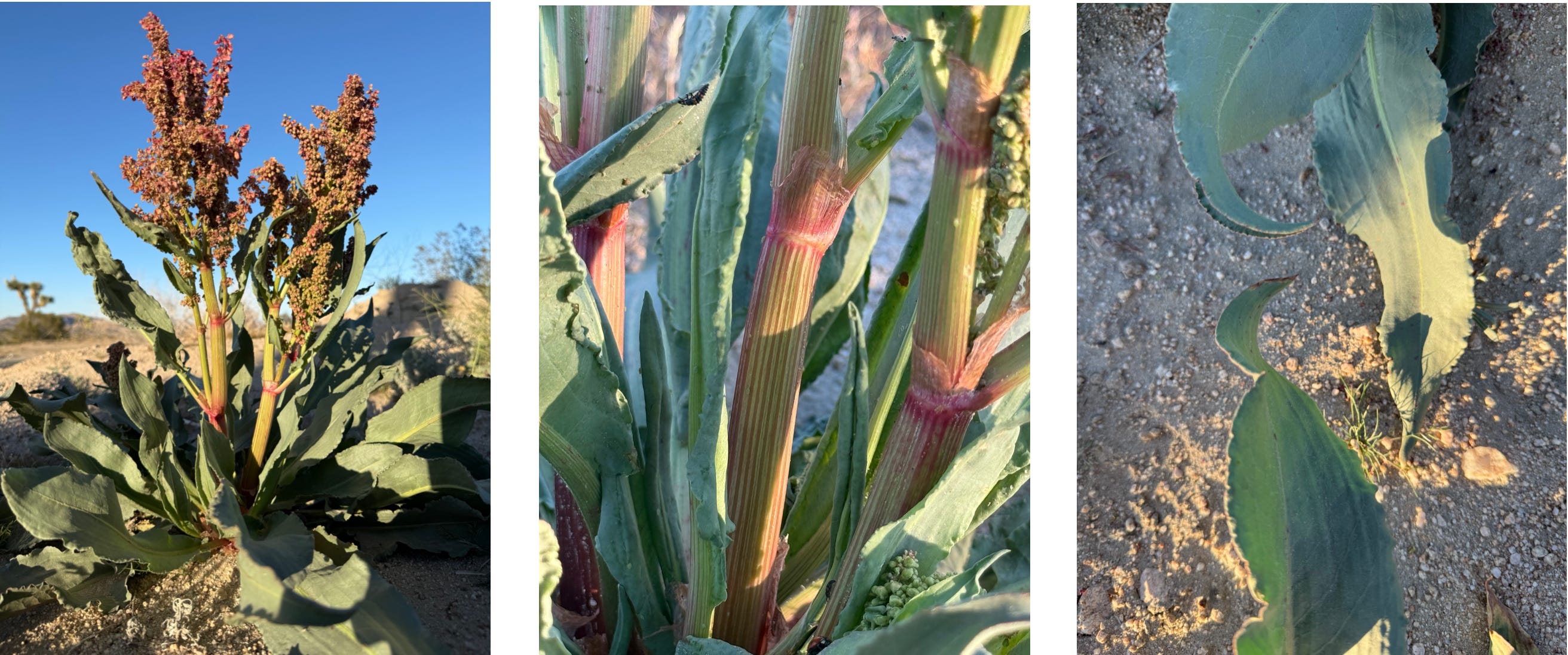
Humans have found as many ways to use R. hymenosepalus as the plant has found to reproduce. Tannins from roots are used for tanning leather and creating earthy brown dyes, ethnobotanical applications ranged from astringents for sores and concoctions for digestive maladies, and seeds and leaves were harvested as food. Although traditionally cultivated by separating the tuberous roots and by encouraging leafiness by cutting the flower stalks, all parts of this plant are high in harmful oxalic acid, meaning that it’s just plain stupid to forage without knowledge of processing to remove toxicity.
A True Bulb: Desert Death Camas
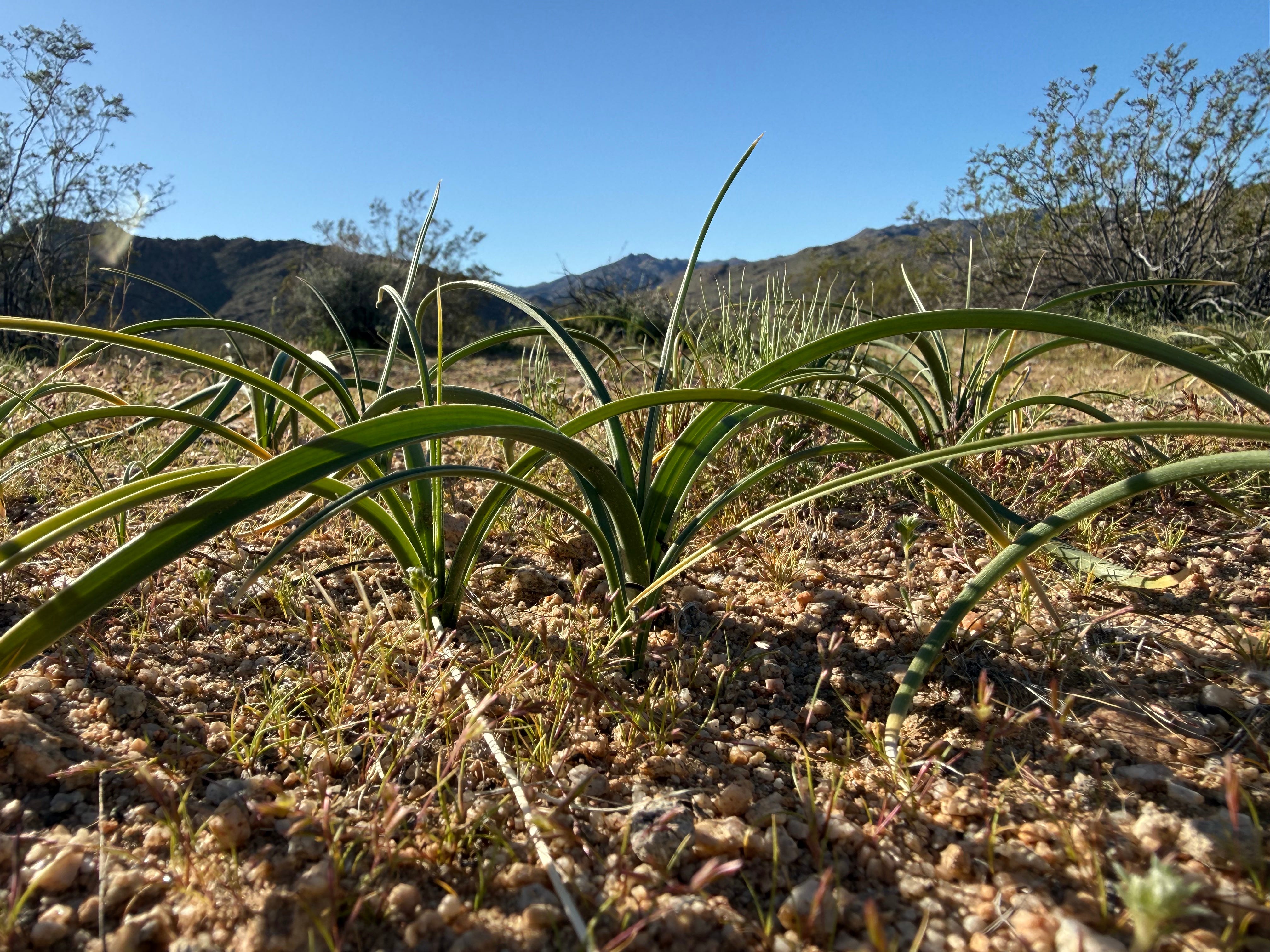
From toxic to lethal, the winter rains also caused a proliferation of Desert Death Camas or False-hellebore (Toxicoscordion brevibracteatum, formerly known as Zigadenus brevibracteatus). Sweet in appearance with pale diminutive flowers that resemble distant twinkling stars, the petit bulb defends itself mightily using steroidal alkaloids, a group that includes toxins from deadly nightshade and poison dart frogs. Adding to the air of malice implied by its name, T. brevibracteatum emerges from a bulb easily mistaken for that of edible wild onions.
Here a reader might be suddenly distracted, seeing a plot twist for a new Desert noir centered around this little pint of terror. Not to be a downer, but Mojave plus gothic novel is already well-trodden ground, and this dispatch celebrates local plant arcana so please return to class.
Geophytes at Large
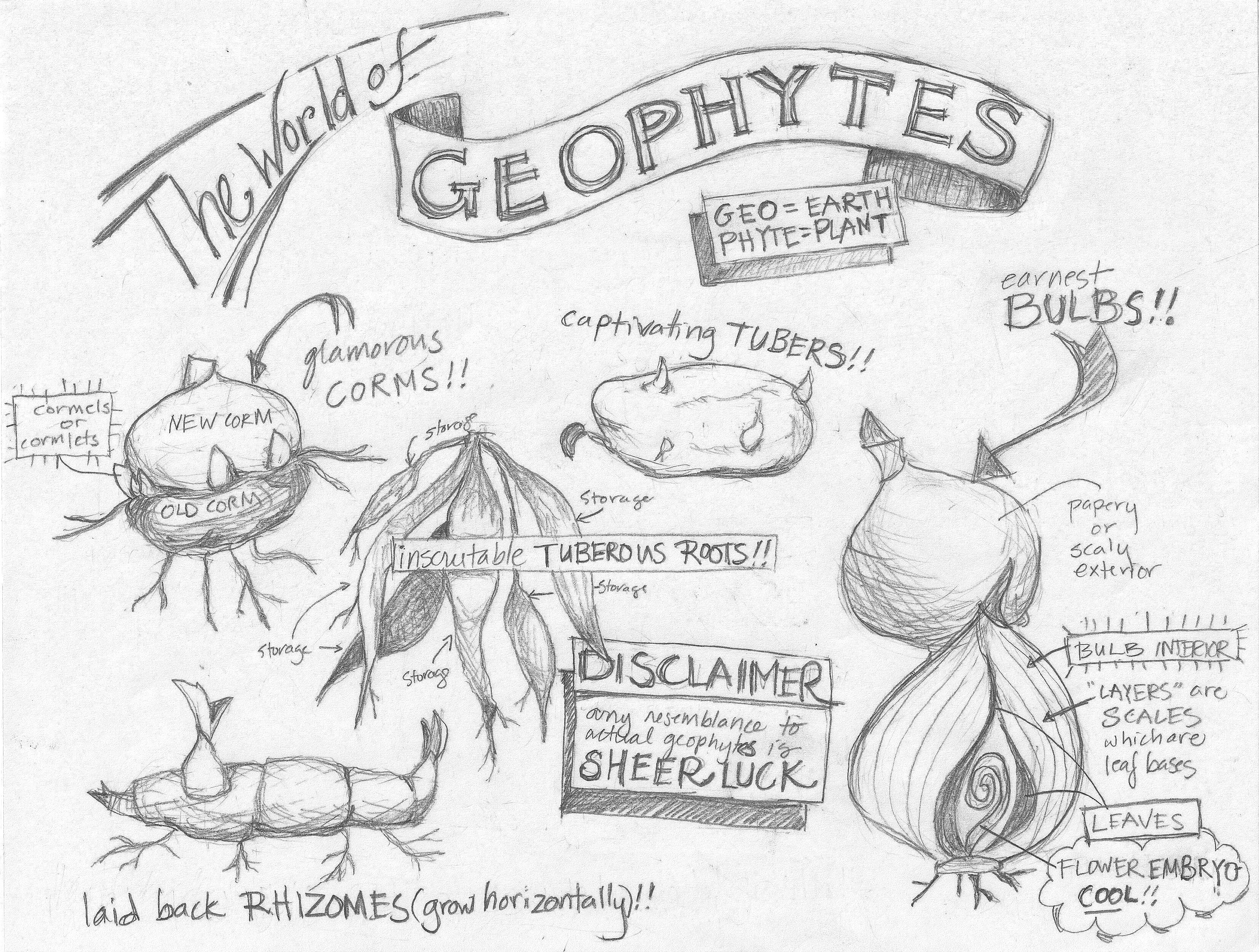
The characteristics that make true bulbs distinctive from other types of geophytes can be illustrated by cutting an onion from the grocery store in half. A bulb’s layers, or scales, are leaf bases, cradling nascent foliage leaves and a fully formed flower embryo at their center. Meanwhile, tuberous roots are thickened storage roots, and corms, tubers, and rhizomes are actually solid stems.
As a group, geophytes are textbook survivalists, hunkering down in their sunken bunkers and hoarding energy supplies through lean years, periodically surfacing to make food using sunlight energy to set aside even more stores. Wild Hyacinth, Wild Rhubarb, and Desert Death Camas share prepper strategies with fellow stunners Desert Mariposa Lily (Calochortus kennedyi) and Desert Lily (Hesperocallis undulata), also giving us glorious displays this year.
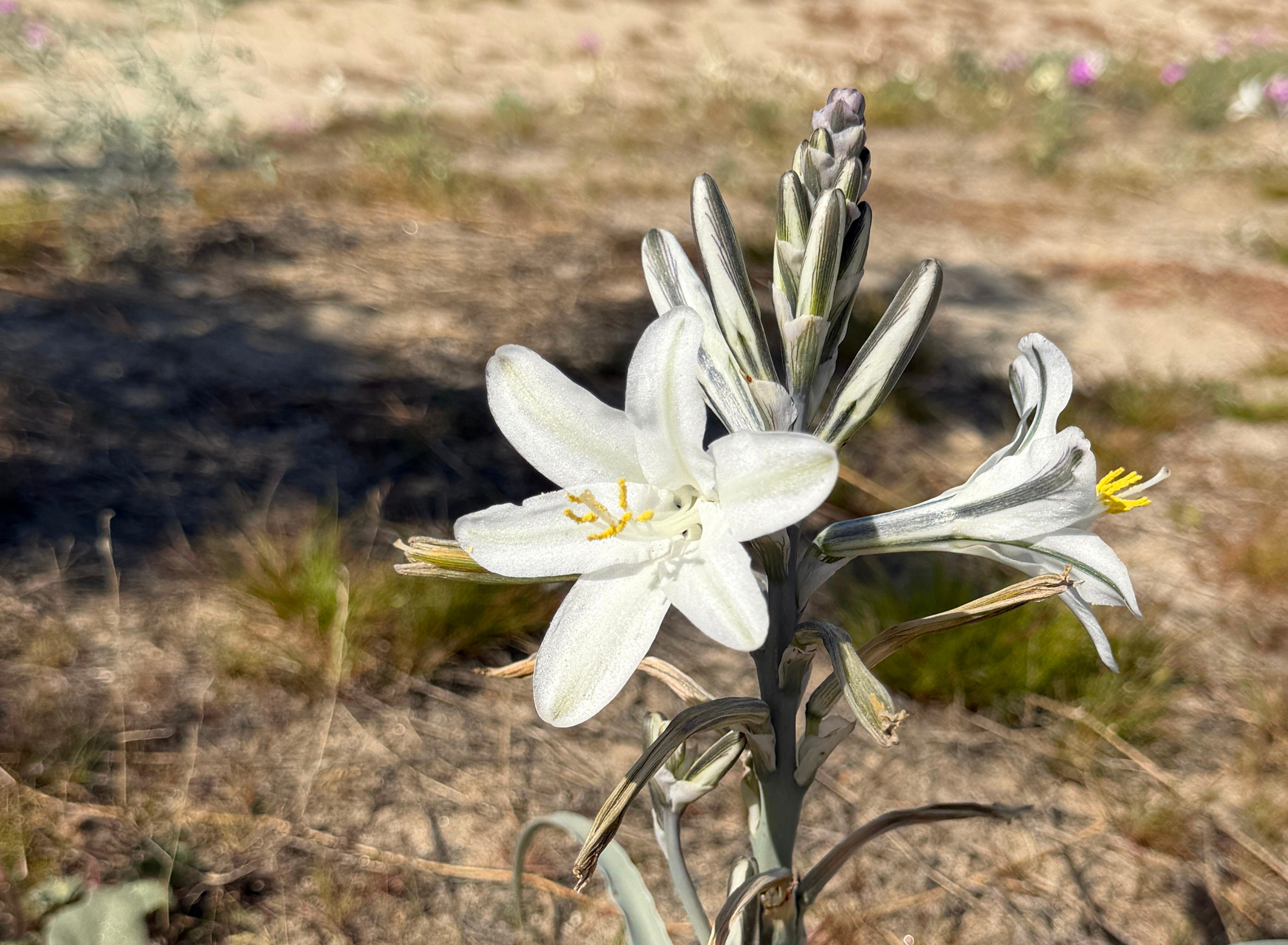
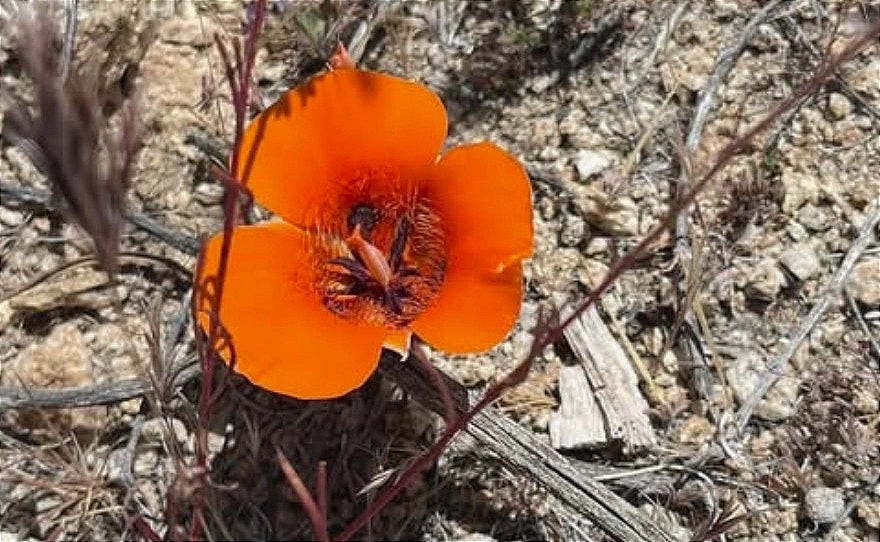
Such is the radiance of these geophyte blooms that they can seduce the staunchest conservationist to hover a finger over Buy Now buttons on platforms like Etsy, where seed may have been harvested without regard for sustaining wild populations or the sanctity of sites such as preserves and national parks. Sober minds know that to achieve the aspirational blooms shown on seed packets, several years are needed before substantial storage organs form. Then allow several more for nutrients to stockpile prior to flowering. That’s an optimistic scenario: a native grower once told me that seed to showy bloom can take as much as eight years, making earth plants an awfully slow burn for seed grown nursery production. But this unwillingness to be tamed as garden varieties causes one to revere them all the more.
So enjoy the fleeting show. When it’s over, our geophytes will dim the lights and disappear back into their subterranean dreaming. In the meantime, I’ll cast anxious glances over my trail, hoping it remains undisturbed in years to come so that I may encounter my old friends when they next pass this way.
Author’s note: Please respect the sensitive nature of native plants in the wild and avoid letting enthusiasm lead to depletion through collection or harvest.
Leave your thoughts in the comments below. Please note that we do not allow anonymous comments. Please be sure your first and last name is on your profile prior to commenting. Anonymous comments will be deleted.
Corm: fleshy, swollen stem base that is solid storage tissue. Most are pulled deeper into soil by contractile roots that shrink and expand until the storage organ reaches optimal depths.
Bulbotuber: an old fashioned term for corm.
Wind pollinated plants benefit from dispersing pollen above the level of surrounding vegetation. Giant Sequoias are an example of a wind pollinated plant.
Vegetative reproduction: plants reproducing without seeds or spores using plant parts that can differentiate into new ones, as with cuttings or runners. The new plants are always genetically identical clones of the parent plant.
Lovely writing, and such a wonderful botany lesson! Thank you.
What a great way to start my day!
Thank you for a wonderful article. I have been noticing these plants and appreciate learning about them.