

Note: We are also making this edition of Sad Trombone available in Spanish!
Read El amor es más poderoso que el odio — Lo que el espectáculo de medio tiempo de Bad Bunny hizo por mí
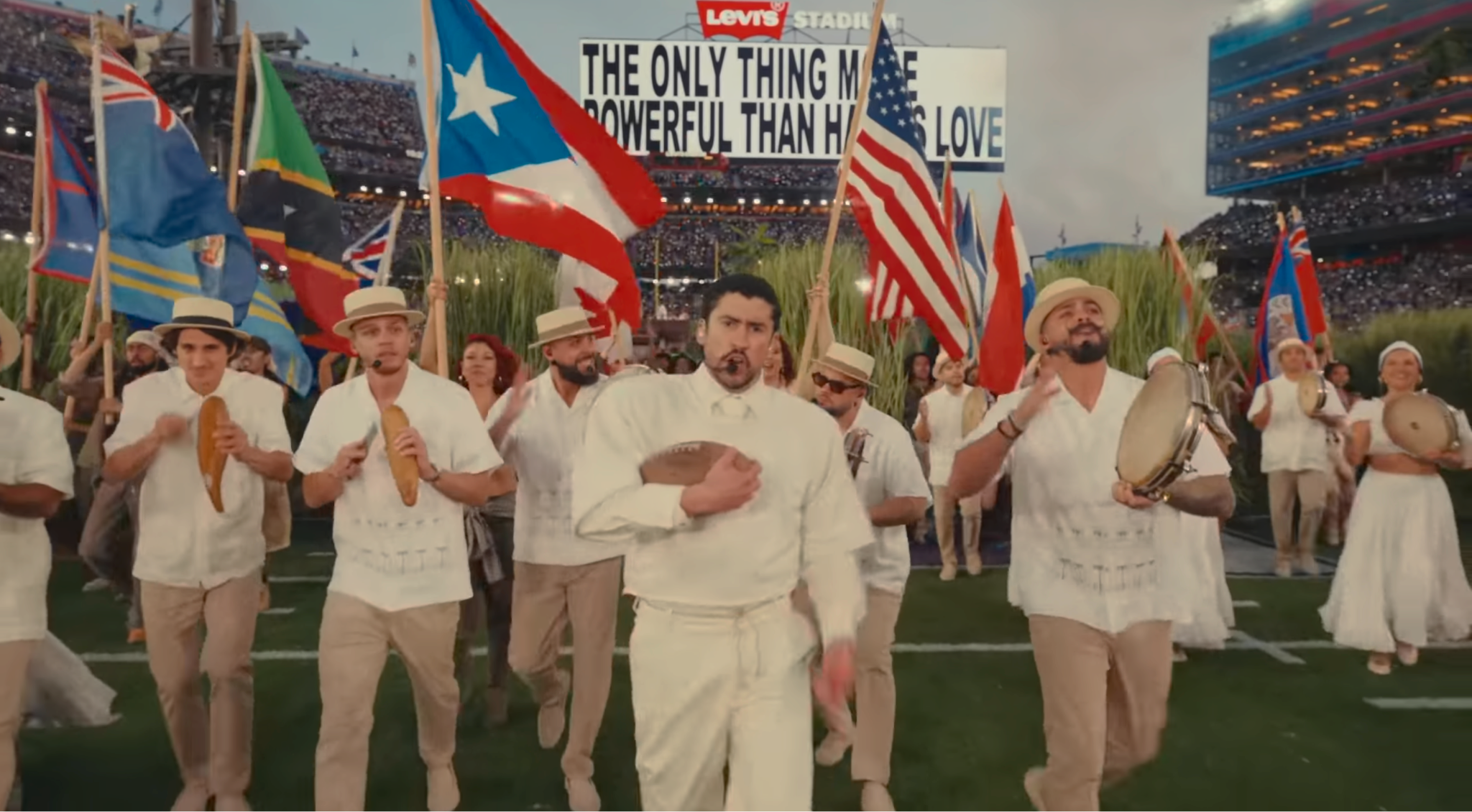
A little more than a week ago, the NFL crowned the Seattle Seahawks its 2025-26 Super Bowl champions. The usual nightmarish news churn resumed, but Bad Bunny’s Apple Music halftime show kept sticking with me. I cried — not as a political gesture or performative move, just sudden, real emotion. I’m Mexican American; I grew up switching between two languages and two worlds. Watching Bad Bunny sing in Spanish on that enormous stage felt like someone had flipped on a light in a dark room. It was visibility in a space that rarely centers us, and it landed as joy.
If you didn’t see the show: Bad Bunny — Puerto Rican, American citizen, musician and entertainer — used a massive live platform to repeat a simple line: “The only thing more powerful than hate is love.” He performed his set in Spanish. For many of us, that language choice felt like direct recognition. For others it triggered a defensive backlash that revealed how tightly language, belonging and national identity are policed in public life.
Singing in Spanish on a national broadcast didn’t just change the lyrics — it changed the frame. It signaled that Latinx culture, speech and emotion belong in mainstream American spaces, not only in niche markets. Pushback isn’t usually about the music; it’s about who gets to be centered, whose grief or joy counts, and which bodies are assumed to be “inside” the nation. That’s why this performance landed politically for many of us: representation lives in small choices.
