
On the Agenda: Morongo Basin Items at the County Board of Supervisors’ August 4, 2026 Meeting
A Homestead Valley campground appeal, a Landers road-charge vote that failed again, and a scattering of County-wide items reaching into the Basin
By the San Bernardino County Board of Supervisors Resident Review Committee
One would hope that August would be a lighter month for the Basin than the last meeting, which was held in June. However, with a contested land-use appeal in the Homestead Valley area on the August 4 agenda and a controversial mining ordinance update planned for August 18, the meetings are likely to be lively. The agenda for the August 4 meeting is here.
Public Comment
The August 4 meeting will be held at 10 a.m. in the Covington Chambers, First Floor, County Government Center, 385 N. Arrowhead Ave., San Bernardino, and the public is welcome to attend and comment in person.
Beginning with this August 4 meeting, the County is adding remote public comment by telephone, which is its mechanism for complying with SB 707, the state law requiring local agencies to offer remote participation.1 To speak, register online beginning at 8:30 a.m. the morning of the meeting through the “Register to Speak” link at publiccomment.sbcounty.gov. You’ll be asked to indicate whether you’ll participate in person or virtually (a phone number is required if virtual) and what items you wish to address. In-person registration is also available at kiosks outside the Board Chambers.2 Written comment can be submitted by email to BoardMeetingComments@cob.sbcounty.gov.
For Basin residents, this telephone option arrives after a two-year decline in local remote access: the County ended the standing interactive-video feed at the Bob Burke Joshua Tree Government Center in 2024, later moving the video site to the Joshua Tree Community Center and offering it only for meetings expected to draw significant local participation.3 4 Whether that in-person video site will be available for a given meeting has become case-by-case;5 residents relying on it should confirm its status with the Clerk of the Board before each meeting, that number is 909.387.3841.
A Closer Look
Item 107 — A Contested Homestead Valley Campground Reaches the Board
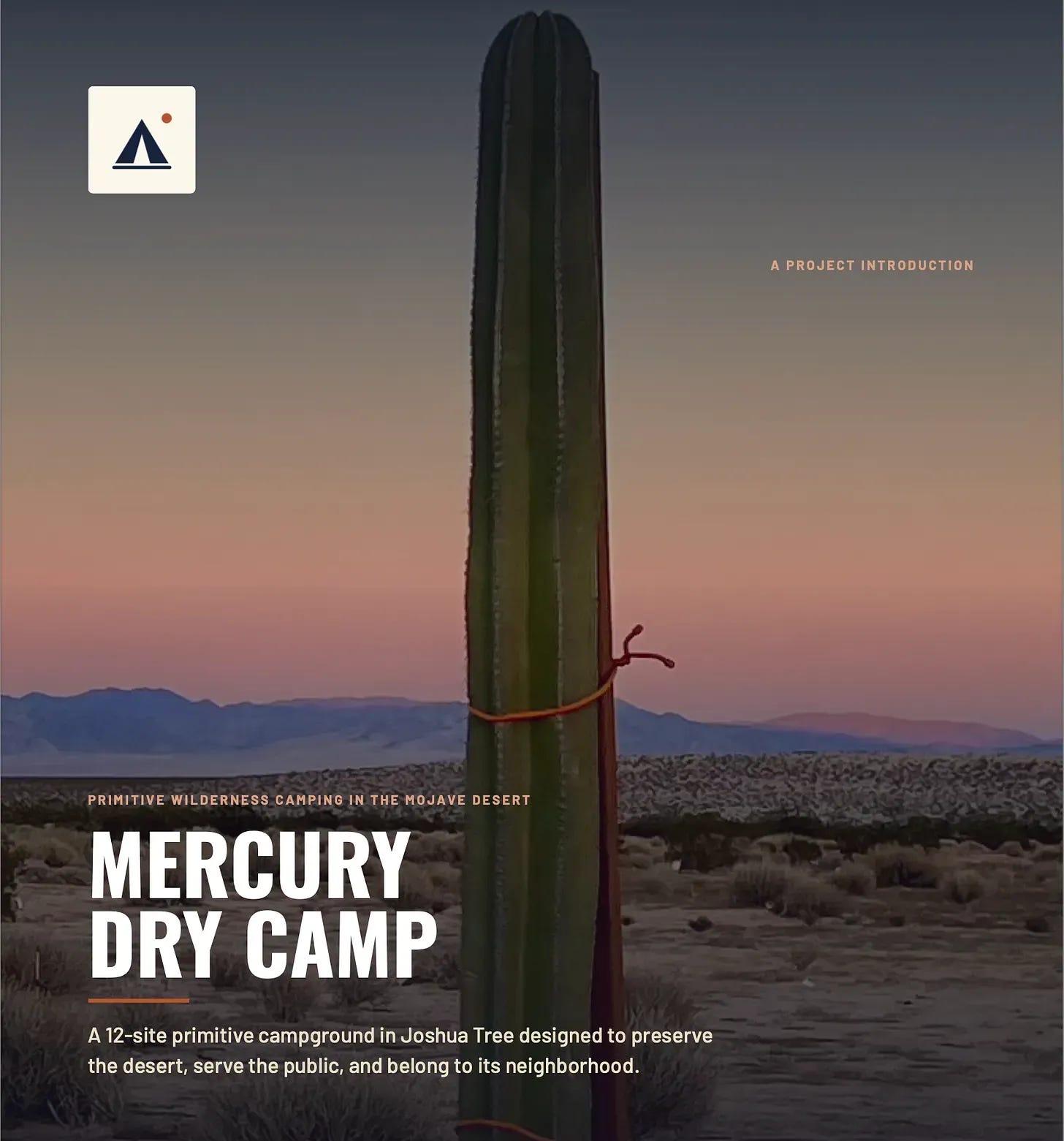
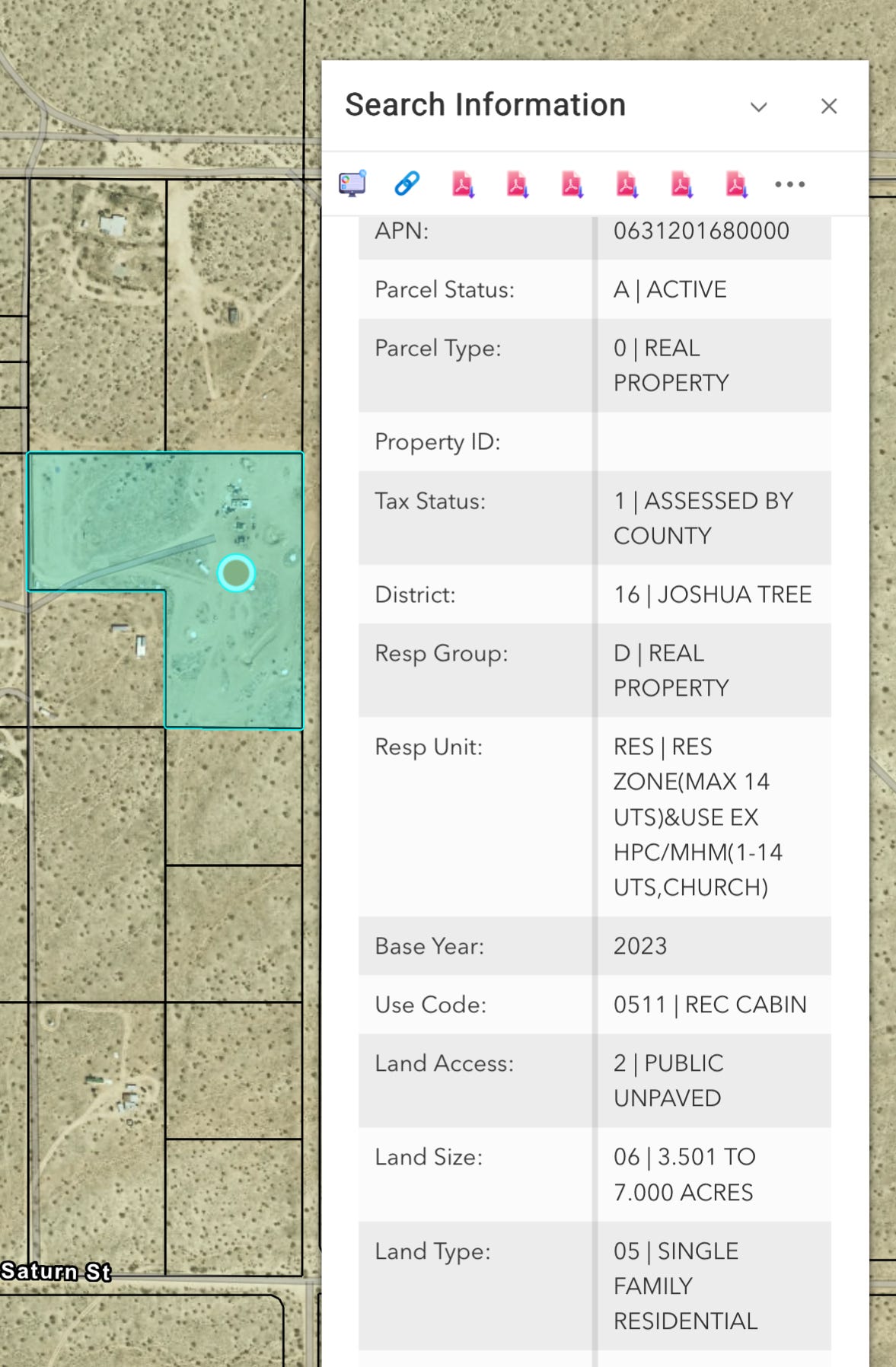
The one genuinely contested Basin land-use matter on Tuesday’s agenda is a discussion item with a professionally litigated appeal behind it. The Board will hold a public hearing on Appeal No. PAPL-2026-00003, challenging the Planning Commission’s April approval of the Mercury Dry Camp, a 12-site dry campground on a 7.5-acre parcel at 62076 Mercury Drive, listed both as the Homestead Valley area north of Joshua Tree or North Joshua Tree.6 The project is described as having no water or sewer with a 24 guests maximum. The applicants are David Lee and Joseph Milburn, through JT Prospecting, LLC, represented by the law firm Allen Matkins. The appellant is Wendy Wacker, who owns a home on the 160 acres immediately east of the site and is represented by the firm Fennemore. Land Use Services recommends the Board deny the appeal and uphold the approval.
The dispute turns on a single question: whether a commercial campground open to the paying public belongs on land zoned Rural Living and whether it can be run without anyone required to be on site. A campground is an allowed use in rural residential zoning with a Conditional Use Permit (CUP), and the County’s finding that the project is compatible rests substantially on the fact that it needs no rezoning.
In response to the appeal, Condition 62, the County’s key new requirement, allows “either a manager on site or an off-site manager within fifteen (15) miles or a 30-minute proximity,” plus cameras and audio monitoring each campsite. That is precisely the arrangement the appeal attacks: the appellant’s appraiser singled out “an operator who may be up to fifteen miles or thirty minutes away,” arguing cameras and audio “cannot detect or address noise, trespass, fire hazards... in real time.” Both sides, in other words, describe the same system; they disagree on whether it is adequate.
After filing a personal appeal in April, Wacker retained the law firm Fennemore and three experts. A third-party acoustician reviewed the County's noise study and found it inadequate under state environmental law: rather than measuring actual background noise at the site, it relied on a single reading taken about four miles away, so it never established how much the campground would raise noise above the desert quiet the neighbors currently have.
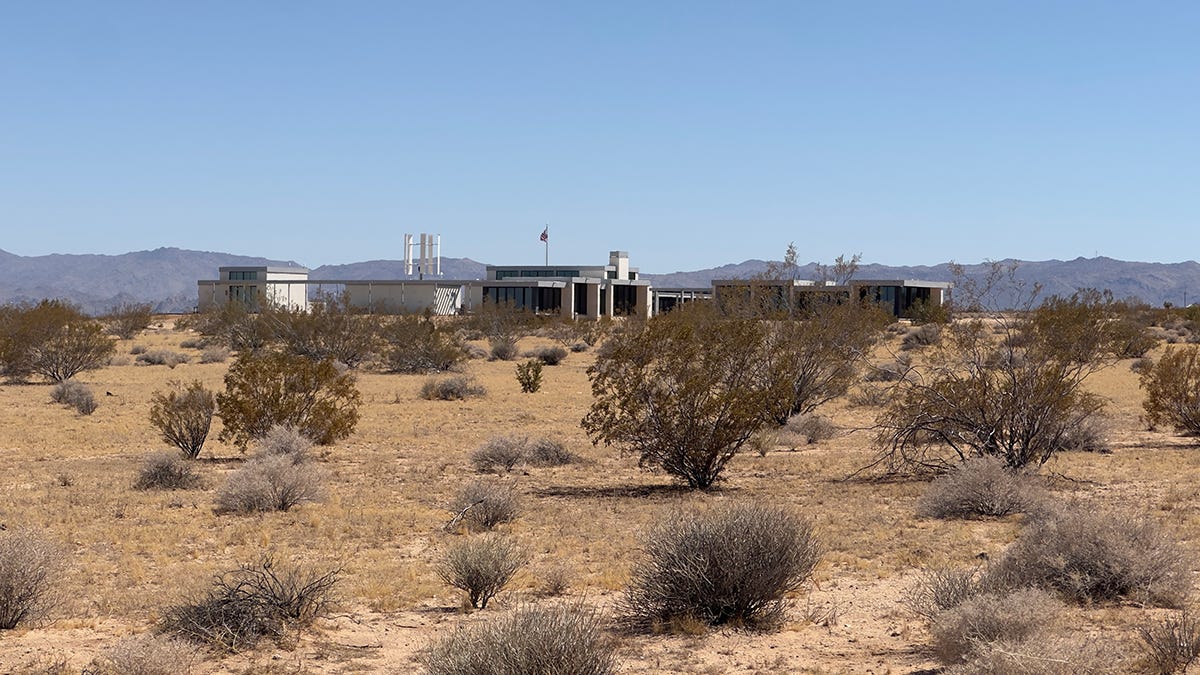
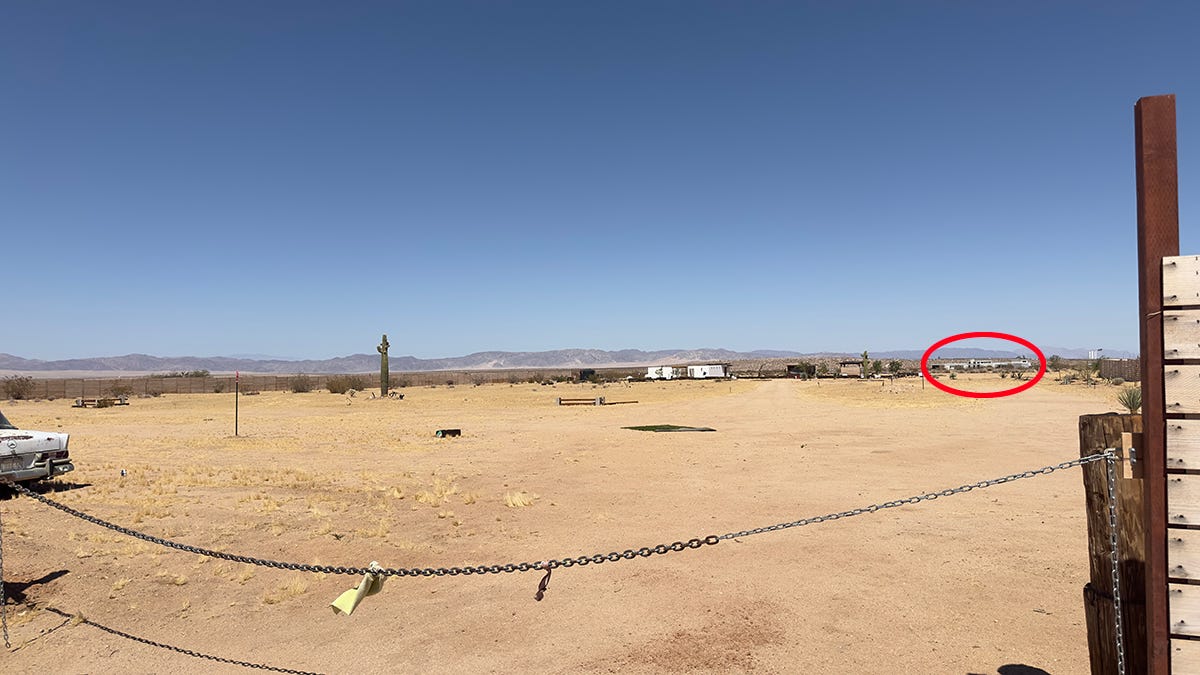
Additionally, two property-value experts hired by Wacker argue the campground shifts costs onto neighbors — a "one-directional transfer of value" — and warn that approving it invites similar projects across the area's rural-residential parcels. The appeal's core legal argument is that the facts do not support the findings the County's own code requires to approve the permit. Its experts also proposed that the County adopt specific permit conditions it ultimately did not — among them a restriction on vehicles entering or leaving the site during nighttime hours — and, if the Board won't deny the permit outright, its fallback request is that a full-time on-site manager be made mandatory.
The applicants' formal response, filed July 27, answers the appeal point by point. On the central noise question, they commissioned a new 24-hour survey on July 17–18, 2026, measuring the existing background noise at four spots around the site, which is the on-site measurement the appellant said was missing. To estimate the noise the campground itself would add, their consultant based projections on readings from two much larger campgrounds and calculated the levels at the nearest homes: roughly 30, 26, and 19 A-weighted decibels, below the County's 45-decibel nighttime limit.
That approach — borrowing levels from a 115-site and a 493-site campground to model a 12-site one — is standard practice, but it is also the crux of the appellant's acoustician's dispute: the projection rests on reference levels from other sites and distance math, not on measurement of this use at this location. The one monitoring location that did exceed County standards sat on the eastern side, toward the appellant’s land. The applicants attribute that reading to existing road noise rather than the project.
The applicants make several other points in response. They concede the staff report’s description of the site as “currently vacant” was “imprecise,” but argue the full record disclosed the existing structures and tents. They contend the County retains complete authority to inspect, modify, or revoke the permit at any time. And they offer to accept several added conditions:
a 24-hour neighbor contact line;
decibel-only noise monitoring, with no audio recording;
a neighbor-contact log; and
a commitment to respond locally within 30 minutes.
Further, the applicants ask the Board to preserve a separate CEQA “small structures” exemption as an alternative basis for approval, citing the County’s 2019 approval of the much larger AutoCamp Joshua Tree. That comparison has a weakness worth noting: AutoCamp abuts the downtown Joshua Tree commercial district, unlike the Mercury site, which sits in a residential area.
There is also a documented history the Board will weigh. The County’s own response to the appeal confirms that code enforcement cited the applicants for unpermitted construction and ordered work halted until the permit process was complete.
The California Department of Fish and Wildlife (CDFW), the only agency to comment during the environmental review, flagged the original biological study for failing to address two protected species — the desert kit fox and Crotch’s bumble bee — and the County added survey-and-avoidance measures before approving.
Whether camping ever occurred on the site is also disputed. The appellant calls the applicants’ claim that “absolutely” no camping had taken place “an utter falsehood.” The applicants, in turn, submitted a camping-rental platform’s records — declined booking requests and a $0 payout history — to argue the site was never commercially rented.
There is a dispute over noise, nuisance and other potential code violations on the property. Adjacent residents describe, in written comments, a pattern of gunfire prompting Sheriff calls, a brush fire, all-night music, and trespass during earlier informal camping, accounts the County says are not corroborated by any Sheriff or code-enforcement record in its file. The applicants attached the Sheriff’s premises history for the address, which lists alarm and burglary-related calls but no noise, party, firearms, or trespass calls. The staff report documents no Sheriff dispatch on those allegations.
This is the item for Basin residents to watch on August 4: a live, well-funded appeal, a Planning Commission approval the Board can uphold, modify, or overturn, and a question — whether an unstaffed commercial use fits a residential desert neighborhood — that a commissioner reportedly called “our test case.” The Morongo Basin Conservation Association, which has urged fuller environmental review on most Basin development, notes that this and several other recent Basin projects (Lovemore Ranch, the Cactus Club Hotel, and the Pipes Canyon subdivision) were approved on Mitigated Negative Declarations.
The support documents for this item can be reviewed here (and yes, there are 21 of them).
We’re kicking off our summer subscription drive! Help the Desert Trumpet reach 1600 subscribers by clicking the button below and receiving the Desert Trumpet in your inbox!
Item 91 — Landers Road District: The Last Zone Votes No, Too
This closes out the story we covered from the June 23 agenda, when four Landers-area road zones voted on maintenance-charge increases and three rejected them. The straggler was Zone R-15 (Landers proper), whose mailed-ballot election ran later. The result is now before the Board for certification — and it’s another no.
Zone R-15 property owners rejected the increase, with about 45 percent voting in favor — short of the majority needed to pass, and close to the margin by which Flamingo Heights turned down its own increase in June. The existing charge stays in place. That makes it a clean sweep of rejection across the Landers-area zones except Copper Mountain, which was the lone yes in June. As we noted then, zones that repeatedly reject increases may eventually face a harder question — whether the County keeps maintaining roads at a charge that hasn’t changed in decades or begins the process of dissolving the zones. This vote doesn’t trigger that on its own, but it adds Zone R-15 to the list of zones rejecting increases.
Basin-Specific Items
Item 97 — Fire Mutual Aid Renewal with the Marine Base (Twentynine Palms). The County Fire Protection District extends its automatic-and mutual-aid agreement with the Marine Corps Air Ground Combat Center in Twentynine Palms by three years, through June 30, 2029, for continued shared fire and rescue response. A routine but consequential renewal, given how much of the eastern Basin's fire response depends on this County–military relationship. Non-financial.
Broader Items with Basin Impact
Item 49 — Local Emergency Continued: December 2025 Adverse Weather. The Board continues the local emergency proclamation from the December 2025 storm event, first proclaimed December 25 and ratified December 29. A County-wide declaration, but the Basin’s flood-prone communities from Morongo Valley to Wonder Valley are among those exposed to the storm damage these proclamations address. Continuing the emergency keeps recovery and funding mechanisms open.
Item 95 — Fire Service Zone FP-5 Special Tax. The Fire Protection District sets the FP-5 parcel tax for 2026-27 at $187.79, a small increase over last year. FP-5 is the district’s broad service zone covering much of the unincorporated County, so this is a line item many Basin property owners will see on their tax bill. Some areas such as Morongo Valley are excluded because they have their own fire department.
Item 30 — Wraparound Mental Health Contracts. The County increases its wraparound mental-health contracts, including funding for Mountain Counseling & Training, a provider that serves Basin and high-desert youth. The staff report doesn’t break out service areas geographically, but Mountain Counseling’s footprint reaches Basin families.
Item 39 — Secure Rural Schools Funding. The Board acts to continue the County’s share of federal Secure Rural Schools funding, which is federal forest-revenue money that supports rural County services and roads, relevant to the Basin’s forest-adjacent and unincorporated communities, though not Basin-specific.
Item 83 — June Primary Election Results Certified. The Board accepts the certified results of the June 2, 2026, statewide primary and declares the winners for offices in its jurisdiction. County-wide, but the record of how Basin precincts voted lives in this certification.
Item 103 — Lobbyist Transparency Ordinance (Introduction). The Board introduces an ordinance adding lobbyist registration, transparency, and reporting rules to the County code, with final adoption expected later in the month. A County-wide governance measure with no specific Basin angle, but we are flagging it for readers who follow how the County regulates influence on its own decisions.
This preview was produced with AI assistance, consistent with our AI Policy, and reviewed by the San Bernardino County Board of Supervisors Resident Review Committee. We provide it as a starting point for your own review of the agenda and its supporting documents, not as a substitute. Corrections and feedback are welcome.
Hi, new subscribers! The Desert Trumpet understands you might not be interested in all of our coverage. That’s why it’s divided into separate newsletters allowing you to opt out of reporting that’s not important to you. For instance, you may want our Education news but not City Hall 29.
Here’s how to opt out: go to your Substack settings, scroll down to “subscriptions,” and select “Edit” for the Desert Trumpet. Simply uncheck the box next to the newsletters you don’t want to receive in your email inbox. You’ll still be able to access all coverage online if you change your mind.
Support the Desert Trumpet’s coverage of the San Bernardino County Board of Supervisors — become a paid subscriber!
The Desert Trumpet’s reporting will always be free. That said, did you know that paid subscribers receive discounts on our DT Social events and invites to DT Front Porch, intimate discussions featuring local officials and notable residents?
Upgrade to a $50+ paid subscription for a 10% discount.
Upgrade to $100+ for a 25% discount.
Sustaining subscribers at the $250+ level and above receive complimentary tickets
Leave your thoughts in the comments below. Please note that we do not allow anonymous comments. Please be sure your first and last name is on your profile prior to commenting. Anonymous comments will be deleted.
This coverage is free - please share!
“Beginning with the August 4, 2026 Board of Supervisors Meeting, members of the public can provide public comment remotely by telephone.” San Bernardino County Public Portal, “Information Regarding Public Participation,” publiccomment.sbcounty.gov. On SB 707’s two-platform remote-participation requirement: “San Bernardino County Board to look at remote meeting options for communities like Joshua Tree,” Z107.7 FM, May 4, 2026.
San Bernardino County Public Portal, “Information Regarding Public Participation,” publiccomment.sbcounty.gov (registration opens 8:30 a.m.; indicate in-person or virtual; phone number required if virtual; kiosk registration outside the Board Chambers).
San Bernardino BOS limits remote attendance in Joshua Tree for future meetings,” Z107.7 FM, August 15, 2024 (Bob Burke Joshua Tree Government Center no longer a standing site; remote video set up only when an agenda item is anticipated to draw significant local participation).
“County supervisors meeting linked in Joshua Tree,” Hi-Desert Star / Desert Trail, April 24, 2025 (the Joshua Tree Community Center, 6171 Sunburst Ave., has replaced the Bob Burke Joshua Tree Government Center as the County’s interactive video site).
“San Bernardino County Board to look at remote meeting options for communities like Joshua Tree,” Z107.7 FM, May 4, 2026 (”remote attendance opportunities for local residents have been inconsistently available and in the last year, provided only on a case-by-case basis”).
A note on where this is: County records give the mailing address as “Joshua Tree,” but the County’s own staff report places the site in Homestead Valley, which it defines as the communities of Landers, Flamingo Heights, Johnson Valley, and Yucca Mesa — not the town of Joshua Tree. The applicants’ own attorneys describe the location as the “Homestead Valley area”; the project’s public brochure markets it as Joshua Tree, as sometimes occurs within the Basin regardless of actual location. The Reset hotel in Twentynine Palms also markets itself as being in Joshua Tree.