
OPINION: Twentynine Palms Should Replace Its Outdated Solar Ban
Every assumption behind the City's utility-scale solar prohibition such as cost, storage, and state law has changed. The ordinance hasn't.

To the Editors of the Desert Trumpet,
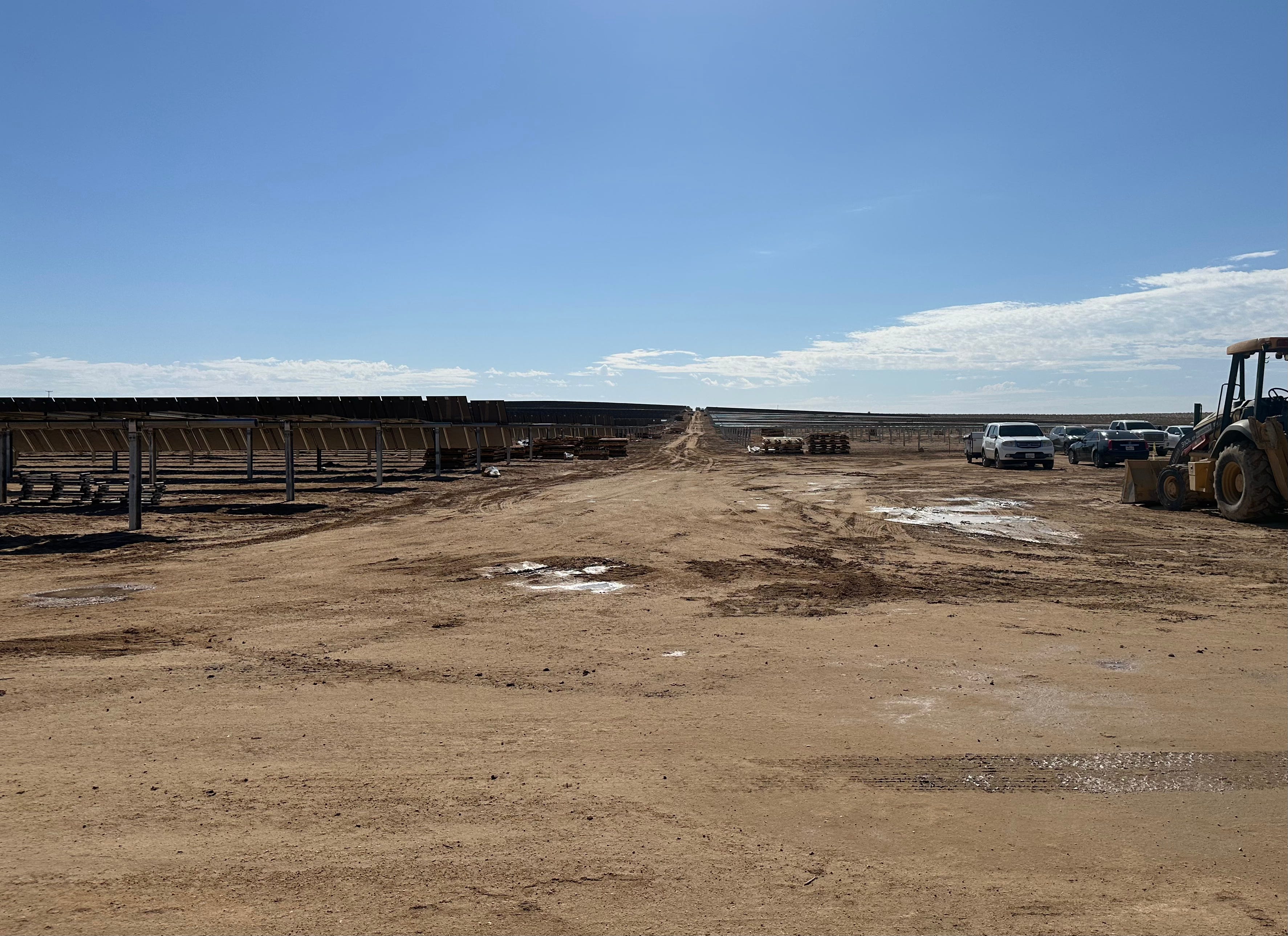
Beneath every solar controversy in the Basin — the County’s approval of the 2025 Lear solar project, now under construction beside a solar farm built off Lear Avenue in 2012, the City’s rejection a few months ago of the Geneva1 solar proposal; the arguments over spheres of influence and staff findings — sits a single piece of law that almost never gets examined directly: the City of Twentynine Palms’ 2012 ban on utility-scale solar. It is the operative instrument in all of these fights. It is one of the factors that the City applied last March to reject the Geneva solar proposal and what critics of the 2025 Lear solar approval say the County should have imported through a consistency finding.
Fourteen years on, the city’s solar ban deserves a hearing of its own. Spoiler alert: It cannot survive one.
The World the Ban Was Written For Is Gone
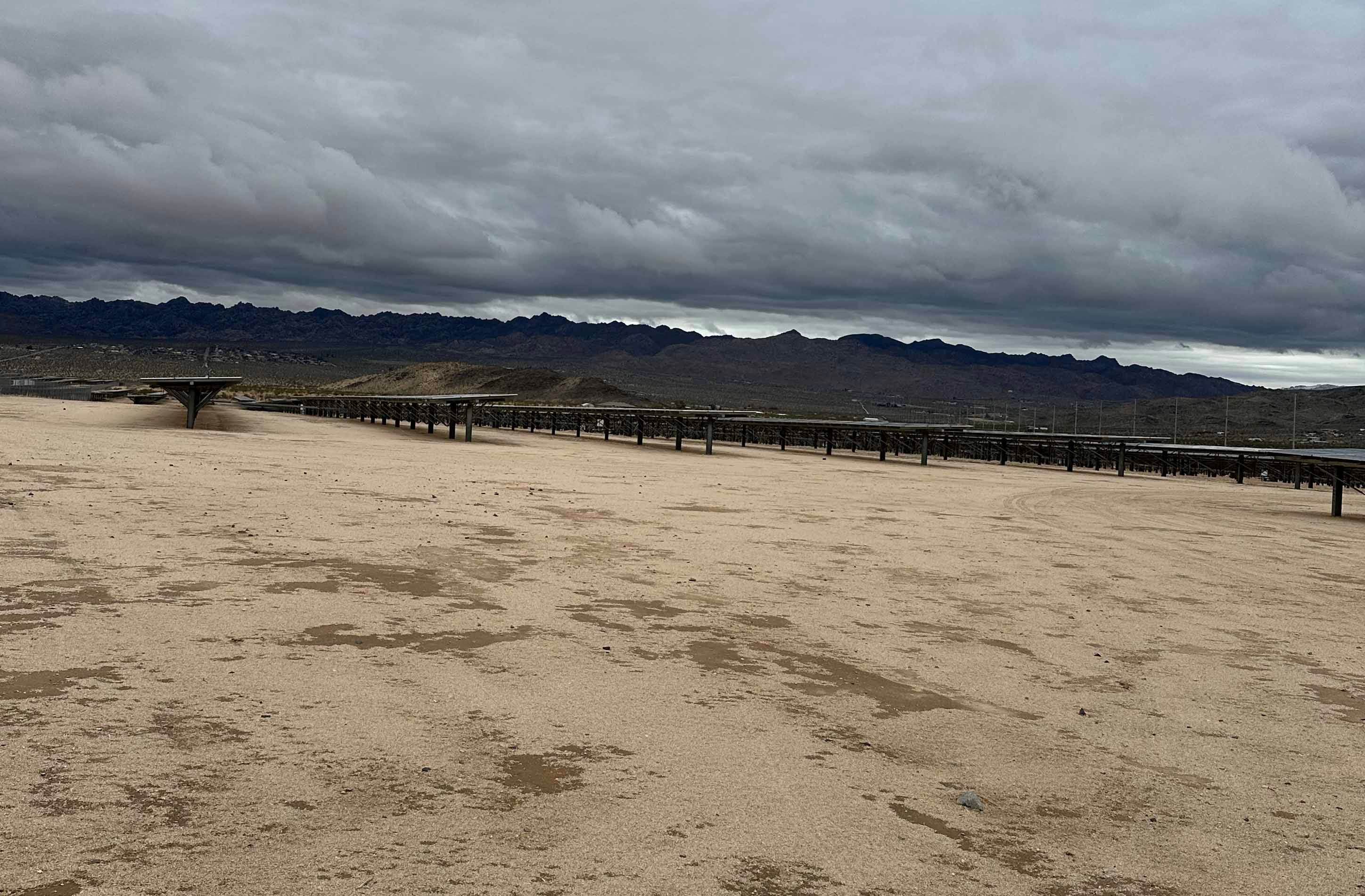
Twentynine’s 2012 solar ban was a reaction to that first generation of local arrays, which were the 2012 Highlander project and the 2012 Lear farm: bare, daytime-only panels, built when utility solar was genuinely expensive and grid batteries barely existed. As a land-use judgment about that technology at that moment, it was at least defensible. But every premise underneath it has since collapsed. Utility solar’s cost has fallen roughly 80 percent, making it the cheapest new-build electricity in the country. Storage has gone from laboratory curiosity to commonplace, and storage answers the single best objection to solar in 2012, that it generates only when the sun is up. A solar-plus-battery project can serve the evening peak. The thing the ordinance prohibits no longer exists in the form it was written to stop.
The law changed as much as the technology. California’s 100-percent-clean mandate, its interim targets,2 and its new state permitting pathway were all enacted after 2012. The Energy Commission’s own modeling says meeting those targets demands building at record-setting rates, and that modeling already assumes aggressive rooftop deployment on top of utility-scale construction. “Put it on rooftops instead” is not an alternative plan; the state’s math requires both, rooftop power costs considerably more per kilowatt-hour, and fourteen years of rooftop-first rhetoric in the Morongo Basin has yet to produce a rooftop program. A preference that only ever functions as opposition is opposition.
A Blanket Ban Can’t Tell Good Projects from Bad Ones
A categorical prohibition is a defensible shortcut when nearly everything in the category is a bad deal for your community, which was arguably true here in 2012. But the shortcut breaks when the technology improves and differentiates, because a ban cannot distinguish a 9.9-megawatt array paired with storage beside an existing substation from a thousand-acre sprawl across intact desert. It treats them identically because it predates the difference.
Notice that the strongest objection to desert solar cuts the same way. Fragile soils, tortoise habitat, and ground disturbance that never heals are real; in fact, these genuine concerns are among the best arguments for replacing the ban with siting standards. Distinguishing a degraded parcel next to existing infrastructure from intact creosote scrub requires a rule that can make distinctions a blanket ban cannot. It protects pristine habitat exactly as much as it protects a disturbed lot beside a substation, which is to say it exercises no ecological judgment at all.
The 2025 Lear project, just outside the city limits, is close to the textbook good site: small, sited beside the 2012 Lear arrays that have run for over a decade, permitted as community-oriented generation meant to serve local load, paired with the batteries the grid actually needs as gas plants retire. It is the near-load, modest-footprint project that critics of remote desert mega-solar claim to prefer, and would have had to clear the ban just the same if it were located in Twentynine Palms. The honest 2026 policy is not “ban everything” or “approve everything.” It is siting standards that say yes to good cases and no to bad ones. The ordinance forecloses that judgment by fiat.
We’re kicking off our summer subscription drive! Help the Desert Trumpet reach 1600 subscribers by clicking the button below and receiving Desert Trumpet in your inbox !
Replace It, or Sacramento Decides Without You
Here is the structural fact that should concentrate minds at City Hall. Since 2022, state law has let developers of projects of 50 megawatts of solar or more, or 200 megawatt-hours of storage,3 bypass local permitting entirely and seek certification from the California Energy Commission, whose approval overrides local zoning. In 2025 the Legislature widened that path further. The developer behind the 2026 Geneva rejection has publicly committed to seeking state certification, and the Energy Commission has already asserted its jurisdiction in writing.4
Which means the ban no longer does what its defenders think it does. It cannot stop the large projects, which route around it through Sacramento. It reliably stops only the small, local kind. The 2025 Lear project shows how. The parcel sits inside the City’s sphere of influence, and the County’s own rules required two things before approval: check the project against the City’s zoning, including the ban, and notify the City. The County did neither.5 Whether the City would have said yes or no, it was never asked. An identical proposal a mile east, inside city limits, would have faced the ban directly.
Worse, the ban actively manufactures the big projects its supporters fear most: a developer facing a guaranteed local “no” has every incentive to size up past the state threshold and file in Sacramento rather than size down into local compatibility. The 2026 Geneva case is the live test. The ban did not end that project. It moved the decision from a Council chamber, where the City writes the conditions, to a Sacramento docket, where the City files comments. The City keeps a role there — but a role is not a permit, and the required community-benefits agreement can be signed with a union, tribe, or nonprofit of the developer’s choosing. The City need not be at the table at all.
Some will answer that even state-certified projects must deliver local benefits, and that is true as far as it goes: the Energy Commission must find a net economic benefit to the jurisdiction that lost permitting authority. But a developer who opted into state review specifically to get around City Hall is not going to invite City Hall to the negotiation. Under that pathway, benefits still flow to the community, with the state verifying that the package meets the statutory minimum. But which organizations sit at the table, and what the package contains, is settled in a negotiation the City may not be invited to join. A city with its own permitting process negotiates for itself. A city with a ban inherits someone else’s bargain. And a community that distrusts its council gains nothing from that trade; it just swaps an elected chooser for an unelected one.6
A city with clear, objective siting standards such as setbacks, screening, decommissioning bonds and corridor protections negotiates for itself and sets enforceable conditions. A city whose only word is “no” watches those decisions made by developers who increasingly do not need its permission. The choice in front of Twentynine Palms is not solar or no solar. It is whether the City shapes the buildout or watches it.
The Ask
The remedy is not a free-for-all. It is repeal-and-replace: retire the 2012 prohibition and adopt a modern siting ordinance in its place, so that the next solar project, like the 2025 Lear project, gets measured against clear standards and the next bad project gets a “no” that actually sticks. Nor is revisiting the ordinance any affront to the people who enacted it. A decision that cannot survive re-examination on current facts was never a settled consensus; it was a snapshot, taken of a world that no longer exists.
A “no” here doesn’t make the need vanish. It exports the project to worse ground, or to a gas turbine, and sends the bill to ratepayers across Southern California. The Council should put the 2012 ordinance on an agenda, in daylight, and ask whether anyone can still defend it on 2026 facts. The argument should be about the law that actually governs these decisions, not the procedural skirmishes it keeps generating downstream.
Respectfully,
Jonathan Hume
Desert Heights, San Bernardino County
Jonathan Hume is a Board member of Morongo Basin Projects, the 501c3 nonprofit which publishes The Desert Trumpet.
Hi, new subscribers! The Desert Trumpet understands you might not be interested in all of our coverage. That’s why it’s divided into separate newsletters allowing you to opt out of reporting that’s not important to you. For instance, you may want our County news but not City Hall 29.
Here’s how to opt out: go to your Substack settings, scroll down to “subscriptions,” and select “Edit” for the Desert Trumpet. Simply uncheck the box next to the newsletters you don’t want to receive in your email inbox. You’ll still be able to access all coverage online or read them later if you change your mind.
Become a paid subscriber!
Subscribing to the Desert Trumpet will always be free. That said, did you know that paid subscribers receive discounts on our DT Social events and invites to DT Front Porch, intimate discussions featuring local officials and notable residents?
Upgrade to a $50+ paid subscription for a 10% discount.
Upgrade to $100+ for a 25% discount.
Sustaining subscribers at the $250+ level and above receive complimentary tickets
Share your thoughts in the comments below. Please note that we do not allow anonymous comments. Please be sure your first and last name is on your profile prior to commenting. Anonymous comments will be deleted.
Share this post—it’s free!
Also known as the E-Group PS or Harmony Acres solar project. The Desert Trumpet covered the March 23, 2026 City Council meeting in which this decision was made here.
SB 100 (2018) set the requirement of 100 percent clean electricity by 2045; SB 1020 (2022) added interim targets of 90 percent by 2035 and 95 percent by 2040.
The currently proposed Healthy Planet storage project in Twentynine Palms is rated at 100 megawatts of power output; the state-certification threshold is measured in energy capacity, at 200 megawatt-hours. The project’s pre-application does not state an energy figure, but grid-scale batteries are built to discharge for multiple hours — two to four is standard — so a 100-megawatt facility would meet or exceed the 200 megawatt-hour threshold at any duration of two hours or more.
E-Group’s representative confirmed publicly that the company intends to petition for state review. In a letter dated March 27, 2026, from CEC attorney Jared Babula to E-Group’s counsel at K&L Gates, the Commission asserted that it “has the exclusive power to certify the site and related facilities” and that a CEC certificate is issued “in lieu of any local permit.” The letter was reported by Z107.7 on April 10, 2026. As of this writing, no formal opt-in application has been docketed, and the question of state jurisdiction over the 50-megawatt project remains unsettled.
The County’s approval rested on a finding that the site lies in no city’s sphere of influence, placing the city five miles away, though the same staff report’s cover page names Twentynine Palms as the sphere city and its location narrative puts the parcel three-quarters of a mile from the city limits. The Desert Trumpet reported the resulting notice failure, which extended to the water district as well.
An early version of AB 205 (2022) would have required the community benefits agreement to be signed with local government. That requirement was deliberately amended so that agreements with community-based organizations — labor unions, tribes, nonprofits — suffice, precisely so that a jurisdiction opposed to a project could not use the agreement as a veto.
How can you promote such a wasteful business as solar? How long do those panels last? What is done with them when their useful life is over?
How can you promote construction on fragile desert sand when it doesn’t last and ruins the environment?
I guess some people hate the vast open space and have to fill it up with what is going to be garbage in 20-30 years.
I guess some people don’t believe in a world that exists beyond their lifetime.
Some would love to tear into our relatively inexpensive desert land for their out of the country projects.
I would like to think that we value our special place in the world and would like to protect what little we can.
That’s why we had the solar ban!