
Public Comment Period Open for E-Group PS Solar Project in Twentynine Palms
Written public comments on the Draft Environmental Impact Report end on January 22, 2026.

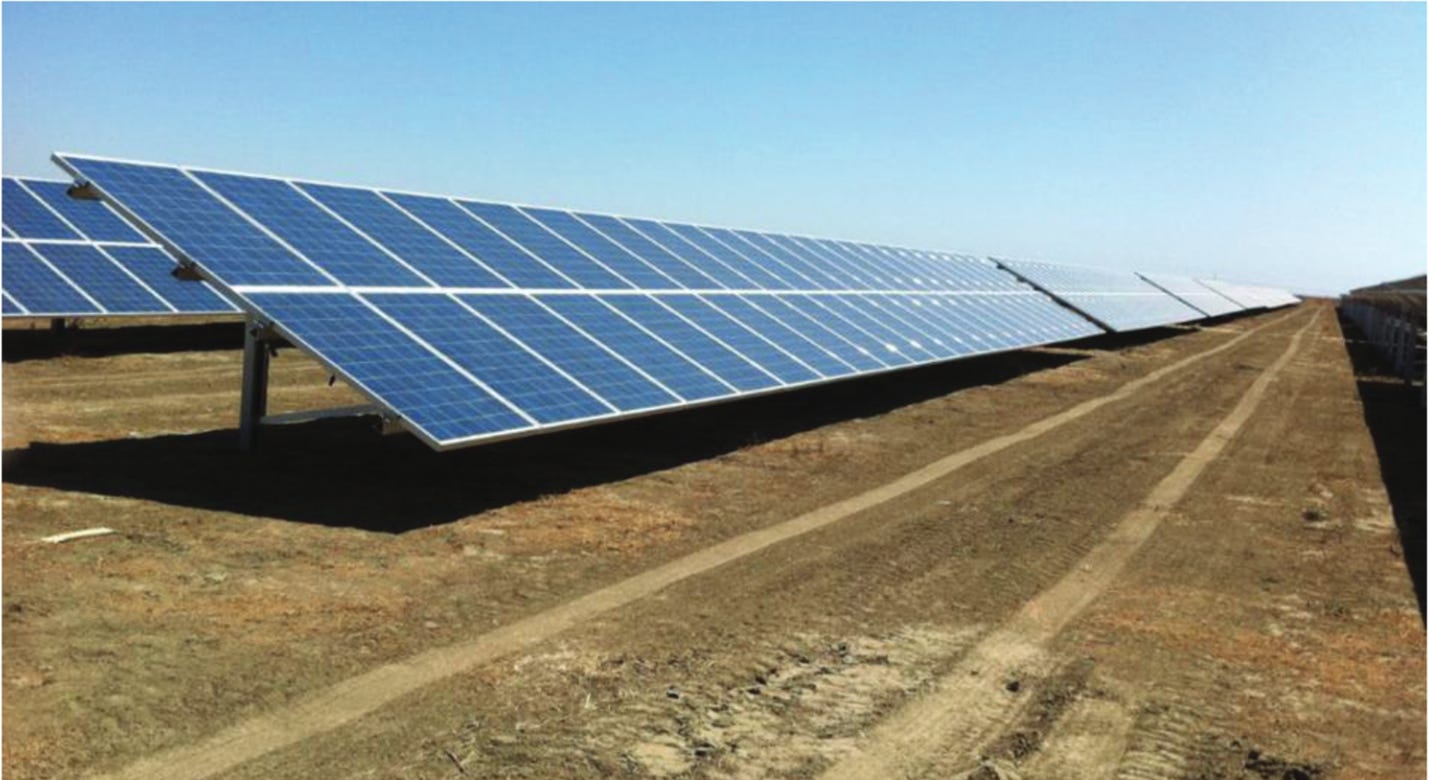
On December 9, 2025, a draft of the Environmental Impact Report for the E-Group PS Solar Project was released. The report, which was prepared by Terra Nova Planning & Research, can be accessed via the City of Twentynine Palm’s website. The 45-day public review period is open until January 22, 2026. During that time, both individuals and public agencies are able to submit written comments on the draft to Community Development Director Keith Gardner at Twentynine Palms City Hall at kgardner@29palms.org or the City of Twentynine Palms, 6136 Adobe Road, Twentynine Palms, CA 92277.
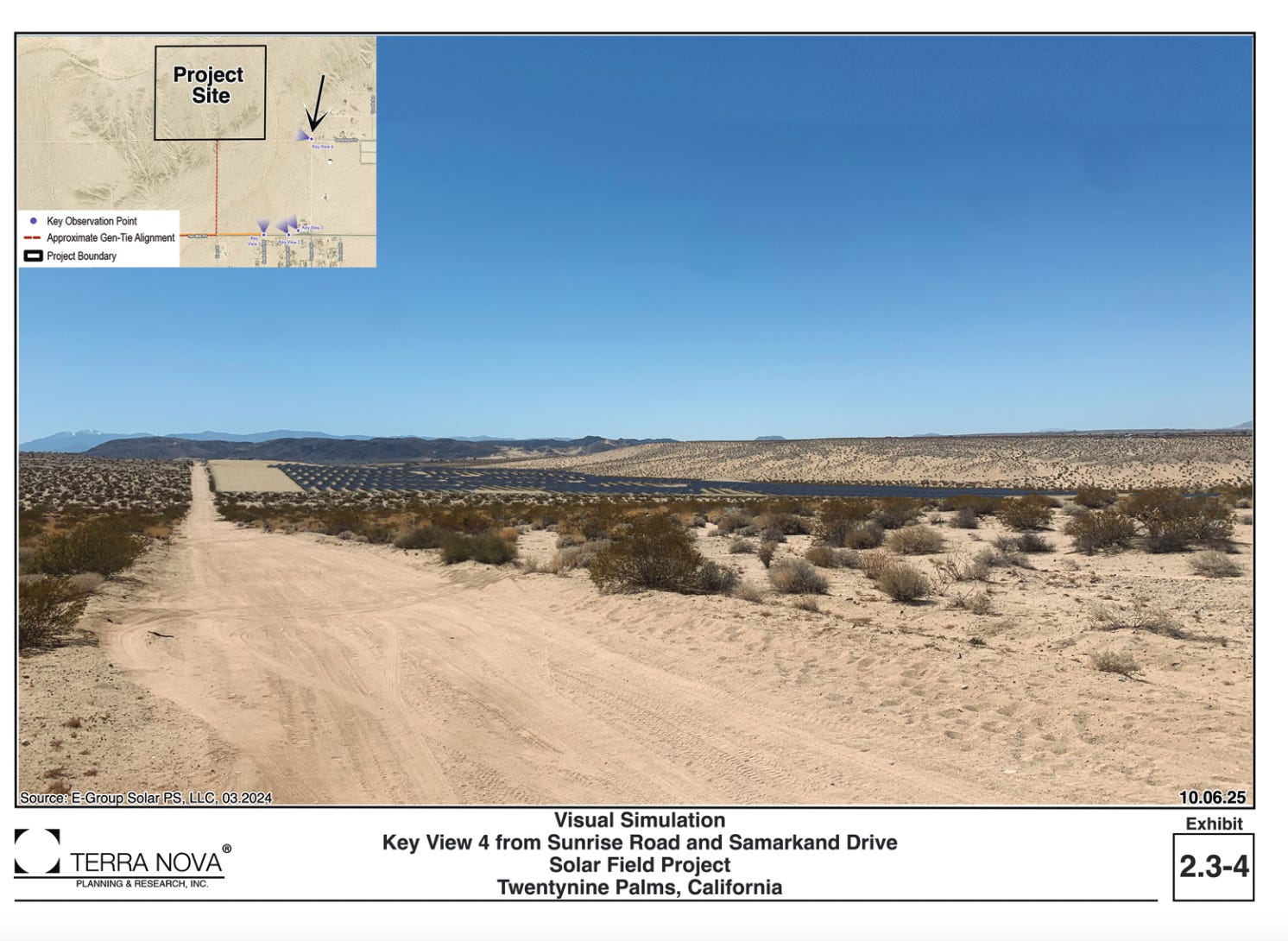
The proposed solar project is on a parcel of about 477 acres, north of Two-Mile Road near the Sugar Bowl and west of the Harmony Acres neighborhood. As previously reported by the Desert Trumpet, the City, with Terra Nova, conducted an initial study that determined the solar project could have significant environmental impacts. The solar project would be developed on 241 acres, including grading about 184 of those acres to accommodate a 50 megawatt commercial solar generation facility, including 160,000 photovoltaic solar panels mounted on 720 ground-mounted, fixed-tilt solar panel racks. Each rack is 104 feet wide and 252 feet long and would be separated by 10 foot wide service drives.
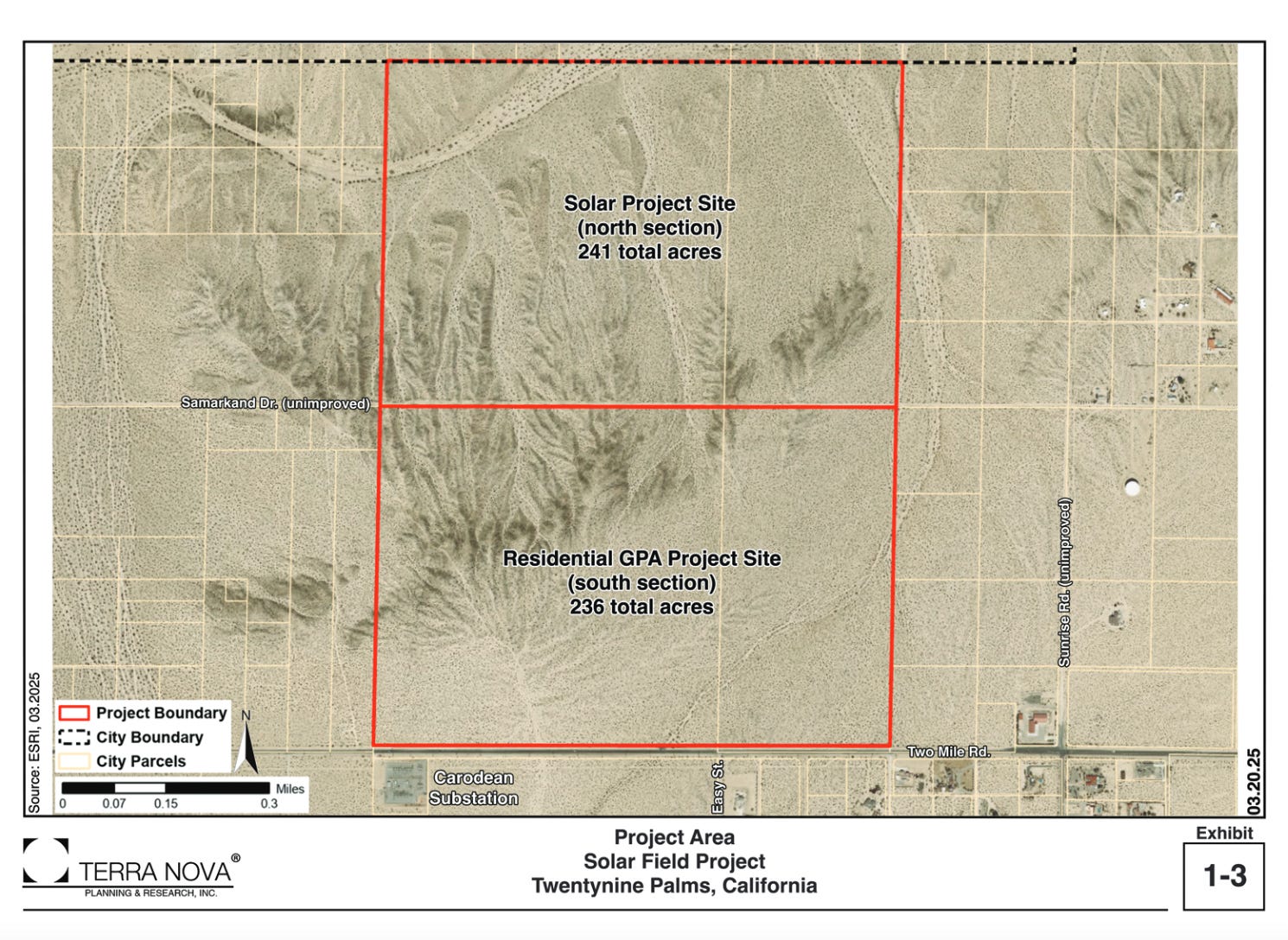
The PS Solar Project also includes a residential portion, as it will remove 241 acres of residential land and the elimination 48 potential housing units. SB 330, the Housing Crisis Act of 2019, prohibits cities from enacting changes that would reduce their quantity of potential new housing. To offset this loss, the developer is proposing a General Use Plan amendment and rezone of the south 236 acres of the parcel from the currently allowed 71 housing units to a maximum of 119 housing units. No residential development is being proposed as part of this project.
Currently, the City’s Development Code does not allow for commercial solar farms (19.18.030 Allowed Uses and Permit Requirements). It banned utility-scale solar facilities in 2012, shortly after the Highlander 1 Solar Field on Lear became operational.

Going into the 2026 elections, Desert Trumpet has sustained a potential 50% cut in funding. Help us provide the coverage you’ve come to expect by becoming a paid subscriber or upgrading your paid subscription today!
The parcels proposed for the 29Palms Project are zoned Single Family Residential RL5. In addition to overriding the City’s moratorium, E-Group will be seeking a development code amendment, general plan amendment, and zone change to permit the project on the site.
The project was first presented at a City Council meeting in May 2023. In an analysis published last year, the Desert Trumpet looked into the land owners, stake holders, and benefits and drawbacks of the proposed solar project, including looking to see who stands to gain the most if this project moves forward.
The draft report identifies the following areas of controversy based on written comments received during the Notice of Preparation (NOP) public review period and the scoping meeting in 2024:
Aesthetics and Glare
Air Quality/Dust Control
Biological Resources
Hydrology
Land Use Compatibility
The Notice of Availability states that,
The potential impacts of the Project were determined to be less than significant for the following topics: air quality, energy, geology, greenhouse gas emissions, land use and planning, noise, population and housing, public services, recreation, transportation and utilities. The potential impacts of the Project were determined to be less than significant with mitigation measures identified in the Draft EIR for the following topics: biological resources, cultural resources, hazards and hazardous materials, hydrology and water quality, and Tribal cultural resources. The potential impacts of the Project were determined to be significant and unavoidable for aesthetics.
To mitigate these measures, the report proposes the following:
Aesthetics: Install native plants along the east and south sides of the perimeter fence to shield the site from residential viewers before the completion of construction and on the site within 60 days of the completion of construction or as early as possible as determined by the City and a qualified biologist.
Air quality and dust control: The plan states that no mitigation is required, however under “biological resources,” the developer states they will follow standard dust control measures, included limiting speeds to 15 mph on unpaved roads, replacing ground cover in disturbed areas, frequently watering active work sites, the installation of shaker plates, and suspending excavation and grading operations during periods of high winds.
Biological resources: The developer states that they will conduct biological monitoring, worker environmental awareness training, clear delineation of property boundaries and any environmental resources that will be avoided during construction, submitting a storm water prevention plan to the City, and covering open trenches and holes that may trap wildlife. The draft report contains detailed plans to minimize, monitor, and mitigate the impacts on desert tortoises and their habitat, and sensitive plants, including western Joshua trees.
Hazardous materials: A Hazardous Material Management Plan will be prepared and submitted to the City specifying the method for handling and disposing of hazardous material related to the construction process. In addition, a test to determine the leaching potential of solar panels will be conducted before they are recycled or disposed of.
Hydrology: Prepare a Spill Prevention, Control, and Countermeasure Plan (SPCCP) that clearly states how to stop, contain, and clean up from a spill of hazardous materials, as well as training workers to prevent and control spills.
The draft EIR also includes a section about cultural and Tribal resources. The developer states they will conduct an analysis of historical and archaeological cultural resources, create a Cultural Monitoring and Discovery Plan prior to development and require that archaeological and tribal monitors be present during all ground disturbing activities.
The 540-page draft Environmental Impact Review report is available for public review, and comments are open until January 22. Additional past reporting on the solar project is also gathered here. The Desert Trumpet will provide additional reporting and analysis as this story continues to develop.
Leave your thoughts in the comments below. Please note that we do not allow anonymous comments. Please be sure your first and last name is on your profile prior to commenting. Anonymous comments will be deleted.
Feel free to share this article!
Help us reach our 2025 goal of $10,000 in subscriptions! Upgrade to a paid subscription for just $5 per month or $50 per year.
We are facing a potential $30,000 loss in funding for 2026. Would you care to donate more than $100? Our Paypal account is up and running!
One thing that is always omitted from these project proposals is the off site construction that is even more of an eyesore than the solar field itself. Will yet another massive substation be built along Hwy 62? Will the current one be expanded? How many more miles of transmission lines will be constructed through residential neighborhoods to get the electricity down the hill?
Not so fun fact, none of that energy will be distributed up here. In Germany, people who live in communities near solar fields receive free electricity to help compensate them for the inconvenience of living near them. We, on the other hand, must put up and shut up.
From the article: "Currently, the City’s Development Code does not allow for commercial solar farms (19.18.030 Allowed Uses and Permit Requirements). It banned utility-scale solar facilities in 2012, shortly after the Highlander 1 Solar Field on Lear became operational."
Given the above, what allows this project to move forward?