
RECAP: Morongo Unified School District Board of Education Meeting, April 21, 2026
In heartfelt and deeply researched public comments, parents and community members speak out against and dispute the necessity of potential elementary school closings.

The Board of Education of the Morongo Unified School District (MUSD) held their monthly meeting at Joshua Tree Elementary School on Tuesday, April 21. During the meeting the board received updates on school activities, listened to program updates and awards presentations, and heard public comment. Seven of the eight commentators expressed concerns about a potential plan to close and consolidate up to three elementary schools in the Morongo Basin, citing projected decreasing enrollment numbers.
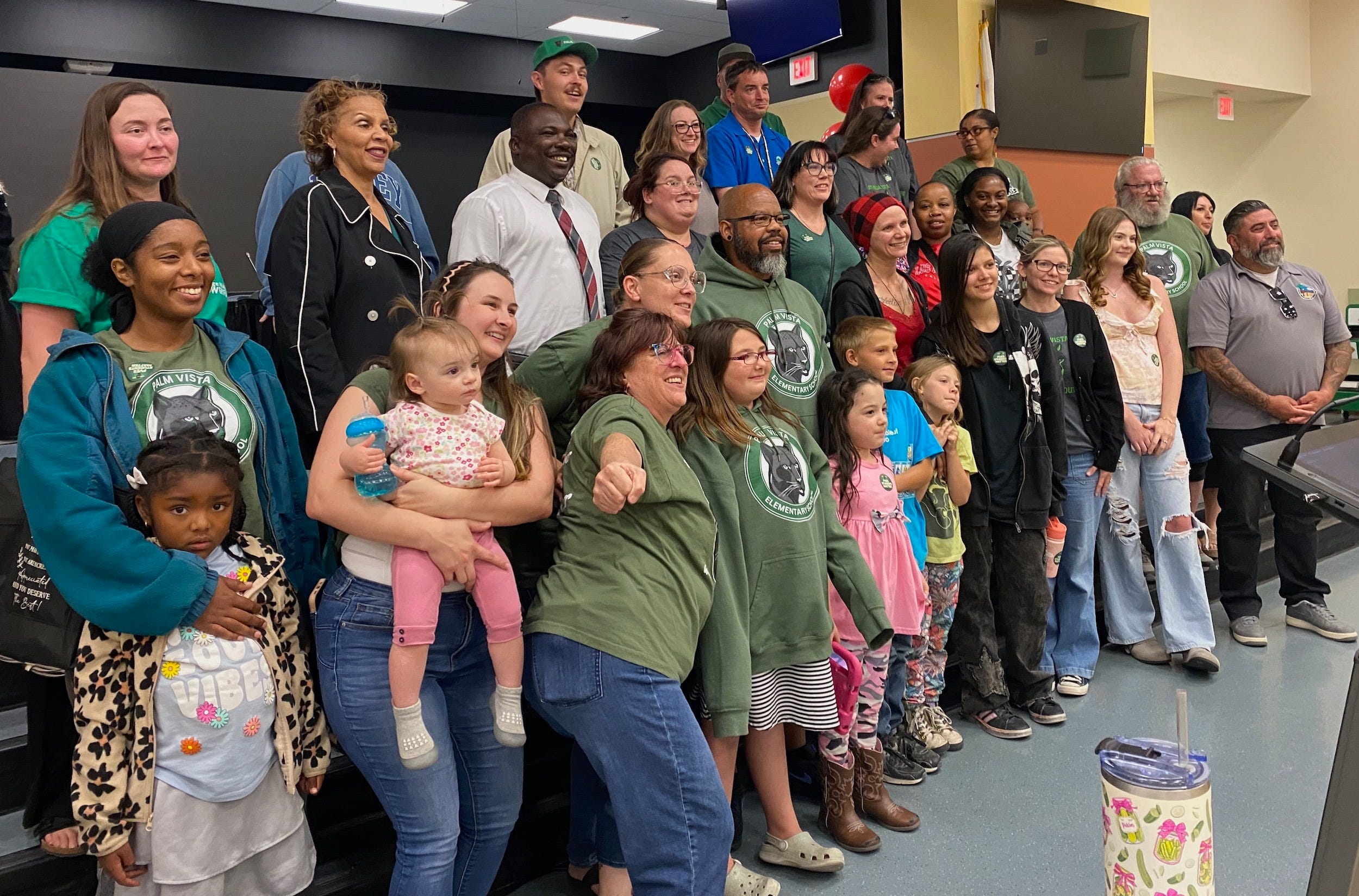
The potential school closures have rallied parents, educators, and other public education advocates throughout the district. The board meeting was well attended, especially by families and teachers from Palm Vista Elementary in Twentynine Palms, one of the schools potentially slated for closure.
The volunteer MUSD Board of Education consists of five members, President Christopher Claire, Board Clerk Roberta Meyers, and members Pete Wood, Bianca Stoker, and Missy Bond. The district is guide by a six-member executive cabinet, Dr. Patricio Vargas, Superintendent; Amy Woods, Assistant Superintendent of Secondary Education; Dr. Gracie Gutierrez, Assistant Superintendent of Elementary Education; David Daniels, Assistant Superintendent Business; Stacy Smalling, Assistant Superintendent Human Resources; and Heidi Burgett, Director of Special Education.
Awards and updates focus on excellence and new opportunities
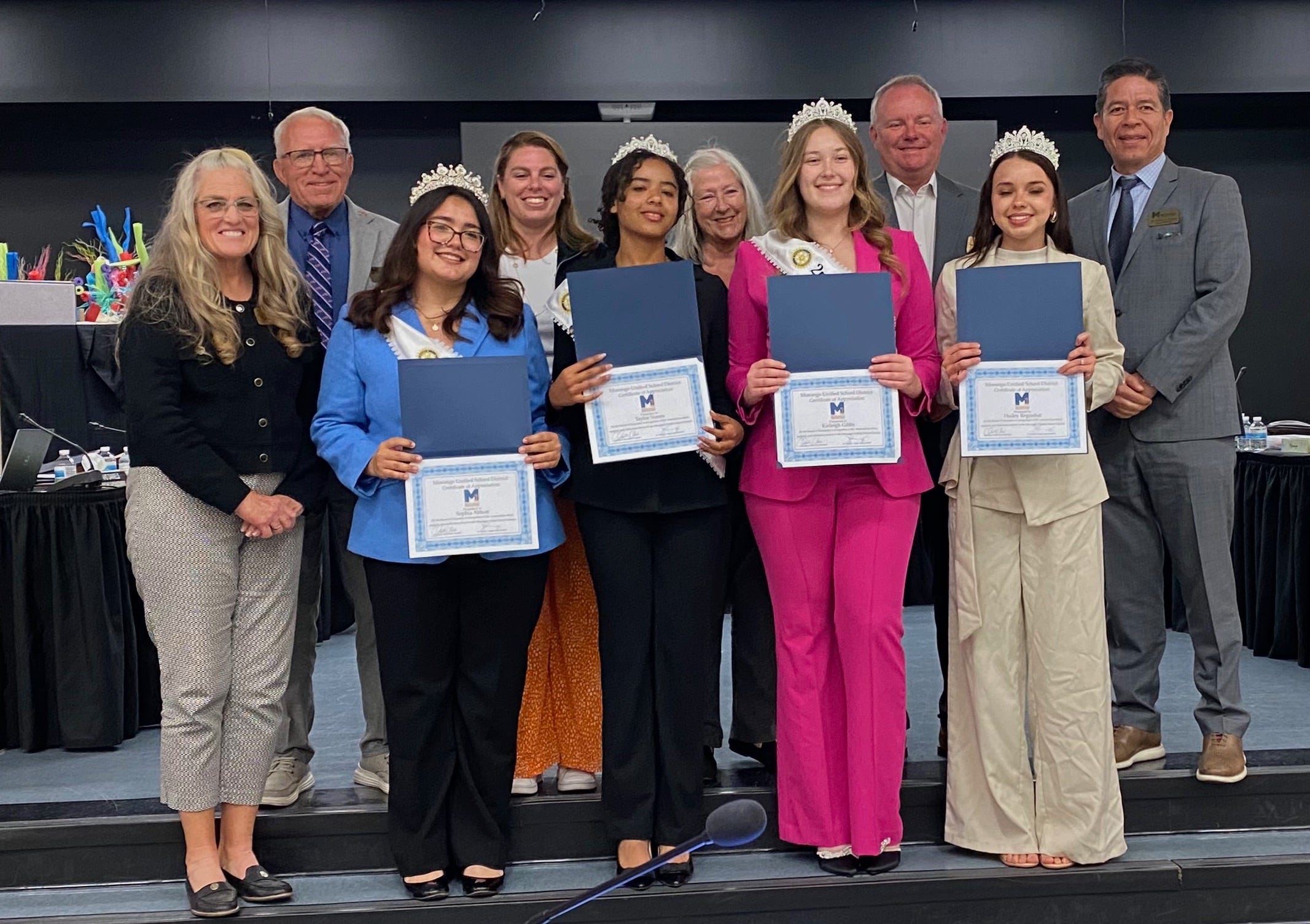
The public meeting opened with the Pledge of Allegiance led by the 2026 student court from Yucca Valley High School who participate in local events throughout the year. Assistant Superintendent of Secondary Education Amy Woods gave a presentation about the Exemplary Dual Enrollment Award, which was granted to both Twentynine Palms and Yucca Valley High Schools. Dual enrollment enables students to take community college classes and simultaneously earn high school and college credits. A particular point of pride, according to Woods, is that out of 31 schools in the state that received the excellence award, only 17 were public high schools. “Dual enrollment is not just an academic pathway,” asserted Woods, “It declares to a student that we see you as college bound, even if no one ever said that before.”
Following Woods, the board heard updates from students at Black Rock and Yucca Valley High Schools, who reported on upcoming proms, fundraising, and graduation activities. According to Julius Fickland, the representative from Black Rock High School, 29 students have already graduated from Black Rock, a continuation high school, which drew applause from the audience.
Board Member Bianca Stoker provided a legislative update and highlighted a trip to Washington, D.C. she and Board President Christopher Claire took to advocate for increased school funding with other school boards and meet with Representative Jay Obernolte. President Claire noted that Obernolte “perked up” at the mention of AI and how to fund the incorporation of AI into the classroom and see that it “isn’t a threat” to students and learning. As an engineer and video game developer with a graduate degree in artificial intelligence, Obernolte has a strong interest in technology and has introduced several bills to supporting robotics and AI development.
Assistant Superintendent Woods discussed Yucca Valley High School’s designation as a Cisco academy. Cisco will provide equipment and curriculum for training and industry-recognized certification in skills like networking and cyber security, which will help students prepare for real world jobs in technology. The program is being tested at Yucca Valley High School before being expanded to Twentynine Palms High School.
Stacy Smalling, Assistant Superintendent Human Resources, provided an update on the Teach Morongo program, which recruits, trains and supports new teachers in the Morongo Basin. The Teach Morongo program recently received $900,000 from the San Bernardino County Superintendents of Schools to support mentoring and coaching for new teachers.
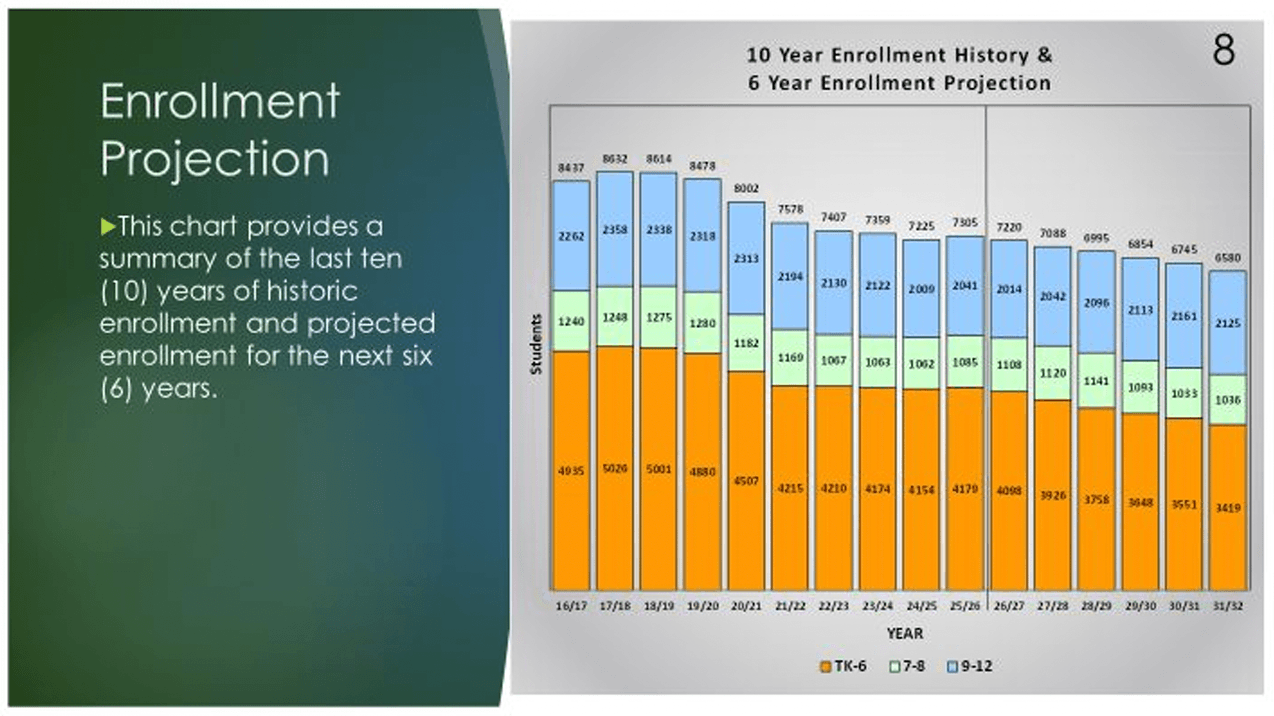
Karla Buchanan, principal of Onaga Elementary School and Vice Chair of the MUSD enrollment committee, provided a brief update on the committee’s activities and their most recent April 9 meeting. She summarized the committee’s activities and purpose for the board,
The committee has been tasked with evaluating the district’s current enrollment trends, particularly at the elementary level, in order to develop recommendations for the board related to declining enrollment, budget impacts, and potential use of any surplus or underutilized properties. As part of this work, the committee conducted site visits to review site conditions and capacity, and held several public meetings where we received financial and enrollment projection data and had opportunities to request additional information to support informed decision making.
She reported that “the committee developed a set of priority criteria to help evaluate sites and guide future recommendations” to address declining enrollment. At their upcoming meeting on April 29 members will review their individual analyses and work toward a consensus on recommended actions. In response, President Claire requested that the committee present the options they would like the board to consider at the June 9 board meeting.
Parents and stakeholders express concern around potential elementary school closing
The public comment period focused on the issue of potential school closures, with seven of the eight public comments bringing up the topic. This January the MUSD formed an enrollment committee and engaged consultants from SchoolWorks, Inc. to address declining enrollment in the district. Their recommendation could result in school closures as a potential cost-saving measure.
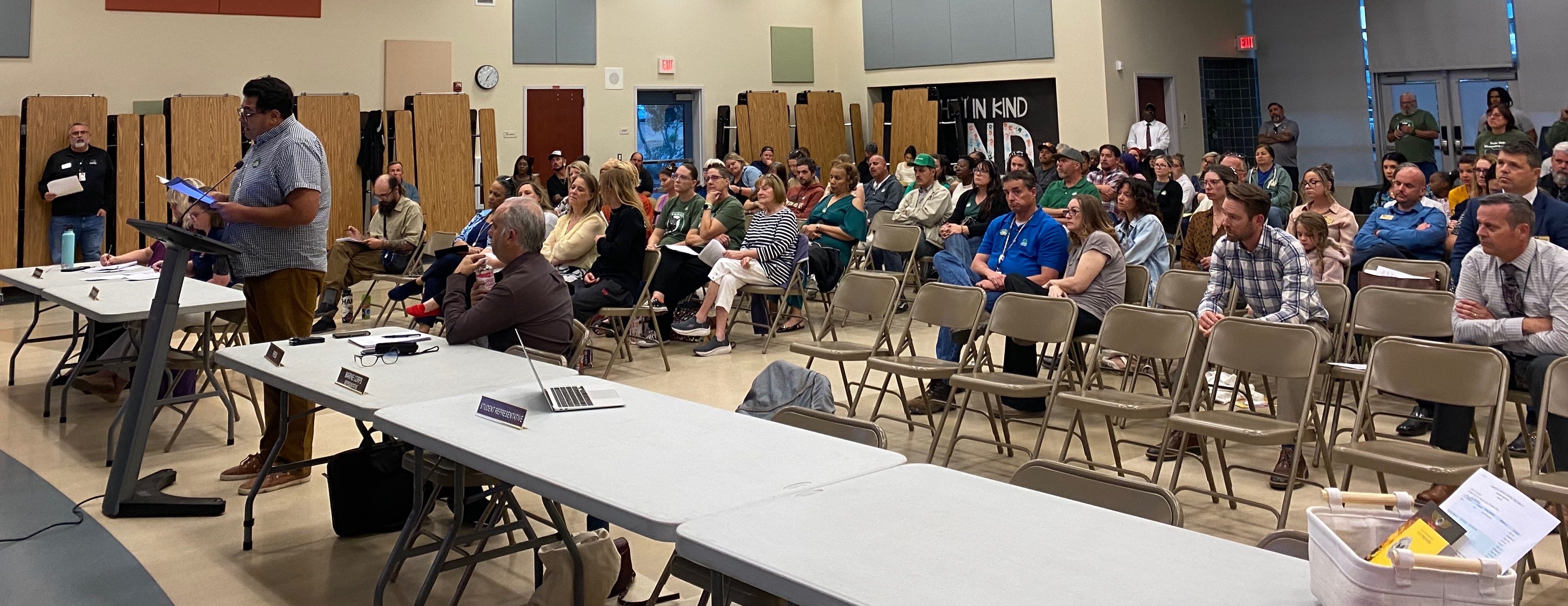
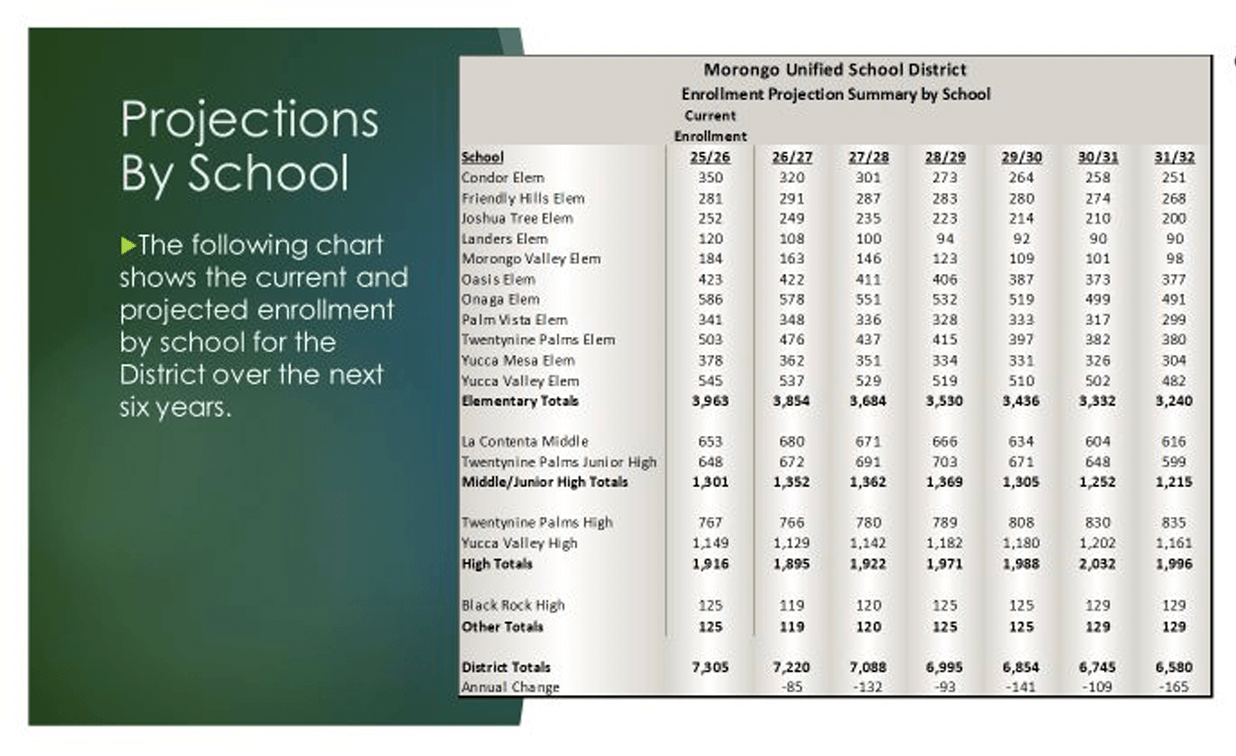
A report by the MUSD states that over the past decade, enrollment has fallen from approximately 8,400 students during the 2016/17 school year to around 7,300 today and could fall further still. A recent article in the Hi-Desert Star recapped the enrollment committee’s April 9 meeting, in which Superintendent Patricio Vargas presented different scenarios for school closure, one of which would close Palm Vista Elementary School on Baseline Road in Twentynine Palms as well as Landers and Morongo Valley elementary schools. In the case of closure, students would be reassigned to the closest campuses.
A group of parents calling themselves Morongo Basin Parents for Transparency! has circulated a petition that has garnered over 860 signatures to protect Morongo Basin students from school closures. In an update posted on April 17, the group noted that, “The district reportedly acknowledged that it has no records showing any timeline for the ‘alternative solutions’ work,” and asked if those solutions were being seriously considered at all.
The creators of the petition are pushing for the Board of Education to demonstrate clear budget math, real site-by-site savings, transportation and staffing costs created by each scenario, and the full impact on children, families, and school communities affected, demands that were also reflected during the public comment section.
Comments at the meeting focused on the importance of small community schools, the disruption that students would face if schools closed, the need for greater transparency in the process, and pushing back against some of the justifications offered for school closings, including potential cost savings and construction on a fault line.
Katie Fleishman advocated for Palm Vista Elementary and their specialized programs for high-needs students. A parent of an autistic son, she spoke of her conscious choice for him to attend an Extensive Support Program at the school, where he has flourished, making friends and building skills. “For children with extensive support needs, routine and familiarity are not small things. They are essential,” she said. She asked the board whether there will be intentional placement of students and whether they will receive the same type of structured support and trained staff in other schools, emphasizing
Moving schools for many students may be inconvenient. For students like Evan, it can be deeply disruptive….I urge you to consider the impact this decision will have on students with the highest needs in our district. Their success depends on stability, specialized environments, and the dedicated educators who know them.
Ruben Rodriguez described the parental and community engagement at Palm Vista and outlined how the school serves as a community hub, with an active PTA of over 60 people, hosting events, parenting and literacy classes, student clubs, and a free store that offers clothing and hygiene products. He reminded the board that attendance, not enrollment, drives funding and Palm Vista leads the way in attendance recovery with Saturday programming. He also provided a history lesson that reminded those in attendance of the importance of organizing around educational needs,
Public education in Morongo Basin began 99 years ago in Twentynine Palms when San Bernardino County refused to build a school for the town, citing enrollment concerns, so the townspeople pooled their money together, built a school house, and hired a teacher, offering their children futures. In 1927 it was the people of Twentynine Palms that made it happen, and in 2026 it will again be the people of Twentynine Palms who get the job done.
Finally, he asked that while the board continues to investigate cost savings, they also delay a final decision about school closings until after the November election, when new board members may be elected.1
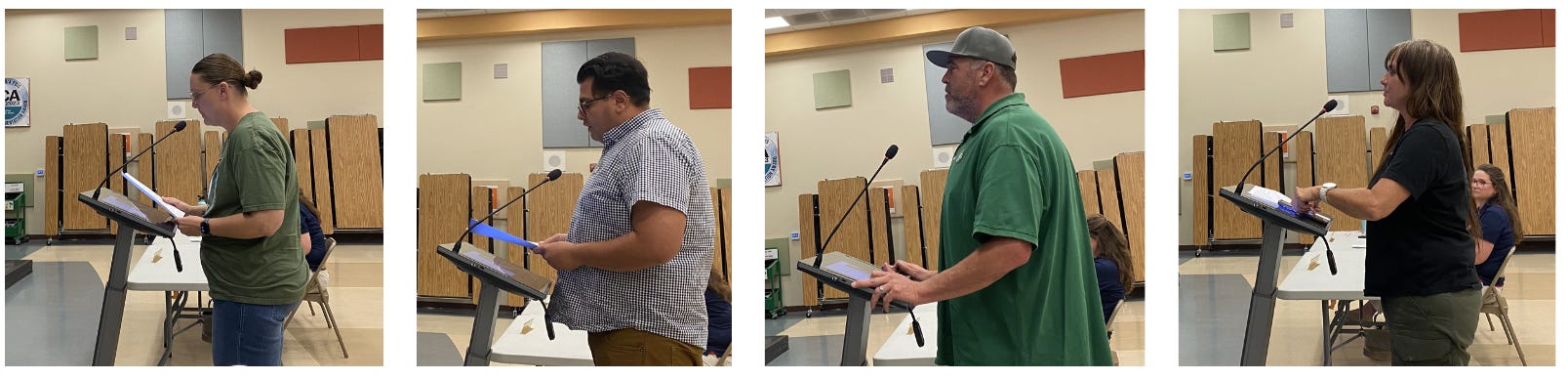
Chris Grabo, whose wife works at Palm Vista, suggested that instead of closing and consolidating schools, the board should focus on reducing class sizes to lessen the burden on teachers. He argued this would increase attendance by making school more enjoyable for students and teachers, noting. “When you make the classroom smaller and you make it more enjoyable for the kids to be there, the kids are going to want to go to school.”
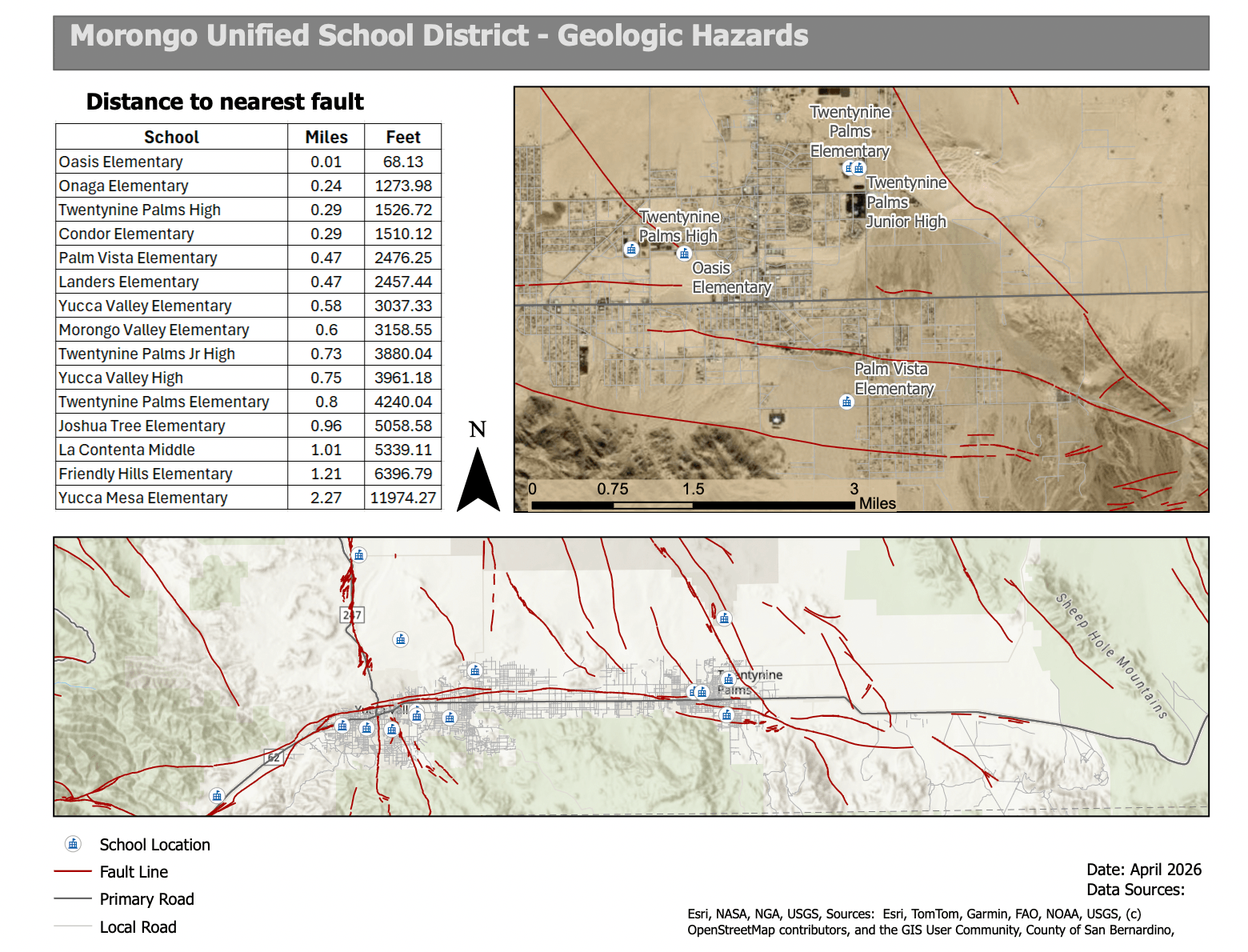
Anna Tegarden, a data analyst, called the claims that Palm Vista is built on a fault as being “actively false,” and presented a map she created with publicly available data from the State of California showing that the fault line is nearly half a mile away. She also pointed out that another school, Oasis Elementary, which is not slated for closure, is only 68 feet away from a fault.
Stacy Smith, who has taught at Palm Vista for five years and currently teaches in a combined 4th and 5th grade classroom, spoke emotionally about being welcomed into the school as a teacher and the difference she has seen the school make in students’ lives, especially ones struggling with unstable family and living situations. She concluded,
We are too much, but we deserve to be there. Please reconsider. We should not be on the chopping block, and respectfully, none of you should be telling any other school that we’re on the chopping block. That isn’t about community, and that’s not about trust.
Vadim Altschuler, a parent from Twentynine Palms and the author of a letter to the editor published by the Desert Trumpet, questioned the logic behind the school closures and why the board is treating them as inevitable without fully exploring alternatives or being fully fiscally transparent. He made several observations about the district’s finances and financial decisions during public comment and later followed up with more detail for the Desert Trumpet:
The district reported a core deficit of $7 million in their 2025–26 Second Interim Budget, but about $3 million of that planned deficit spending is tied to textbook adoptions, so the deficit may be closer to $4 million.
According to the district’s AB 1200 disclosure, management received a one-time $580,000 bonus in the 2024/25 school year when the district was only about $17,000 above the state minimum reserve.2
Altschuler provided the Desert Trumpet with copies of the 2025–26 Second Interim Budget, the 2024-2025 unaudited actuals, and the AB 1200 form to confirm these numbers for further analysis. Budgets and financial documents can also be found on the MUSD’s website.
In public comment he stated,
Yes, there is fiscal pressure, but fiscal pressure is not a blank check for irresponsible governance….Show the stabilization plan, fully explain management compensation, and the alternatives [to school closure] that were supposed to be presented. Show what had been cut, examined, frozen or restricted at the top before dismantling schools in this community.
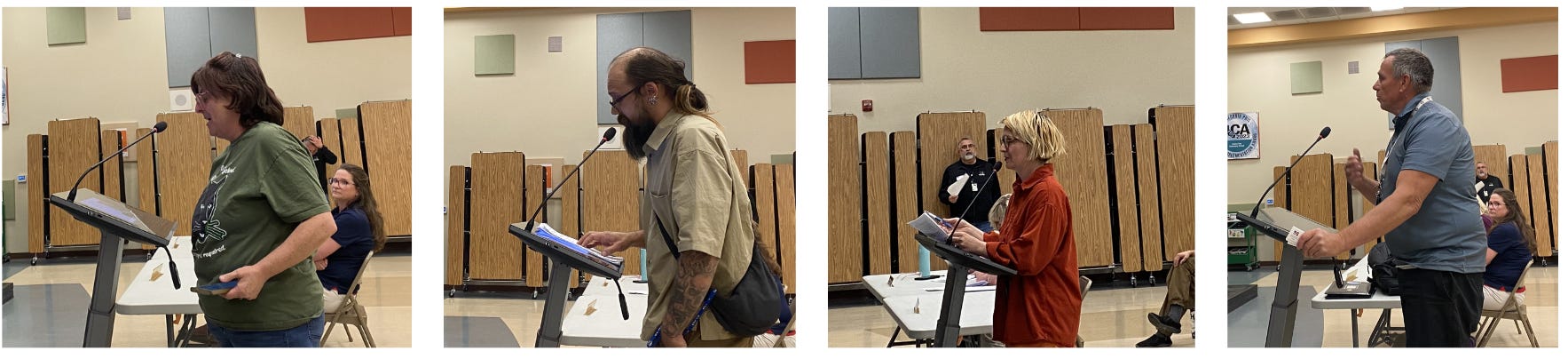
Carolyn Riggs, the parent of a student at Friendly Hills Elementary School in Joshua Tree, acknowledged the time board members had spent meeting with parents about this issue. She also discussed meeting with Mike Fine, CEO of California’s Fiscal Crisis and Management Assistance Team, which advises school districts, who told parents that the fiscal crisis could be addressed without closing schools in the MUSD. She also discussed best practices the district could employ to identifying savings without closing schools, such as performing a comparative analysis to other districts to identify where the district could be overspending and to save. She stated,
There are clear actionable steps available for the district to create a viable fiscal stabilization plan for MUSD that does not involve closing any schools. At this point, our district has not presented detailed financial modeling to demonstrate what school closures would actually save, showing each item of savings line by line, along with other expected increased costs incurred with transport or structure improvement, and seeing where it nets out is crucial data.
In closing, Riggs asked that the Board direct the administration to produce a comprehensive, community informed fiscal stabilization plan with clear data and a full exploration of alternatives before considering school closures stating, “School closures should only ever be a last resort.”
The final public comment of the evening was the only one that did not address school closures directly. Tom Baumgarten, a former superintendent of the MUSD, addressed the board and thanked them for their service. Speaking about the board, he told community members, “Community, trust them. They will work hard, they’ll do what they can, and they’ll do the best thing they can for you.” Finally, he recommended that the professional development building located in the old Joshua Tree Elementary School be named for groundbreaking educators in the Morongo Basin and include an Educator Hall of Fame to recognize excellence.
Further questions to consider on the impact of potential school closures
Those who offered public comment raised many vital issues around financial and decision-making transparency at the highest administrative levels of the MUSD. They also painted a picture of the many roles schools play in the Morongo Basin as places of learning, connection, and community building that support whole families in addition to the students who attend. As the district embraces innovation with programs like the Cisco Networking Academy and gets recognized for excellence in the dual enrollment program, what will they do to make sure students, including the most vulnerable, don’t get left behind or suffer due to long bus rides, crowded classrooms, and over-stretched teachers?
Parents and community members have repeatedly asked the board for more transparent data around potential school closures, but it is unclear if the board will be able to provide that before the June 9 deadline requested by President Claire for the enrollment committee to provide their recommended actions to address declining enrollment. And while the board reports that enrollment could fall to 6,821 within five years, that estimation is based on local birthrates. Other factors could impact enrollment, such as younger couples or families with small children moving to the hi-desert, which should be taken into consideration. It also remains unclear why the board has moved so quickly to potentially push for school closures without fully examining the impact they will have on Morongo Basin communities.
Closing schools also raises legal obligations to ensure the board of education follows a community engagement process and don’t violate students’ civil rights. Attorney General Rob Bonta laid out these laws and offered guidance in a 2023 letter to superintendents and Board of Education members facing demographic and fiscal pressure similar to that of MUSD. The introduction of the letter states, “These impacts [of school closure] are serious and can cause educational harm. When these harms affect one group of students more than others, they may also be unlawful.” What actions will the MUSD take to ensure equity and access close to home of quality education for all students?
The next meetings for the MUSD are as follows:
Enrollment Committee Meeting: Tuesday, April 29, 2026 at 6:00 PM, Joshua Tree Professional Development Center (Old Joshua Tree Elementary), 6061 Sunburst Ave, Joshua Tree
MUSD Board Meeting:Tuesday, May 5, 2026 at 6:00 PM, Joshua Tree Elementary School, 4950 Sunburst Ave, Joshua Tree
MUSD Board Meeting: Tuesday, June 9, 2026 at 6:00 PM, Joshua Tree Elementary School, 4950 Sunburst Ave, Joshua Tree
Hi new subscribers! Desert Trumpet understands you might not be interested in all of our coverage. That’s why it’s divided into separate newsletters allowing you to opt out of reporting that’s not important to you. Here’s how to opt out: go to your Substack settings, scroll down to “subscriptions,” and select “Edit” for the Desert Trumpet. Simply uncheck the box next to the newsletters you don’t want to receive in your email inbox. You’ll still be able to access all coverage online if you change your mind.
The Desert Trumpet is within $100 of meeting our $10,000 paid subscription goal!!! We need your paid subscriptions to publish the coverage you depend on. Basic subscriptions are $50 per year or $5 per month.
Become a sustaining subscriber by increasing your subscription to $100 or more per year! Want to make a one-time donation or are you able to give more than $100? Donate via Paypal!
Leave your thoughts in the comments below. Please note that we do not allow anonymous comments. Please be sure your first and last name is on your profile prior to commenting. Anonymous comments will be deleted.
This coverage is free - please share!
Three seats out of five will be represented on the November ballot, with terms set to expire in December 2026 in Trustee Areas 1, 4, and 5. These seats are held by Missy Bond, Christopher Claire, and Roberta Myers.
Altschuler provided the Desert Trumpet with a copy of MUSB's AB 1200 disclosure form, at the time of publication we could not find a digital copy of the form.
Thank you so much for summarizing all our work!!!