RECAP: Tourism Business Improvement District, April 23, 2026
Event grants and sponsorships are awarded for the second half of 2026, and the board plans to revisit and discuss the application requirements and process.

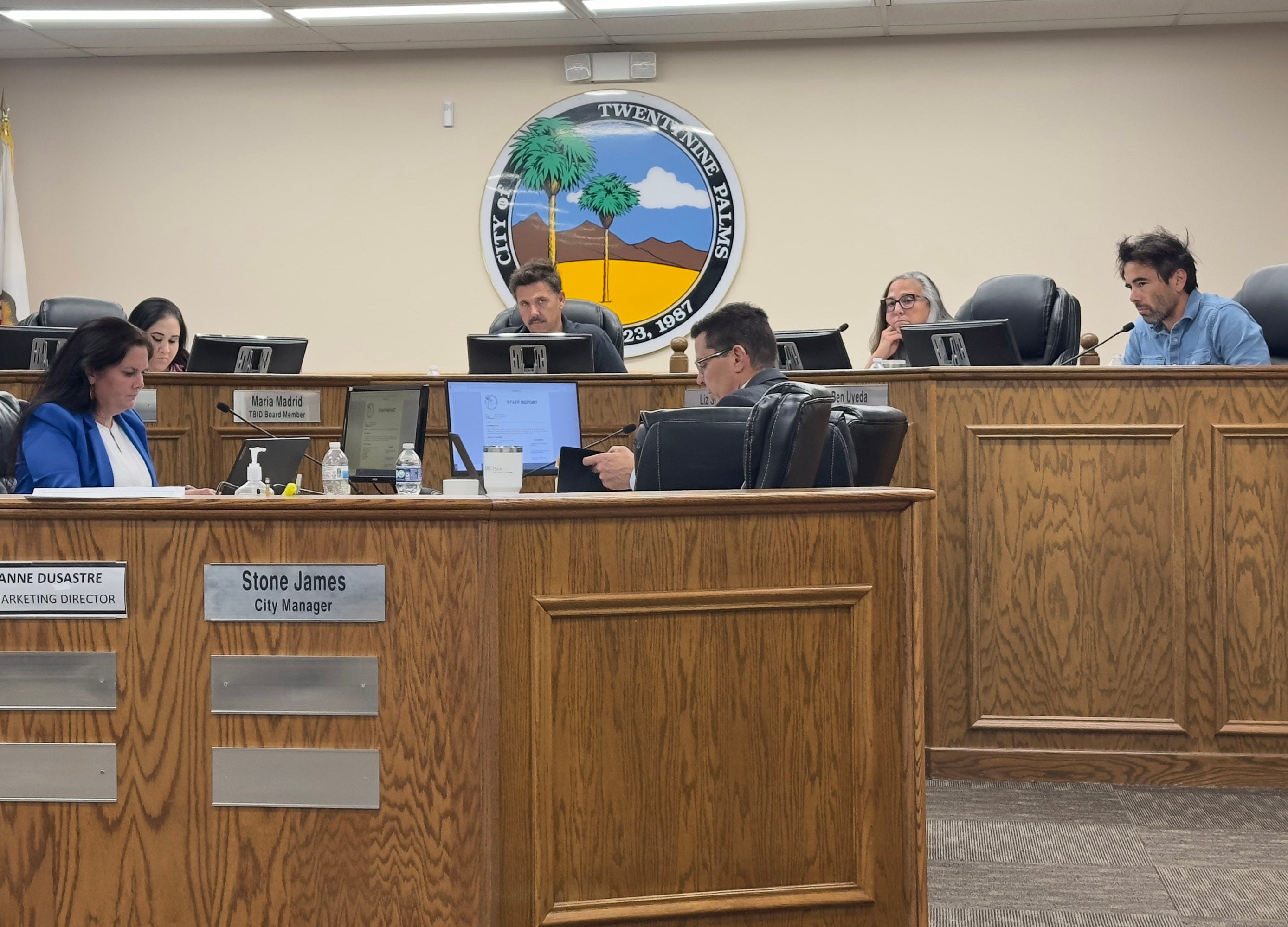
On Thursday, April 23, 2026 the Twentynine Palms Tourism Business Improvement District Board (TBID) held their regularly monthly meeting. The light public agenda focused on approving event grant and sponsorship funding for the second half of 2026. Present were Vice Chair Ashton Ramsey and Board Members Maria Madrid, Ben Uyeda, and Liz Shickler. Chair Rakesh Mehta had an excused absence. There were five members of the public in attendance.
Overall, the board approved funding for four grants totaling $52,000 and four sponsorships, for a total of $9,500. Originally grant scores were submitted with incorrect average total scores, which Marketing Director Breanne Dusastre corrected prior to the meeting after it was brought to her attention in a public comment submitted in advance by email.
Broader issues around the grant and sponsorship application process were raised in both board discussion and public comment. These issues have been a common theme at recent TBID meetings and have focused on the clarity of the application and the scoring process and how to ensure it is both consistent and that events being funded meet the board’s goal to bring more overnight visitors to Twentynine Palms.
Brief Board and Director of Marketing updates
Vice Chair Ramsey provided an update on the Levitt AMP music series, which began April 4 and runs through May 2 with free concerts on Saturday evenings at 7 pm in Freedom Plaza. The community rallied together to help win the Levitt grant, which provides funding for ten free concerts a year over three years. Now, Ramsey explained, is the time to make certain the events are a success and well attended. He discussed increasing radio spots and social media posts promoting the concerts and making a more comprehensive promotion plan for the fall concert series.
Hi, new subscribers! Desert Trumpet understands you might not be interested in all of our coverage. That’s why it’s divided into separate newsletters allowing you to opt out of reporting that’s not important to you. For instance, you may want our Education news but not City Hall 29.
Here’s how to opt out: go to your Substack settings, scroll down to “subscriptions,” and select “Edit” for the Desert Trumpet. Simply uncheck the box next to the newsletters you don’t want to receive in your email inbox. You’ll still be able to access all coverage online if you change your mind.
Dusastre acknowledged most of her time had been dedicated to preparing the grants and sponsorships for review. She provided a brief marketing update that the billboard campaign on I-10 will launch on May 10 and that she will attend the Visit CA media reception in Los Angeles on April 30 to connect with journalists and other members of the media. She also echoed Vice Chair Ramsey’s comments about her focus on promoting the Levitt Concert Series and other events through radio and social media advertising.
Public comment focuses on accessibility of TBID meetings and suggestion for board structural improvements
There were two public comments. Susan Peplow provided suggestions for making the TBID meeting more accessible, especially to lodging partners and local business owners, who are often working during the 3:30 - 5 pm Thursday time slot. She also referenced an update to SB707, which requires that all meetings of a legislative body include a way for the public to participate remotely through a two-way audio or visual system. The city will be upgrading its AV system for meetings to meet the July 1, 2026 deadline for compliance, which was discussed at the April 14 City Council meeting.
While this type of recording may not be required by law for the TBID, Peplow suggested it would be beneficial for the TBID. Peplow remarked:
What would be great moving forward is the ability for people to actually stream these sessions and play them back at a later time, because I think we can see 3:30 in the afternoon on a Thursday is pretty tough for a lot of businesses, and it’s particularly lodging partners that are out of the area.
Peplow emphasized that she didn’t want her suggestion to put additional burden on staff time, but simply make sure sessions are available to the public.
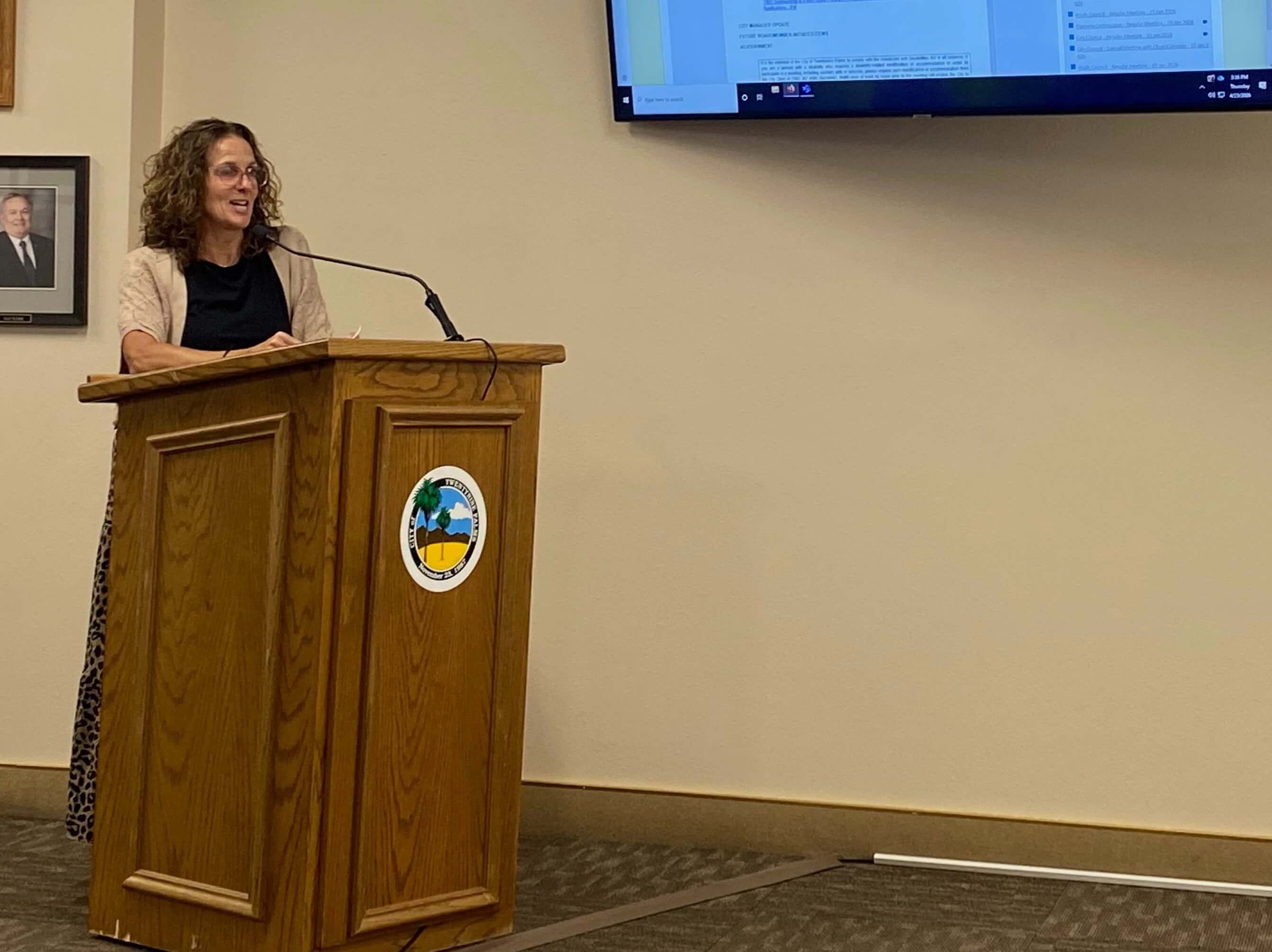
Cindy Bernard echoed the need to move the meeting to a later time, but focused on TBID structure, pointing out that the board is the only body in the City that doesn’t have terms of office or rotate chair or vice chair on a yearly basis. The TBID Advisory Board members, who are lodging owners and operators, are appointed by the City Council. While such rotation is not required by law, in Bernard’s estimation, this could impact the TBID’s push for moving to a five-year reauthorization process under the Property and Business Improvement District Law of 1994, instead of their current annual re-authorization schedule.
“No one’s going to give you guys your five-year reauthorization that I know you all want to ask for, unless you deal with some of the structural issues that are out of alignment with every other city body,” Bernard told them. Bernard also explained that the lack of rotation does TBID members a disservice because they don’t have the opportunity to learn the responsibilities of the board chair. She also inquired as to why the producers brainstorm session, which has been added as a future agenda item in December, had dropped off the agenda.
In second round of funding, TBID awards grants to four events
The TBID gives out event grant funding twice a year: The first round for events taking place between January and June, and the second for events between July and December. Grants are intended to support larger, signature events that generate overnight stays and, by extension, increased tourism spending.
Grants and sponsorships are funded by the 1.5% passthrough tax (also known as the Transit Occupancy Tax or TOT) on lodging properties within Twentynine Palms. For this fiscal year, TBID allocated $150,000 to the program, with $120,000 designated for event grants, which range from $3,000 to $20,000 per event. The TBID had previously awarded $20,000 during round 1, leaving $100,000 available for the remainder of the fiscal year. This round, the TBID received 12 grant applications and voted to fund four of them, with a fifth event, the Area 29 Galactic Gathering, tabled until the next meeting since two board members, Shickler and Vice Chair Ramsey, had to recuse themselves due to their connection to the event.
Grants were awarded to:
Twentynine Palms Book Festival: $20,000 (4-0-1 approved)
Joshua Tree Half Marathon: $20,000 (full) (3-0-1, Uyeda recused)
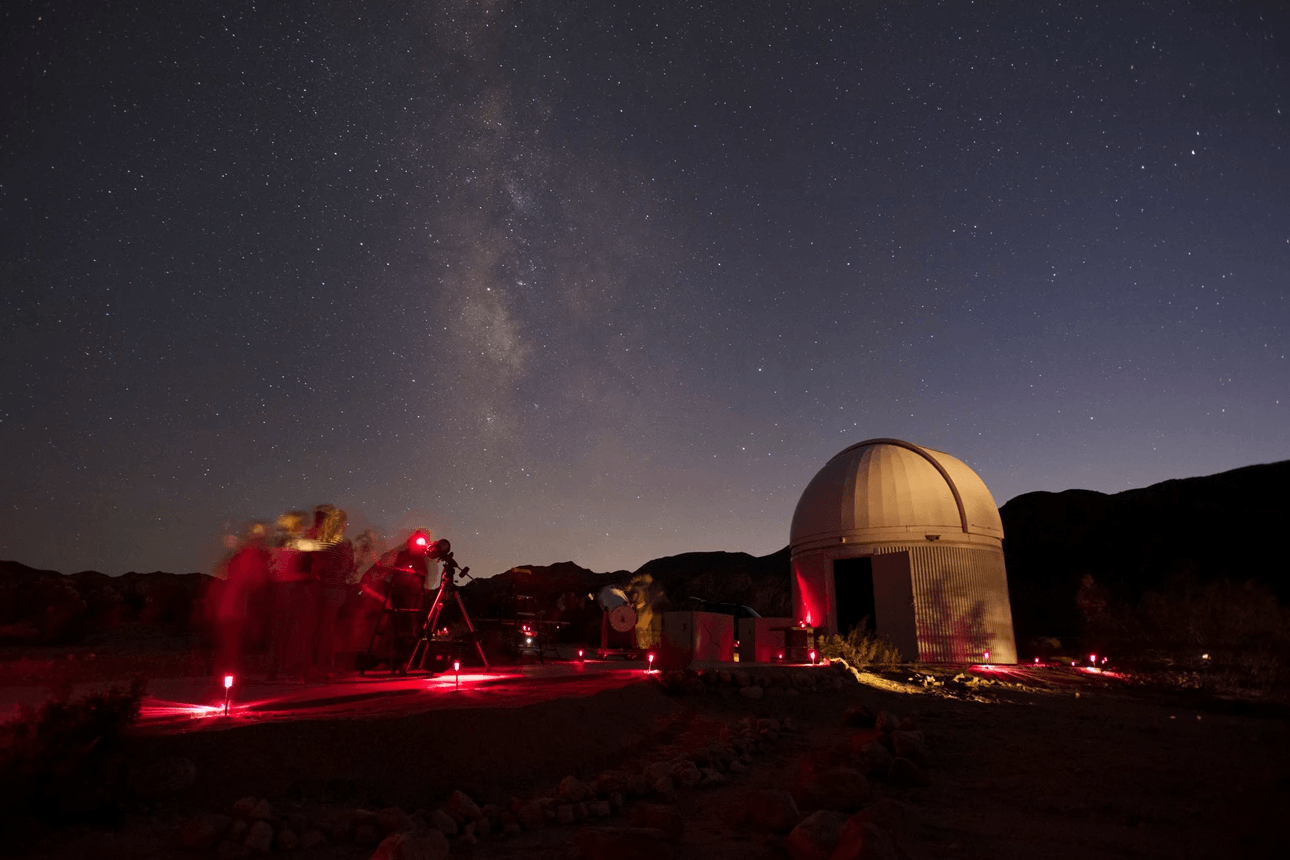
Night Sky Festival: $6,000 (4-0-1, approved)
Climb Smart: $6,000 (4-0-1, approved)
If producers’ estimations in the applications are correct, together these events will bring over 4,000 out of town visitors to the Morongo Basin.
Grant applications are scored by a five-person review committee, which includes three community members and two TBID board members. They must receive at least 80 points to move forward. The events grants committee is: TBID board members Liz Shickler and Ben Uyeda, and community members and lodging stakeholders Mary Jane Binge and Susan Peplow, and Scott Clinkscales, Community Events Coordinator for the City of Twentynine Palms.
Applications are evaluated on the following criteria:
Target audience
Organizer’s prior event experience
Budget and marketing plans
Alignment with the TBID destination pillars
The destination pillars are:
Outdoor recreation
Arts and culture
Health and wellness
Culinary experiences
Stargazing and astronomy
Throughout the review process, evaluating against these criteria, especially the destination pillars, proved subjective, as scoring varied widely between reviewers. Reviewers also varied widely in their approach to evaluation, with some like Peplow and Clinkscales, leaving detailed remarks, while Uyeda left none at all. This inconsistency can provide a frustrating experience for applicants, especially those who missed the minimum by just a few points. It also raises the question of alignment and if the grants review committee has aligned on a scoring rubric to make clear what a successful, fundable application looks like.
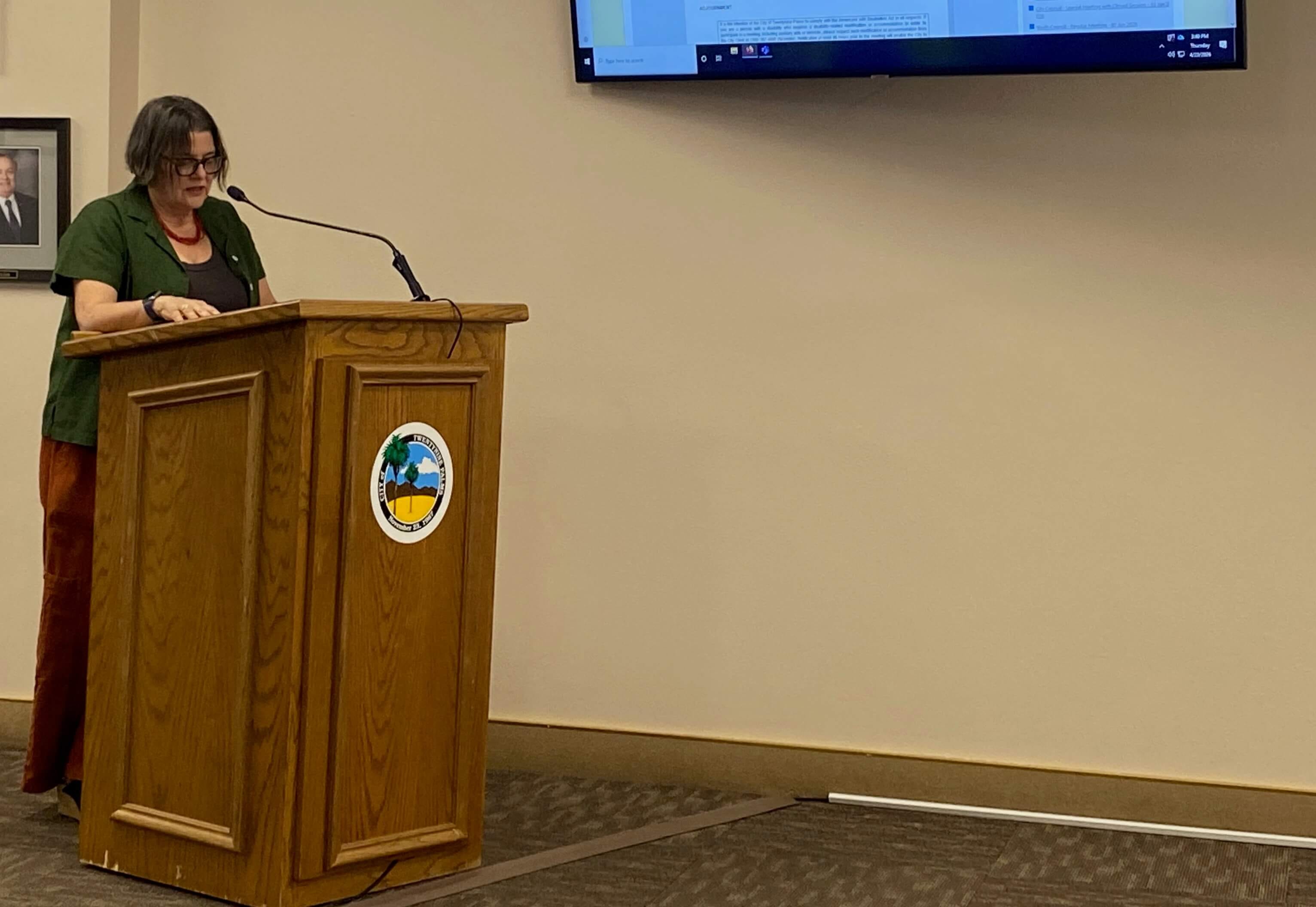
Before the meeting, Cindy Bernard brought inconsistencies in the grant scoring, incorrect score totals, and concerns about the grant process to the board and Dusastre’s attention via email. Dusastre corrected the score totals, which did not impact funding eligibility. In her public comment, Bernard suggested that the granting system is broken and that the TBID rethink the grant process from the ground up and consider excluding board members from the grants committee, because it creates a potential conflict of interest. She offered ideas to improve the process, including:
Pre-approval for proven event partners, such as the Joshua Tree half-marathon.
Creation of a mentoring program that nurtures newer event partners.
A mechanism for working with experienced event producers to put on the types of events that the TBID is looking for.
She explained,
Maybe it would be more productive for these larger figure projects to brainstorm what would be great projects, what are the projects that we need to happen here that could become signature events that would benefit everybody, and really think those through with the various producers in town that have long time production experience and then apply that idea.
In her public comment on the grants process, Susan Peplow acknowledged that her grant scoring was often much lower than her colleagues’ on the committee. She asked that the TBID reconsider quality applications that came within “striking distance” of 80 points, but may have been impacted by her scores.
By now, you should all be aware that I was concerned about my scoring, and it became really evident, specifically in the pillars department, that the scoring that came from my part was significantly lower than other people on the committee.
Peplow apologized for any extra time her communications caused and acknowledged that the TBID board, staff, and subcommittees could grow by acknowledging where they fell short, and also using this as an opportunity to rethink grant guidelines.
Board comments struck the same tone as public comments and focused on the need to rethink the grant process. Echoing what he had said during the board discussion of grant guidelines and process during the March TBID meeting Uyeda remarked,
I heard from quite a few applicants as well as quite a few stakeholders, about the [grant] process. I was hearing dissatisfaction on one side with how long and how much time was put into these applications, and on the other side about how feeling that, how selections and criteria for evaluation was too vague and not specific enough.
Shickler noted that reviewing the applications in one week and scoring them consistently was also a challenge and said it was important to keep the generation of overnight stays and revenue in focus.
Grant scoring, criteria, the types of events that are proposed, and the question of whether to work with experienced producers to create specific signature events, and how to measure the impact of overnight stays have been points of discussion in recent TBID meetings. At the March TBID meeting Shickler and Uyeda planned to meet within a month to come up with recommendations for updates to application guidelines and deadlines for the next funding round, though it was unclear if they have met yet. At the end of the meeting Uyeda proposed a future agenda item to discuss the grant and sponsorship program so that the board can weigh in on his and Shickler’s recommendations for an overhaul. According to Uyeda, “the amount of frustration I heard from all aspects involved with this last round was considerable.”
The board approves four sponsorship applications for $2,375 each
The TBID also approved applications for four event sponsorships out of eleven applications for the second half of 2026. Event sponsorships are for smaller events that contribute to visitor experience and overnight stays, as well as aligning with destination pillars. The TBID allocated $30,000 for sponsorships and awards ranging from $100 to $3,000 per event. The TBID had already awarded $20,500 in sponsorships in the first half of 2026, leaving $9,500 available for the rest of the fiscal year. Earlier in the meeting, Dusastre assured the board that the scoring for the sponsorship review was correct.
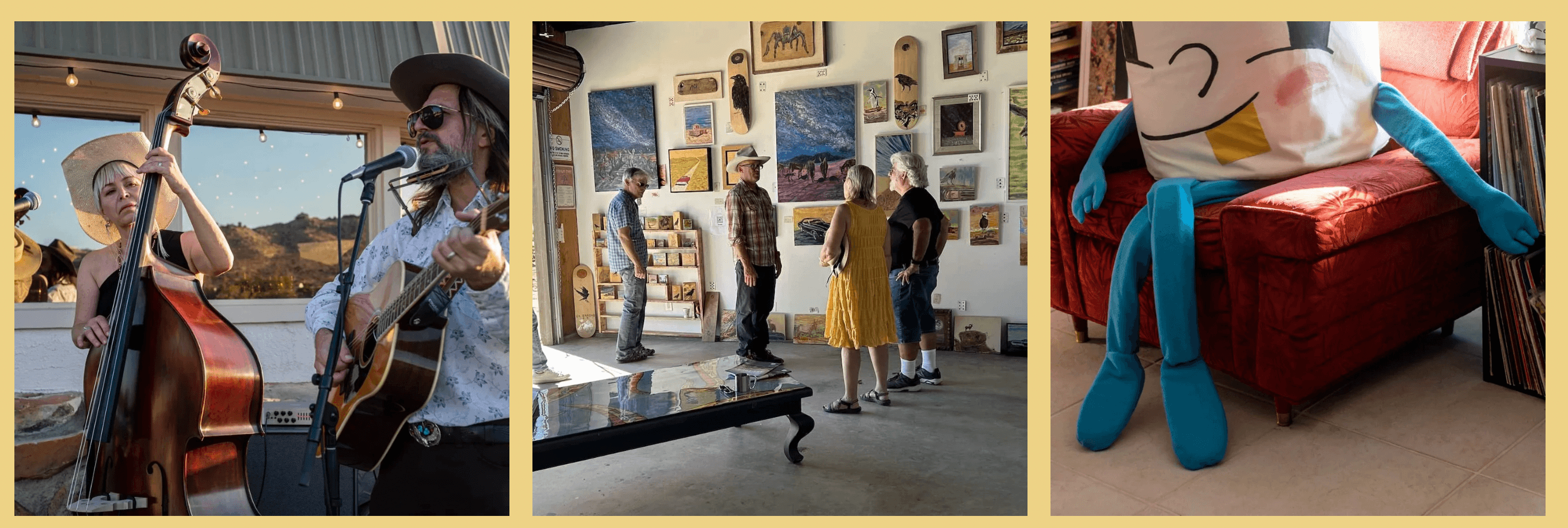
To maximize the use of the remaining sponsorship budget, the board voted 3-1-0, with Mehta absent and Shickler recusing, to approve funding of $2,375 each for four applicants. They were:
Joshua Tree National Park Art Exposition
Cosmic Connections: Women in Scientific Exploration
Mil-Tree Presents a Night of Improv Theater
Hwy 62 Open Studio Art Tours
Uyeda remarked, “It’s great that we got qualified recipients to the point where we used up the program’s budget,” and hoped that each event would continue to grow so all the qualifying applications can be fully funded in following years. Vice Chair Ramsey remarked how even though the TBID was contributing a small amount, which will support advertising and one event during the art tours weekends, relative to their overall budget to the Hwy 62 open studio tours it was, “Something that shows our support and helps them support us.”
In public comment, Bernard clarified some of her earlier points about the grant and sponsorship application and scoring process. She highlighted that:
There is no wording that specifies funded events must be public and the board should consider whether tax dollars go to supporting private events.
With many recusals on the board, the board should consider a formal process and rules in case a board or committee member needs to recuse from scoring or voting on an application.
There is a typo on the grant application form attendance projection form that may have caused confusion, as there was a check box of “>100” or anticipated audience of greater than 100, when the correct notation have been “<100”, implying less than 100.
The scoring rubric for grants and sponsorships, especially around destination pillars, is subjective.
She commented, “The event concept in alignment with TBID destination pillars is given so much weight in the application and is the most subjective element in the application that sometimes it throws things off.” These comments were not about sponsorship applications, but the process in general, highlighting that it needs to be overhauled and elements that need to be clarified.
City Manager update
The final portion of the meeting was an update by outgoing City Manager Dr. Stone James. He discussed the launching of a groundwater study to help the city understand the urgency of the implementation of a citywide sewer system, working with the Joshua Tree National Park Association to create housing for seasonal employees, and that a package sewage treatment plant that serves 15 businesses in downtown Twentynine Palms will open in about 90 days. More information about the affordable housing initiative is covered in the Desert Trumpet’s recap of the April 14, 2026 City Council meeting.
Dr. James seemed to respond to Bernard’s public comment about the lack of rotation in the TBID board chair. He claimed the lack of rotation was not due to an individual hoarding power, but the workload of other board members. “I’ve spoken with staff about this,” claimed James, “Found out that over time, that [Chair Mehta] has been in that position, he has offered that position to other board members, but due to the workload of the board members, they have respectfully passed.” Dr. James did not provide any specific examples. While legally the TBID board chair is not required to rotate, the question remains, why the TBID board chair seems to be based on an individual’s own decision and there is no formal rotation policy, as is customary and considered best practice for other civic boards.
A date for the May TBID meeting has yet to be announced. The only future agenda item proposed was a review of the grant and sponsorship application process.
The Desert Trumpet is within $100 of meeting our $10,000 paid subscription goal!!! We need your paid subscriptions to publish the coverage you depend on. Basic subscriptions are $50 per year or $5 per month.
Become a sustaining subscriber by increasing your subscription to $100 or more per year! Want to make a one-time donation or are you able to give more than $100? Donate via Paypal!
Leave your thoughts in the comments below. Please note that we do not allow anonymous comments. Please be sure your first and last name is on your profile prior to commenting. Anonymous comments will be deleted.
This coverage is free - please share!