
Recap: Tourism Business Improvement District Board Meeting, June 18, 2026
The board meeting focuses on revisiting grant and sponsorship guidelines to drive overnight stays and enhance visitor experience in Twentynine Palms.

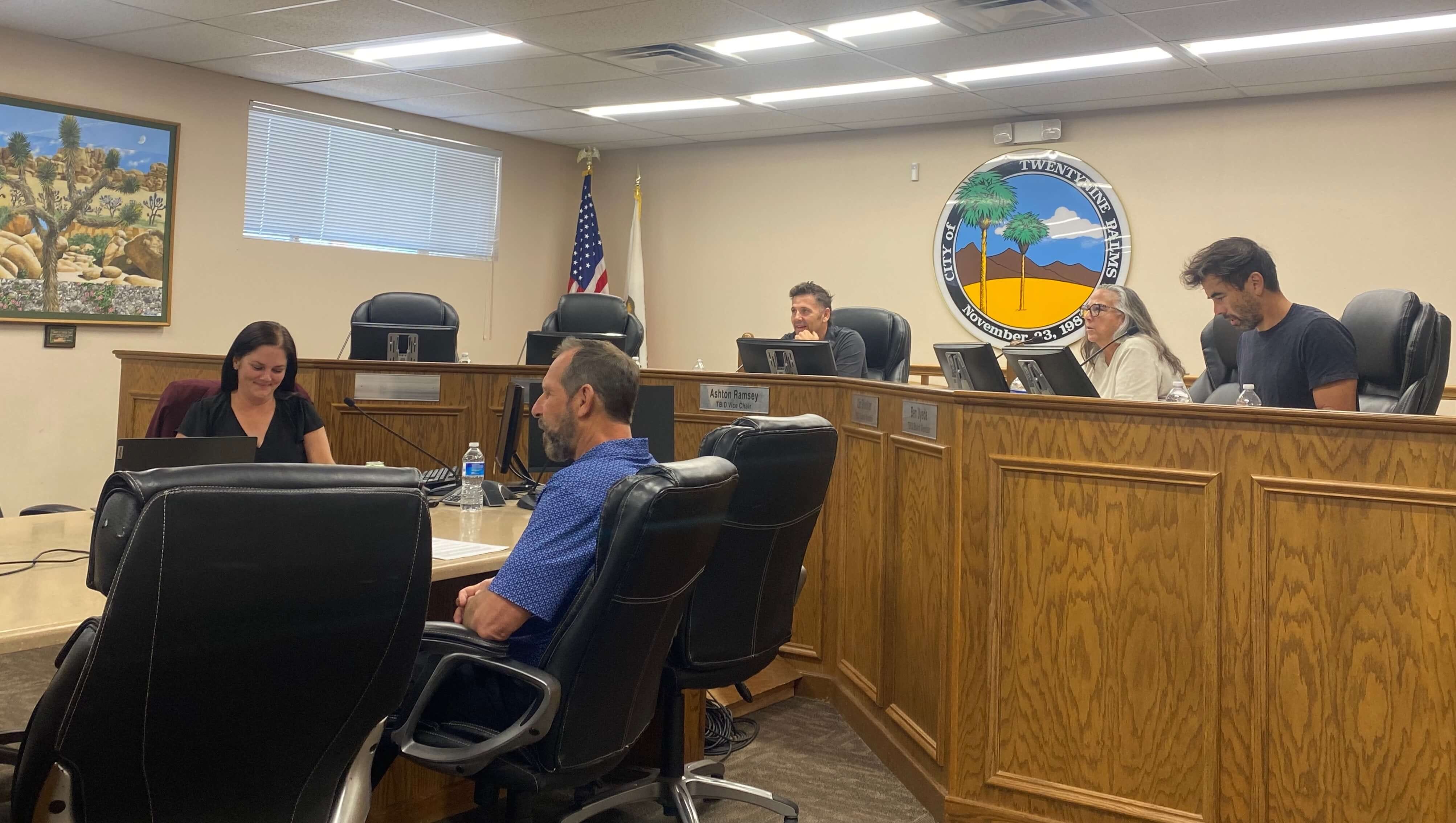
In a meeting that lasted just under an hour on Thursday, July 18 the Twentynine Palms Tourism Business Improvement District (TBID) board met to discuss revised grant and sponsorship guidelines. While they did not come to any conclusions, issues covered included changing amounts available for grants and sponsorships, the types of events TBID wants to attract, and how to ensure funding goals and guidelines are met. Present were Vice Chair Ashton Ramsey and board members Liz Shickler and Ben Uyeda. Chair Rakesh Mehta had an excused absence. Former board member Maria Madrid stepped down last month.
Director of Marketing update and welcoming a new visitor center employee
The meeting began with a short update from Breanne Dusastre, the TBID Director of Marketing. She introduced TJ Williams, who will be working in the City of Twentynine Palms Visitor Center Tuesday to Saturday.
Dusastre highlighted upcoming summer Twentynine Palms events. She specifically mentioned Fourth of July in the city and the Hemmings Great Race that will be in the city on June 27th celebrating 100 years of Route 66. She also mentioned that there are seasonal summer pieces on the Visit29 website, including an article about summer star gazing. She is currently working with Palm Springs Life on a two-page advertorial that will run this fall.
Dusastre also showed the SoCal episode of Get to Going, which features Twentynine Palms destinations including Hotel Reset, Ramsey 29, Desert General, Tin Town, and the Sky’s the Limit observatory, many destinations that are associated with TBID board members. It is currently live online and will be featured on Sun Country Airline’s in-flight entertainment.
Discussion of grant and sponsorship program and application guidelines
Discussion of the grant and sponsorship program was the meeting’s main agenda item. The program has been a focus of the TBID meetings for the past few months. Community members, local business owners, grantees, lodging stakeholders, and board members have all had feedback on how the process could function smoothly and more effectively drive overnight stays. Comments have included how to hold grantees accountable for reporting on the funds they receive, how grantees can show impact on overnight stays, and how marketing can be a greater focus for grantees. Past discussion has also focused on the type of events that are funded and the TBID’s interest in cultivating both larger signature events and regular series.
Following the May 21 TBID meeting, the TBID Events Subcommittee, comprised of Liz Shickler and Ben Uyeda, met twice to review the existing TBID Sponsorship & Event Grant Program Guidelines, application and scoring process. They developed a draft of revised guidelines reflecting the discussion and feedback received to date, although the document does not include redlined changes that show specific differences from the current application.
Public comment raises question about the type of events TBID cultivates
The meeting’s one public comment focused on the need to rethink the process of grants and sponsorship from the ground up. The written comment by Cindy Bernard recommended a public conversation about what is and is not working in the grants process. Bernard has experience producing large events focused on experimental music through the nonprofit SASSAS and was on the subcommittee that originally developed the TBID grant requirements.
She recommended holding the public meeting at a time when small business owners, lodging stakeholders, and community members can attend. Her comment focused on producing larger, signature events that draw people to Twentynine Palms and as an example she brought up Spacecraft, a new weekend-long festival in Pioneertown in mid-August that features performances by Tangerine Dream and ESG.
She wrote,
Speaking as a person who suggested and then helped design the current system, it’s broken and is failing to produce what the city needs. If the TBID wants to demand heads and beds, then they need to invest in a system that will deliver larger scale events. The amount being granted is too small to attract professional producers capable of events like Spacecraft.
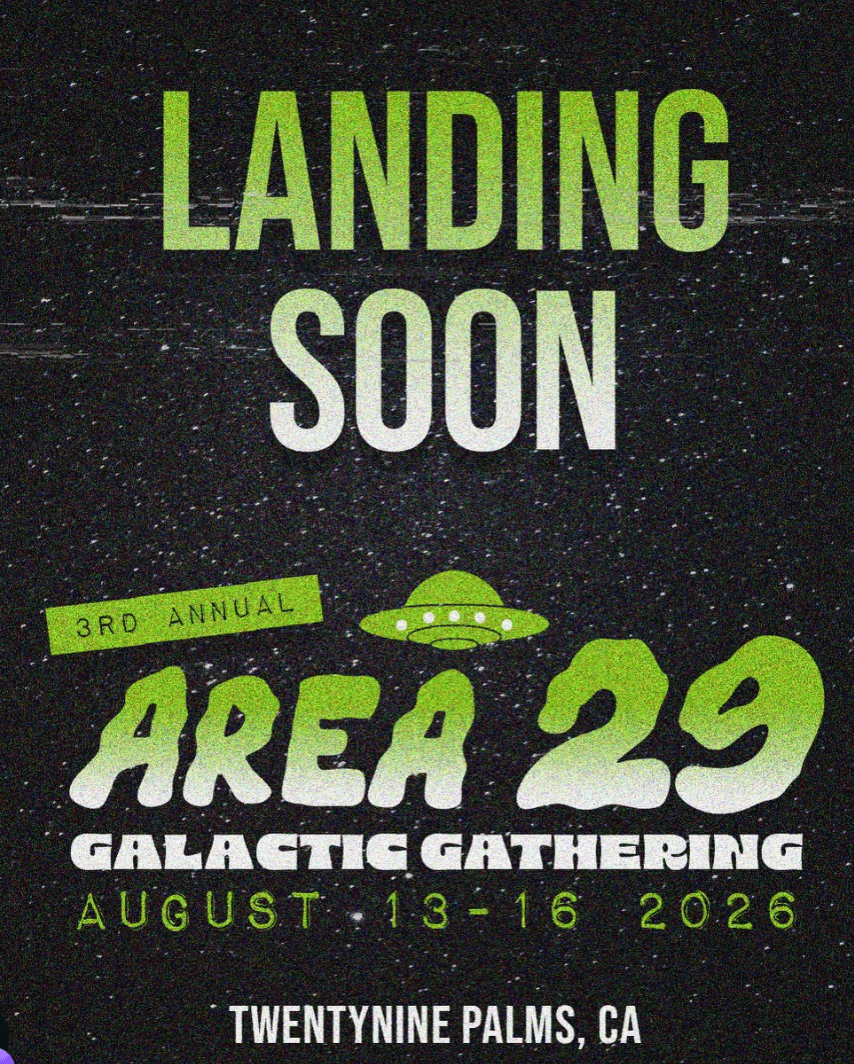
She also mentioned that local businesses and individuals that come up with great ideas, like the Area 29 weekend organized by Rediscover 29, lack time and resources needed to scale up their events. The contrast between Area 29 and Spacecraft was also a focal point of discussion at the May 21 TBID meeting. In Bernard’s analysis the grant timeline, currently just a few months in advance, is too short for larger events that would need to secure larger sponsorships and professional producers. She suggested increasing the amount of sponsorship money available and forming a committee with TBID board members and local event producers to brainstorm signature events and then bring in professional producers to execute them.
Bernard’s public comment highlights an ongoing points of tension around the TBID event funding that has been brought up in discussions in multiple past meetings. These tensions include the type of events that are effective in bringing overnight visitors to the city, the amount of funding that’s impactful, who should be producing the events, whether TBID should invest in large scale events or smaller events that activate the downtown, and how the existing infrastructure in Twentynine Palms can and cannot support the types of events that the TBID might want to cultivate.
Revised guidelines emphasize simplicity and impact
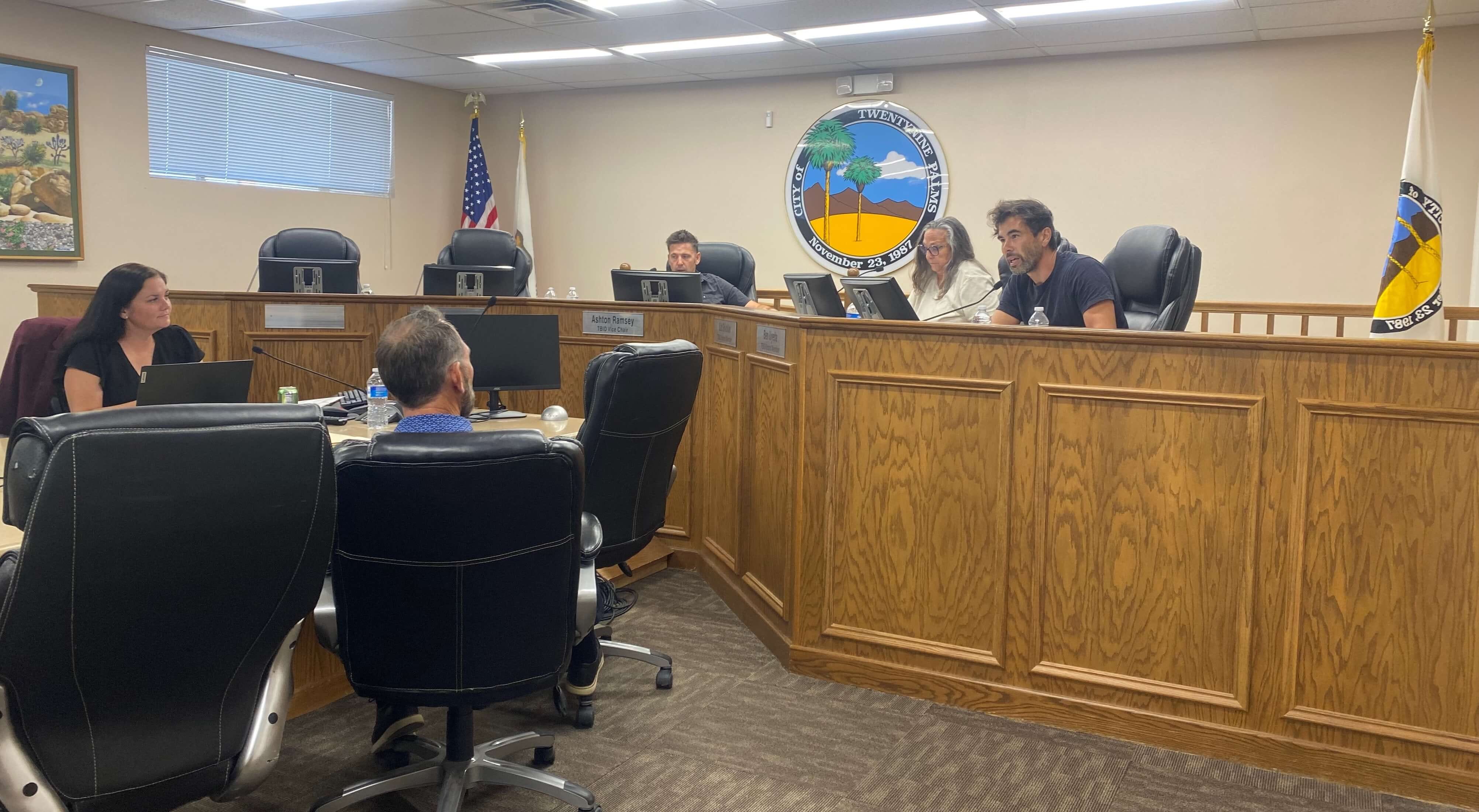
Board member Uyeda opened the board discussion of the events and grants sponsorship program by walking the board through the revised guidelines he and Shickler drafted. He introduced the discussion explaining,
Throughout my tenure on the board, probably the most feedback I’ve heard from both the stakeholder side and from the community at large is about the events. On the stakeholder side, I’ve heard that there’s a lack of accountability, and these events don’t actually meet any of what they consider the goals of the tourism board to be. On the community side, I hear a lot of complaints about the application process itself, too time consuming, not clear on how the funding decisions are made.
Uyeda explained that the draft, updated guidelines strip out redundancies in the application, reduced the number of questions asked of applicants from 29 to 18 and explicitly stated the TBID’s goals for funding events.
As outlined in the draft guidelines, the goals are:
Increase overnight visitation and lodging demand within the City of Twentynine Palms.
Support events and programming that activate Twentynine Palms for visitors and enhance the overall visitor experience.
Foster the long-term growth, sustainability of events and reoccurring events that contribute to the local tourism economy and advance Visit 29 Palms’ destination marketing objectives.
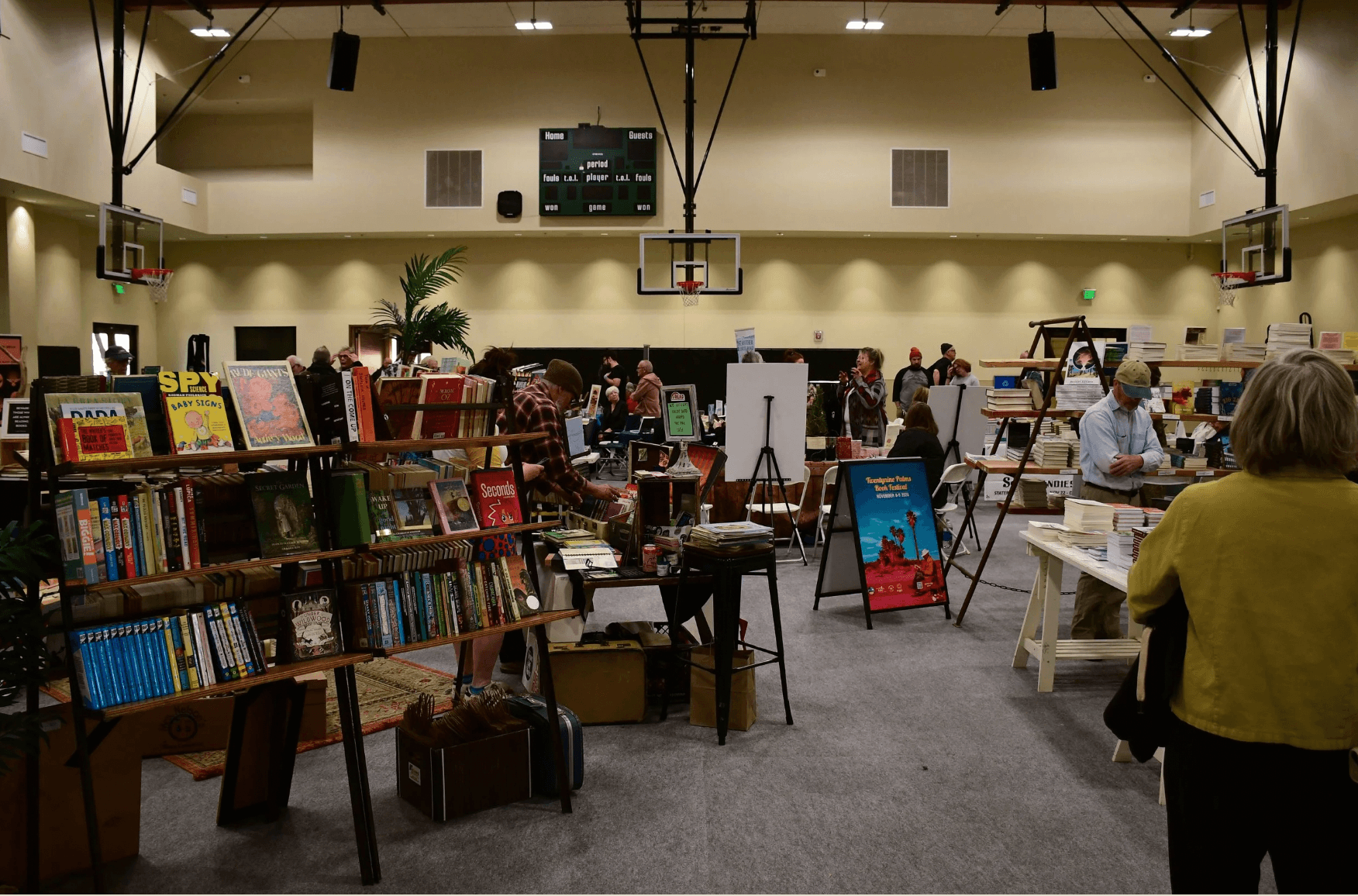
Uyeda noted that events may lean more heavily toward one goal or another but, “We would ideally like it to hit on all three, but some people will specialize and adapt accordingly.” As an example of events that hit the mark he brought up the Twentynine Palms Book Festival, organized by Patrick Zuchowicki of Desert General, and the Vacation Races event, which brings in an outside organization and trusted brand for a signature event, which previously took place in Joshua Tree, but will take place within the city of Twentynine Palms this year.
Ramsey supported the revised goals, saying that enhancing the visitor experience in Twentynine Palms is important in addition to overnight stays saying, “It’s been pointed out in the past that we do have these events that seem to be more of a local event, but they make the downtown pop, and I’m all for that.”
Grants and sponsorship budgets will be combined, but amount caps raise questions
The draft guidelines propose several changes in how grant and sponsorship money would be allocated. These include increasing the amount available for sponsorships and combining the grant and sponsorship budget. In the current 2025-2026 fiscal year TBID allocated $150,000 to the program. $120,000 was designated for event grants, which are designed to support signature events and range from $3,000 to $20,000 in funding per event. $30,000 was designated to sponsorships, with a maximum of $3,000 of funding available per event.
In the revised guidelines, the budget will not be divided between grants and sponsorships, which will enable more flexibility in funding. The sponsorship amount was adjusted up to $5,000, and grants would be available from $5,000 to $20,000. Uyeda explained the proposed sponsorship changes saying,
Part of the feedback we had heard was that actually some people that had gotten sponsorships and decided it simply wasn’t worth the hassle on the paperwork side on the back end to accept it …. That tells us that we need to sort of make some adjustments.
The potential to adjust the maximum amount for grants was also a point of discussion for the board. Uyeda argued in favor of raising the maximum for grants because $20,000 is not enough money for many larger events. However, he expressed concern that if the maximum is raised, applicants will ask for it without justifying why. In contrast, Shickler suggested that lowering the maximum for grants would enable the TBID to spread out the money more and support a wider range of events.
TBID members suggested several ideas to correlate grant dollars to room nights including:
Units of grant money available pegged to room nights, such as $75 of grant money to room night.
A tiered system where events with certain projected attendance numbers or room nights could apply for a certain amount of money.
The board did not reach a decision, but Shickler acknowledged accountability is a continual challenge for the TBID grants, saying, “People can just, they can tell us, oh yeah, we expect to fill every room, but they don’t. How can we make them prove that?”
A holistic system for tracking and measuring impact across TBID events was not included in the revised guidelines. If the TBID decides to correlate room nights to grant and sponsorship dollars, creating a system that grantees can use to measure impact, such as a booking link or code, across all events could help with reporting and right-sizing grants in the future. Currently this is left up to each individual event producer, which can add stress and keep results ambiguous.
Scoring and evaluation criteria still need to be further defined
The proposed changes aim to clarify the grants and sponsorship application scoring criteria, which will focus on four areas:
Economic efficiency
Feasibility track record
Marketing
Alignment with TBID mission tourism goals
Each application would be evaluated with a point system and each focus area is worth up to 25 points, with a maximum of 100 total points. Events must receive at least 80 points to move forward for funding consideration, which is similar to how the applications have been scored over the last cycle.
Uyeda acknowledged that there’s still work to do, saying, “We will still need to put a little bit more color and define the terms for what economic efficiency, feasibility, and track record [mean].” A persistent issue has been what the scoring criteria actually means, with scores varying widely between reviewers. In these revised guidelines the TBID did not spell out what “good” looks like and, for example, what would receive a 5, versus a 15, versus a 25. Without clearly defining the criteria for scoring and providing clear guidance for reviewers, scores for funding will still be subjective and inconsistent.
Approach to events still under discussion
The TBID’s overall approach to events still remains mostly undefined. Uyeda asked Shickler and Ramsey the types of events they’d like to see, and they suggested the following ideas:
Events that target the summer, traditionally the slow season for tourism.
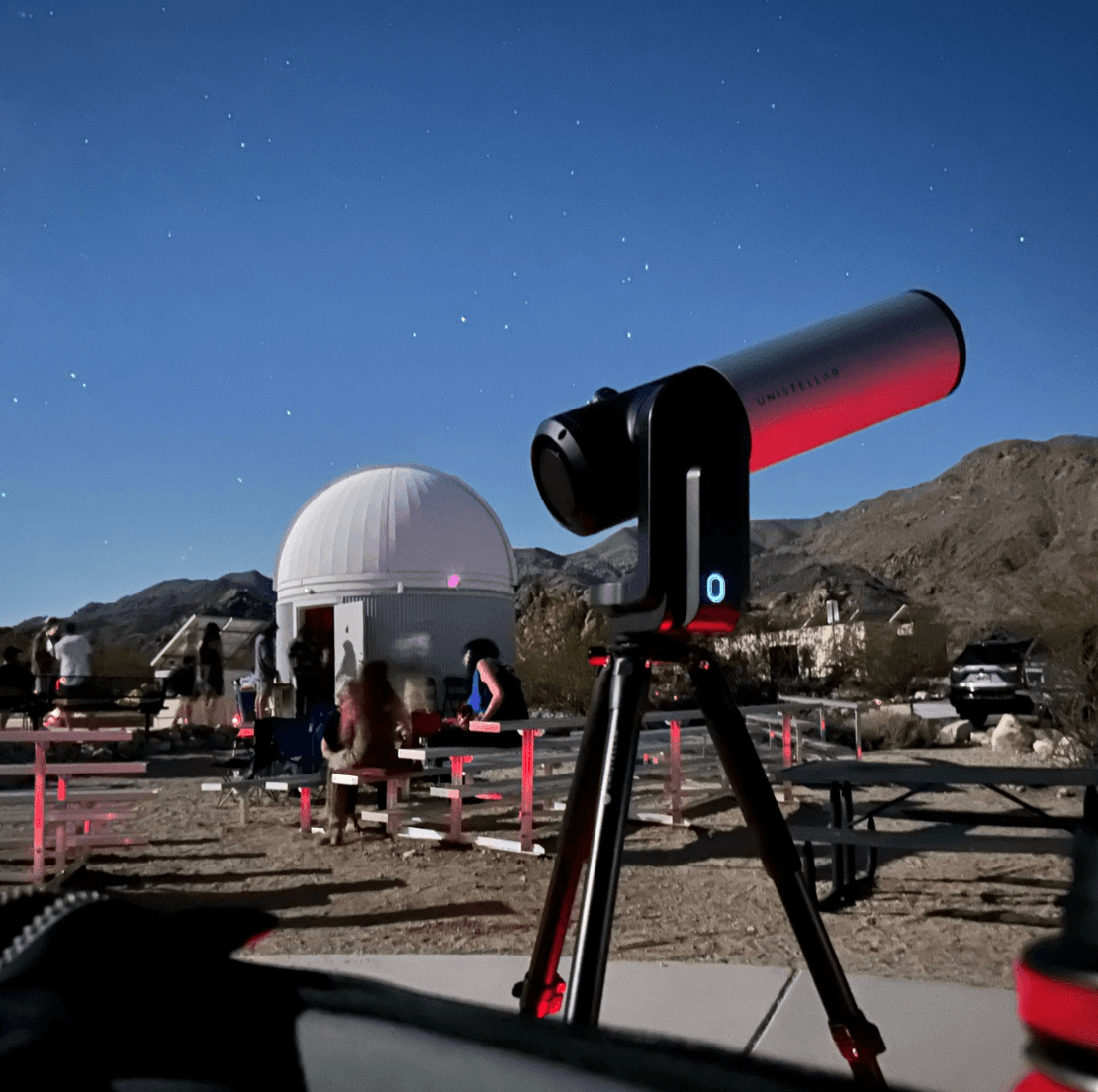
Recurring and series events, like the Sky’s the Limit monthly series, possibly a full moon or new moon party.
Markets, like a health or craft market.
Events that build on the success of other activities, such as gatherings adjacent to the farmer’s market.
The question of whether and how to professionalize events remained. Uyeda underlined this tension saying, “It’s not our role to teach people how to be professional. I’m happy to help out in workshops and kind of lead by example,” but also brought up that there can also be pushback from community members on the kind of accountability professionalism requires.
Uyeda also suggested that local organizers don’t need to “cosplay” as professional event producers, but instead simply explain how they will reach out to and activate their grassroots and peer networks to help spread the word about events in lieu of a professional marketing service. “If you’re going to take a grassroots approach, you need to build that coalition,” he explained.
In past discussions the TBID has also outlined the types of events they want to see, but these guidelines do not yet go so far as to explicitly state what they are looking for. If the TBID wants certain kinds of events, they could also still define what they are looking for and write that into the requirements.
Reporting, coordinated TBID advertising, and plan for public workshop still missing from next steps
While the discussion focused on the type of events and how much to grant, it did not touch on other approaches the TBID could take to help events professionalize and draw crowds. These strategies could include TBID sponsored advertising for multiple events, a holistic reporting system that all producers can use, and workshops with event producers and a committee of local event producers and business owners to come up with event ideas, as had been previously suggested in public comment.
Coming to any kind of conclusion was a challenge, as only three board members were present and the board is currently down a member following Madrid’s departure. The board suggested that Mehta send in comments on the proposed guidelines in writing. Following the discussion Shickler and Uyeda will further revise the guidelines and Mehta will send in written comments. A vote on the finalized guidelines will take place at the next meeting.
In other business, Shickler and Mehta will serve on the budget subcommittee. They will begin the development of the TBID budget for the 2026-2027 fiscal year, which will be discussed at the August TBID meeting and be presented to the City Council in September. It is unclear if the TBID is going to be pursuing conversion from the 1989 law, which requires yearly renewal, to the 1994 Property and Business Improvement District Law to enable a five-year renewal term. The TBID voted not to pursue conversion last year, and while conversion was part of their 2025-2026 marketing plan, it has not been a focus so far this year.
The TBID is also currently searching for a new board member to replace Maria Madrid. The board member must be a lodging stakeholder in Twentynine Palms. Eligible applicants include owners, operators, and authorized representatives of lodging businesses located within the district, including hotels, motels, vacation rentals, and RV resorts. The deadline to submit a resume a letter of interest was Friday, June 19, but it’s not clear if any applications were received.
If you are interested, letters of interest and resume can be submitted to the City Clerk by email, mail, or in person.
By Email: Cindy Villescas, City Clerk, cvillescas@29palms.org
By Mail or In-Person: Twentynine Palms City Hall, Attn: City Clerk, 6136 Adobe Road, Twentynine Palms, CA 92277
A date for the next meeting was not set.
Hi, new subscribers! Desert Trumpet understands you might not be interested in all of our coverage. That’s why it’s divided into separate newsletters allowing you to opt out of reporting that’s not important to you. For instance, you may want our Education news but not City Hall 29.
Here’s how to opt out: go to your Substack settings, scroll down to “subscriptions,” and select “Edit” for the Desert Trumpet. Simply uncheck the box next to the newsletters you don’t want to receive in your email inbox. You’ll still be able to access all coverage online if you change your mind.
Thanks to you, Desert Trumpet met our $10,000 paid subscription goal!!!
Not a paid subscriber yet? Did you know that paid subscribers receive discounts on our DT Social events and invites to DT Front Porch, intimate discussions featuring local officials and notable residents?
Upgrade to a $50+ paid subscription for a 10% discount.
Upgrade to $100+ for a 25% discount.
Sustaining subscribers at the $250+ level and above receive complementary tickets.
Leave your thoughts in the comments below. Please note that we do not allow anonymous comments. Please be sure your first and last name is on your profile prior to commenting. Anonymous comments will be deleted.
This coverage is free - please share!
Thanks for the report.
Worth noting is that the reporting on any grant from the City has gotten more onerous in the past year. Mojaveland has never applied for a TBID grant, but we do get PAAC grants (max $1000) to provide free art projects for children at events such as the Farmer's Market and the Levitt Concerts. I probably spent 4-5 hours going back and forth trying to get the reporting forms correct, when a few years ago we simply submitted a letter with all the details, receipts or invoices, and photos of the events. Those hours, and those of my bookkeeper, were not paid by the grant. So it's just not worth it, sadly.