
RECAP: Twentynine Palms Planning Commission, February 3, 2026
Residents raise legal, environmental, and aesthetic concerns ahead of a likely vote on the Harmony Acres Solar Farm

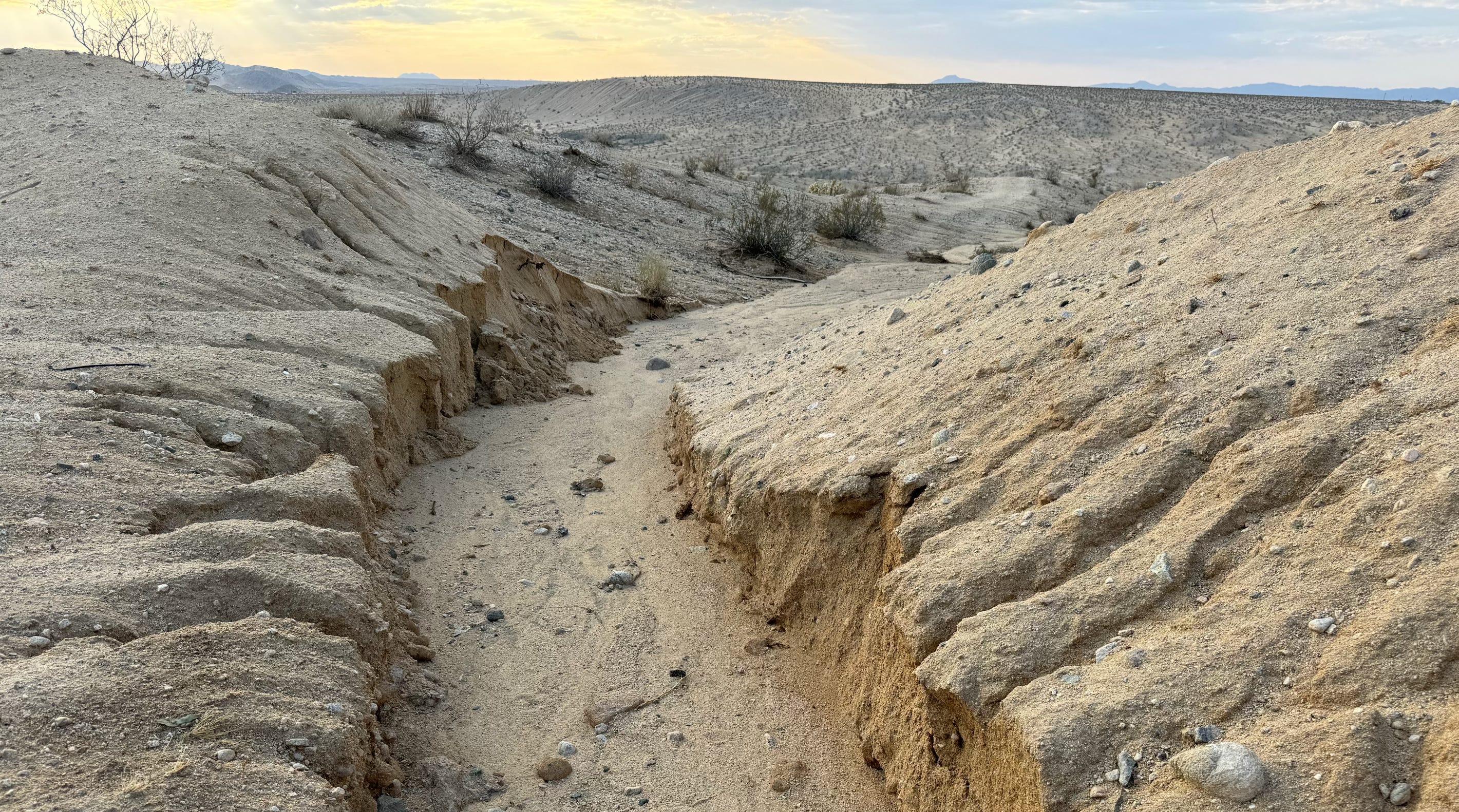
Residents set the tone at the February 3 meeting of the Twentynine Palms Planning Commission, where public comment was the only item on the agenda. All Commissioners were present, but because they cannot respond to items not on the agenda, they largely remained silent throughout the meeting, leaving residents as the sole speakers.
After public comment, the Commission adjourned to a closed session to discuss anticipated litigation or possible legal action involving the City. While the public was technically allowed to comment on the closed session item, the agenda did not say what the potential litigation involved, limiting meaningful public input.
Public Commenters Challenge Harmony Acres Solar Project Ahead of Conditional Use Permit Decision
A half dozen speakers made the case in public comment that the E-Group PS Solar Project, also known as the Harmony Acres Solar Farm, misrepresents the amount of energy it will produce and will have a devastating biological and aesthetic effect on the north side of Twentynine Palms. Granting a Conditional Use Permit for this project—which is currently sited on land that is zoned for Rural Living—will likely come up in the next Planning Commission meeting on February 17 or soon after.
The Desert Trumpet has covered this project in depth; a link to our stories is here.
David Fick of Joshua Tree argued that the Harmony Project’s 170-plus acres were unlikely to produce even 40 megawatts. He urged commissioners to scrutinize what he described as inflated claims and reminded them that approval authority rests locally, not with the state. He said:
So please understand this proponent for this project is bluffing you….They have to prove that they can even get above that to your board. Please understand that if they’re in a complete bluff, you have complete control over this project, and it’s not going to be by the state.


Suzanne Lyons reinforced those concerns with her own calculations based on inverter capacity, estimating a maximum output of roughly 38 megawatts. Lyons questioned why the 50-megawatt figure had been used to frame the project as inevitable under state law, noting that AB 205—which lawyers for the developers claim will force the City to develop the solar project—still requires environmental review.
It’s also a sloping landform, so that it would require mass grading, which would generate a lot of dust. And the plant is in city limits, with neighbors close by and …dust blowing out of the northwest would go into town. It’s always been our decision to act in the best interest of our community. And why would we really want this thing? What’s in it for us? A $100,000 payment to the City?
Lyons also questioned the nature of E Group, describing it as an offshore investment firm with unclear long-term commitments.
Peter Lang, a Twentynine Palms resident, invoked the city’s 2012 moratorium on industrial solar within city limits, calling it a deliberate effort to protect residential compatibility and visual character. Quoting directly from the project’s environmental documents, Lang emphasized that aesthetic impacts were deemed “significant and unavoidable,” with no feasible mitigation. He urged the commission to reject the proposal and allow the developer to pursue state approval if it believed AB 205 applied.
I just want us to sit back and think for a moment about having 170 acres of permanent ugly. The DEIR [Draft Environmental Impact Report] admits this project permanently damages the visual character of this area. It calls aesthetic impacts significant and unavoidable. Says there are no mitigation measures to reduce them to less than significant and states the facility would be in full view from key viewpoints and would substantially degrade the existing visual character of the area. ….For this reason alone, the project should be immediately rejected.

Thanks to our new paid subscribers, we are at $8935 in subscriptions, just $1,065 short of our $10,000 goal. Upgrade your subscription from free to paid today for just $50 per year or $5 per month.
Are you able to give more than $100? Donate via Paypal!
Pat Flanagan, a long-time resident, brought concerns about dust and health impacts. She described years of wind-driven dust from the solar project on Lear, which began operation in 2012. She noted the absence of battery storage in the proposal and disputed claims that the power would serve the local grid. “It’s all going into Southern Cal Edison’s station,” she said, “ and will not go to 29 Palms.”
Jeffrey Johnson of the Chocolate Drop area reiterated that the project is a city choice, not a mandate, and warned of cumulative impacts to neighborhoods.
And as you know, as we all remember, in 2012 we banned solar farms within the city limit for good reason. They impact our neighborhoods, and the benefit is is less than good. It’s not mandated, just as the sewer system was not mandated. It’s up to us to determine what is good for our city.
Mary Kay Sherry offered historical perspective, recalling community opposition to a proposed solar plant decades earlier and likening promises to “hide” today’s project to “hiding an elephant in a playground.” She shared personal observations of desert tortoises on the site, underscoring the land’s living value.
Here’s a photo of two tortoises sparring. They were doing what tortoises do in this neighborhood. It’s where they live. It’s their home. They’ve been there long before I came here. They’re happy there. They’re a viable community. We’re a viable community. We live here, we love it here, and we don’t want our community destroyed.
Heather Drake described, even after due diligence, discovering after purchasing her home that city zoning requires a full acre to keep even a single hen—far stricter than San Bernardino County rules. She asked the commission to align local regulations with County standards, citing food security and fairness.
Please consider amending the zoning regulations to just follow what the San Bernardino County zoning regulations are about backyard flocks, because I think they’re saying [how important they are] especially in such a rural environment as ours.
Carlos Blandon closed by urging commissioners to consider urban planning principles before approving projects with permanent landscape impacts:
We need to look around, determine how we want to move our zoning and concentrate development somewhere, and how we’re going to do it and what values were there before inventories are conducted according to the guidelines I can provide you in an email. They are three primary components to a visual resource inventory: scenic quality evaluation, sensitivity level analysis, delineations of distance zones based on these three components, and four visual resources inventory classes represent the relative value of visual resources.
After these public comments, Commission Chair Jessica Cure adjourned the session, saying:
Any public comment on closed session items will be taken before the closed session. Any required announcements or discussion of closed session, items or action following the closed session will be made in the city council chambers on anticipated litigation, significant exposure to litigation. Code section 5495, 6.9, d2, two cases.
After twenty minutes, the Commission returned to the auditorium and Chair Cure announced, “there were no reportable actions from our closed session. Meeting adjourned.”
Heading into the 2026 elections, Desert Trumpet has sustained a potential 50% cut in funding. Help us provide the coverage you’ve come to expect by becoming a paid subscriber or upgrading your paid subscription today!
Leave your thoughts in the comments below. Please note that we do not allow anonymous comments. Please be sure your first and last name is on your profile prior to commenting. Anonymous comments will be deleted.
Thanks for reading! This post is public so feel free to share it.