

By the Yucca Valley Resident Review Committee
The August 18 meeting ran over three hours, most of it spent on department reports and public comment. All agenda items including the twelve-item consent calendar, and the cancellation of elections in Districts 1 and 3 were approved 5-0.
Council heard the Town’s first homeless services update, a Sheriff’s report on off-highway vehicle (OHV) enforcement, and the fall and winter recreation lineup. Six residents spoke on OHVs and fire, two on the homeless services program, three on the election item, and nine more at the end of the meeting.
With memories of the August 6 one-acre blaze at Cholla Avenue and Golden Bee Drive still fresh, residents from several neighborhoods described the same pattern behind three years of fires: OHV riders setting off fireworks. They asked the Council to hold responsible parties accountable and to focus more on prevention.
Celebrating champions and community service
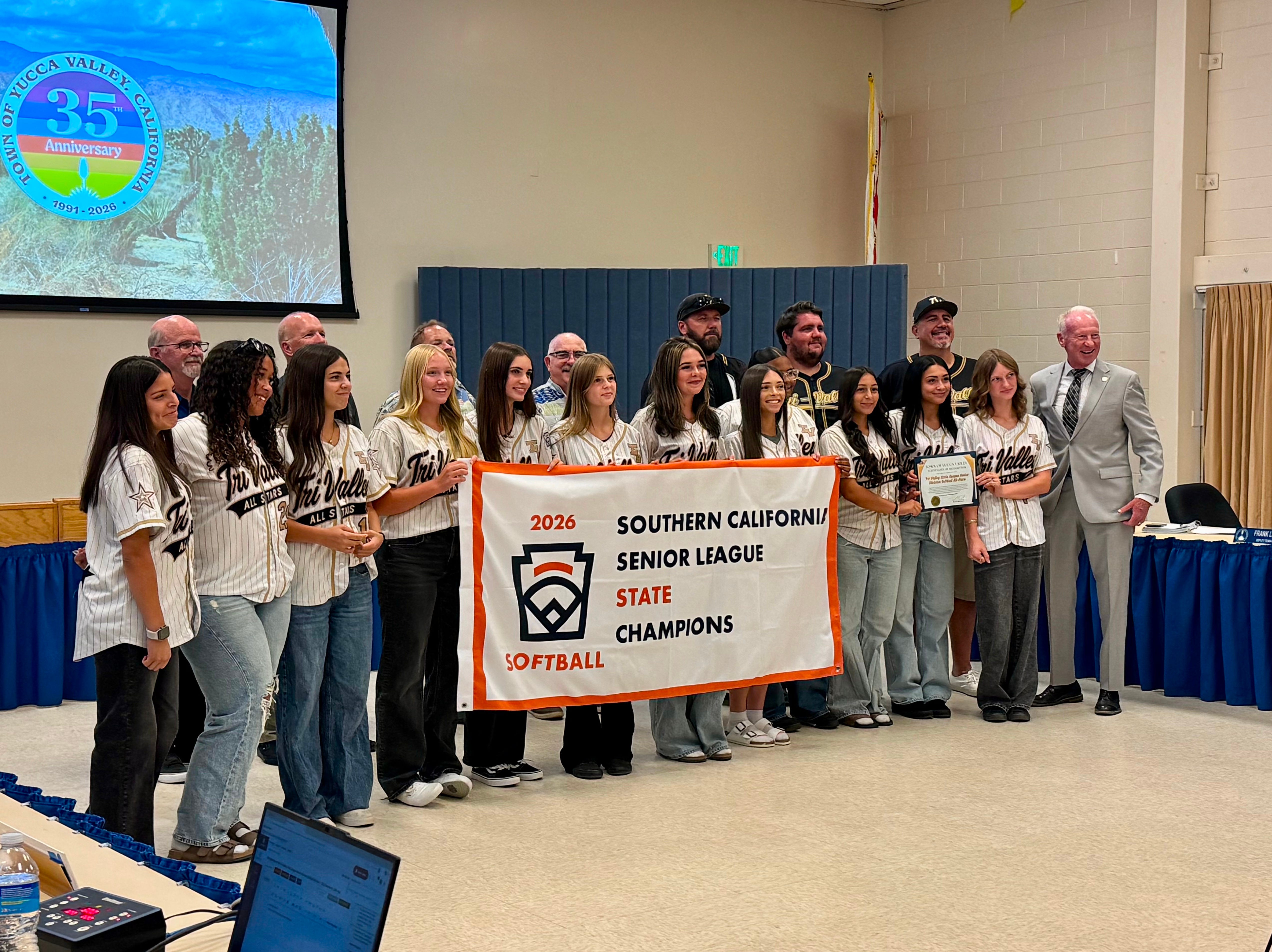
Starting on a high note, the Tri-Valley Little League Senior Division Softball All-Stars were recognized as 2026 Southern California State Champions, the first Tri-Valley team to reach the U.S. West Regionals, played in Montana. League president Lindsey Jones credited the dedicated young athletes, head coach Ernesto Gamboa Sr., and his assistant coaches for the historic win. Jones also described a heroic fundraising effort organized on roughly a week’s notice so no family would be burdened by the cost of the trip.
The evening’s second recognition went to the Joshua Tree Sportsman’s Club for its $1,500 donation to the Town’s animal shelter. Mayor Merl Abel noted the club has been serving the Morongo Basin for 79 years, supporting a wide range of local causes. Secretary and manager Jennifer Cornell said recent giving has gone largely to youth programs, including the Tri-Valley All-Stars ahead of regionals. The club funds its giving through bingo, held every Sunday 1:30-6:30 p.m. at the Joshua Tree Community Center.
The homeless services program gets its first numbers
Faith Nicholson, hired in June as the Town’s first Community Engagement and Homeless Services Coordinator, delivered a report to Council. The housing programs themselves belong to San Bernardino County and its nonprofit partners, not the Town, so much of Nicholson’s work is outreach, case management, and pushing the county's system to reach the Basin.
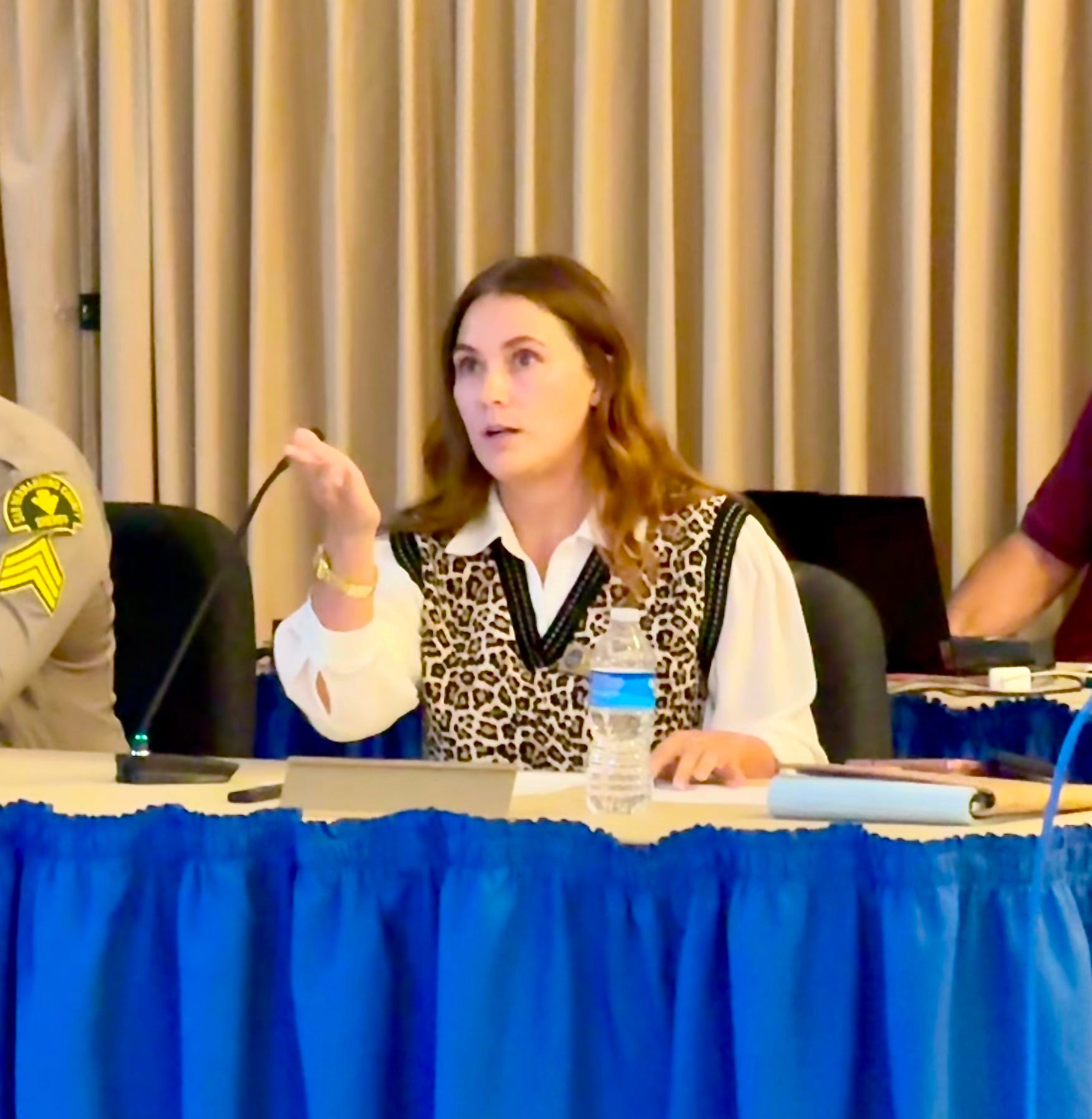
Nicholson covered program goals, a mapping system for tracking encampments and engagements, and the program’s first data. Much of it came back to Coordinated Entry, the county’s system for connecting people experiencing homelessness to housing and supportive services. A person fills out one referral, which goes into a pool that every participating agency draws from. Many housing providers use no other source, so a person who never gets entered is effectively locked out of the housing pipeline.
Right now the only source referring people into Coordinated Entry is 2-1-11, the free resource hotline run by Inland SoCal United Way. Its staff are based in San Bernardino and struggle to verify identity, income, and housing status for applicants in the Basin. United Way can subcontract that work to a local provider, but the U.S. Department of Housing and Urban Development (HUD) allocated only $7,000 for the year to run 2-1-1 and Coordinated Entry for the entire Morongo Basin, and no provider will take it on for that.
HUD allocates funds based on the annual Point-in-Time Count (PITC), a one-night census of people living unsheltered, in emergency shelter, or in transitional housing, which is why Nicholson underscored the need for an accurate number. Undercounting the Basin’s homeless population directly reduces the money available to serve it. The result shows in the numbers. The staff report counted 209 Yucca Valley calls to 2-1-1 between April and June of this year, 127 of them requests for housing. In the first six months of the year, only 35 people from the entire Basin were placed into Coordinated Entry.
Residents offer to pitch in
Two residents spoke. One, whose name was not recorded by the clerk, asked if the fledgling program was looking for volunteers. Melodie Chambers, in her first comment of the evening, asked if in-kind donations were being accepted. Nicholson responded that outreach isn’t set up for volunteers or in-kind donations yet, and offered her card. Abel redirected the volunteer offer to the January 2027 PITC, which Nicholson will run for both Yucca Valley and Joshua Tree. Because the count sets the Basin's funding and has to be done in a single night, he called it the first place to volunteer: more bodies, more accurate numbers. Nicholson agreed they need a lot of people for it. Abel also suggested the Town add a donation-referral link to its website, adding that “our nonprofits do a much better job than government in getting those items to those individuals.”
All five Town Council members commented with praise for Nicholson, with more than one saying the Town had found the right person for the job. Council Member Rick Denison called the McKinney-Vento count alarming. The staff report identified 457 Morongo Unified students as experiencing housing insecurity last school year under the federal definition, which counts children doubling up with other families or staying in motels, not only those unsheltered.
Denison asked why Yucca Valley was the only Basin community reporting anyone sheltered. Nicholson said other communities have people in transitional housing too, but County Behavioral Health had not been required to report its beds, so those residents never entered the count. Changes to the reporting rules take effect next year, which she said will bring those residents into the count for the first time.
A deputy dedicated to OHV enforcement
The Sheriff’s Department gave a staff report on OHV public safety. Sergeant Daniel Berumen filled in for Captain Steven Scovel and introduced Deputy Alex Camacho, who now holds a newly created position dedicated to OHV enforcement, homeless outreach, and quality-of-life calls across the Basin.
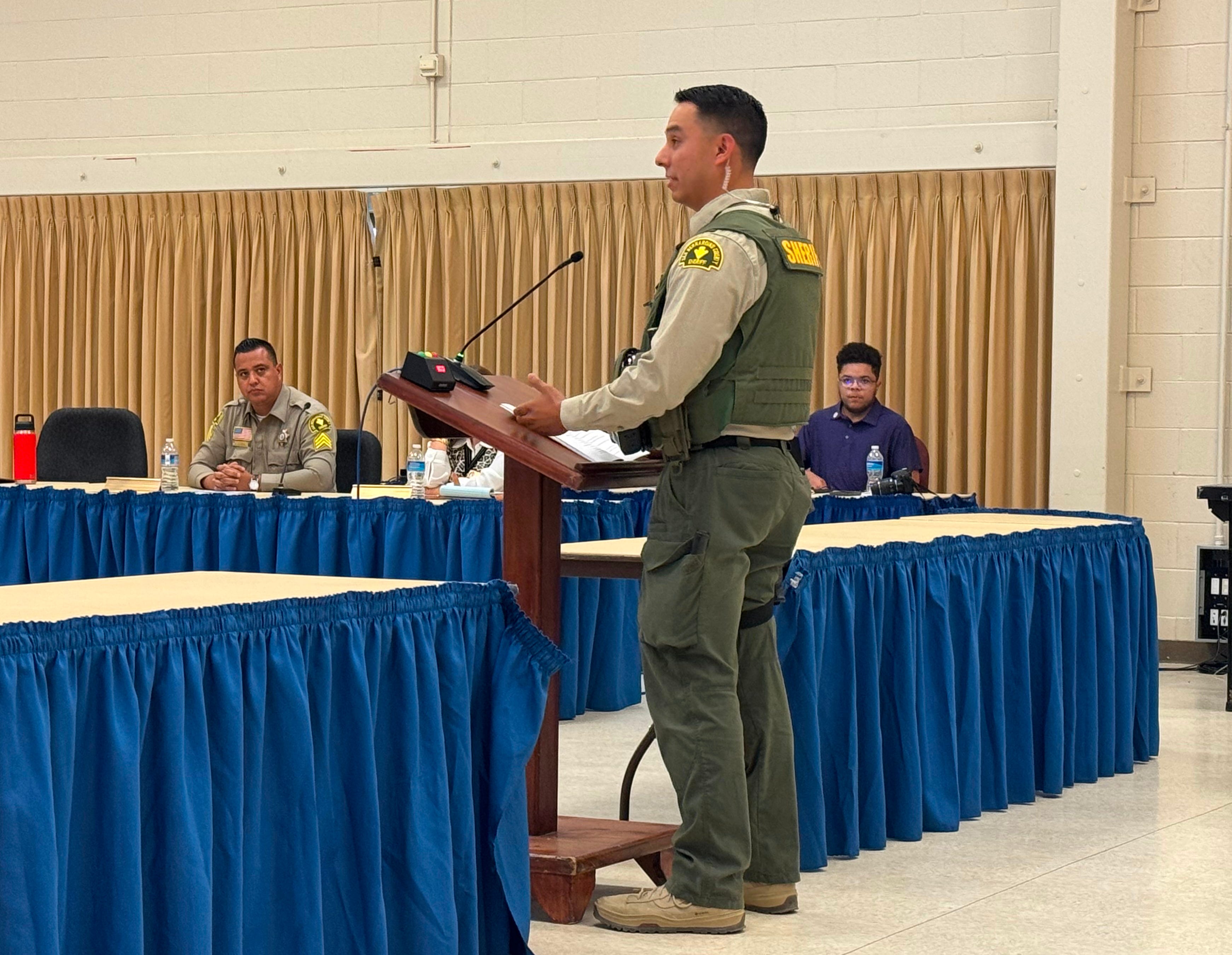
Camacho, who grew up riding off-road in the area, described the position as a response-time fix. OHV calls had been pulling patrol deputies off other work, whereas a dedicated deputy goes straight to the problem. He cited more than 400 OHV-related calls for service over three years, 150 of them between August 2025 and August 2026. Berumen added that the periodic targeted operations are zero-tolerance: every rider is cited, every unlicensed operator’s vehicle is towed regardless of age. Those operations have also produced several arrests, as well as seizure of guns, drugs, and paraphernalia being moved on back roads. No one has been charged in connection with any of the fires, though Camacho said he has an open investigation that could carry felony consequences.
Six neighbors, several fires, no accountability
The item drew six speakers, many from the Storey Park area, gathered by Alison Venanzi of Golden Bee Drive so they could “say the same things over and over again. We need help.” She described two fires behind her house, and credited the fire department with saving it twice. Venanzi said her husband was walking their dog on August 6 when “he saw the ATV (all-terrain vehicle) with three juveniles giggle and laugh and then shoot off a firecracker which then proceeded to burn the area behind our houses.” It wasn't the first time. A little over a year earlier, on July 23, 2025, Venanzi and her neighbors turned out to protect their homes from another fire investigators suspected began with illegal fireworks:
I was out on my back patio, I heard the firecrackers go off, I heard the kids on the ATVs. We had people in our neighborhood out with their hoses trying to save their houses…I want to save my house.
Jim Foote described infractions he watches almost daily: unaccompanied minors riding OHVs at high speeds without the required registration stickers. Foote said his career with the Bureau of Land Management taught him that signs and barricades don’t work:
OHV users often ignore signs, drive around barricades, or simply destroy them.
Sharon Motley read a statement on behalf of her daughter-in-law, Kimberly Hooper-Davis, describing the aftermath of the July 2025 fire that came within twenty feet of her house while neighbors dug a break line with shovels:
No one ever held accountable. Folks had emergency room visits that night from smoke inhalation. In the coming days, news of the event was misreported. Law enforcement was rude and dismissive, and we were left with no answers. We still have folks who shoot off fireworks. Every time I hear a dirt bike going down the road, my heart seizes, and I know that I have PTSD from that night.


Debbie Smith, a lifelong Yucca Valley resident, counted three fires in her neighborhood in three years. She called it "a linked connection between illegal off road vehicle use and delinquent behavior with fireworks," and said parents have to be accountable:
I'd like to promote community awareness in some way other than just at these meetings, and I'd also like to ask that we educate the youth to help them be better than maybe they have been acting.
Stephen Dreher pointed out that the August 6 fire burned right across the street from the Valley Care nursing facility, “the town dodged a bullet that night:”
I feel also locally there’s a lot of disdain for the desert, especially coming from the dirt bikes. I think we could use better education, especially in the schools, because these are where the dirt bikers and the ATV guys are coming from. I think the kids might really learn something more from that. So I think we need an attitude adjustment.
Sherry Novak said she has been calling the OHV line for nine years, and described witnessing a collision involving a minor.
…completely unsupervised, he ran the stop sign at the end of Desert Gold and rear-ended a lady, she narrowly missed running him over on Amador. Parents weren’t anywhere around. Now my understanding is that to ride the streets you have to have a driver’s license. I don’t think a child around the age of nine has a driver’s license. And he certainly shouldn’t be running up and down the streets in our neighborhood.
The common thread was a call for accountability, for prevention beyond signs and fences, and for increased outreach and education.
Questions from the dais, but no direction
Council Member Jeff Drozd asked whether Ring camera footage helps. It does, Camacho said, calling the videos “huge” and noting that footage from the days before and after an incident helps as well. Asked whether vacation renters were a source, Camacho said no, “it seems to be mostly locals.” Mayor Pro Tem Jim Schooler asked whether Camacho can reach remote areas; Camacho said his truck and side-by-sides get him anywhere the riders go. Denison, a lifelong off-roader, said he sees the vehicles out patrolling and supports the program. Council Member Robert Lombardo asked about school-based education, and Camacho, a former school resource officer, said he’d add it to his notes.
Abel asked whether the position was grant-funded. Camacho said it isn’t. The hours count as regular patrol time, so he can adjust his schedule and days rather than waiting for a funded operation. The grants pay only for the periodic large-scale enforcement pushes that field fifteen or more deputies. Abel shared his reasons for including the item: “I also wanted to put it on the agenda so people could know that we are doing something. So the statement that we’re not doing anything would be incorrect.”
The Council took no action and set no date to revisit the issue.

Tickets just went on sale! Get yours before they’re gone!
A full slate of fall and winter programming
Community Services Manager Susan Earnest led a multi-presenter walkthrough of the fall/winter lineup, with staff covering exhibits and the renovation closure at the Hi-Desert Nature Museum, special events, sports and fitness, enrichment classes, and senior programming at Desert Willow. Recreation Supervisor Jakub “Kuba” Kusmieruk noted with enthusiasm that this will be the last youth basketball season before the Yucca Valley Aquatics and Recreation Center (YVARC) gives the program a permanent home. A standalone YVARC launch publication comes to Council this fall. The full activity guide is published on the Town’s recreation page.
Two elections canceled, citing savings the staff report doesn't document
Town Clerk Brooke Dudra presented the resolution canceling the November 3 elections in Districts 1 and 3. Elections Code § 10229 allows the Council to appoint a sole nominee instead of holding an election, which in this case means Schooler in District 1 and Abel in District 3, each to a four-year term. Cancellation hasn’t been an option in recent cycles: in 2022 and 2024, ballot measures (K, then Y and Z) required an election regardless of whether Council races were contested. This year there are no such measures.
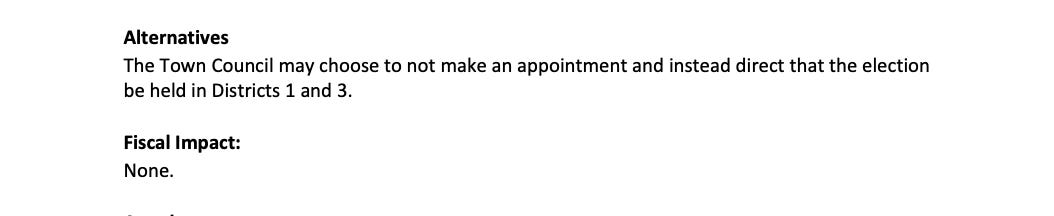
District 5 is the exception: Rick Denison drew a challenger in Dion Antic, so that race proceeds to November 3 regardless. What the cancellation removes is two uncontested races from an election the Town is holding anyway. Dudra told the Council that canceling would save approximately $30,000 in election-related costs, a figure that appears nowhere in the 339-page agenda packet.
A bad look
Resident Erin Gatlin, the first speaker, opposed the resolution on both procedural and democratic grounds. Gatlin described what the cancellation would cost the Town in credibility, and what it would cost voters in Districts 1 and 3.
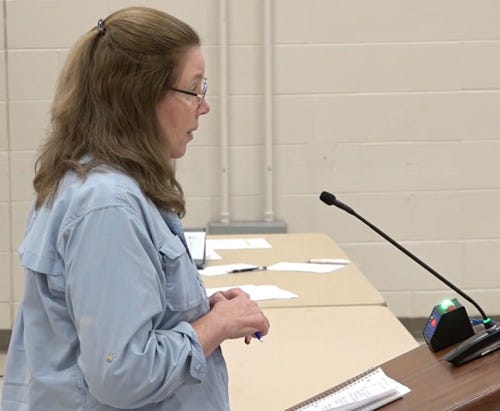
While you may be able to cancel the vote for Districts 1 and 3, it’s a bad look, and not one that we want for the town…it’s a bad look because you’re taking away people’s opportunity and their right to vote, either to vote for their affirmed candidate…or the opportunity to write in another candidate. That is something that is allowed in our democracy…and we should give people the opportunity to do that.
Gatlin also questioned the fiscal impact claim, and noted the absence of documentation.
I did look very carefully at the information provided before the council meeting. I looked at the packet, I looked at it twice…and I am not finding all the information that indicates the fiscal impact. The information…that’s included in the packet says no fiscal impact.
Alison Venanzi, returning for a second comment, urged the Council to leave both options on the table:
I think that we should uphold our Constitution and have the right to vote. And I agree that we have the right to write in, and we also have the right to bubble in our favorite candidate, and whether it be you again, give me the honor to do that. And don't take my right away of my bubble.
Melodie Chambers, also offering her second comment of the evening, supported the cancellation:
Yeah it is my right to vote, but it’s also my right to choose not to vote. But the fact of being able to save $30,000 because we’re not hosting this vote is smart.
Five yes votes and no recusals
Abel said he was nearly persuaded by the opposing comments until he heard the $30,000 figure.
I don't want to spend $30,000, even though it may not look good to some, but I think again we have to be good stewards of the taxpayers' dollars, and so I would support this resolution as drafted.
He told the Council he had researched write-in success rates and found them to be “basically 0%.” Lombardo said he “hadn’t thought of it taking away the right to vote, but it does.” He supported it anyway, calling the outcome almost inevitable with only one candidate running.
Two of the three public commenters had asked the Council to hold the election, yet the discussion turned instead to the topic of districts. Abel said districting was responsible for taking away voting rights by reducing how often residents get to vote for the school board and the water district, among other seats. Abel also argued that Yucca Valley had no need for districts in the first place.
In a small community, our districts were pretty much the same. There's no big pockets of any particular groups that are not represented because we're pretty well dispersed.
Schooler said that before 2018, as many as nine candidates might file for three at-large seats, and that districts have discouraged people from running “because they don’t feel as though they have a chance to win.” Drozd said districting "ruined a lot," noting that without it, all three seats would have been on a single town-wide ballot. That scenario would also have foreclosed Tuesday's vote: under § 10229, an at-large election with four candidates for three seats could not have been canceled at all. Abel closed by saying the Town adopted districts “because of pressure through lawsuits.”
No lawsuit was filed. In September 2017, the Town, along with several other Morongo Basin agencies, received a letter from attorney Kevin Shenkman alleging its at-large system violated the California Voting Rights Act. After a closed session, the Council directed staff to begin establishing five single-member districts, a step the Town said was taken to avoid spending tax dollars defending a potential lawsuit. State law lets small-city councils make that change by ordinance, without a vote of the public.
The resolution to cancel elections in Districts 1 and 3 passed 5-0. No one recused, so Schooler and Abel each voted to seat themselves for four more years without facing voters. Town Attorney Thomas Jex’s only contribution to the item was to confirm that one resolution covered both districts and would be handled by a single motion.
Palm Springs had the same option and declined it
Yucca Valley wasn’t the only desert city facing the choice. On August 20, two days after the Yucca Valley vote, the Palm Springs City Council called a special meeting to decide whether to appoint Councilmember Jeffrey Bernstein, the sole nominee in District 2, or to hold the election for that district. The city clerk estimated the cost at $22,0002. The Palm Springs council voted 3-1 in favor of the election anyway.
Councilmember Ron deHarte called voting “the most valuable right our citizens have,” framing it as a matter of principle rather than a judgment on Bernstein. Mayor Naomi Soto cast the lone vote to appoint. Bernstein, told by the city attorney that he was not required to recuse himself, abstained.
Because Palm Springs retained the ballot listing, the write-in path is still open. Anyone who wants to challenge Bernstein can file as a write-in candidate between September 7 and October 20, and voters there can write in a name on election day. Yucca Valley voters lost that option on August 18. Appointment bars the Town Clerk from accepting write-in filings.
In Twentynine Palms, Mayor Daniel Mintz remains on the November ballot despite running unopposed.
Staff asked to revisit cannabis rules and study a return to at-large elections
During the future agenda items segment, where Council members can request topics for later meetings, Lombardo asked for two. The first picked up the districting question from the election item: he asked what the Town would need to know to move back to at-large elections. Drozd and Abel both signaled support.
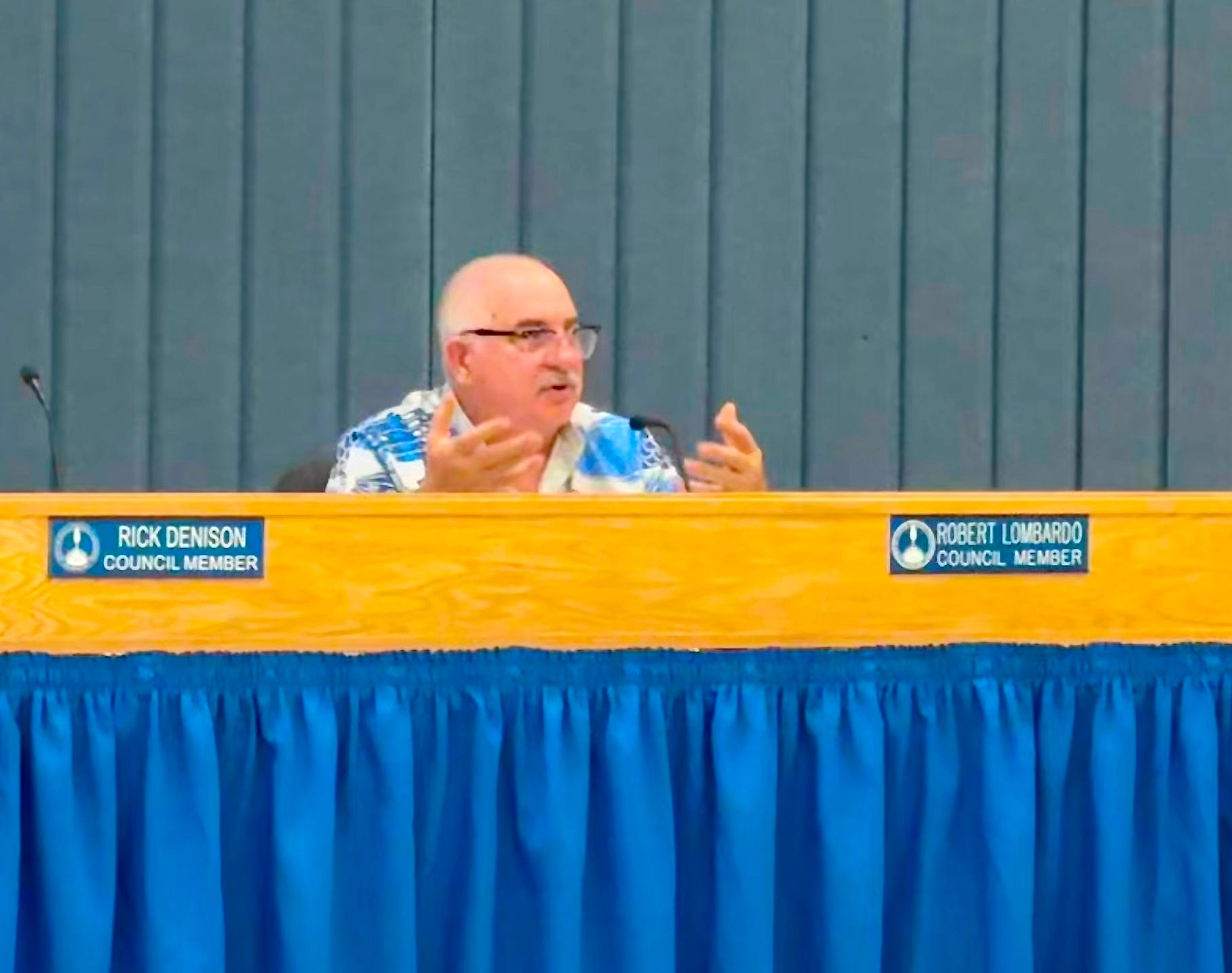
The second: a review of the Town’s cannabis prohibition. Lombardo’s argument was economic. Deliveries from Desert Hot Springs, Palm Springs, Apple Valley, and Lucerne Valley already reach Yucca Valley residents, while the sales tax and the jobs land elsewhere, and the one local medical distributor is barred from competing. He excluded storefront dispensaries, saying voters had rejected those, but Drozd said he’d want walk-in dispensaries left on the table as well. Abel agreed the Town is losing revenue, noting the state has barred local governments from blocking delivery since 2021.
Unmentioned was the Twenty-Nine Palms Band of Mission Indians' Red Falcon dispensary, a walk-in retailer that opened in December 2024 on sovereign land along Highway 62 at the edge of town, beyond the reach of the Town's prohibition.
The future agenda queue already includes short-term rentals, outdoor lighting, open spaces, the Old Town Specific Plan, hospitality and commercial zoning, minimum square footage, and the downtown parking agreement. The length of that list prompted Abel to ask for a staff report before anything gets scheduled. Town Manager Curtis Yakimow summarized the direction as a technical brief, with the Mayor deciding placement afterward.
The rodeo question returns, off the agenda
Nine residents spoke during general public comment, the segment near the end of the meeting reserved for topics not on the agenda. The Brown Act bars discussion and action on those items, though brief responses, clarifying questions, and referral to staff are permitted.
Four spoke about the rodeo, a subject residents have raised at three consecutive meetings without it appearing on any of those agendas. Rather than a ban on rodeos, Caroline Havens of Morongo Valley, Brenda Calvillo of Twentynine Palms, and Corbett Brattin of Cathedral City asked the Council to prohibit tools deemed harmful, especially flank straps, electric prods, and spurs. Havens asked that it be placed on a future agenda, as opponents have before. No member took it up.
Calvillo explained what a flank strap does:
Without a flank strap, the animal will buck occasionally, but not on demand.
Havens called them "barbaric tools" that "have no place in civilized society:"
I understand that rodeo is something that some people seem to have an attachment to, and I respect that people in our community can have different opinions about it. But I also believe that our community should be willing to examine traditions when there are legitimate concerns about animal welfare, public safety, and whether certain forms of entertainment reflect the values we want our city to promote.
Brattin, a former ranch veterinarian, read a letter from veterinarian and former prosecutor Dr. Peggy Larson detailing injuries to rodeo animals. Michelle Walsh, a humane services officer from Palm Springs, said mutton busting, in which children cling to a sheep as it bolts around the arena, has caused head injuries and broken bones despite protective gear.


None of the four rodeo speakers live in Yucca Valley. In July, rodeo opponents were accused of being outsiders, but those who spoke were Basin residents. That was less true on Tuesday: two of the four came from down the hill. Abel addressed it without naming it, thanking “everybody that spoke, whether you live within the town limits or outside the town limits.”
Rent, fire risk, and Flock cameras
Melodie Chambers, a resident of the Gates of Spain Mobile Estates and a board member of the local Golden State Manufactured-Home Owners League chapter, said her space rent has risen from $427 to $845 in six years with no park improvements:
There's been a lot of members who have stated that they're going to have to sell their homes and move out because they can't keep affording the increase…My concern is that we’re going to end up losing really good residents, because my next-door neighbor is selling their house because of the increase.
Chambers asked whether the Council could cap increases at senior parks. Abel returned to it in his closing statements, noting the Council’s past work protecting senior parks and saying that limited incomes leave seniors vulnerable. He suggested it may be something to revisit.
Krista Wargo listed this summer’s fires: five acres near the high school on June 5, a half acre on July 4 with fireworks found near the origin, and the August 6 fire across the hill from her house. She highlighted the connection between fires and insurance premiums, noting that homeowners are seeing rates climb and policies canceled. Wargo’s own premium is going up to over $6,000 a year. She asked how many property owners have been cited for fireworks this summer and how many fines collected, and requested the figures appear in an upcoming code compliance report:
If we want this law to stop people from setting off fireworks, there has to be real and predictable consequences. Otherwise it’s just a law on the books.
Cheryl Contopalos, a shelter volunteer, challenged Council and staff to visit and photograph themselves with the roughly 90 dogs there, about 60 of them adoptable. Robert Hark asked whether the softball field could be dragged on Wednesdays, when he plays, rather than only Tuesdays and Thursdays.


Dudra entered a written comment from Benjamin Heywood objecting to Flock surveillance cameras installed near his home, writing that being tracked in his hometown “feels draconian — and honestly, a little creepy.” He said the city he moved from removed its Flock system after an audit found misuse and false positives, and asked the Council to reconsider the Town’s relationship with the company.
Staff and Council comments
Sergeant Berumen thanked the Town for a Justice Assistance Grant (JAG) the department had banked over several years to buy an off-road motorcycle, delivered the previous Friday. Shop with a Cop on August 1 served 50 children with about $10,000 in school supplies. Monthly figures: roughly 2,000 calls for service, 200 reports, 40 arrests, and just under 100 citations.
Town Manager Yakimow reported the regional pickleball facility is nearing a ribbon-cutting. He also said AB 1808 and AB 1663, two bills that would significantly change the Western Joshua Tree Conservation Act, had been amended in ways “very positive for Yucca Valley,” principally mitigation-fee relief for existing single-family lots, plus a possible delegation of permitting authority to the Town. Denison, who said he speaks with legislators regularly, credited residents and business owners for advancing the bills with their personal testimony.
Schooler reported from the animal shelter subcommittee, which met August 5 covering both June and July: favorable statistics, full staffing, an active volunteer program, and enough cooperation between shelters that Yucca Valley took in surplus cats from Palm Desert. The subcommittee meets again September 17.
Drozd noted the range of presentations and public comment and reminded residents they can contact the Council between meetings. Lombardo, congratulating the softball team and thanking the Sheriff’s Department, returned to his earlier point that educating children about fire danger and legal riding is where prevention starts.
Abel closed by thanking the evening’s speakers and praising the Town’s long-standing contract with the Sheriff’s Department, which he called one of the founding Council’s best decisions.
The next regular meeting is Tuesday, September 1, 2026, at 5 p.m. in the Yucca Room.
This report was produced with some AI assistance, reviewed, edited, and fact-checked by humans. Please see our AI policy.
Hi, new subscribers! Desert Trumpet understands you might not be interested in all of our coverage. That’s why it’s divided into separate newsletters allowing you to opt out of reporting that’s not important to you. For instance, you may want our Education news but not City Hall 29.
Here’s how to opt out: go to your Substack settings, scroll down to “subscriptions,” and select “Edit” for the Desert Trumpet. Simply uncheck the box next to the newsletters you don’t want to receive in your email inbox. You’ll still be able to access all coverage online if you change your mind.
Support Desert Trumpet’s coverage of Yucca Valley Town Council — become a paid subscriber and get discounts to DT Socials!
The Desert Trumpet’s reporting will always be free. That said, did you know that paid subscribers receive discounts on our DT Social events such as our upcoming DT Social 2 pool party on September 17 and invites to DT Front Porch, intimate discussions featuring local officials and notable residents?
Upgrade to a $50+ paid subscription for a 10% discount.
Upgrade to $100+ for a 25% discount.
Sustaining subscribers at the $250+ level and above receive complimentary tickets
Leave your thoughts in the comments below. Please note that we do not allow anonymous comments. Please be sure your first and last name is on your profile prior to commenting. Anonymous comments will be deleted.
This coverage is free - please share!
“2-1-1 is a free telephone number providing access to local community services. 2‑1‑1 is available in multiple languages, allowing those in need to access information and obtain referrals to physical and mental health resources; housing, utility, food, and employment assistance; and suicide and crisis interventions. 2‑1‑1 also provides disaster preparedness, response, and recovery during declared emergencies.”
Neither city pays a flat fee up front. Under California Elections Code § 10002, cities and towns contract with their county registrar to run municipal elections and reimburse the county for services performed after it submits a bill. Yucca Valley contracts with the San Bernardino County Registrar of Voters.
I contacted the mayor the day after the meeting about the missing information from the agenda package related to the fiscal impacts of not sending ballots to districts 1 and 3. The agenda package also did not include a rational to support canceling the election in those districts beyond that they could. The mayor did not address my concerns. I disagree with the councils vote. But I wouldn't necessarily have gone if I had had the missing information in advance. That's three and a half hours of my life I won't get back.