
She's Been Here the Whole Time: And the Game Has Never Been Better
Plus a short list to lean into the WNBA

Here’s what I want you to know before I tell you anything about basketball: the WNBA (Women’s National Basketball Association) is one of the most important professional sports leagues in America — not just for social justice, though it has a record there that will stop you cold — but for what it represents about labor, visibility, race, queerness, and who gets to be seen as extraordinary. If you have ever cared about any of those things, this league is for you. It will not be for everyone. But it will be for more people than currently know it.
And you don’t have to take my word for it. Walk into local spots like Tiny Pony or 29 Palms Beer Co on the right night and look up at the televisions. There’s a good chance you’ll see women’s basketball. That’s not a fluke — it’s happening in bars and living rooms across the country. A Portland bar called The Sports Bra, founded by chef and former basketball player Jenny Nguyen, shows only women’s sports and made history as the first women’s sports bar of its kind when it opened in 2022. With backing from Alexis Ohanian — Reddit co-founder, husband of tennis legend Serena Williams — it’s now franchising to Boston, Indianapolis, Las Vegas, and St. Louis, with more cities likely to follow.
To understand why any of that matters, you have to know where this league came from — and what it has been carrying the whole time.
A Brief History — and Why It Was Never Brief
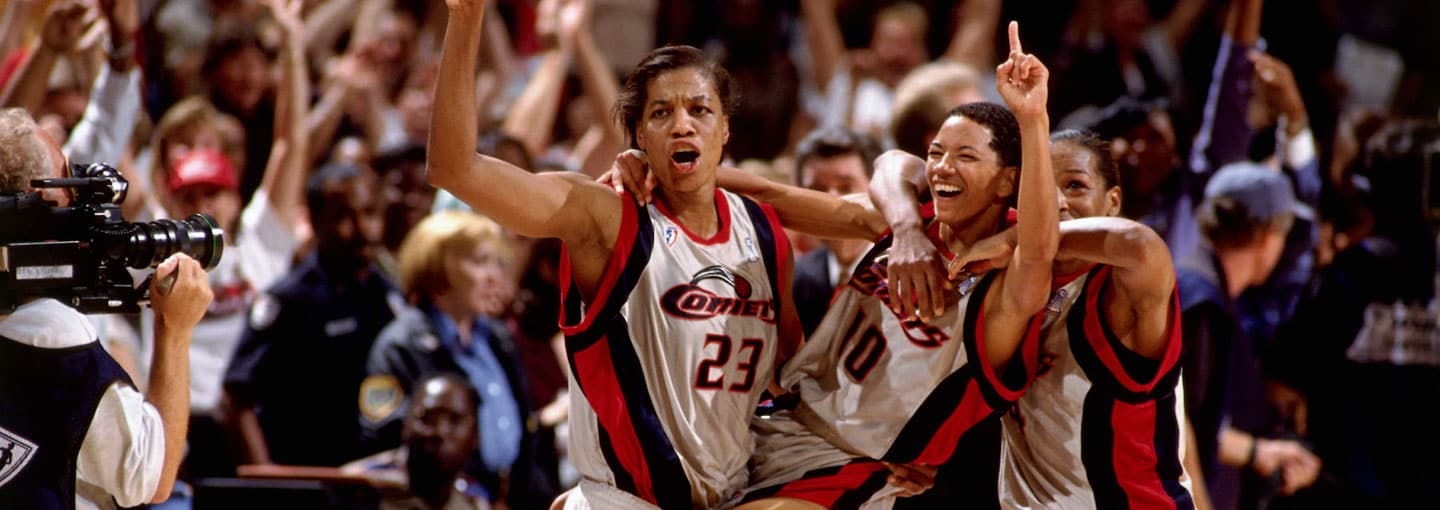
The league was founded in 1996 and played its first season in 1997 — four teams, a summer schedule tucked in around the NBA calendar like an afterthought. From the beginning, the criticism was familiar: not enough scoring, not enough speed, not enough dunks (or men).
What the critics missed — what they always miss — is that these same women were simultaneously the most dominant force in international basketball. The U.S. women’s national team, powered entirely by WNBA players, won eight consecutive Olympic gold medals from 1996 through 2024, becoming the first team in any sport in Olympic history to accomplish that feat. Eight straight. They haven’t lost an Olympic game since 1992. They came home from Paris with gold, then came back to play in arenas that were often half-empty, in front of cameras that were often not there, for salaries that didn’t come close to reflecting what they were worth. They did it anyway. Every summer. For nearly thirty years.