
Solar on Twentynine Palms' Doorstep: How the County Approved a Project Its Own Rules Should Have Stopped
Is the Lear Solar project a warning for unincorporated communities across the Basin?

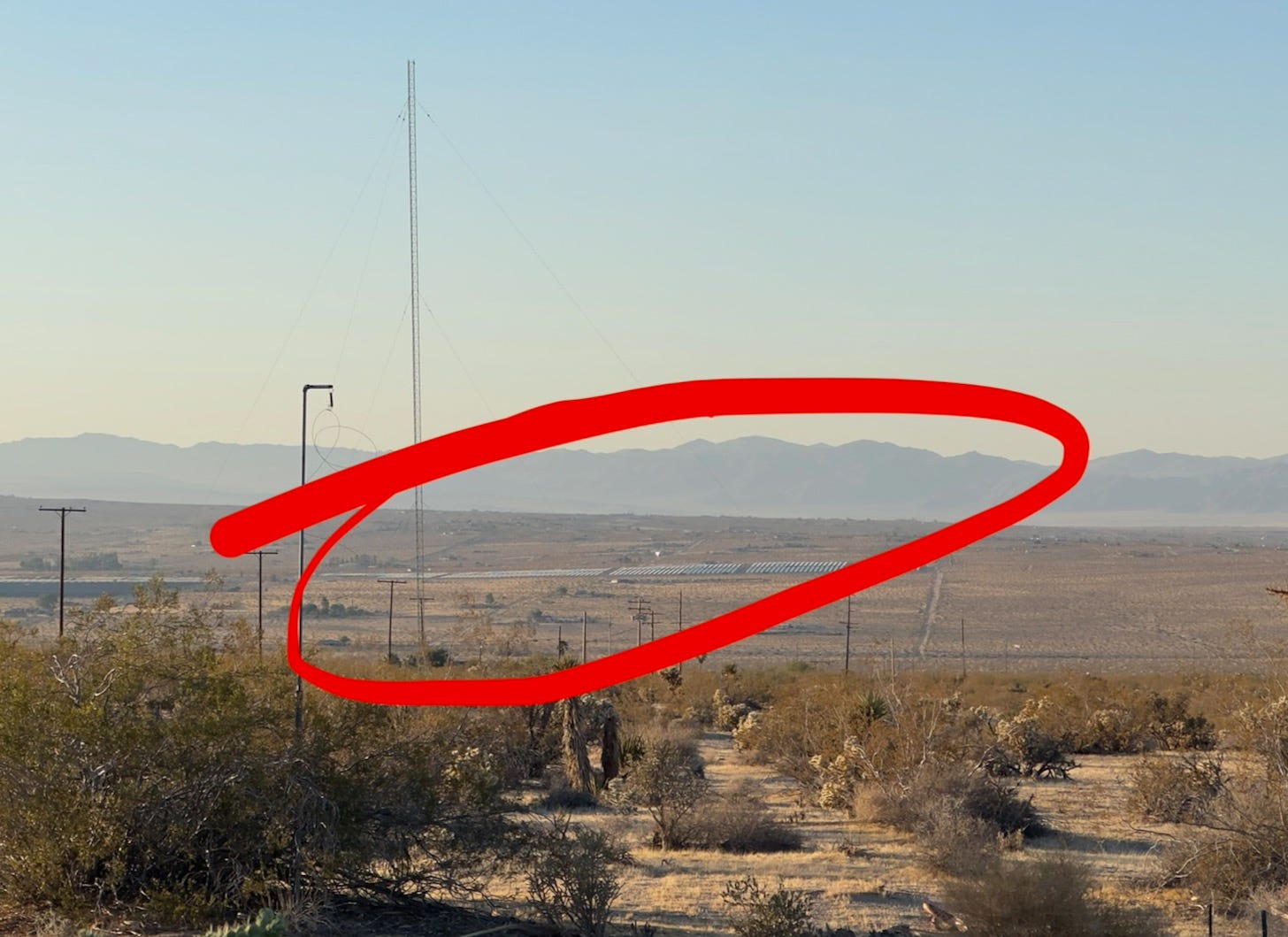
The San Bernardino County Planning Commission approved a utility-scale solar project just outside Twentynine Palms on a finding that let it sidestep its own ordinance and without the notice that same ordinance requires be given to the water district serving the site.
The 9.9-megawatt Lear Solar Project, now under construction on unincorporated land in Desert Heights, was approved in January 2025 after County staff determined the site was “not located within the Sphere of Influence of a city.” That finding is contradicted by the same staff report’s own cover page, which lists the site’s sphere of influence (SOI) as Twentynine Palms and by the County’s own LAFCO1 mapping. The distinction is not academic: under the County’s code, a project inside a city’s SOI must be found consistent with that city’s zoning, and Twentynine Palms has banned utility-scale solar since 2012. The report’s erroneous finding is what allowed any reckoning with the City’s ban to fall away.
The County's code also required that the water district serving the site be notified when the application came in. It wasn't.
Residents on the west side of Twentynine Palms who looked north and saw a new silver line spreading across the desert and other Morongo Basin locals living in the midst of undeveloped land might wonder, “How does San Bernardino County decide where utility-scale solar gets built, and who gets a say?” Much of the answer runs through Lear Solar and a set of rules the County wrote for itself but appears not to have followed.
The Lear Solar Project
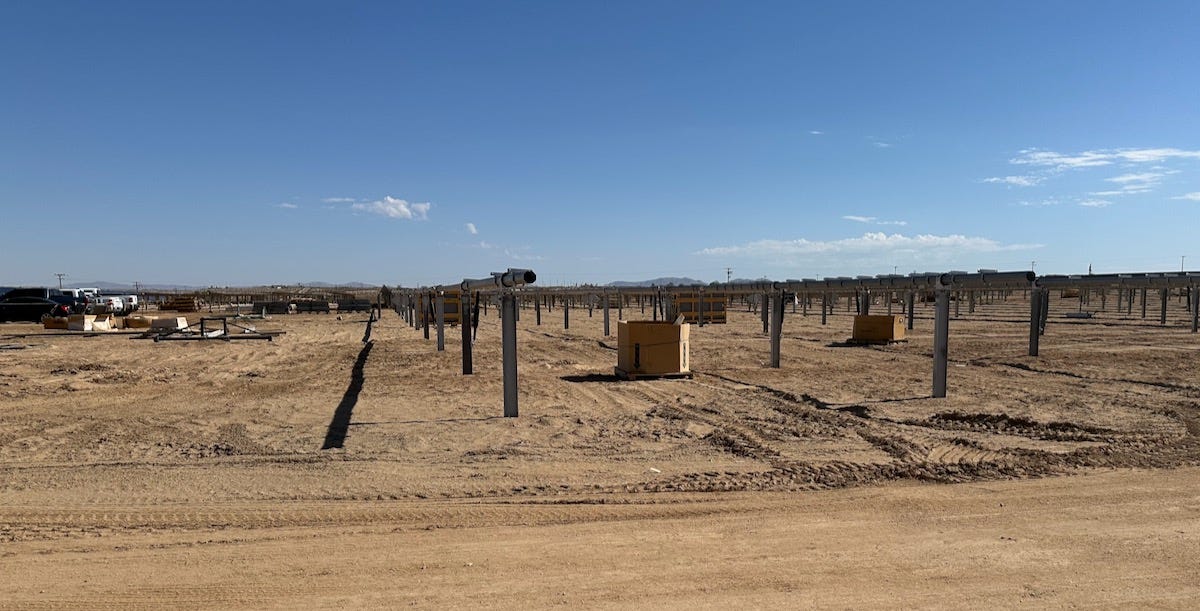
When we visited the site on June 23, construction was visibly unfinished. Many of the panels were not yet mounted and a worker on site confirmed the array was not yet complete. The work had been underway since early 2026, and as it progressed, a number of readers flagged it to us, among them two Desert Heights residents who described dust from the site clouding the air.
The parcel is owned by Lear 29 LLC,2 a California company formed in September 2021 whose mailing address is in Laguna Woods, an Orange County retirement community more than a hundred miles away and one of several absentee owners of land in this corner of the Basin. The company’s registered agent is listed in state records as Jeffrey Chao, of Lake Forest.
The project pairs about 48 acres of solar panels with on-site battery storage within a roughly 62-acre development area on the 80-acre parcel. The developer, RPCA Solar 15 LLC, leases the site from Lear 29 LLC. RPCA Solar 15 is an entity of Renewable Properties, LLC, a San Francisco solar developer founded in 2017 by Aaron Halimi, who remains its chief executive; the company reports more than 1.7 gigawatts of projects in development across 17 states.
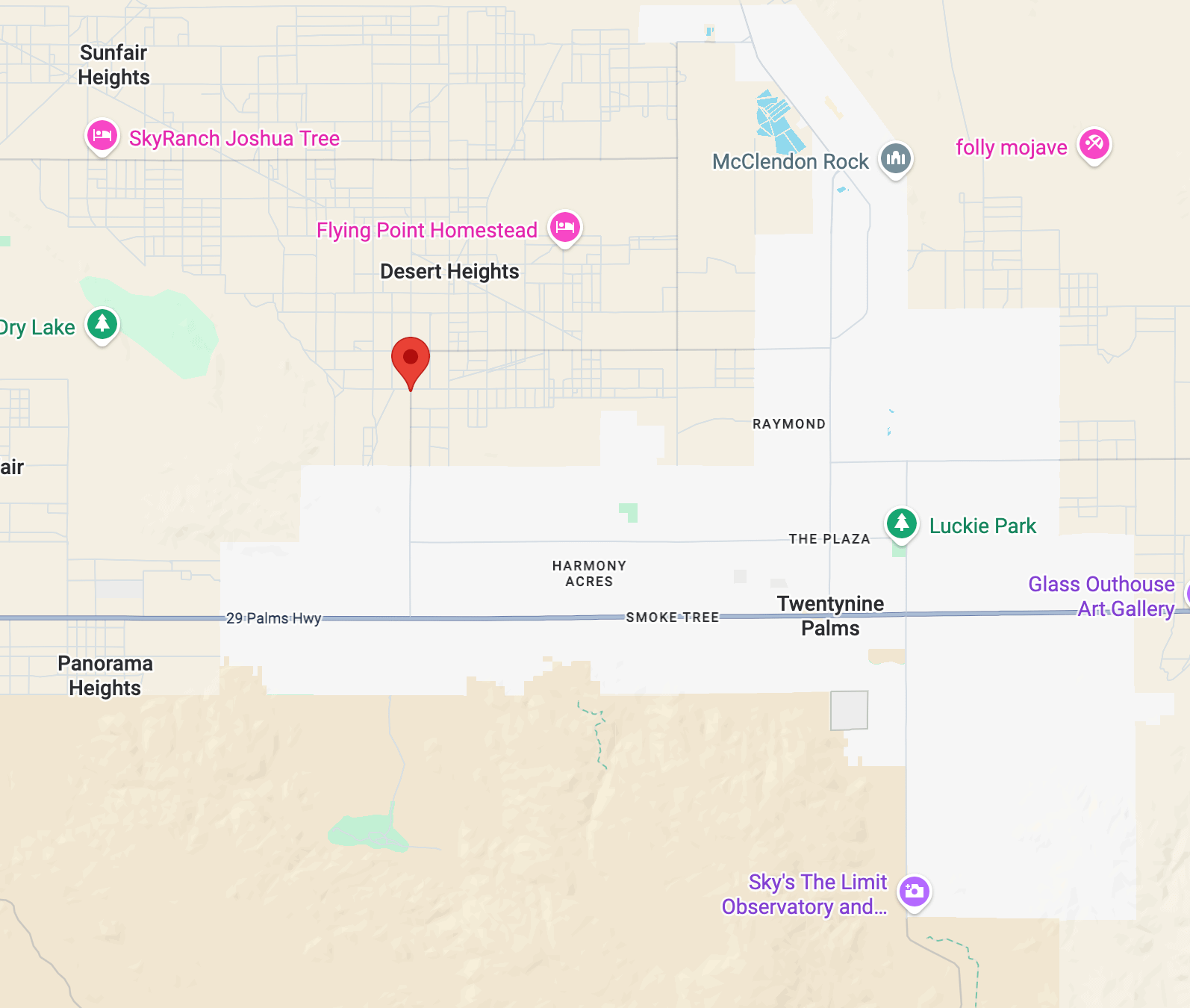
San Bernardino County approved Lear Solar as a Community-Oriented Renewable Energy (CORE) facility, a designation its Renewable Energy and Conservation Element reserves for projects primarily serving local users; the staff report names Joshua Tree and Twentynine Palms as the intended beneficiaries, citing distances of roughly nine and five miles. Those distances measure to the communities’ centers, not their edges: the parcel sits about three-quarters of a mile from the City of Twentynine Palms border — the County’s own figure — and is visible from within the City. The site is zoned Rural Living, which already permits solar facilities under 10 megawatts with a Conditional Use Permit, so no zone change was required. That the approval ran through the County rather than the City is the heart of what follows.
The timing reflects a federal deadline. Under the One Big Beautiful Bill Act, signed in July 2025, commercial solar projects must begin construction by July 4, 2026, to lock in the full federal investment tax credit on the best terms. Lear has had its County approval in hand since January 2025, so breaking ground in early 2026 is consistent with beating that window. The County record doesn't address the developer's tax position, so this is a matter of timing, not stated motive and battery storage, unlike solar, isn't subject to the deadline.
The jurisdiction question
The contradiction at the center of this approval sits inside the County’s own staff report, and it turns on a technical term: sphere of influence.
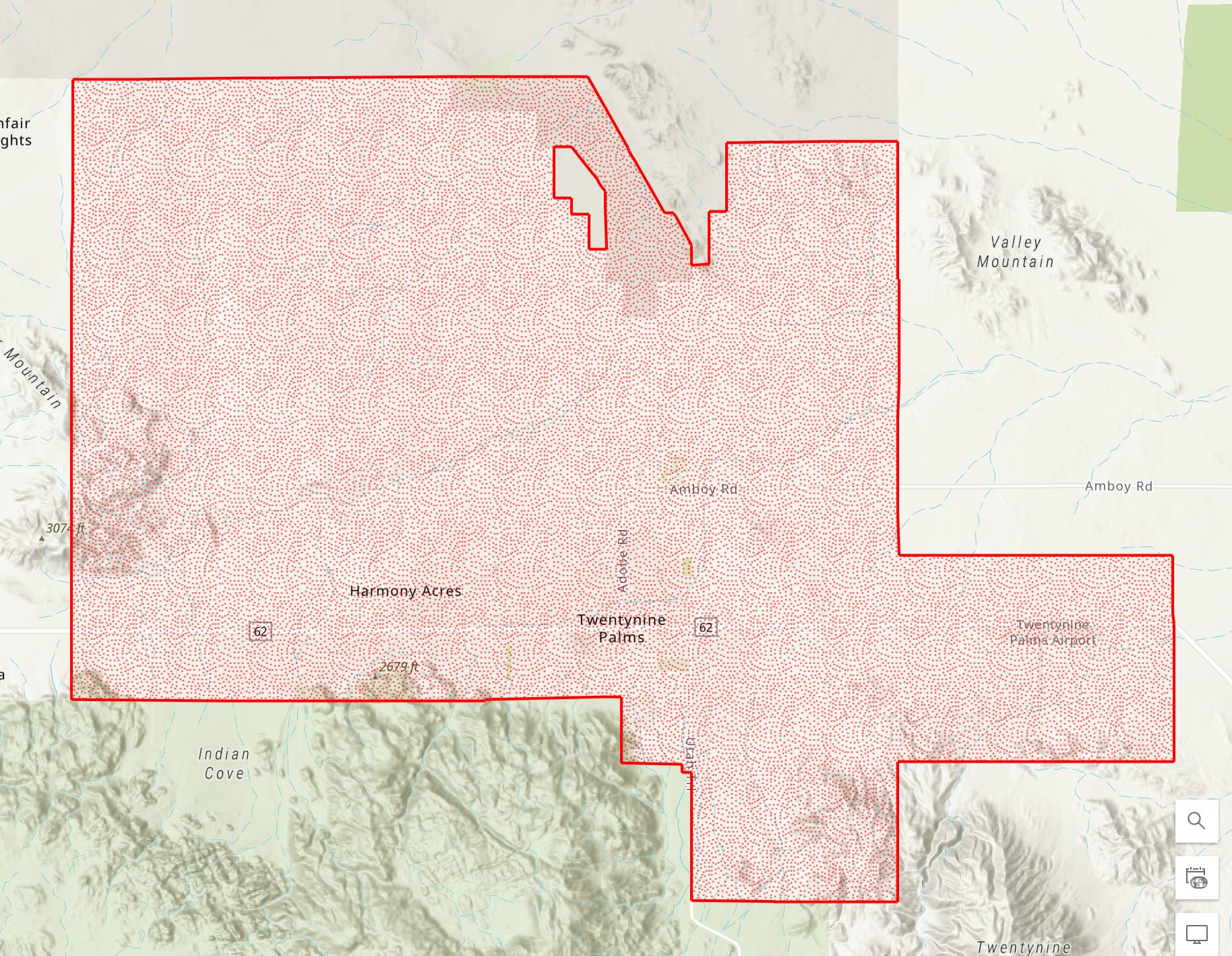
A sphere of influence (SOI) is the territory LAFCO (the County’s Local Agency Formation Commission) has designated as a city’s probable future boundary, the land it is expected one day to annex. Desert Trumpet readers may recall our last occasion to explain LAFCO: in 2022, when then-City Manager Frank Luckino raised the possibility of the City absorbing the Twentynine Palms Water District, the agency whose boundaries the City’s SOI follows. Not only does Lear Solar’s staff report cover page list the project’s “City Sphere of Influence” as Twentynine Palms and its water service as the Twentynine Palms Water District, the County’s own “City Spheres of Influence” mapping places Desert Heights, including the Lear parcel, inside the Twentynine Palms sphere.
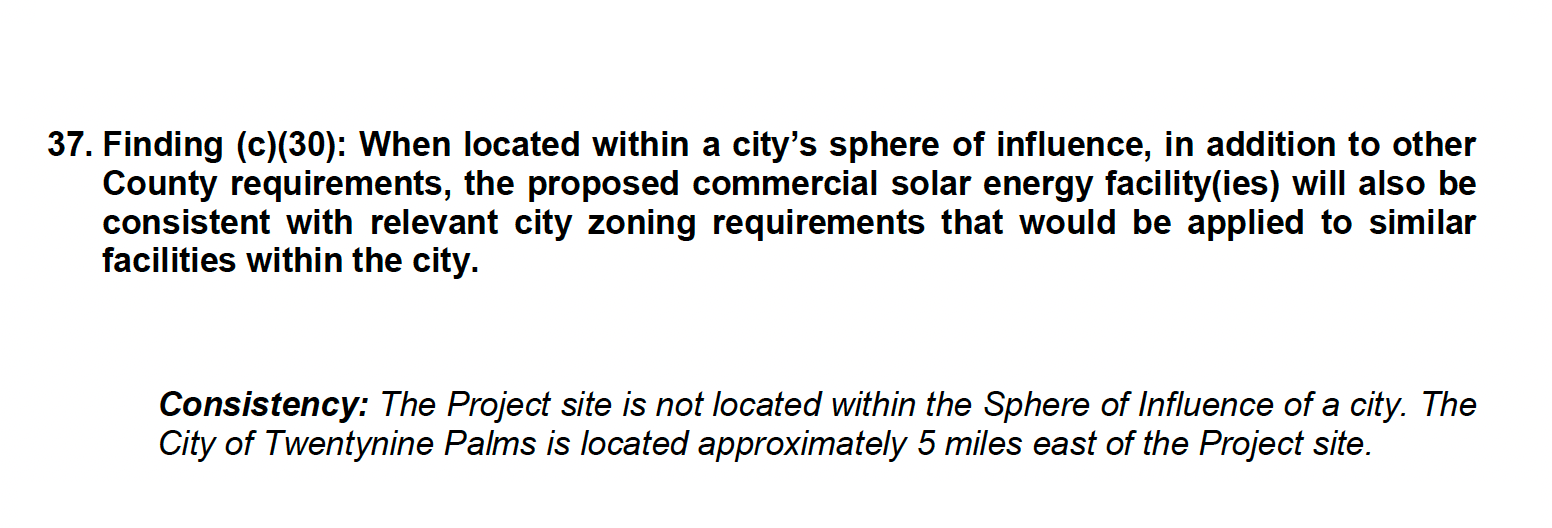
That placement carries a legal consequence that’s in San Bernardino County’s own code: Development Code Section 84.29.035 includes Finding (c)(30): “When located within a city’s sphere of influence, in addition to other County requirements, the proposed commercial solar energy facility(ies) will also be consistent with relevant city zoning requirements that would be applied to similar facilities within the city.” The General Plan’s Renewable Energy and Conservation Element (Policy RE-3.4) sets the same expectation. The point of the rule is straightforward: a project inside a city’s sphere should be held to what the city itself would allow. But making that finding for Lear Solar would have forced a reckoning the County avoided.
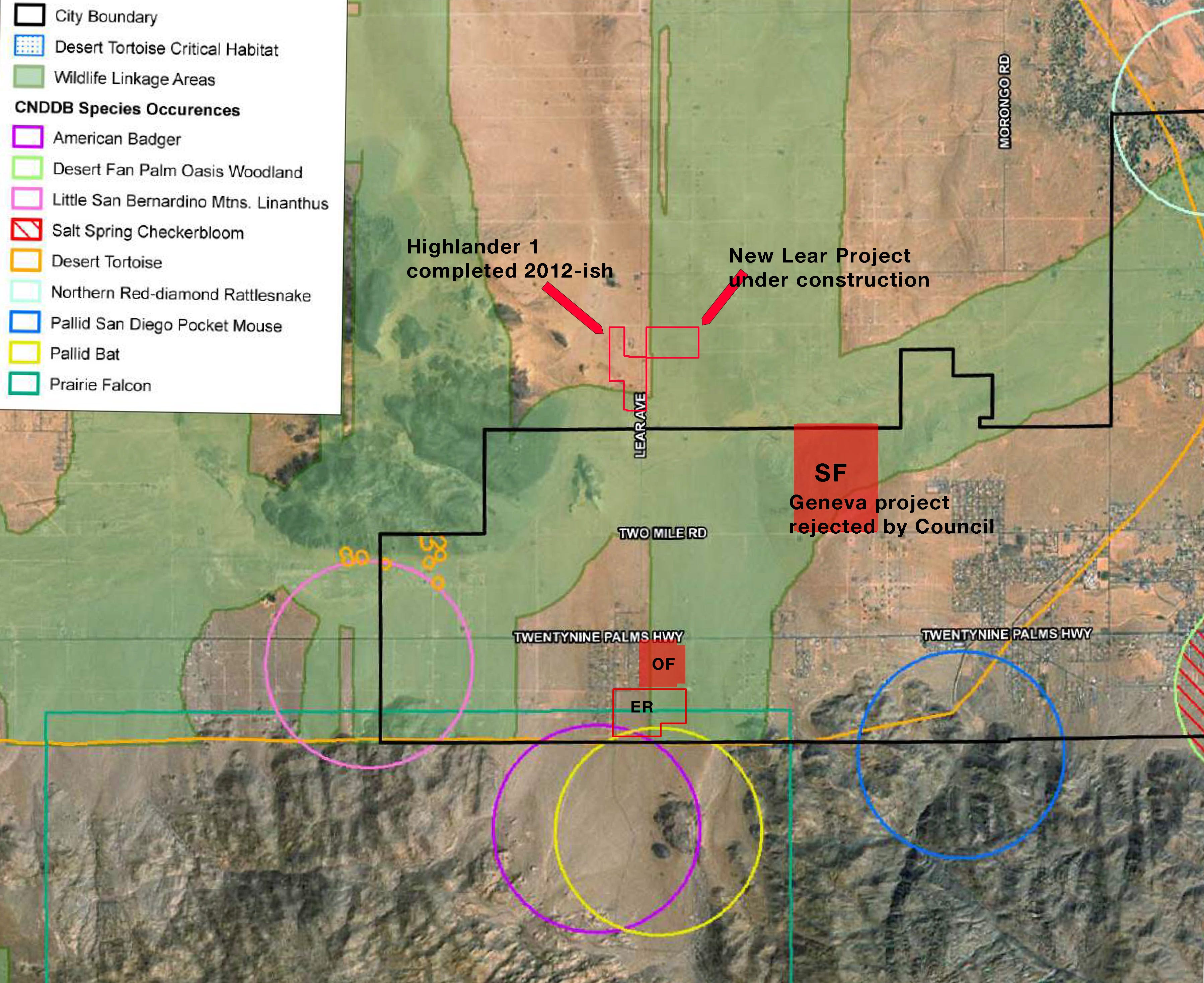
The Lear parcel is not the first solar in this immediate area: the staff report itself identifies two existing arrays on the west side of Lear Avenue, southwest of the project site — one of about 20 acres adjacent to the site, and a larger one of about 100 acres beyond it. These arrays, known as Highlander 1, were completed in 2012-2013.
Highlander 1 is what prompted the City of Twentynine Palms to ban utility-scale solar within its own limits, a moratorium it has kept in place and reinforced with its recent rejection of the E-Group Geneva solar project. A genuine consistency finding for a project inside the City’s sphere would have to confront that ban, because the code requires consistency with the zoning that would apply to “similar facilities within the city.”
However, the staff report does not confront it. Its consistency response to Finding (c)(30), contradicting its own cover page, reads: “The Project site is not located within the Sphere of Influence of a city. The City of Twentynine Palms is located approximately 5 miles east of the Project site.”
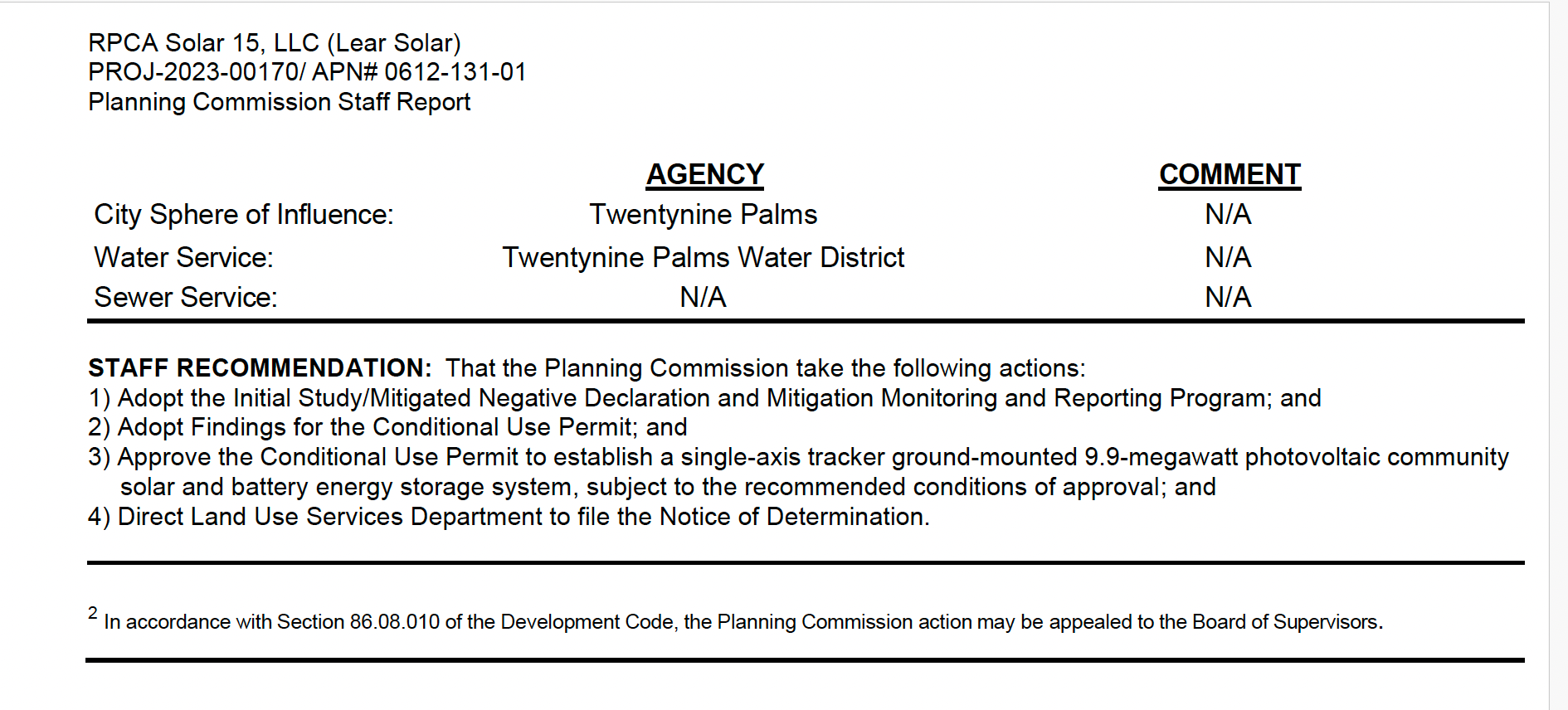
Asked about the discrepancy, County Land Use Services confirmed the project is within the City's sphere of influence, the opposite of what the staff report found. Land Use Services’ explanation was that because the City raised no objection after being notified, County standards governed.3 But the code requires more than that: Finding (c)(30) calls for an affirmative determination that the project is consistent with the city's zoning for similar facilities, not merely the absence of a city objection. The question remains: how can San Bernardino County Land Use Services now assert that the project sits within the Twentynine Palms SOI, yet fail to make that finding when it mattered—in the permit it approved?
A notice the water district never got
The County’s code requires more than findings. It requires that the agencies closest to a solar project be told one is coming , and it names who must be informed. Development Code Section 84.29.040(f), “Project Notices,” directs that notice of an application “shall be provided to the Municipal Advisory Council (MAC) for the area, any Community Service District or water agency serving the project site, and to all property owners, whether located in a city or in the unincorporated area of the County.” The code also fixes the timing: notice “shall be accomplished upon acceptance of a new Conditional Use Permit application” — at the start of the process, not the end.
The Twentynine Palms Water District serves the Lear site; the staff report’s own cover page says so. Yet its general manager, Matt Shragge, says the district learned of the project only after it had been approved and fencing was underway, when it was asked to set a construction meter:
They were starting the fencing process, but for us it was like, hold on, where is there a water meter? Why are we sending a construction meter? And what’s going on? I want to meet with somebody out on the site.
The code names the water agency serving the site specifically, and by the district’s account, that notice never came.
The City says it was in the dark as well. Twentynine Palms City Manager Kevin Cole, relaying the City’s community development director, told the Desert Trumpet via email:
According to Keith, the City (Planning Department) did not receive any agency review requests or notices of public hearings on this project. Of course this is concerning, in light of the Council’s rejection of the proposed solar farm inside the City limits.
The code does not name a city’s planning department among the required recipients the way it names the water agency, but the City is the jurisdiction whose sphere of influence the County’s own report places the project within, and it learned of a major solar facility on its doorstep no earlier than its own water district did.
We inquired about the notices. County Land Use Services said it mailed a project notice to the water district, the City, and County Fire on May 3, 2024, and sent the City a public hearing notice before the December 2024 Planning Commission meeting. After contacting the water district, the County confirmed the district had received no notice.4 As for the City, its planning department says it received nothing, and the County, which has not produced proof of mailing, did not reconcile that account. The burden of showing that notice was given rests with the County, and on the water district it has, by its own account, acknowledged the notice did not arrive.
A wildlife corridor the review didn’t check
The same approval skipped past a third problem, this one in the environmental review.
The County approved Lear Solar with a Mitigated Negative Declaration (MND), a finding that the project’s impacts could be reduced without a full Environmental Impact Report. That review addressed the standard question of whether the site sits in a wildlife-movement corridor, and answered it in the negative:
The APE5 does not occur within a corridor that links between or among larger habitat areas on a regional basis and is not within any areas mapped as Essential Connectivity Areas by the California Essential Habitat Connectivity Project.
The conclusion rests on a single source: the California Essential Habitat Connectivity Project, a statewide map layer.
But there is a designation the review does not mention. The City of Twentynine Palms 2012 General Plan maps the Joshua Tree–Twentynine Palms Connection, a wildlife linkage the plan says was “designated within and near the City” as the result of a state interagency workshop. The linkage, the plan states, “connects areas of open space in Joshua Tree National Park and the Marine Base,” across a span that “varies from approximately 9 to 22 miles.” It is mapped in the General Plan’s Exhibit CO-3.
Lear Avenue is the linkage’s western boundary, marked as such on the CO-3 map; the parcel lies east of Lear, within the corridor and not at its edge. The corridor was designated in 2012; Lear Solar arrived more than twenty years later.
The same General Plan defines a wildlife corridor as a geographic area that “link[s] together areas of suitable wildlife habitat that are otherwise separated by rugged terrain, changes in vegetation, or human disturbance.” A designated link between Joshua Tree National Park and the Marine base, two of the largest blocks of protected open space in the region, is, by that definition, a corridor connecting larger habitat areas on a regional basis. The MND says the site is not in such a corridor but the solar farm runs through the corridor.
This is also where the corridor question meets the jurisdiction question. The same finding that placed the site outside any city’s sphere of influence is what let the review skip a consistency check against the City of Twentynine Palms’ planning documents. Had that check been run, it would have led to the City’s General Plan, the document that maps this linkage.
The County may argue that the Connection is a City designation. But it did not originate with the City: the General Plan attributes it to a state interagency workshop, and Exhibit CO-3 draws on South Coast Wildlands and the California Natural Diversity Database.
Why Lear was approved and Bear Valley wasn’t
San Bernardino County’s framework sorts solar projects largely by how the underlying land is already zoned, and the clearest way to see it is to set Lear beside a project the County’s Planning Commission turned down.
Lear sits on land zoned Rural Living, which already permits solar facilities under 10 megawatts with a Conditional Use Permit. No change to the land’s designation was needed, only permission for the use. The application cleared the Planning Commission.
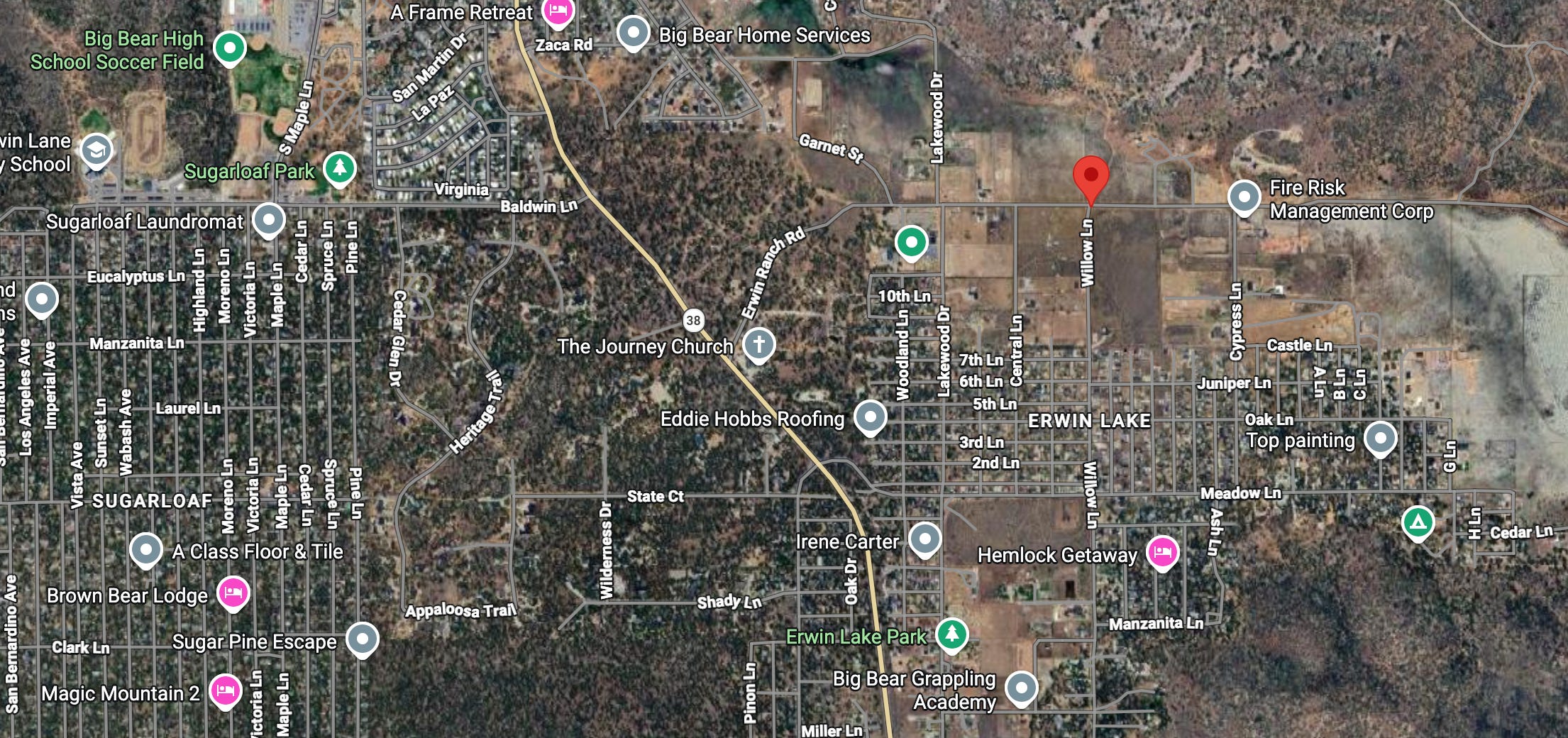
A 5-megawatt project proposed by EDF Renewables with Bear Valley Electric Service did not. That facility, in the unincorporated Erwin Lake area at the east end of Big Bear Valley, sat on land zoned Residential Single. To put solar there at all, the applicant needed both a General Plan Amendment and a full zone change to Rural Living — not just permission for a use, but a redesignation of what the land is for. The Planning Commission denied it. The developers have appealed to overturn that denial; the Board of Supervisors continued the matter at its June 23, 2026 meeting without ruling.
Projects on rural-zoned vacant land, like Lear, move relatively smoothly through the County process; projects that require rezoning residential or community-adjacent land face a far steeper climb, and at that level community opposition carries real weight. The framework was, in effect, built to accommodate exactly the kind of project Lear is, which is also why the consistency check the County skipped mattered. Rural Living zoning let the Lear Project through without a rezoning fight, and the finding that the site was outside any city's SOI kept the City's stricter standard from being considered.
A pattern taking shape around one substation
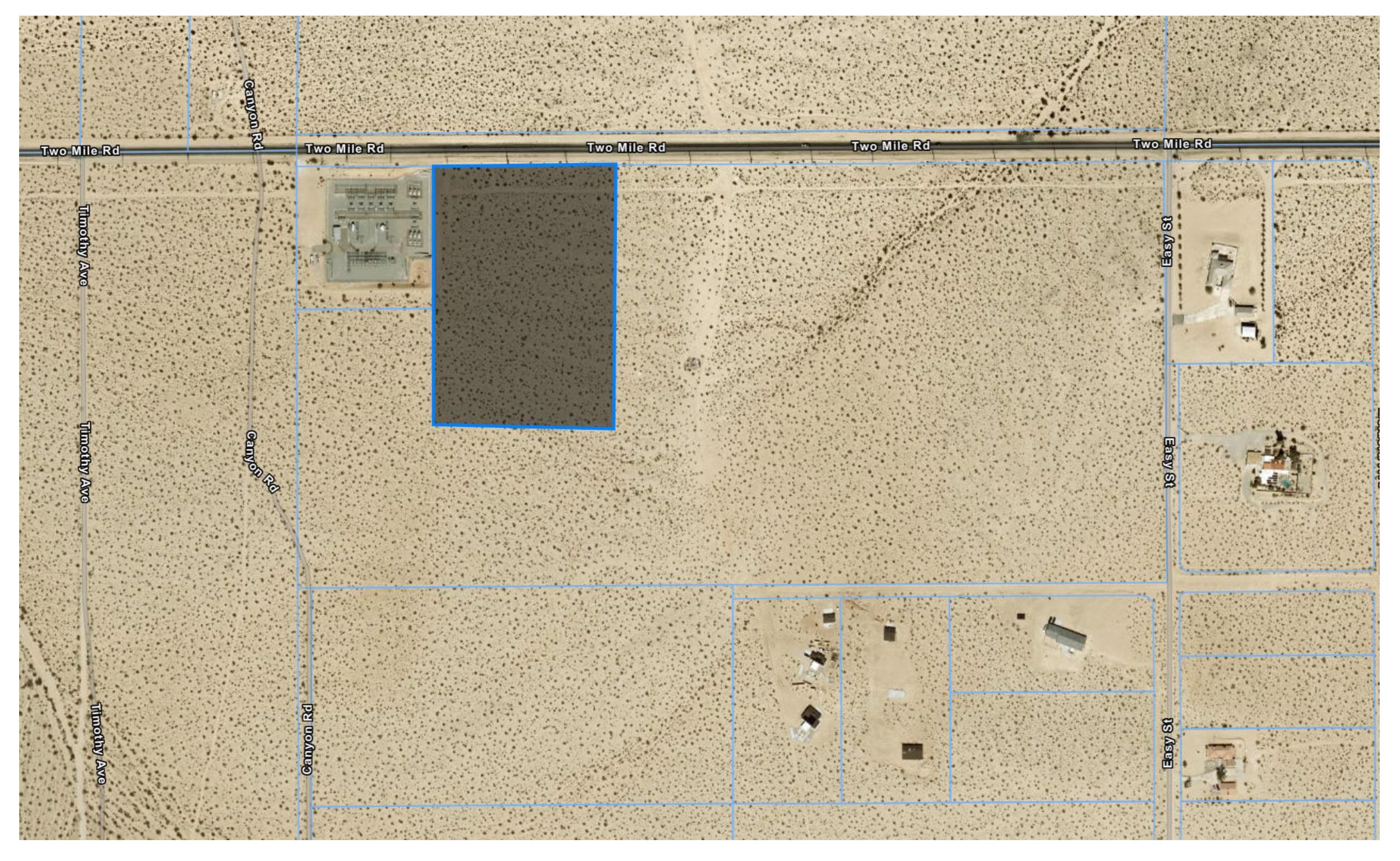
Lear is not the only energy project converging on this corner of the Basin and the common thread is the SCE Carodean Substation, on Two Mile Road on the west side of Twentynine Palms, the point where the local grid’s power is gathered and distributed.
Across Two Mile Road to the northeast is the site of the E-Group solar project, also known as the Geneva Solar Project, or the Harmony Acres Solar Farm, which the Twentynine Palms City Council rejected on a 3-1-1 vote in March 2026 after hours of public opposition. The developer has since sought to move the project to state review. As of this writing the California Energy Commission had made no determination on the project itself, and the question of state jurisdiction remains unsettled.
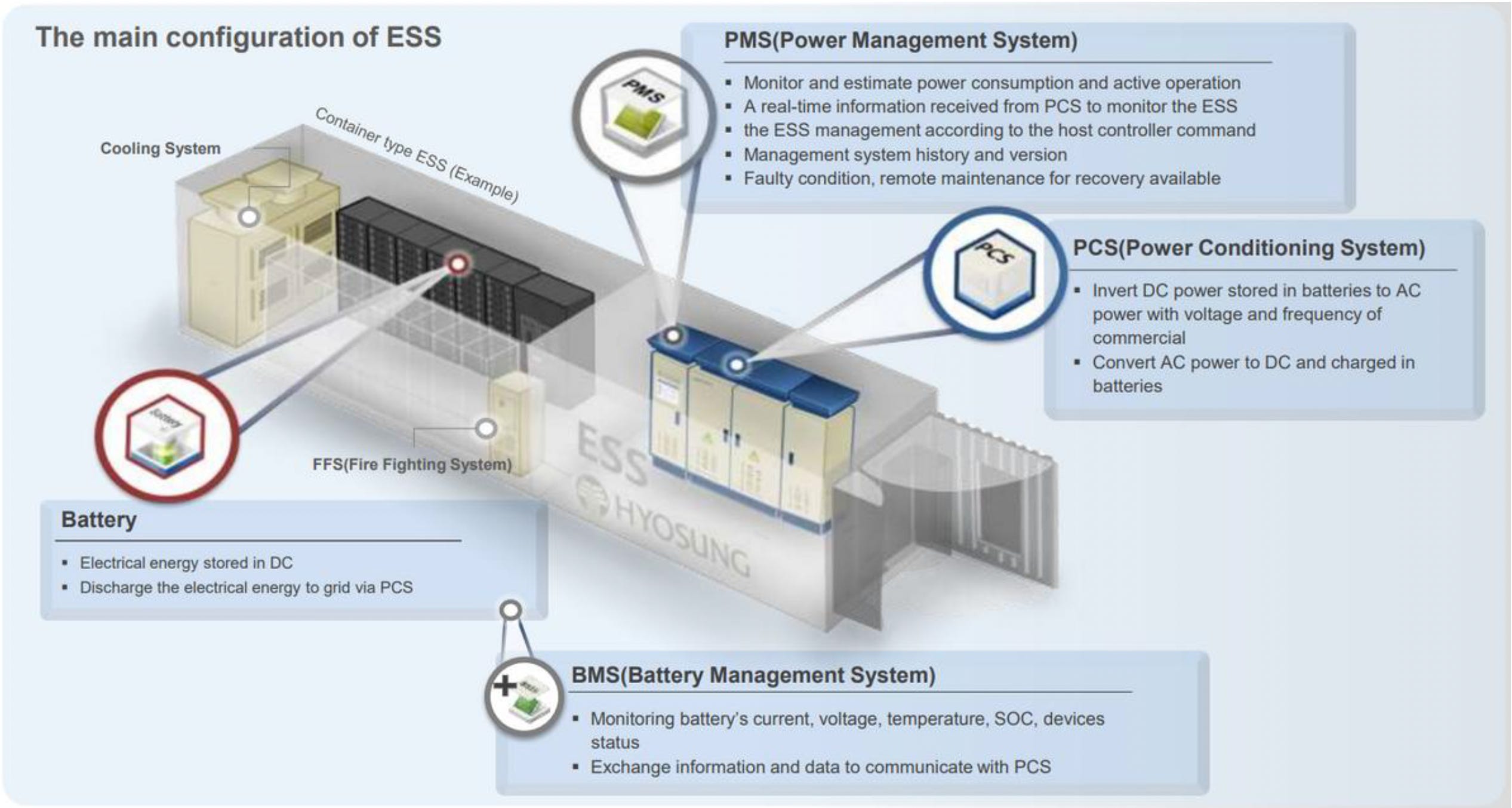
On the parcel beside the substation itself, a Sacramento family land trust, the McDonald-Russell Family Trust, has filed a pre-application with the City for the Healthy Planet Energy Storage Project, a 100-megawatt battery facility. That proposal is at the earliest stage, the trust is still in escrow on the parcel, and, like E-Group, it would require a General Plan amendment, a rezone, and a conditional use permit, because battery storage is not a permitted use on the residentially zoned land.
And a few miles to the northwest, in unincorporated Desert Heights, the County-approved Lear array feeds the same local grid, part of the roughly 56 megawatts of solar that the battery pre-application says already flows into the local system.
These are separate projects, separate developers, split between two jurisdictions. Each is reviewed on its own, by the City or the County, and none is weighed against the others. The County approved Lear through an MND, a finding that environmental impacts could be reduced below significance without a full Environmental Impact Report; whether that review accounted for the solar already operating and proposed nearby is a question worth considering.
Why this reaches beyond the Lear Solar Project
What happened with the Lear Solar Project can happen anywhere in the unincorporated Basin. The flaw at the center of the approval is clear. The San Bernardino County Planning Department and Planning Commission approved the Lear Project based on a staff report that contradicts itself on whether the site sits within a city's sphere of influence and never resolved the discrepancy.
The notice failure points to something structural. None of the ordinance's three required channels worked as intended:
The Morongo Basin MAC, whose delegates included one representing Desert Heights, was dissolved and its status at the time of Lear’s review is unclear. The ordinance names a body that no longer exists.
Notice to adjacent property owners, the second channel, is better suited to dense neighborhoods than to the rural Basin, where parcels are large, often vacant, and frequently held by absentee owners like Lear’s.
That leaves notice to the water district, the channel that plainly should have worked regardless, and the district says it never came.
The communities most exposed to large-scale energy development — among them Landers, Johnson Valley, Wonder Valley, Desert Heights, Flamingo Heights, and Copper Mountain Mesa — have a direct stake in how the County answers the questions the Lear Project raises. Those answers are increasingly being shaped through the County’s Energy Ad Hoc Committee, led by Supervisor Dawn Rowe, which helps steer where and how energy projects get sited.
Whether the County closes these gaps, or leaves them open will determine whether the next solar farm arrives the way this one did: with the neighbors finding out when the fencing goes up.
In brief:
San Bernardino County approved the 9.9-MW Lear Solar Project on unincorporated land less than a mile from Twentynine Palms, which has banned utility-scale solar since 2012.
The County’s own staff report contradicts itself on whether the site sits in the City’s sphere of influence. That contradiction let the County skip a required check against the City’s zoning — and its ban.
County code required notice to the water district serving the site. The district says it got none until the fencing went up; the County now confirms it.
The site runs through a wildlife corridor designated in 2012. The County's 2025 environmental review concluded none existed.
The same process governs the rest of the unincorporated Basin. Solar farms are reviewed project by project, without confirmed notice and with no one weighing the cumulative effect.
Sources: Lear Solar (RPCA Solar 15, LLC), PROJ-2023-00170 — San Bernardino County Planning Commission staff report and Mitigated Negative Declaration, Notice of Determination, State Clearinghouse No. 2024110047; San Bernardino County Land Use Services. San Bernardino County Development Code Sections 84.29.035 and 84.29.040(f); County General Plan Renewable Energy and Conservation Element (Policy RE-3.4). City of Twentynine Palms General Plan 2012, Conservation and Open Space Element (Joshua Tree–Twentynine Palms Connection; Exhibit CO-3, sourced to South Coast Wildlands and the California Natural Diversity Database). LAFCO City Spheres of Influence mapping. Bear Valley Solar (PROJ-2025-00036), CEQA record. E-Group PS / Geneva / Harmony Acres Solar Farm, City of Twentynine Palms (CEQA SCH No. 2024021042). Healthy Planet Energy Storage Project, pre-application PA25-000007, City of Twentynine Palms. Federal: One Big Beautiful Bill Act (2025), Internal Revenue Code Section 48E. Interviews with Matt Shragge, General Manager, Twentynine Palms Water District, and email exchange with Kevin Cole, City Manager, City of Twentynine Palms; Desert Trumpet reporting, March 2026.
This article was produced with AI assistance, consistent with the approach described in our AI Policy.
Help us cover San Bernardino County — Become a paid subscriber!
Not a paid subscriber yet? Did you know that paid subscribers receive discounts on our DT Social events and invites to DT Front Porch, intimate discussions featuring local officials and notable residents?
Upgrade to a $50+ paid subscription for a 10% discount.
Upgrade to $100+ for a 25% discount.
Sustaining subscribers at the $250+ level and above receive complimentary tickets
Leave your thoughts in the comments below. Please note that we do not allow anonymous comments. Please be sure your first and last name is on your profile prior to commenting. Anonymous comments will be deleted.
This coverage is free - please share!
LAFCo is an acronym for Local Agency Formation Commission. It is an independent regulatory agency found in every county in California, mandated by the state to coordinate community growth, organize municipal boundaries, and oversee the efficient delivery of public services. See CALAFCO for more information.
Parcel ownership was confirmed through a paid third-party property-records lookup drawing on County assessor data. The County's own online parcel portal no longer displays property-owner information to the public.
Land Use Services, responding through Supervisor Dawn Rowe after the Desert Trumpet's stated deadline, replied that the project is within the City's sphere of influence and that, because no response was received from Twentynine Palms, "County standards and requirements governed the project."
Land Use Services initially stated the project notice was mailed to the Twentynine Palms Water District on May 3, 2024. In a subsequent response, Land Use Services reported that it had contacted the district, which confirmed it received no notice; LUS added that the district indicated the omission would not affect its position. The City's planning department separately reported receiving no notice (via the City Manager).
The APE is the area of potential effect, essentially the project’s footprint.
Lear Ave is a major corridor-the road most military base workers and the convoys use. This is insulting to hear that city is bypassing its culpability by saying they were “unaware” of the construction.
The city says that they were unaware. But anyone who lives in town or drives back and forth would have seen the construction activity. I find it hard to believe that city officials were completely unaware of this large construction activity. If they really were unaware, they need to open their eyes and maybe drive around the city once in awhile.