
WILDLIFE WEDNESDAY: The Bird of Peace, Reconsidered
On the fierce, funny, devoted lives of mourning doves


If wildlife has a starter species, an animal most likely to introduce an unsuspecting human to the concept of sharing a home with nature, the mourning dove would win. Anyone with a patio, a hanging fern, or even the faint suggestion of a horizontal surface has probably hosted a dove nest in the most inconvenient place possible.
I avoid a particular door for the nesting season, which seems to be most of the spring, summer, and fall, so I don’t explode a dove from its pile of twigs balanced on a crossbeam. Although the nests appear flimsy and are regularly blown down by the wind, the doves construct them carefully. The male brings the female pine needles, grass stems, and sticks and passes them to her while standing on her back. She’ll lay two eggs and may have up to six broods a year—one reason it seems there always so many mourning doves around even though they are the favorite fast food of falcons, hawks, owls, and other predatory birds.
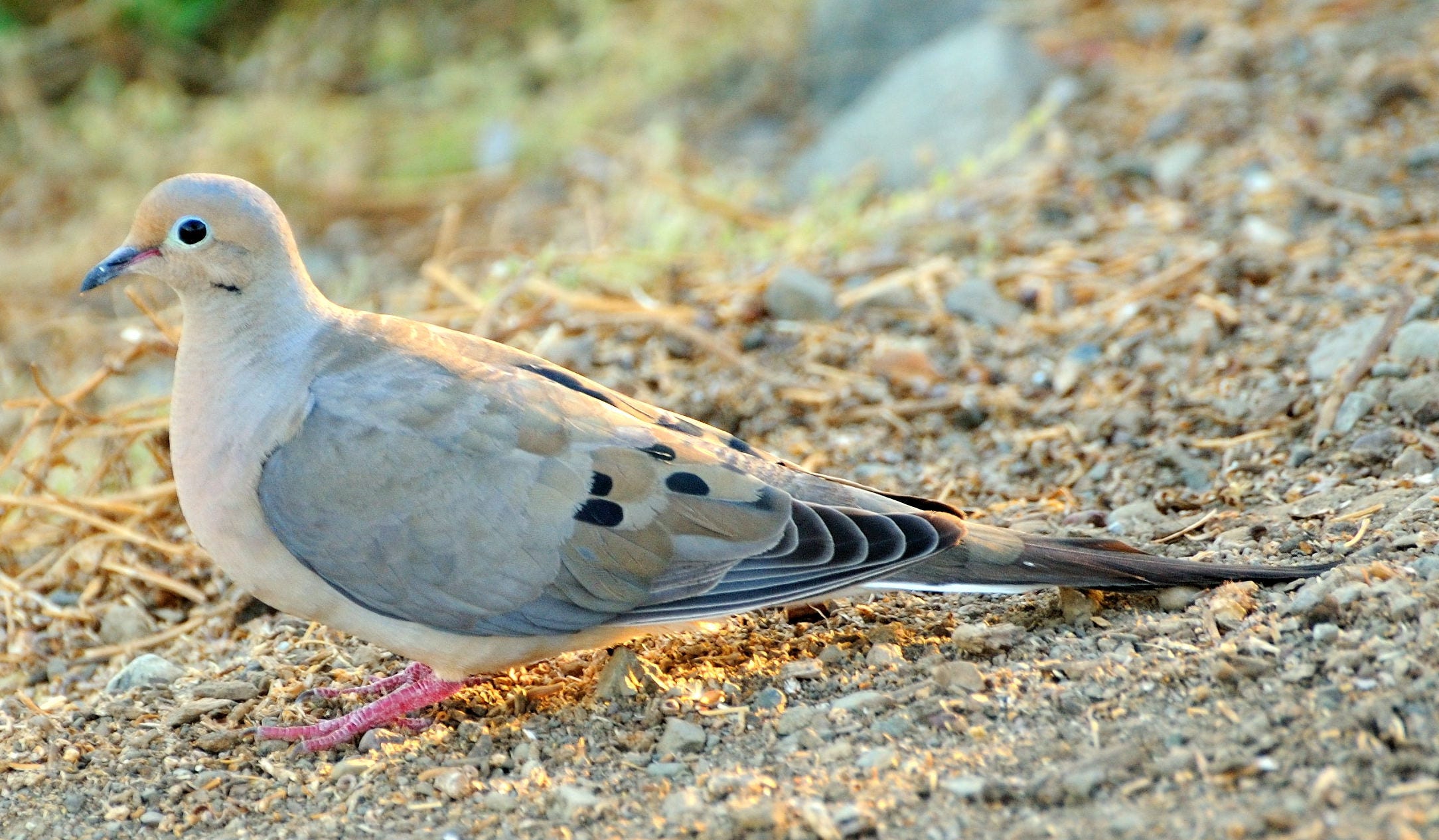
When Doves Fly
If you ask people what they love about doves, many will mention their soft, mournful call, so beautifully evoked by Caetano Veloso singing “Cucurucucú Paloma,” written by Mexican songwriter Tomás Méndez.
A scene from Pedro Almodóvar’s Habla con ella.
But doves also produce another sound, one far more distinctive and far less serene: the high-pitched wing whistle that accompanies every startled takeoff. However awkward they seem, doves can speed along at up to 55 mph, swooping and ascending. The real test comes as they dodge hawks, which they often but not inevitably evade.
Bird of Peace?
Doves have a reputation for being gentle but let me tell you, I have seen them hanging around gawking as a roadrunner murdered a cactus wren fledgling or gazing with interest as a red racer swallowed a quail chick. They will perch in flocks of 20 or 30 on a power line, apparently untroubled by the hawk patrolling the next pole over. Sometimes they seem less like gentle souls than like a mob attracted by murder and mayhem.
A Family Affair
One of the dove’s most endearing qualities is its devotion to family. Mourning doves often mate for life. I can’t tell individuals apart but one summer we watched Bill and Coo every night as they preened each other with delicate nibbles around the neck. They share parenting shifts for about two weeks: the female often takes the night shift incubating the eggs; the male covers the daylight hours.
When the chicks hatch, their parents feed them a remarkable substance known as crop milk, which their bodies manufacture from the seeds they eat. This pale yellow liquid resembles cottage cheese and is high in protein, fat, and antioxidants and helps nestling reach an age to leave the nest in 12 to 15 days.
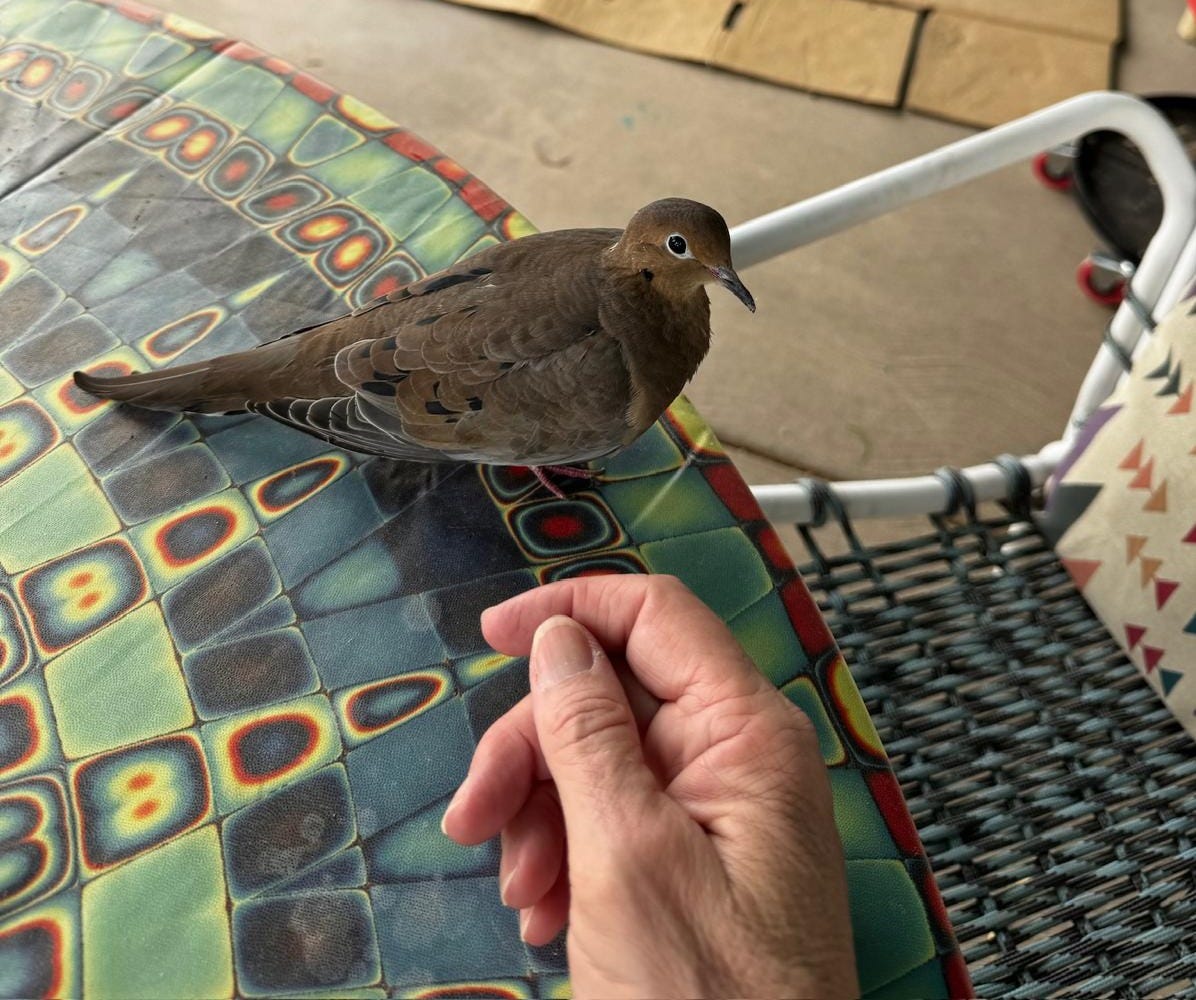
Young doves imprint quickly and irrevocably, forming their understanding of “who I am” based on who feeds them. In the wild this works out nicely—dove parents raise dove babies who join dove flocks. But this explains why rescued chicks sometimes grow up believing humans are their flocks—an error that can make them easy prey.
Symbols of Peace and Resilience
Cultures across millennia have turned to doves as symbols of peace and renewal. From Noah’s ark to Greek mythology to contemporary art, the dove embodies gentleness and hope. I like to see them as a symbol of resilience, however. They adapt to deserts, farms, prairies, woodlands, and the edges of suburbs. They endure heat, cold, predators, high winds, and the occasional poorly timed garage door.
So on this last Wildlife Wednesday of the year, as doves line the power lines and coo from the eaves, may we take a small lesson from our feathery companions. May we find peace not in perfection but in persistence. May we welcome tranquility not as a rare visitor but as a familiar roost. And may we embody the quiet dignity of the dove, graceful in our missteps, loyal to our flock, whimsical in our nesting choices, and capable of sudden, astonishing flights.
Leave your thoughts in the comments below. Please note that we do not allow anonymous comments. Please be sure your first and last name is on your profile prior to commenting. Anonymous comments will be deleted.
Feel free to share this article!
Help us reach our 2025 goal of $10,000 in subscriptions! Upgrade to a paid subscription for just $5 per month or $50 per year.
Would you care to donate more than $100? Our Paypal account is up and running!
Thank you for this informative & interesting story.
The last paragraph is wonderful; let’s all try to achieve your lovely parting thoughts.
Beautiful info and wonderful to hear Caetano Veloso-a treasure. We had a very low nest in a Cholla and the mom just stared at us, not moving, every day, til the eggs hatched. It seemed like such a long time we almost thought it was not going to happen and she was faking it!!! But it did and it was lovely to watch. Thank you for the inspiring words.