
Wildlife Wednesday: Bighorn Sheep in Spring
The Dudes May Have the Sexy Horns, but the Ladies Keep It Running

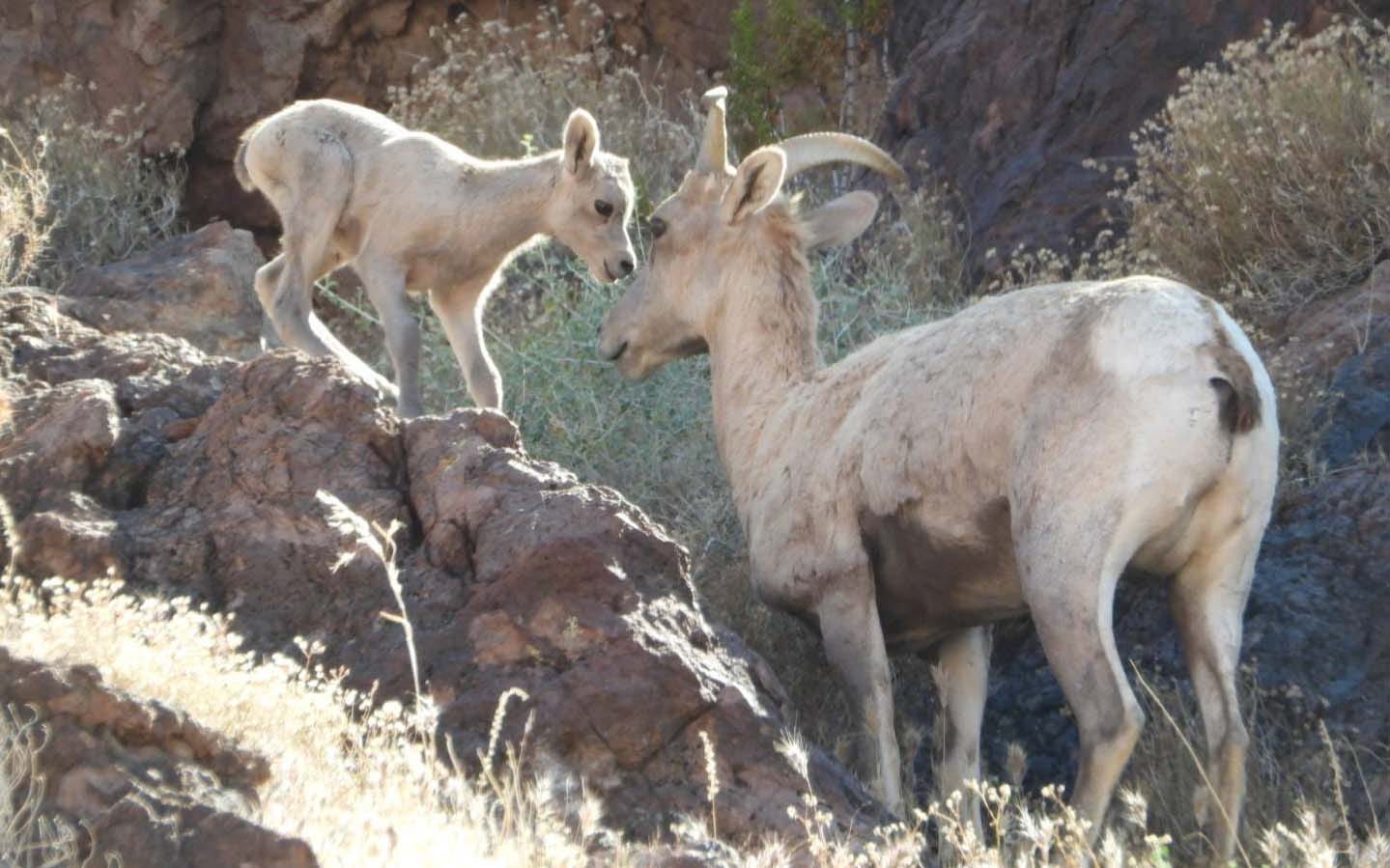
Here’s a link to a Wildlife Wednesday feature on bighorns from last July.
The 49 Palms Oasis Trail in Joshua Tree National Park has been open again lately, and I’ve been grabbing every chance I can to hike it. Sometimes I do it for my Preventative Search and Rescue volunteer gig and sometimes just because I need the reward of that cool, green oasis at the end of a huffy-puffy climb and all those stone steps down.
The park closed the trail for months to repair the tread and the steps and add a new water bar or two to keep erosion down on the steep slope. More important, the park also closes the trail in the summer to give the oasis back to the wildlife that depends on it. Bighorn sheep are at the top of that list. This year the trail closes on June 1 for the summer.
I don’t often encounter sheep on the trail or at the oasis, but sometimes I do. One late winter morning I turned a corner and nearly walked into a ram and a very pregnant ewe standing maybe 30 yards away. They moved off slowly, the ewe too heavy with lamb to do her usual disappearing act over the rock, the ram giving me serious side-eye. I know how to take a hint (usually) and quickly gave them their space.
A Society Run by Ewes
For much of the year, male and female bighorn sheep live in mostly separate worlds. The rams form their own bachelor bands and go off and do ram things. The ewes, meanwhile, run a tight operation of their own.
Ewe herds, sometimes called nursery herds, are made up of adult females, lambs, and female and male yearlings. I ran into one of these herds while I was poking around in a wash to the west of the Indian Cove campground. I jumped when I heard a rattle and clack and realized it was hooves on rock. A cluster of ewes and lambs, as startled as I was, flowed straight up the rocks and looked down disapprovingly. The lambs nudged their moms and started nursing, knowing they could safely disappear in an instant.
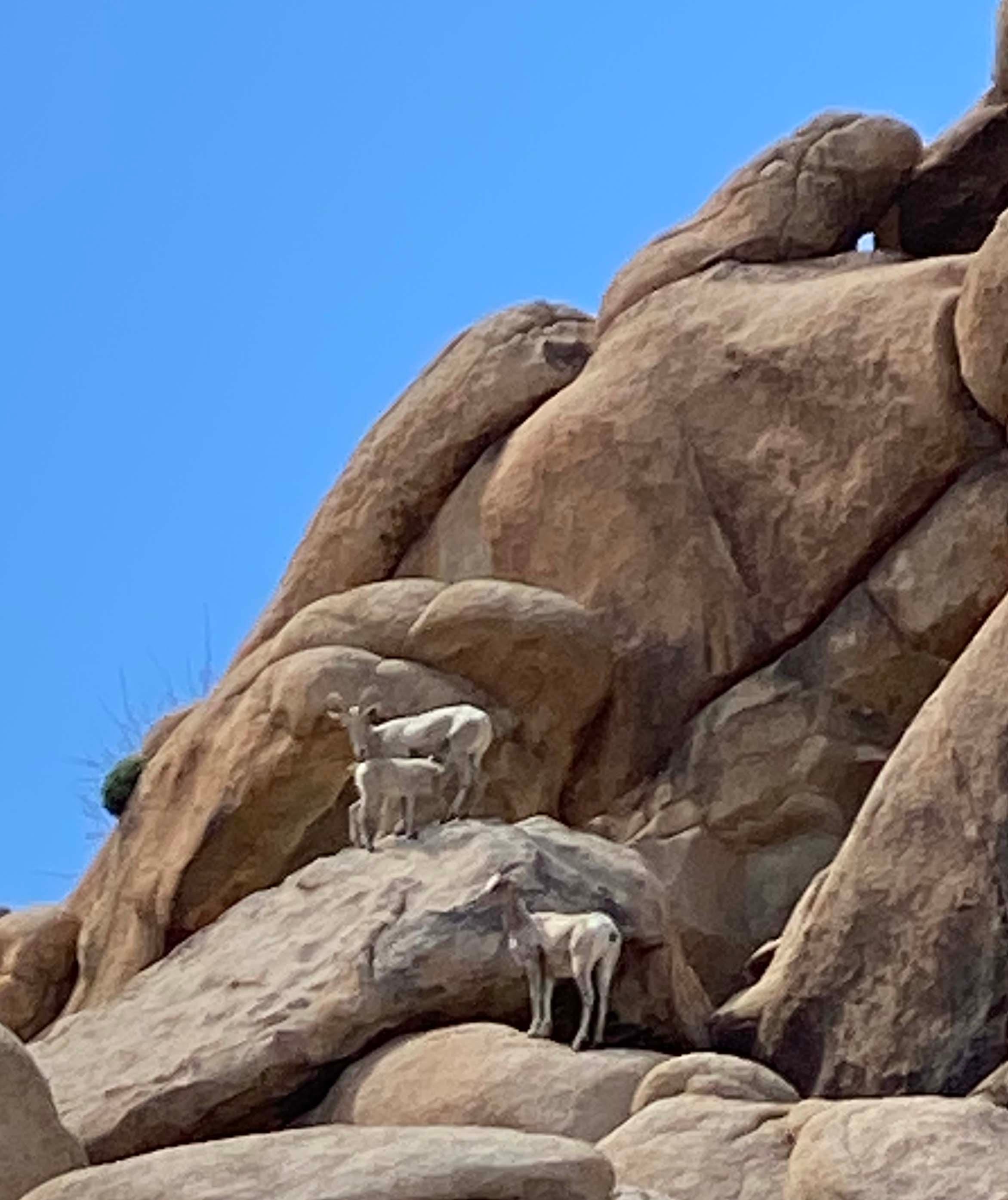
Ewes are the backbone of the herd’s continuity. They know the terrain, the water sources, the escape routes. Young sheep learn the landscape by following older females and figure out where to find water, which slopes are safe, how to read a possible mountain lion situation. A fascinating study in Science shows how bighorns in Idaho, Wyoming, and South Dakota pass along information through social exchanges. It can take new arrivals that might have been translocated to provide genetic diversity and disease resistance several generations to learn how to best use the landscape. One researcher said:
They possess excellent spatial memory. They can remember when a path greened up and time their movements to go to that area the next spring.
Like many desert animals, bighorns remember where water pools after monsoon and winter rains. Although the park has very few year-round water sources, sheep know where they can find water in neighboring residential areas. A friend who cleaned the Invisible House in Joshua Tree said the sheep were such a nuisance (imagine not being charmed by visiting bighorns) that the property manager had to build a special wall to keep the sheep out of a water feature.1
The Breeding Season (When the Rams Come Back)
Sometime between July and October, rams rejoin the ewe herds, and things get dramatic. Breeding is a competitive, noisy, physically punishing affair. Rams charge each other head-on from 20 feet or more, crashing their massive horns together until one gives up. Those horns aren’t just for show; on an older ram they can weigh over 30 pounds. The crashes are audible from a distance and sound exactly as bad as they look. I know people who have witnessed this; perhaps I will soon.
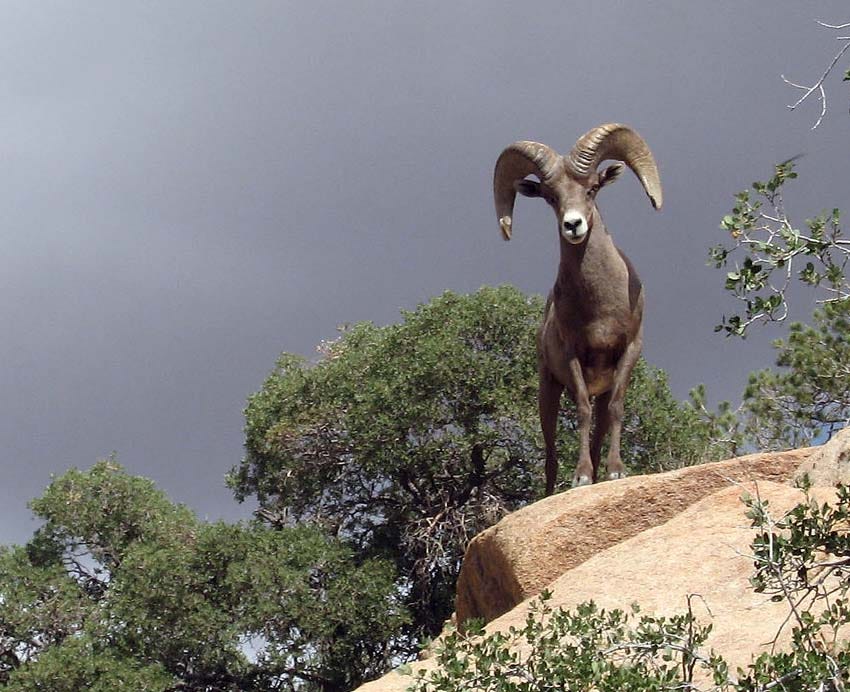
Horn size and overall vigor determine who wins. Males reach sexual maturity in their second or third year, but most aren’t strong enough to actually compete for mates until they’re about seven years old. So a young ram might be technically ready but gets pushed aside by more experienced competition for years. Patience or persistence eventually pays off.
After breeding, the rams go back to their bachelor bands. Gestation lasts about 150 to 180 days, which means most lambs arrive between January and April, right when desert conditions are (relatively) mild and early spring green-up gives ewes the nutrition they need for nursing.
Lamb Life: Hard from the Start
Bighorn lambs are born alert and on their feet almost immediately. They have to be. Every larger predator from coyotes to mountain lions finds them tasty. Within a few weeks of birth, lambs begin forming their own little subgroups within the herd, playing together and exploring while still checking back in with their mothers to nurse. By six months old, they’re completely weaned.
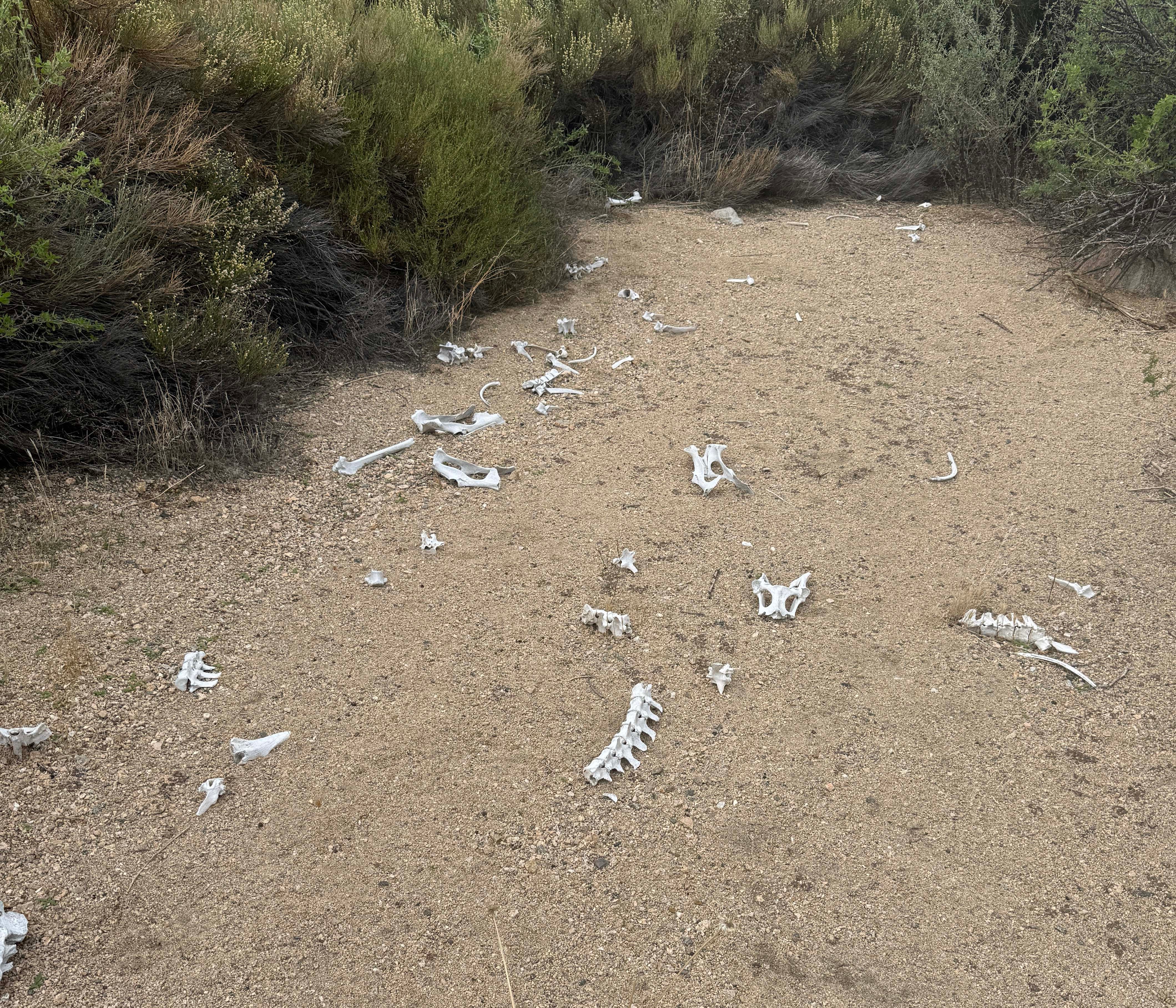
Those first six months are the most dangerous of a bighorn’s life. Only about one-third of lambs survive their first summer. The heat, the lack of water, predators, and disease all take their toll. Because they are naïve and adventurous and they’re, well, sheep, some die in falls and a few have drowned in water guzzlers maintained here and there in the desert.
Let’s Hear it for the Mamas and the Aunties
That any life survives in the desert can seem like a miracle. It takes luck sometimes and good instincts. For bighorn lambs it also takes the life lesson they learn from their mothers and the aunties in their nursery herds. Watching a nursery herd disappear into the boulders, almost seeming to transubstantiate into rocks, is one of those moments that puts everything in perspective.
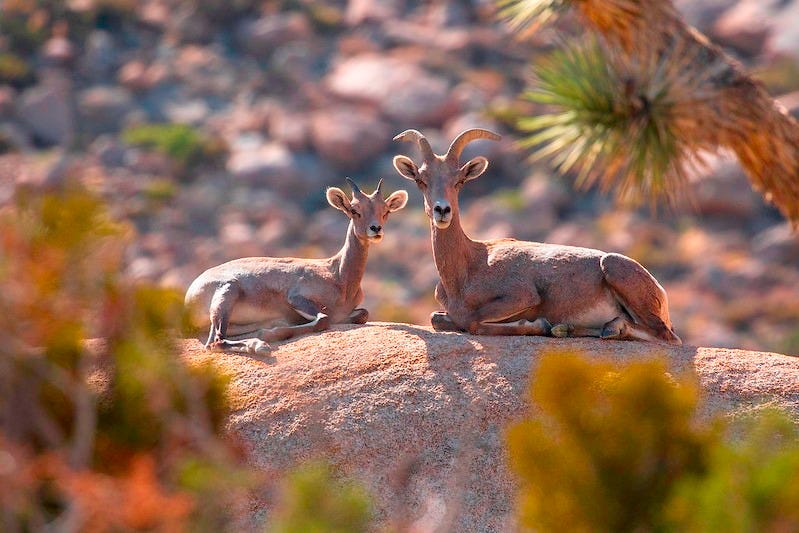
They were here long before us. Here’s hoping they’ll scramble alongside and away from us for many years more.
Have you seen bighorn sheep near the park boundary or in Twentynine Palms neighborhoods? We’d love to hear about it! Leave a comment or send us a note.
It’s possible this is a desert fable because the pool is famously inside the Invisible House.
Thanks to you, Desert Trumpet met our $10,000 paid subscription goal!!!
Not a paid subscriber yet? Did you know that paid subscribers receive discounts on our DT Social events and invites to DT Front Porch, intimate discussions featuring local officials and notable residents?
Upgrade to a $50+ paid subscription for a 10% discount.
Upgrade to $100+ for a 25% discount.
Sustaining subscribers at the $250+ level and above receive complementary tickets
Leave your thoughts in the comments below. Please note that we do not allow anonymous comments. Please be sure your first and last name is on your profile prior to commenting. Anonymous comments will be deleted.
This coverage is free - please share!