

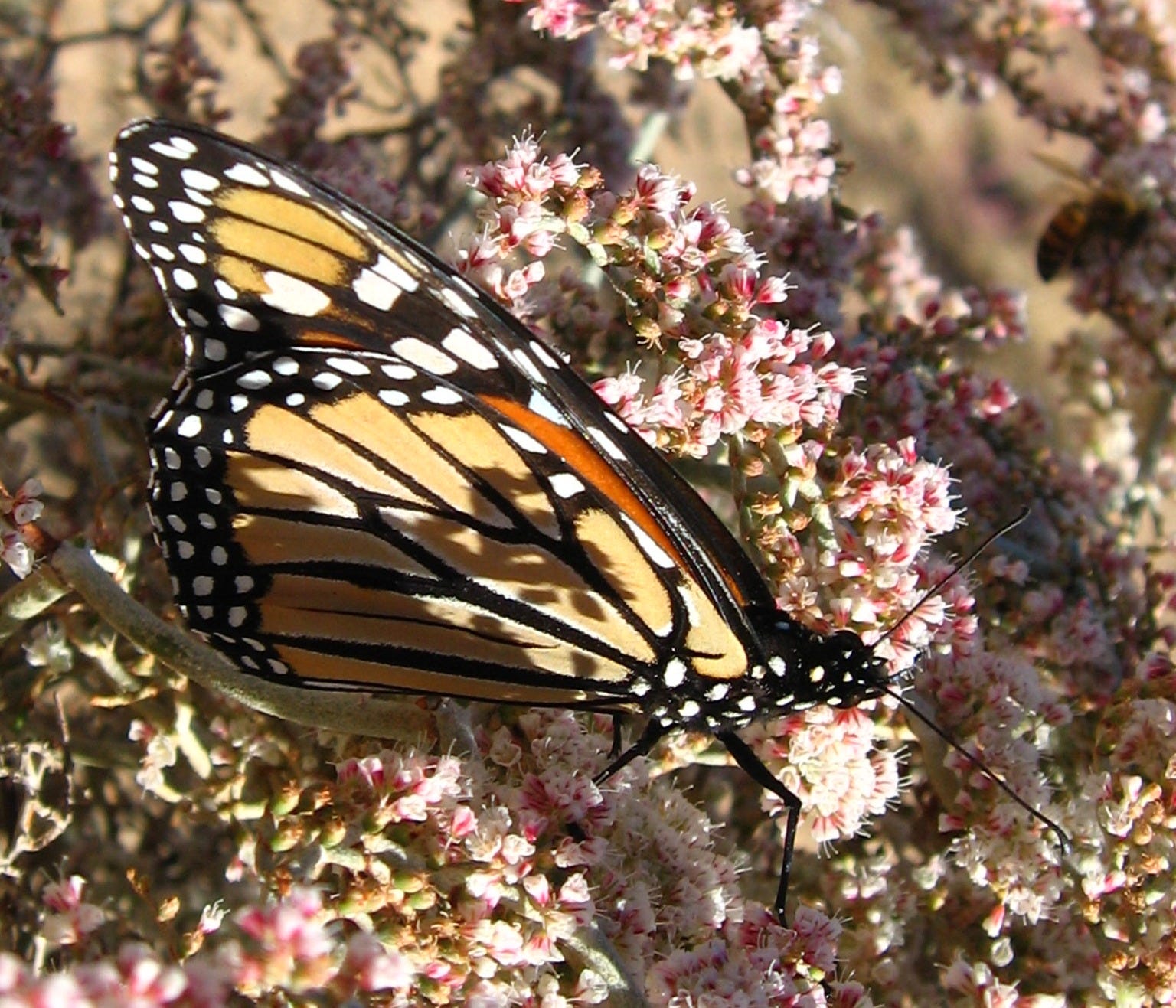
Because of our abundant late summer and winter rain, flowers bloomed early throughout the Morongo Basin this year. And with the flowers came the butterflies, moths, and skippers.1 We have several sweetbushes bursting with blooms, and butterflies of all kinds have been dancing around them. Dry years bring far fewer butterflies; a wet winter like this one can produce an explosion of wildflowers and wings.
To identify them, I pulled out my trusty copy of The Butterflies and Skippers of Joshua Tree National Park, but the pesky insects don’t hold still, and my photos of them are all terrible. Suffice it say that there are a lot of butterflies flitting around the sweetbush, and whatever they are, all are small, fluttery, and very pretty.
Abounding in Butterflies
Don’t take my word for it—experts have been at work! Retired park staff and dedicated citizen scientists Joe Zarki and Marilyn Lutz have organized formal butterfly counts like the much-better known Christmas bird count. For more than 25 years Marilyn and Joe have been counting and observing butterflies. They have found that Joshua Tree National Park is home to approximately 85 documented butterfly species, with 14 more found just outside the park boundaries.


Is this an unusual number of butterfly species? It is, actually. Because the park encompasses both the Mojave and Colorado deserts, the plants that support the butterflies are quite diverse. As we all know, the desert is far from barren and is bursting with life!
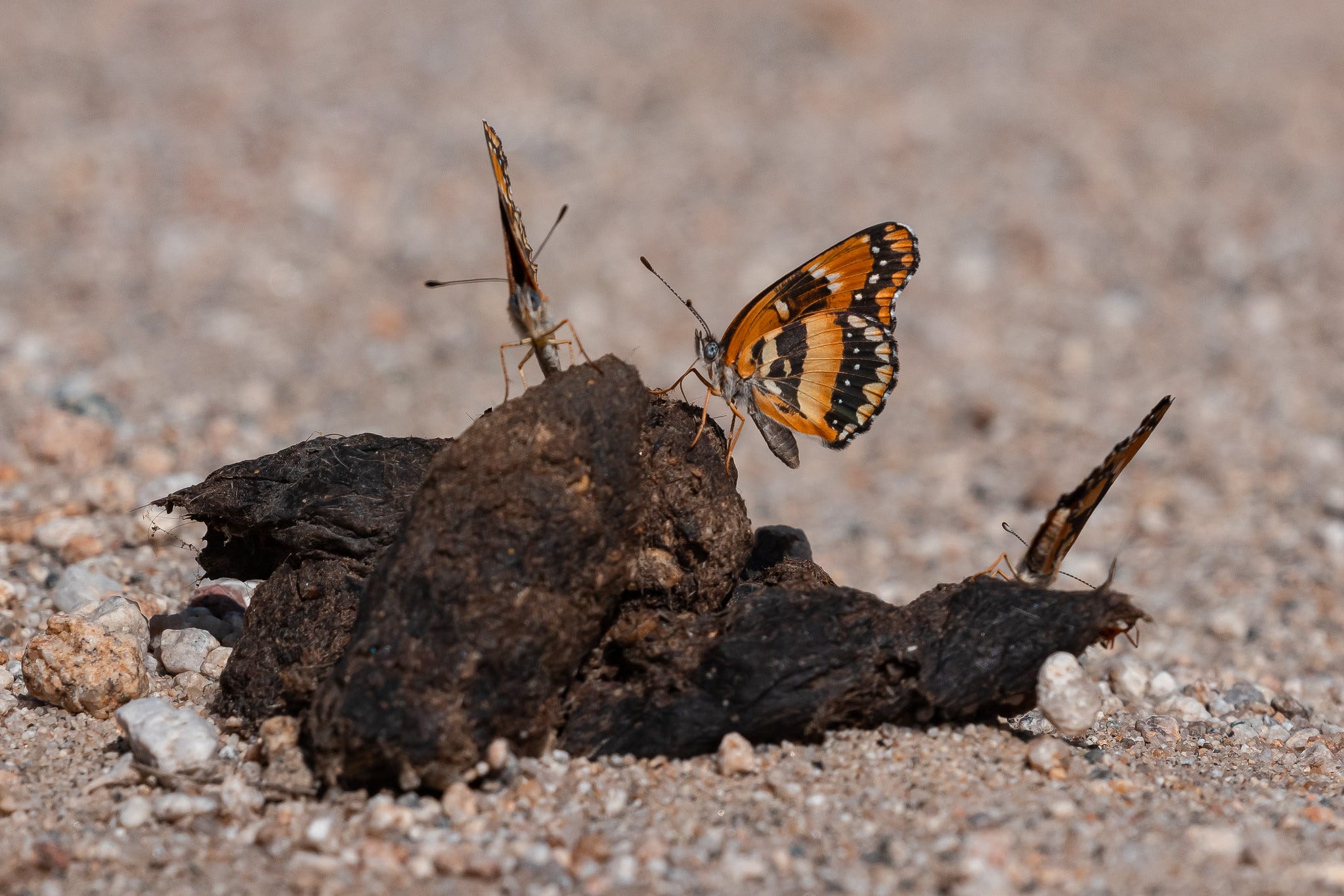
These butterflies, moths, and skippers live their marvelous life cycles feeding and laying eggs on plants. Caterpillars emerge from the eggs, and they are Very Hungry as Eric Carle’s beloved book tells us. Some caterpillars feed on many different kinds of plants, including the painted lady, orange sulphur, and gray hairstreak. Others are pickier, including the checkerspot butterfly, which depends almost completely on chuparosa, which is found in the lower reaches of the park and, because of its beautiful red flowers, in many local gardens.
Hi, new subscribers! Desert Trumpet understands you might not be interested in all of our coverage. That’s why it’s divided into separate newsletters allowing you to opt out of reporting that’s not important to you. For instance, you may want our Wildlife Wednesday column but not news about Twentynine Palms ‘ City Hall.
Here’s how to opt out: go to your Substack settings, scroll down to “subscriptions,” and select “Edit” for the Desert Trumpet. Simply uncheck the box next to the newsletters you don’t want to receive in your email inbox. You’ll still be able to access all coverage online if you change your mind.
Caterpillars encase themselves in chrysalises (butterflies) or cocoons (moths) and in a few weeks emerge as butterflies. This metamorphosis doesn’t need to be a metaphor for rebirth or recovery to inspire amazement. It’s merely one of the many astonishing changes that take place in living creatures all over the planet.
The Monarch that Overshadows Them All
Metamorphosis isn’t the only wondrous butterfly phenomenon. Some of them also undertake incredible migrations. Of all the North American butterflies, monarchs get the most attention. The big reason is its migration. These tiny, fluttery creatures migrate over several generations for thousands of miles from Mexico into the central and eastern United States. Western monarchs don’t make a journey this epic, but they hug the Pacific Coast to overwintering sites from Santa Cruz to San Diego to Baja California. The Morongo Basin is not on the primary monarch migration corridor, but monarchs do pass through and there are some small overwintering sites in Death Valley.
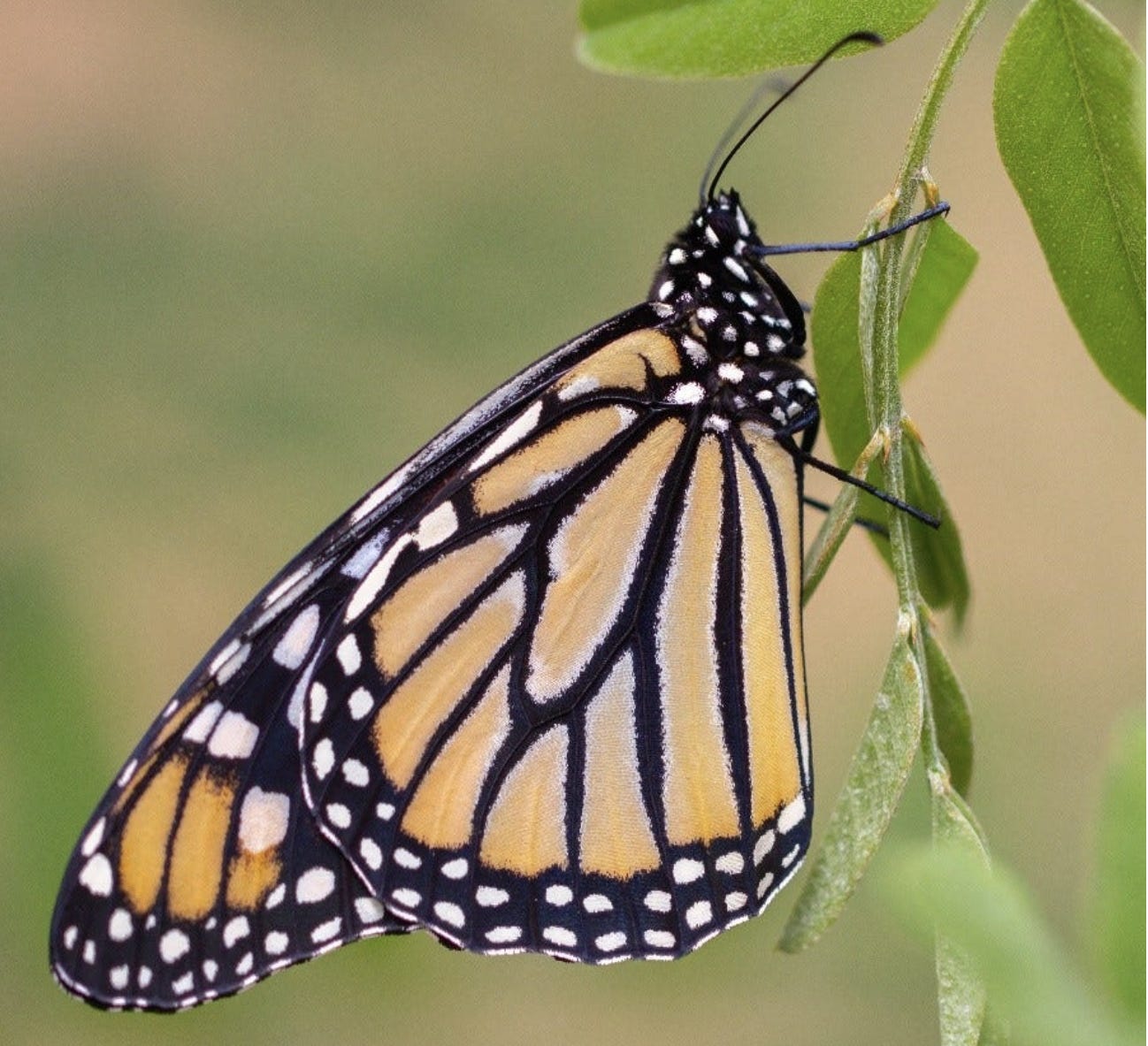
For decades, researchers have been fixing tiny tags to monarch wings to track their migration. One of the most memorable moments in the park’s long butterfly-counting history came on October 9, 2016, when volunteers found a tagged monarch in the Smithwater Canyon area near Covington Flats. Only about 1% of tagged monarchs are ever found, so the odds of finding the monarch were low. This butterfly had been tagged in southeast Arizona on September 20 and had traveled approximately 350 miles west-northwest to reach the park in just 20 days.
This butterfly is part of a bigger story that researchers are still trying to understand.
Butterfly Brains
The monarch butterfly is likely the most studied butterfly on the planet, and for good reason. How does an animal navigate thousands of miles over several generations with a brain just a bit bigger than this period? → .
A New York Times article highlights research that shows that these butterflies use multiple internal compasses. They track the position of the sun and detect patterns of polarized daylight, with their navigational clocks located not in the brain but in their antennae. Researchers have recorded brain signals in real time while butterflies flap away in a flight simulator.2
Because humans don’t seem to have this magnetic sense, it’s not something we understand well. But we’re trying! Not only are scientists recording monarch brain signals, but they are using gene editing to identify where magnetic sensing is located.
Researchers have also been studying how monarchs use their brains in other ways. They have trained butterflies to associate colors and odors with food rewards and show they have more than 75 percent accuracy after less than 40 seconds of exposure. Monarchs can remember this information for at least seven days, which beats my wandering into the kitchen and then wondering what I was looking for. Probably a snack.
Speaking of Snacks
Monarchs are one of the species of butterfly that will only feed on one type of plant—milkweed. This is a lot like the kid you know who insists they’ll only eat chicken nuggets. Nine of the 14 milkweed species native to California grow in our region, and the Mojave Desert Land Trust actively cultivates and preserves these plants. People who are better gardeners than I am plant them and provide food for these colorful migrants.
Like so many species, monarchs are threatened by climate change. The U.S. Fish and Wildlife Service (USFWS) is expected to decide by September 2026 whether to list the monarch under the Endangered Species Act, a designation that could provide critical habitat protections along migration routes and at overwintering sites. (Here’s how to let the USFWS know what you think.)
Waiting on the Wash
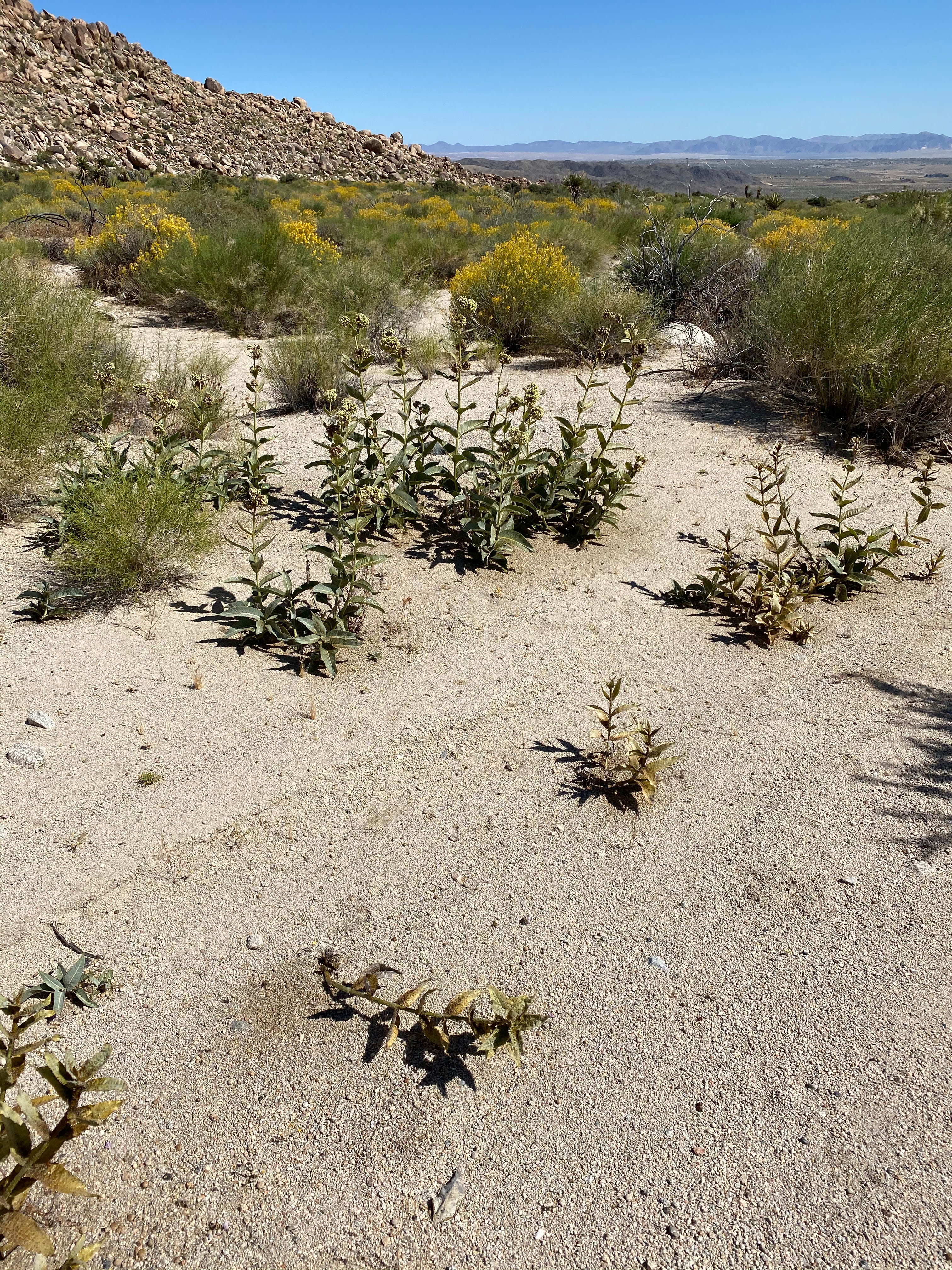
For seven or eight years, we have been watching two patches of milkweed that grow in a nearby wash. In 2019 and 2020, which were much wetter than it has been lately, milkweed grew in abundance, and we found monarch caterpillars on those plants. They grew bigger every day and worked their way steadily through the leaves like the hungry caterpillars they were. We looked for chrysalises but never found any. Perhaps a lizard or a bird ate them, to their great regret. Alkaloids in milkweed make monarchs taste disgusting, and some animals learn not to eat them. Or maybe the butterflies completed their transformation in a place we couldn’t find, tested their wings, and moved on to the next stop in their journey.
A monarch caterpillar feeding on milkweed in a nearby wash. (Video: Kat Talley-Jones)
This spring, the milkweed is thriving in the wash. We are watching and waiting for the monarchs to return.
Skippers are a group within the larger order of Lepidoptera, which include butterflies and moths. They are small, quick and darty, have hook-like ends to their antennae, and are exceptionally cute.
This will of course make you think of the butterfly effect, in which a butterfly flapping its wings in Tokyo sets off a tiny atmospheric disturbance that, through a long and unpredictable chain of cause and effect, may ultimately influence whether a tornado forms in Texas.
The Desert Trumpet is within $100 of meeting our $10,000 paid subscription goal!!! We need your paid subscriptions to publish the coverage you depend on. Basic subscriptions are $50 per year or $5 per month.
Become a sustaining subscriber by increasing your subscription to $100 or more per year! Want to make a one-time donation or are you able to give more than $100? Donate via Paypal!
Leave your thoughts in the comments below. Please note that we do not allow anonymous comments. Please be sure your first and last name is on your profile prior to commenting. Anonymous comments will be deleted.
This coverage is free - please share!

My applause to Kat Talley-Jones for wonderful writing and informative information on our natural world. Thank you.
Wow, this is such a cool article and a reminder of the sheer persistence of these delicate beauties. Hey, gardeners, if you want to support Monarchs, you'll need various types of nectar plants for the adults to feed on - meanwhile, the caterpillars exclusively feed on milkweed leaves but sustainably limit themselves to only eating a little bit before moving to a different milkweed plant. So if you're planting to support Monarchs, plant multiple milkweeds for Baby + nectar plants to lure in Mama. Use local varieties, such as Skeleton or Desert Milkweed as some exotics (e.g. tropical milkweeds, widely available at big box stores) have bloom cycles throw off the internal calendar that causes Monarchs to move on. Fun fact: the milky sap (hence "milkweed") contains toxins that helps make caterpillars unappealing to predators...and feeding on the leaves provides protection as well as sustenance for those stripey, snack-sized buggers. Ain't nature great?