
MUSD: Enrollment Committee recommends against closing schools at June 9, 2026 Board Meeting
Parents, community members, and teachers turn out to advocate for keeping schools open. The decision now rests with the school board.

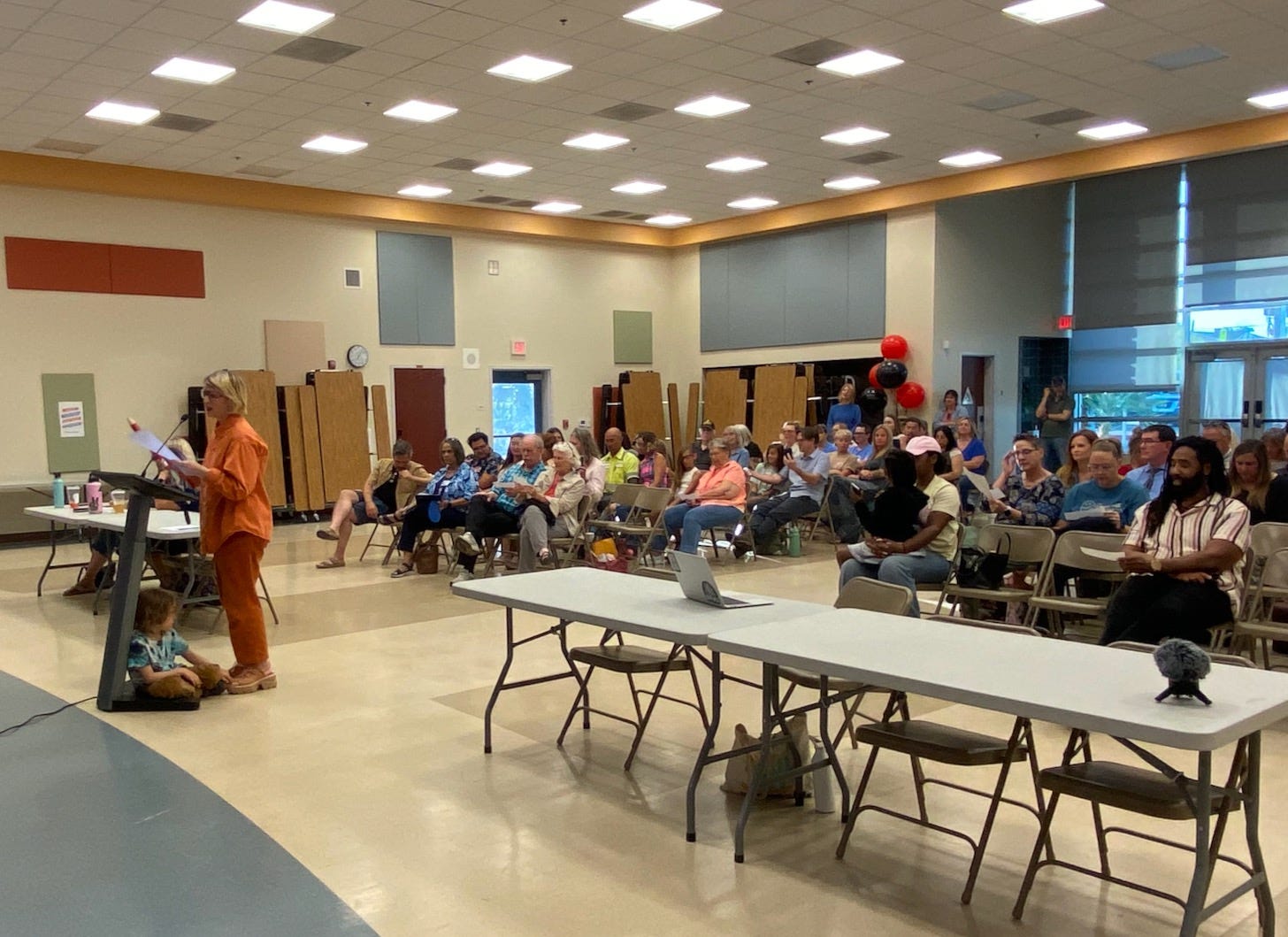
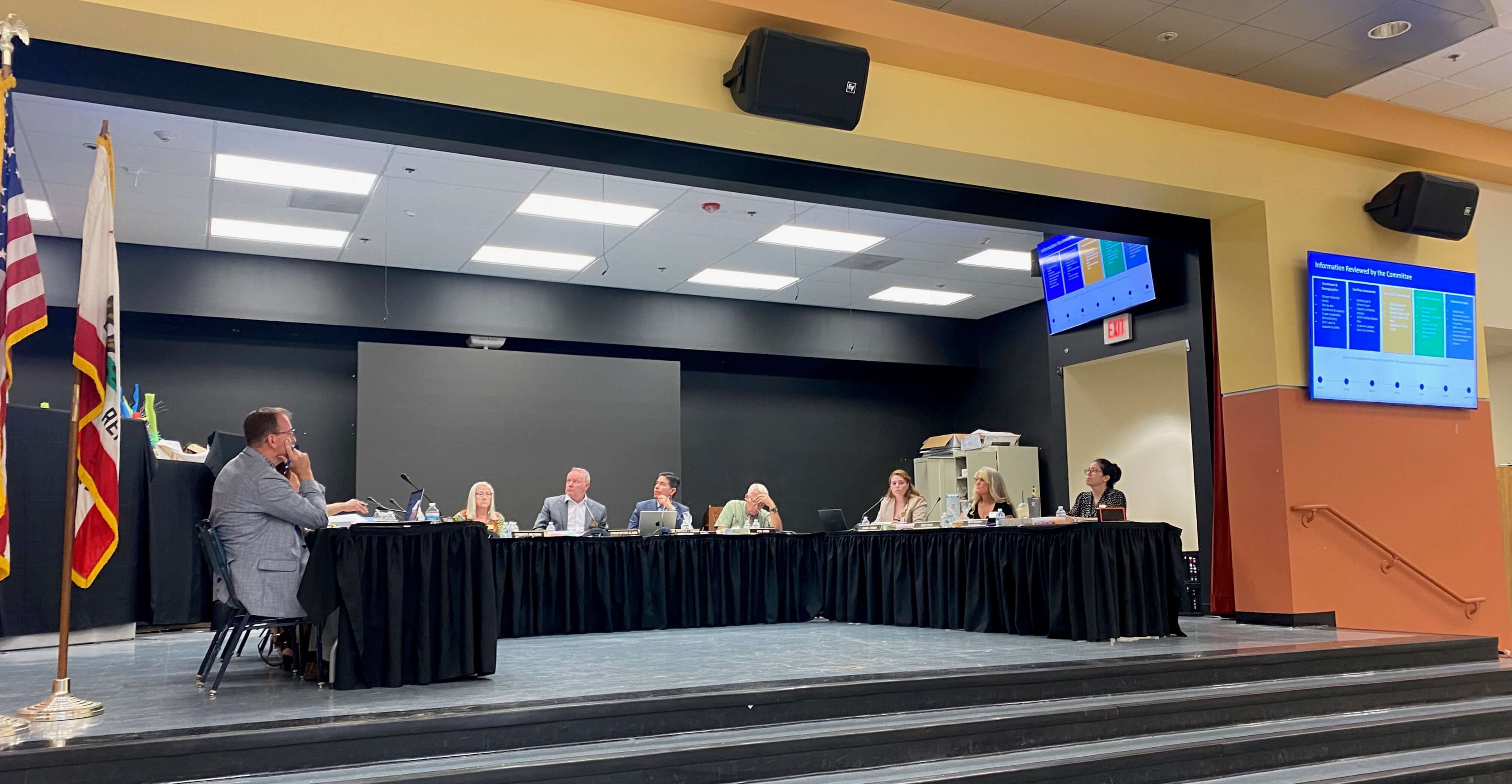
As students, teachers, and school employees across the Morongo Basin celebrate graduations and get ready for the summer ahead, the issue of school closures dominated the June 9 Morongo Unified School District (MUSD) Board meeting. The board has been focused on developing a strategy to address declining enrollment, falling state funding, and rising costs over the past few months. To develop a plan and review options, the board hired consulting firm SchoolWorks and formed a nine-member, volunteer Enrollment Committee to serve in an advisory capacity.
At the 90-minute meeting, Enrollment Committee Vice Chair Karla Buchanan presented the volunteer group’s recommendation to keep schools open, emphasizing that school closure should only ever be a last resort. The committee also recommended additional strategies to balance the budget and strengthen enrollment. Their suggestions included redrawing boundaries to rebalance enrollment across the district and pursuing enrollment recovery, retention, and enhancement, as well as pursuing operational efficiency.
For more background, see our coverage of the May 9 and April 21 meetings. The meeting also covered a summer Transitional Kindergarten program, an upcoming vote on teacher’s contracts, and routine business.
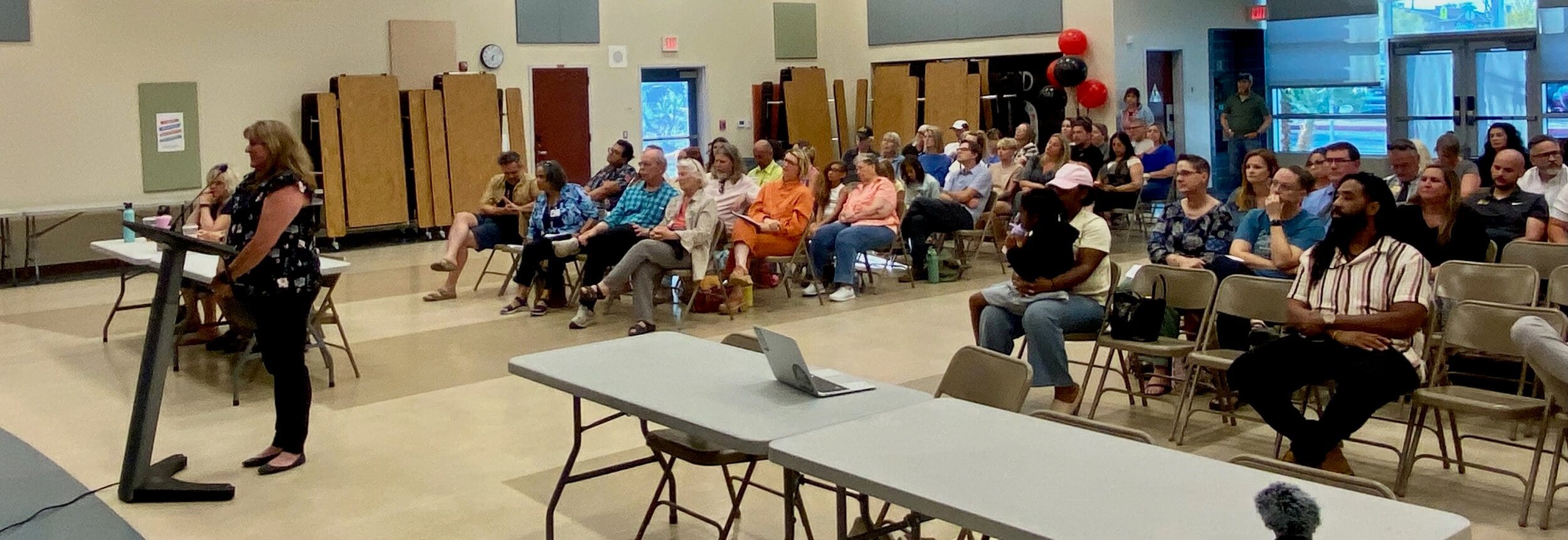
Passionate and well-researched public comments largely focused on the issue of school closure, but also addressed the increased use of combination classrooms, the lack of buses for school field trips, and Extended Learning Opportunities Program.
An agenda and recording is available on the MUSD’s website.
Enrollment Committee’s final report recommends keeping schools open
The report by the Enrollment Committee was the most anticipated part of the meeting. Meeting since January 2026, the advisory Enrollment Committee was tasked with reviewing enrollment trends and evaluating facilities in order to come up with a recommendation to address the potential budget shortfall that could be created by declining student enrollment. A report by the MUSD states that over the past decade, enrollment has fallen from approximately 8,400 students during the 2016/17 school year to around 7,300 today and could fall further still.
The summary and findings of the committee’s final report were presented by committee Vice Chair Karla Buchanan and were the culmination of months of meetings, community conversations, and research. Buchanan acknowledged the diversity of experience of committee members, including parents, district employees, business owners, and community members. The committee held seven public meetings, conducted site visits, and reviewed enrollment and demographic data, facility assessments, financial operational information, consolidation scenarios, and community feedback.
Buchanan explained that the committee considered multiple scenarios, from no school closures to the closures of multiple schools. Ultimately, the committee recommended that school closure should only be considered as a last resort. Buchanan explained,
The committee understood the financial challenges facing the district and took those concerns seriously. However, after extensive discussion, review of the available information, the committee reached consensus that school closures should remain a measured last resort. Members repeatedly expressed concern about the long-term impacts that school closures have on students, family, staff, and community served by those schools. Once the schools close, those impacts can be significant and difficult to reverse.
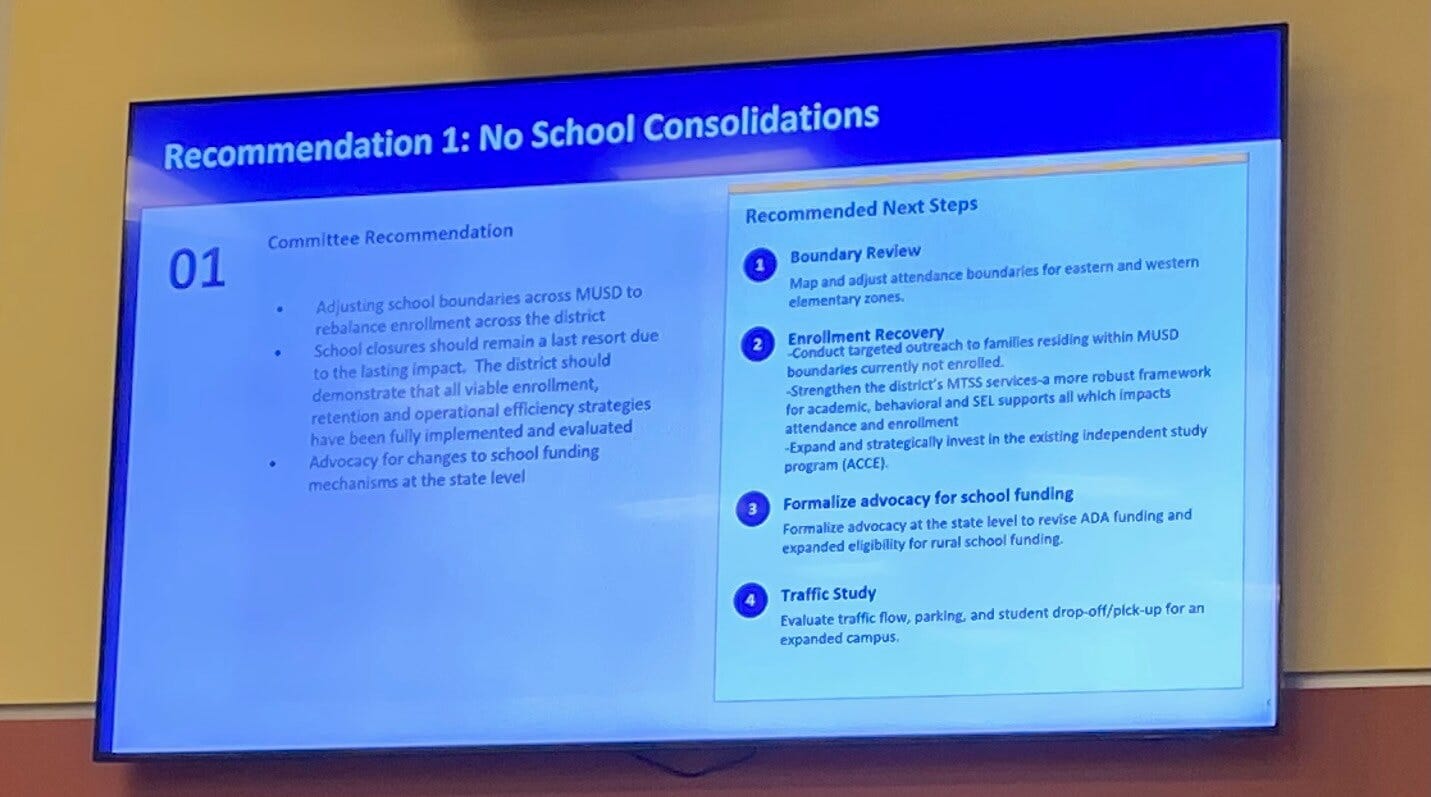
To address declining enrollment and budget shortfall, the committee recommended that the district pursue all viable strategies before considering closing any schools. They highlighted several strategies including:
Adjust elementary school boundaries across MUSD to rebalance enrollment and make better use of resources across the district.
Pursue enrollment recovery and enhancement, including re-engaging families whose children attend private, charter, or faith-based schools or other education alternatives.
Enhance support and resources for students with behavioral needs that may impact enrollment.
Expand and invest in the existing independent study program.
Formalize advocacy for school funding at the state level to better support the needs of students with disabilities and our rural school system.
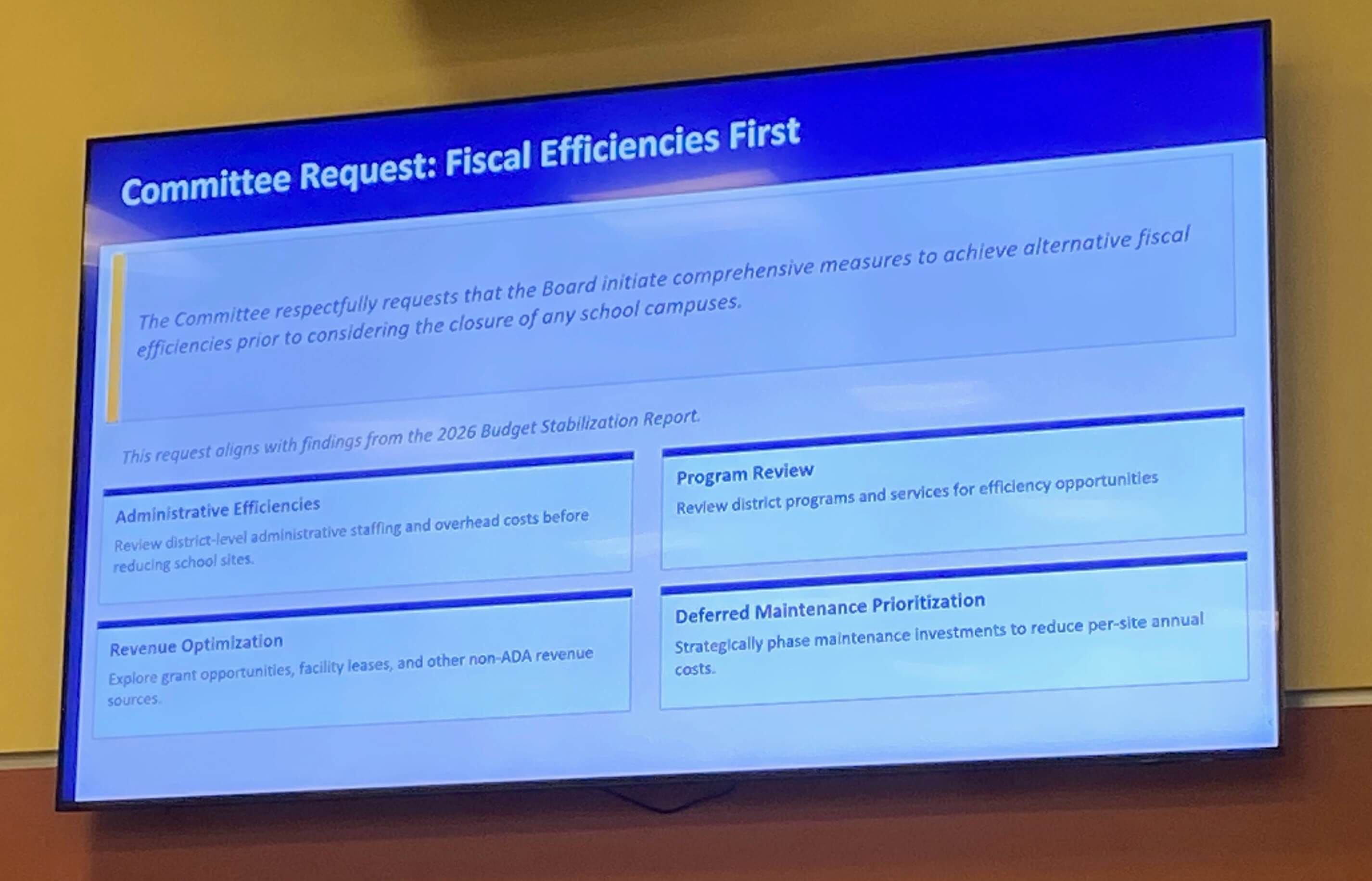
The committee felt strongly that any decisions the school board makes must take into account not only their impact on the district’s finances, but also students, school communities, and educational equity across the Morongo Basin. The process of coming to a decision matters, explained Buchanan,
For that reason, the committee is requesting that any future actions include clear implementation timelines, transparent communication, ongoing monitoring of student outcomes, careful consideration of equity institutions, and assurances that any receiving schools are fully prepared to support additional students.
Because the Enrollment Committee serves in an advisory role, the decision on next steps and action items rests with the school board. A timeline for a decision was not announced.
Parents, teachers, and community members advocate for Morongo Basin schools, with Landers Elementary and Palm Vista in focus
Teachers, parents, and community members offered public comment on the Enrollment Committee’s recommendation and the issue of potential school closures. Overall, the seven public comments focused on the impact school closures would have on communities that are already underserved and struggling with resources. Together, they reiterated that school closures do not save money overall. While commenters showed up representing Landers and Palm Vista in particular, most made it clear that they supported all schools and students throughout the district and stressed the importance of unity.
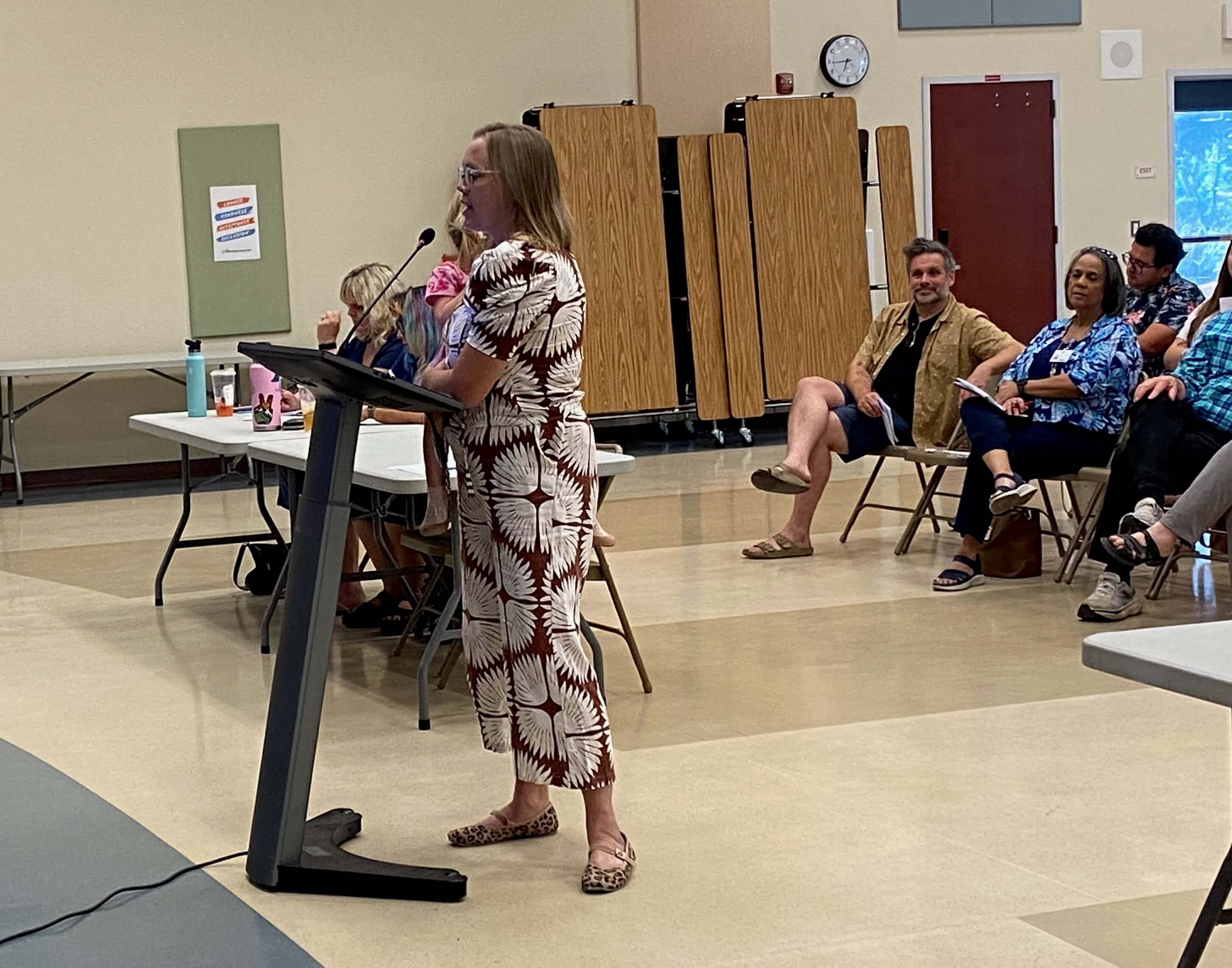
Cordelia Reynolds, a resident of Landers and Treasurer for the Landers Community Association, emphasized that the school serves as a hub for the community and provides many services to vulnerable community members. To see it close would be “beyond devastating.” She urged the board to look at the issue holistically, taking into account how many families in communities like Landers moved out when housing prices rose sharply during the pandemic due to an influx of vacation rentals. As the real estate market flatlines, she suggested that families will move back in. She said,
I’d really love for these schools to always remain open, and for us as a community in the Morongo Basin to be dedicated to these schools remaining open. If that means going to state level, then we can go to the state with it, because attendance is not something to use to maintain a school being open when we live in a rural community that’s been devastated by AirBnBs without any regulation.
Mark Farison, a teacher with a 35-year tenure in the school district also came out to represent Landers Elementary School, where he teaches. He praised the board’s commitment to fiscal responsibility and the benefits that approach brought to the district, but reminded them that,
We are not part of a corporation where success is measured by profit margins or bank account balances. We instead provide an incredibly important service to the public, and what matters the most are the families who entrust us with the care and education of their children. Their success and well-being is the ultimate measure of our accomplishment.
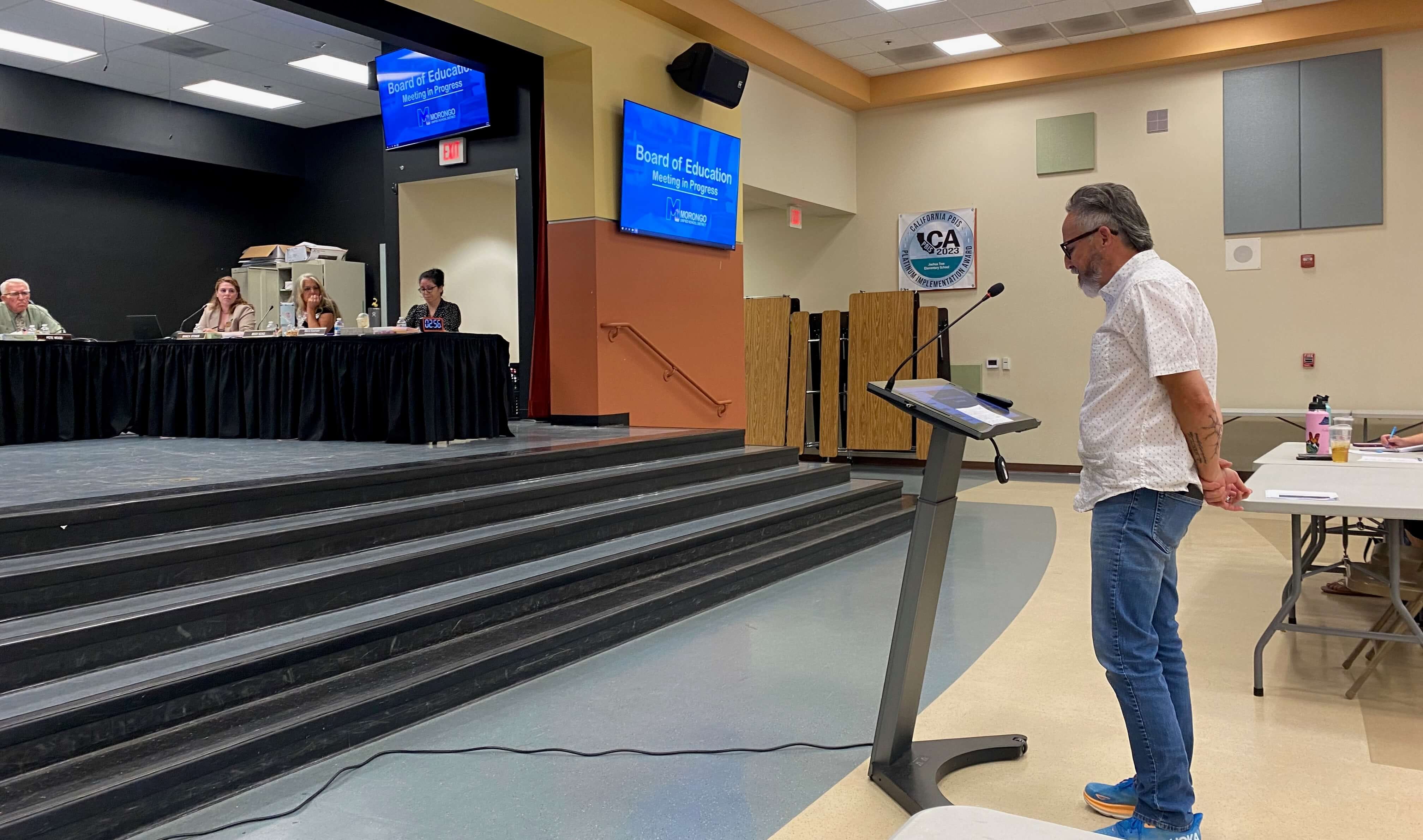
He explained that closing schools erodes public trust that the school board is putting children first, especially in communities with highly vulnerable populations like Landers where 91% of the families are socioeconomically disadvantaged and the school services as a “lifeline” for services and a social hub. In the 2024/2025 school year, 145 out of 168 students at Landers Elementary were considered socioeconomically disadvantaged according to data available on EdData.
Farison also questioned the economic argument of school closure saying “The numbers simply do not justify the harm that would come to the families and children, nor the disruption of their education.”
Abby Farison, a graduate of Yucca Valley High School and a political scientist with a master’s from UCLA, dove deeper into the impact of school closer from an academic perspective. She cited a number of peer-reviewed studies that showed that school closures negatively impacted education outcomes, graduation rates, enrollment, and attendance.
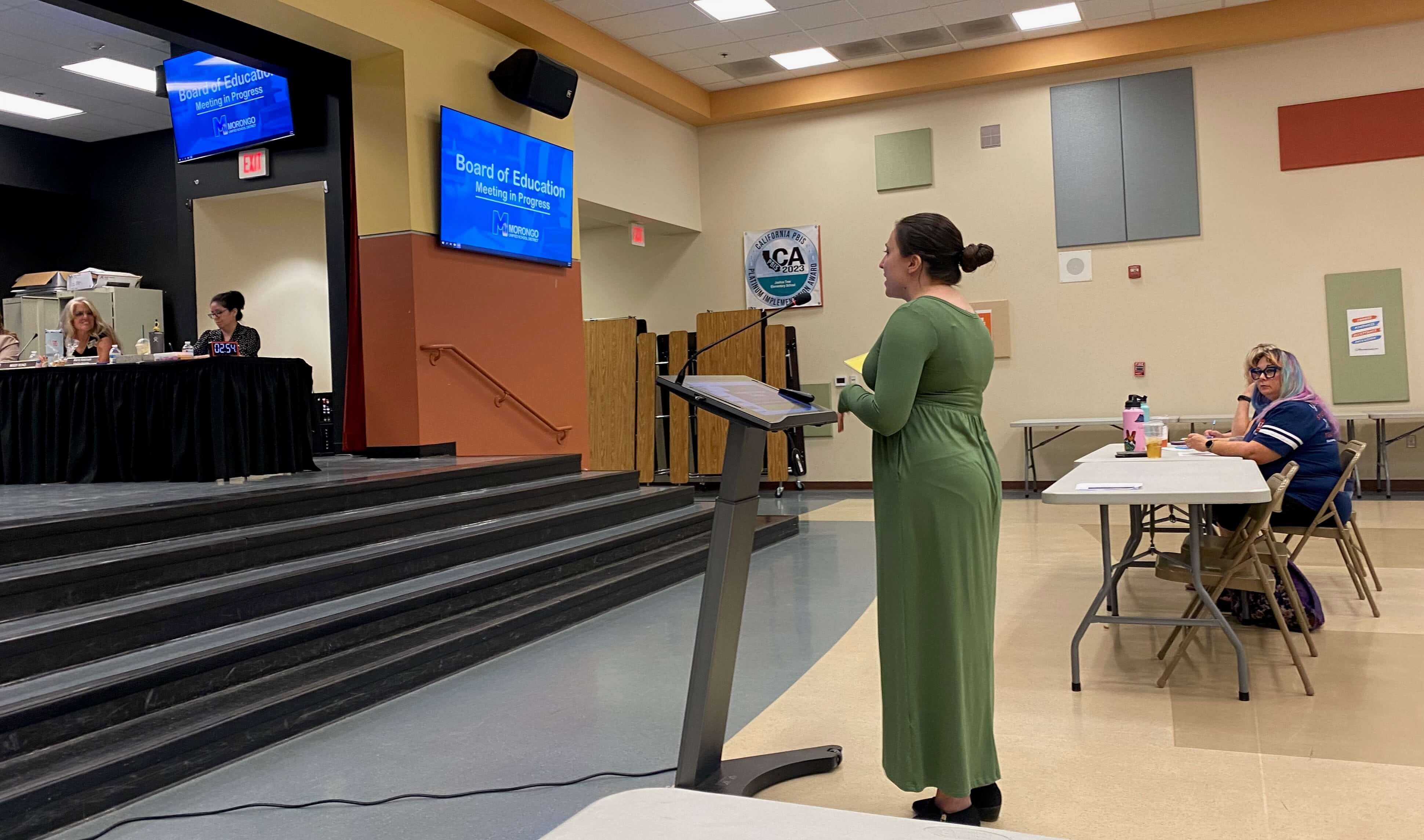
Her final citation was a recent study released in May 2026 by Francis Pearman from Stanford University who studied public school closures across California from 2011 and 2019. Pearman found that school closures on average had no impact on financial conditions. Ms. Farison summarized the study and how it applies to the MUSD saying, “I think that that shows that all of those schools, all those districts, I’m sure had similar projections where they expected to save money, but the math and the statistics and studies show that in the end it does not save much.”
While overall each speaker stressed the importance of unity and coming together to address challenges throughout the district, whether aging facilities, crowded classrooms, or the need for expanded enrichment programs, tensions within the district were also evident. James Osler spoke against what he viewed as systemic racism by the board by targeting Palm Vista Elementary in Twentynine Palms for closure while schools like Friendly Hills, which has more white students, will remain open. A review of demographic data of Palm Vista and Friendly Hills showed that in the 2024/2025 school year 64% of Palm Vista students identified as Black, Hispanic or Latino, Asian or Pacific Islander or two or more races, compared to 43% of Friendly Hills students who identified as Hispanic or Latino or two or more races.
Despite tensions, the message of of working together to find a solution and fight for quality schools prevailed. In her comment, Carolyn Riggs reflected on the process saying, “We learned of all these different ways to shore up the budget, and not one of these included closing any of the schools that were proposed. Most importantly, we were reminded of how dedicated the families of Morongo Basin are to students.” In closing she led the crowd in a short song to the tune of Aud Lang Syne,
From Landers to Morongo El, Palm Vista, Friendly Hill, All students there deserve our care and fight for all we will!
While the steps around potential school closure will be decided by the school board, given the energy and effort community members have put in so far to organize, it’s clear they will continue to show up.
Upcoming vote on a new contract and the importance of protecting schools
Amber Hanson, the certificated representative (who represents certificated educators and education professionals) from the Morongo Teachers Association, reminded the board about their upcoming vote on a new teachers contract. The vote will take place at the next meeting on June 16. She spoke to the two years of work that went into putting the contract together, including the bargaining process, 20 on-site meetings, 158 one-on-one meetings with members, and a “famous” survey that took 45 minutes to fill out with an 80% response rate. Hanson explained the contract is powerful because it offers teachers compensation higher than surrounding areas and it emphasizes solving conflict through collaboration and bringing teachers into decision making processes.
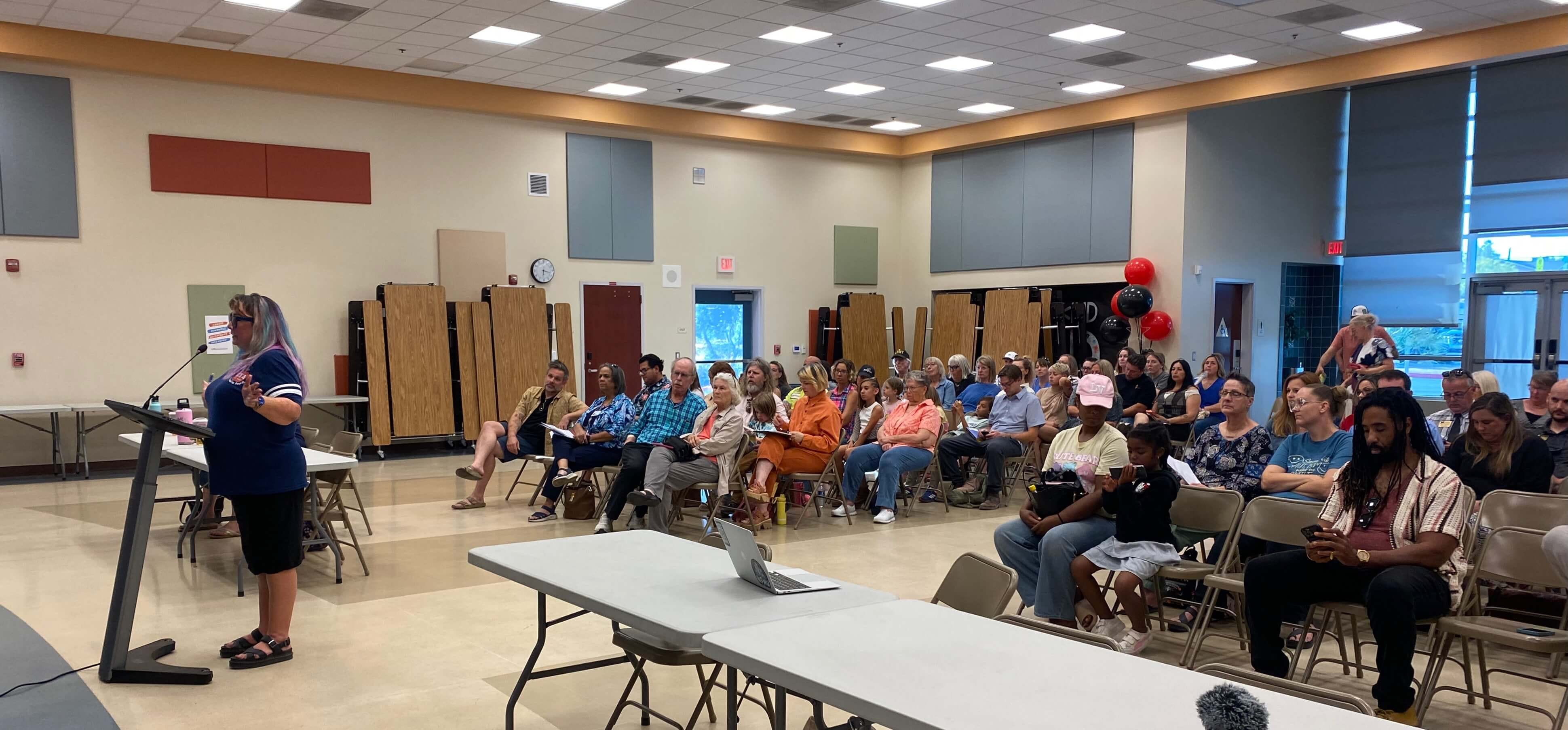
Hanson also addressed the Enrollment Committee and the board’s pending decision around school closure. She emphasized the importance of unity across the district and the role of schools, the school board, parents, and community members in coming together and putting in the work to increase enrollment, ensure students get the services and support they need, and help students struggling with school and other needs,
We have to be in this together, if we want schools to stay open, and we want them to be good … Community exists. You have to have conflict, but how we deal with it and what we do to solve it is what’s going to make the difference for our children and their future.
Transitional Kindergarten Boost summer session returns
Dr. Gracie Gutierrez, the Assistant Superintendent of Elementary Education, gave an update about the return of TK/Kinder Boost. This week-long program is designed to provide transitional support for young children who will be starting school in August. It focuses on building social skills and identifying needs children may have before school starts. It helps young students learn skills that will enable them acclimate to school, like standing in a line or going to the cafeteria. Dr. Gutierrez explained, “For many of [the children] it is the very first time that they are leaving their parents’ side, and it’s an opportunity for them to interact with adults in a school environment and to begin to familiarize themselves with that school setting.”
The program will be offered the week of June 22 to June 26 at Oasis, Onaga, and Yucca Mesa elementary schools from 8 am to 12 pm. Breakfast and lunch, as well as morning transportation will be provided from the students’ home school. While Dr. Gutierrez mentioned Oasis has already reached its enrollment cap, she emphasized the goal is not to turn anyone away, and they will rebalance staff as necessary. Interested families can fill out this short form.
Open public comment focuses on concerns about false advertising, increasing opportunities for students, and fair workloads for teachers
Non-agendized public comments focused on issues of equity and concern in the district. Ruben Rodriguez raised a concern about the lack of busses for school field trips, an issue he learned about from his wife who is a teacher in Twentynine Palms and had five field trips where busses were unavailable this year, leading to the cancellation of three of the five trips. “Going forward, we really need to find a way that when we create opportunities for our kids to get there,” he said.
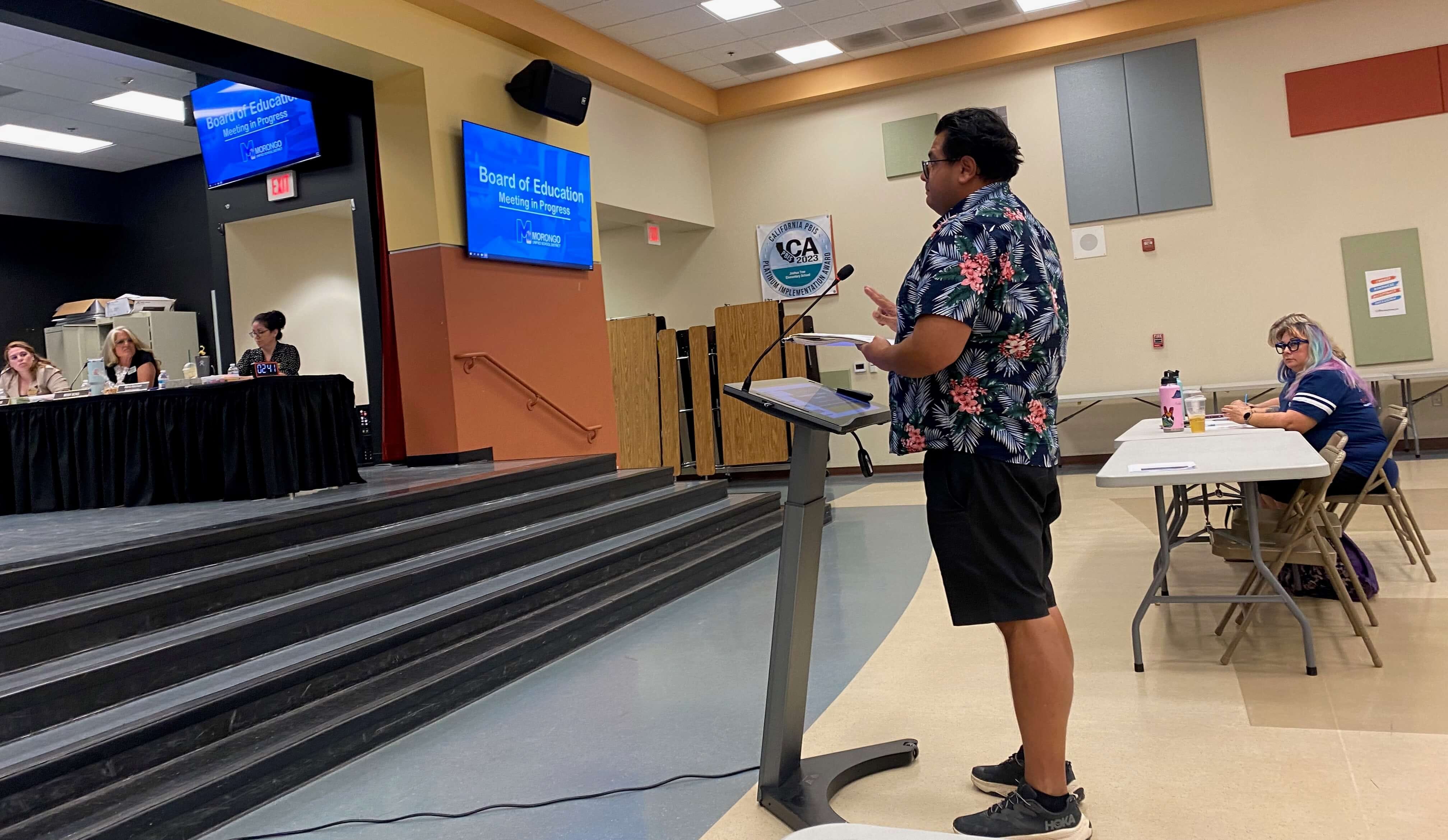
Rodriguez also raised an issue related to the school closure conversation to the board’s attention: That consulting firm School Leaders is currently using their work with the MUSD on fiscal stabilization as a case study on their website. Rodriguez cautioned the board of how this may appear to the public,
[The case study] is actually an advertisement for how to bring what happened here to other districts, so after this community having to go through all of that, to see it now used as advertising … I don’t think its a real honest evaluation of what went on here, because this talks about how much trust it built in the community when it had some adverse results.
The School Leaders consultants are not to be confused with SchoolWorks, the consultants hired to work specifically on enrollment projections and demographics that helped inform the Enrollment Committee’s initial research. In casual conversation after the meeting, a parent referred to the School Leaders case study as a “scandal,” pointing out that many of the proposals for fiscal stabilization in the case study were similar to those generated by parents and community members. The parent expressed concern that the consultants had claimed and taken credit for the community’s suggestions.
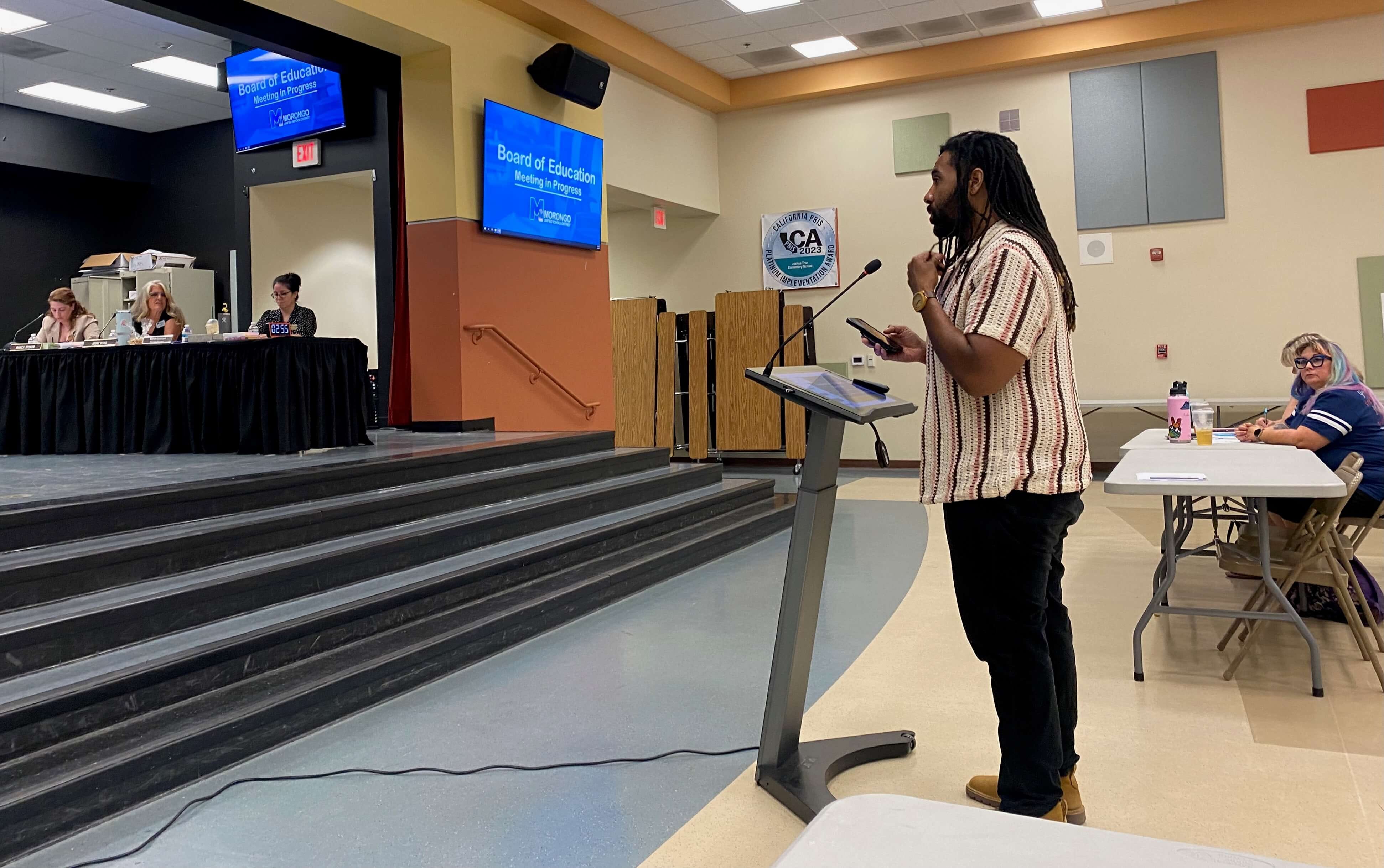
Terrance Lattimer, the Executive Director of 29 Dines, shared successes of the organization’s “Harvest and Thrive” program, which was supported by the district’s Extended Learning Opportunity Program (ELOP) and thanked the board for their support. He emphasized that participants found that, “Food is a powerful gateway, a powerful doorway to learning and to expanding beyond the campus.”
Jennifer Bouma, a teacher with a 30-year tenure in the district, raised concern about the increased number of combination classes, where students from two grade levels are grouped into one classroom. “The students we serve are not members on a spreadsheet, and teachers are not robots. Decisions about staffing and class placement have a direct impact on the quality of education our students receive and on the well-being of the educators who serve them,” she explained. To alleviate stress on teachers and provide students with a better learning experience, Bouma urged the board to consider alternatives and to let the decisions about staffing and classes be made at the school level by principals who know their school, teachers, and students’ needs.
After the serious issues that the board considered, the meeting ended on a high note. During their comments section, Board members reflected on the joy of attending graduation and promotion ceremonies around the district, celebrated the new kitchen at Twentynine Palms Junior High, and shared the news that Palm Vista had received $66,000 in grants from the Toshiba and Hearst Foundations and the Honda USA Foundation.
The next school board meeting will be held on June 16, 2026 at 6 pm at Joshua Tree Elementary School, 4950 Sunburst Ave, Joshua Tree.
Hi, new subscribers! Desert Trumpet understands you might not be interested in all of our coverage. That’s why it’s divided into separate newsletters allowing you to opt out of reporting that’s not important to you. For instance, you may want our Education news but not City Hall 29.
Here’s how to opt out: go to your Substack settings, scroll down to “subscriptions,” and select “Edit” for the Desert Trumpet. Simply uncheck the box next to the newsletters you don’t want to receive in your email inbox. You’ll still be able to access all coverage online if you change your mind.
Thanks to you, Desert Trumpet met our $10,000 paid subscription goal!!!
Not a paid subscriber yet? Did you know that paid subscribers receive discounts on our DT Social events and invites to DT Front Porch, intimate discussions featuring local officials and notable residents?
Upgrade to a $50+ paid subscription for a 10% discount.
Upgrade to $100+ for a 25% discount.
Sustaining subscribers at the $250+ level and above receive complementary tickets.
Leave your thoughts in the comments below. Please note that we do not allow anonymous comments. Please be sure your first and last name is on your profile prior to commenting. Anonymous comments will be deleted.
This coverage is free - please share!
A thorough and well-reported post, thank you. We have an awesome community.
Thank you very much, Eleanor, for summarizing everything we’ve been working on so hard!!!