
On the Agenda: Morongo Basin Items at the County Board of Supervisors' June 23, 2026 Meeting
Two solar items, a water rate ordinance taking effect, and $13.7 million in sheriff contracts — a guide to Morongo Basin items buried in the county's 206-item June 23 Board of Supervisors' agenda.
By The San Bernardino County Board of Supervisors Resident Review Committee
Editor’s note:
Last month, as an internal experiment, we used our AI, Anthropic’s Claude, to produce a breakdown of the San Bernardino County Board of Supervisors (BOS) agenda for their May 19 meeting. What it surfaced was surprising — the City of Twentynine Palms had allowed the county contract for downtown sewer and septic maintenance to lapse on March 31, leaving the system unattended except for emergencies for two months. We also flagged a solar field installation just over the Twentynine Palms city border, which had caught some neighboring residents by surprise.
That experiment compelled us to produce our first public breakdown, of the June 9 agenda, which we sent to our email subscribers. What you’re reading now is our second, and the first we’re publishing in full rather than sending by email alone. The solar project near the Twentynine Palms border is part of what convinced us this coverage matters enough to share more broadly — it’s directly relevant to items on Tuesday’s agenda, and we’ve reported on it in more depth below.
This analysis is AI-produced, with more human review than our earlier efforts but still far from comprehensive. It is limited to the Morongo Basin as defined by criteria we’ve fed to Claude. We’re sharing it because our county representatives leave residents little time to review what they’re voting on — agendas are issued at 5 p.m. on a Friday for a meeting the following Tuesday at 10 a.m. That’s barely a business day to digest a document that runs 62 pages before a single supporting document is opened and that references millions of dollars in spending.
For several items we’ve gone past the agenda summary and into the supporting documents, and we provide links so you can read them yourself and draw your own conclusions. We cover those items first, under the heading “A Closer Look” then dive into lists of the “Basin-Specific Items” and finally the “Broader Items with Basin Impact” in the agenda.
We don’t currently have the capacity to report on the outcome of individual meetings, but we are assessing whether we can produce a monthly summary of the actions the Board takes on the items we highlight so readers can track what was actually decided. If that’s something you’d find useful, let us know.
AI makes mistakes, and we welcome corrections. We’re also still building a review committee, similar to the one in place for our Yucca Valley coverage, to help catch errors and advise on which items deserve a deeper dive. Like our Yucca Valley committee, reviewers are anonymous. We currently have representatives from Desert Heights, Flamingo Heights, Joshua Tree (central) and Morongo Valley. If you’re interested in participating, email us at editor@deserttrumpet.org with BOS review in the subject line.
Before we dive into the BOS agenda, a note from the June 4 County Planning Commission meeting
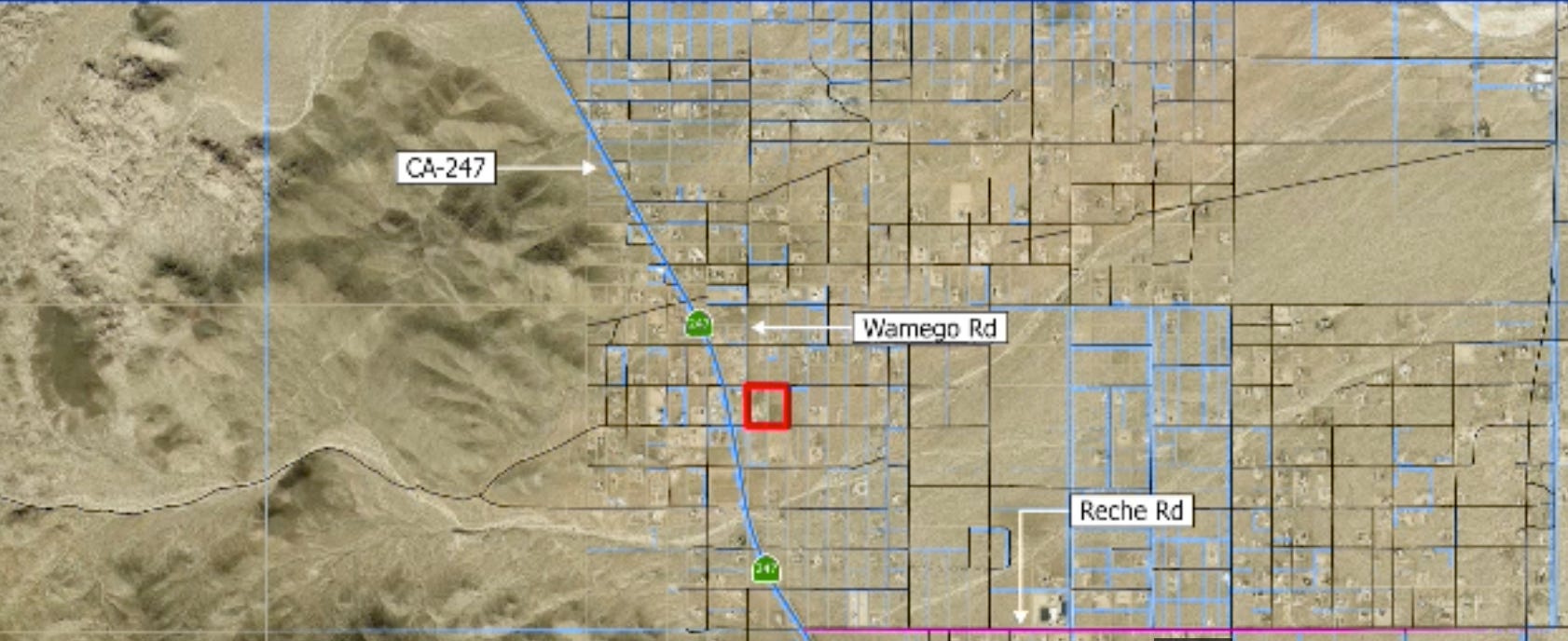
Landers area residents may want to be aware that the San Bernardino County Planning Commission approved a significant expansion of the Lonely Dove Motel at its June 4 meeting. (The county’s planning records call it “Lonely Dove”; the business operates as the Lonesome Dove Motel.) The project at 1473 Wamego Trail in the Homestead Valley community would expand the existing 8-room motel to roughly 40 units1 across two 5-acre parcels. According to the project’s environmental filing, the western parcel where the existing motel sits would add 12 rooms in six free-standing structures plus an 1,800-square-foot restaurant, while the currently vacant eastern parcel would take the bulk of the expansion: 20 more rooms in ten structures, a 1,000-square-foot restaurant, a miniature golf facility, and a prefabricated “futuro” home. The approval includes a partial zone change from Rural Living to Special Development-Residential. The Planning Commission adopted a Mitigated Negative Declaration, meaning the county found potential environmental impacts could be reduced to acceptable levels through mitigation measures.
The Board of Supervisors is the appeal body for Planning Commission decisions; if you have concerns, confirm the appeal window with the county’s Land Use Services department at (909) 387-8311.
June 23 County Board of Supervisors Agenda
Of the 206 items on the June 23 agenda, we’ve identified the following as relevant to Basin residents. As a reminder, items 2–200 are on the consent calendar and approved with a single vote, while items 201 and on are discussion items.
Notably, Joshua Tree, the county’s own services hub for the Basin and home to the Bob Burke Government Center, does not appear by name anywhere in this 206-item agenda.
Public Comment
The BOS information on Public Comment can be found here.
In person public comment can be made at the 10 am meetings located at:
Covington Chambers
County Government Center, First Floor
385 N. Arrowhead Ave.
San Bernardino
Additionally there are three options for written public comment:
Online: publiccomments.cob.sbcounty.gov
Via email: BoardMeetingComments@cob.sbcounty.gov
Via U.S. mail: San Bernardino County Clerk of the Board of Supervisors, 385 N. Arrowhead Ave, 2nd Fl., San Bernardino, CA 92415
As of July 1, the BOS will offer remote telephone participation for public comment. Details here.
A Closer Look
For the items below, we went past the agenda summary and into the support documents the county posts alongside it. These are the top four items that we think Basin readers would be most interested in.
The Lear Solar Project and the Rules the County Set for Itself (Items 203 & 205)
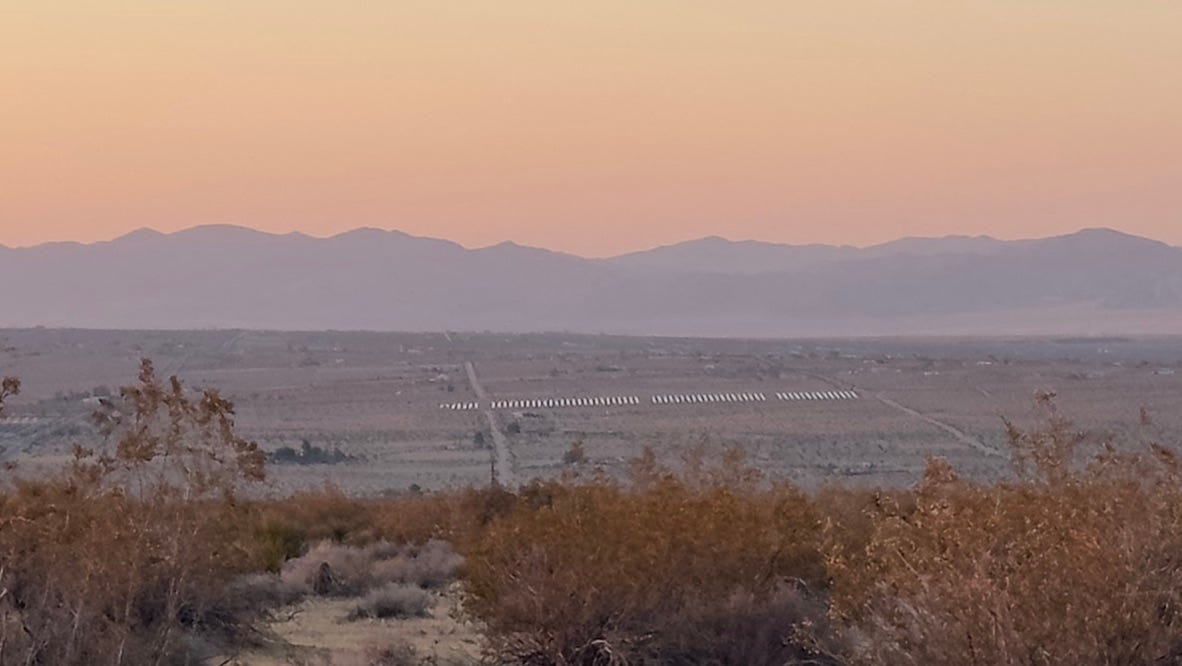
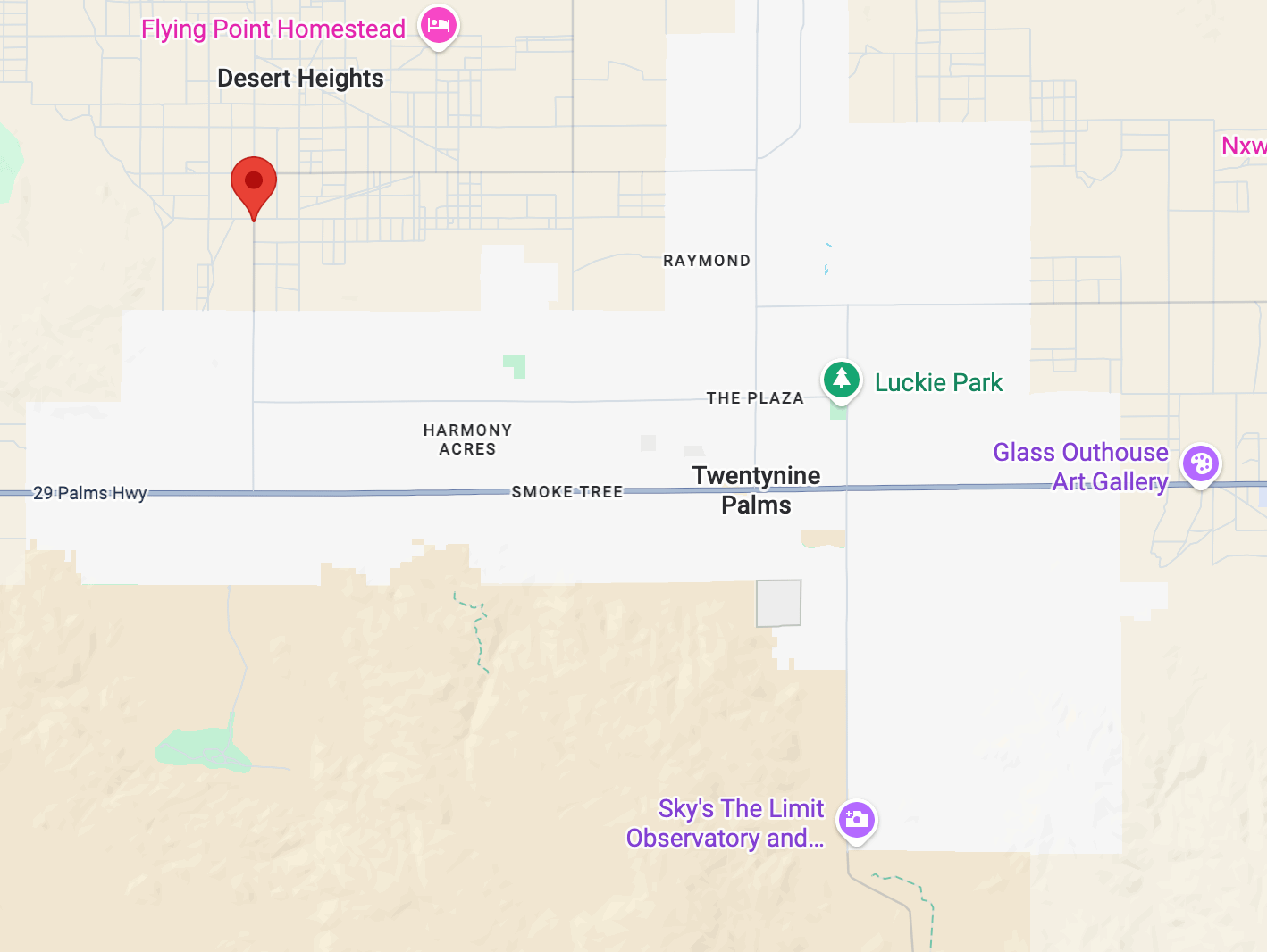
A pair of Tuesday's agenda items turn on how the county handles solar — Item 203, an appeal of a denied solar project in the Bear Valley area, and Item 205, the Energy Ad Hoc Committee discussion. Both read more clearly against a project the county has already approved: the 9.9-megawatt Lear Solar Project, on unincorporated county land just outside the Twentynine Palms city limits, near Lear Avenue and Mesa Drive in Desert Heights. The county Planning Commission approved it in January 2025, and construction began in early 2026. Our review of the county’s own records found that the approval appears to depart from rules the county wrote for itself.
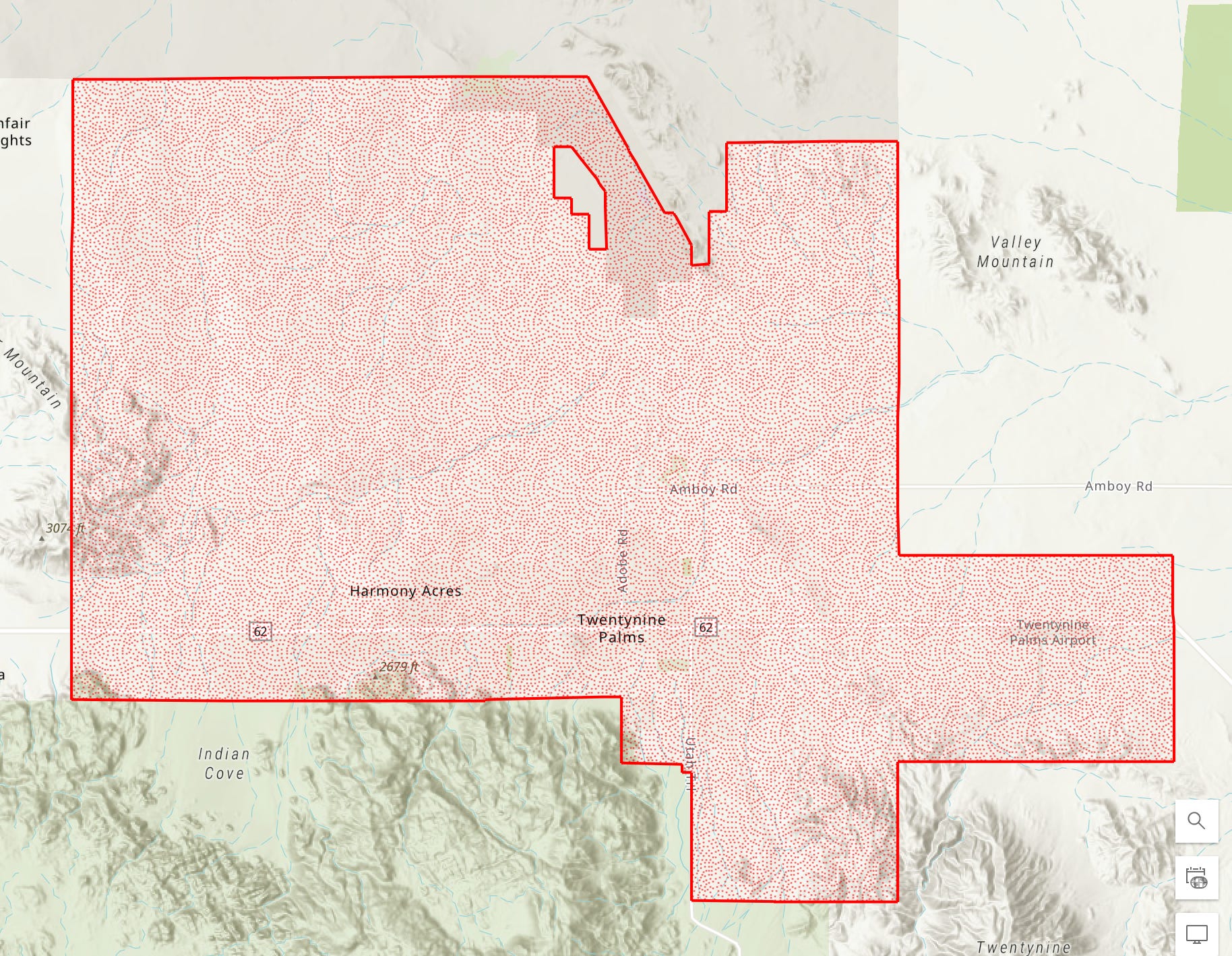
Both of those departures are worth flagging now, and we'll examine them more fully in a forthcoming report. First, the county’s own staff report contradicts itself on whether the site sits within Twentynine Palms’ sphere of influence: its cover page lists the “City Sphere of Influence” as Twentynine Palms — as does LAFCO’s mapping — yet a required finding states the site “is not located within the Sphere of Influence of a city.” That second determination let the county sidestep its own rule that a solar project within a city’s sphere of influence be consistent with that city’s zoning — and with it, any reckoning with the City’s solar ban.2 Second, the county appears not to have notified the water district serving the site: the general manager of the Twentynine Palms Water District, Matt Shragge, says the district knew nothing of the project until it was already approved and being fenced — though county code requires that the water agency be notified when the application is accepted. 3
The Lear project was approved by the county, not the City, and that distinction is what made the approval possible. The site is zoned Rural Living, which already permits solar under 10 megawatts with a Conditional Use Permit, so no zone change was needed, and the county classified it as a Community-Oriented Renewable Energy (CORE) facility. Because the parcel is unincorporated, the approval ran through the county even though the project is plainly visible from within Twentynine Palms — a city that has banned new solar farms within its own limits since 2012, and that rejected the E-Group solar proposal inside city limits in March 2026 after hours of public testimony.
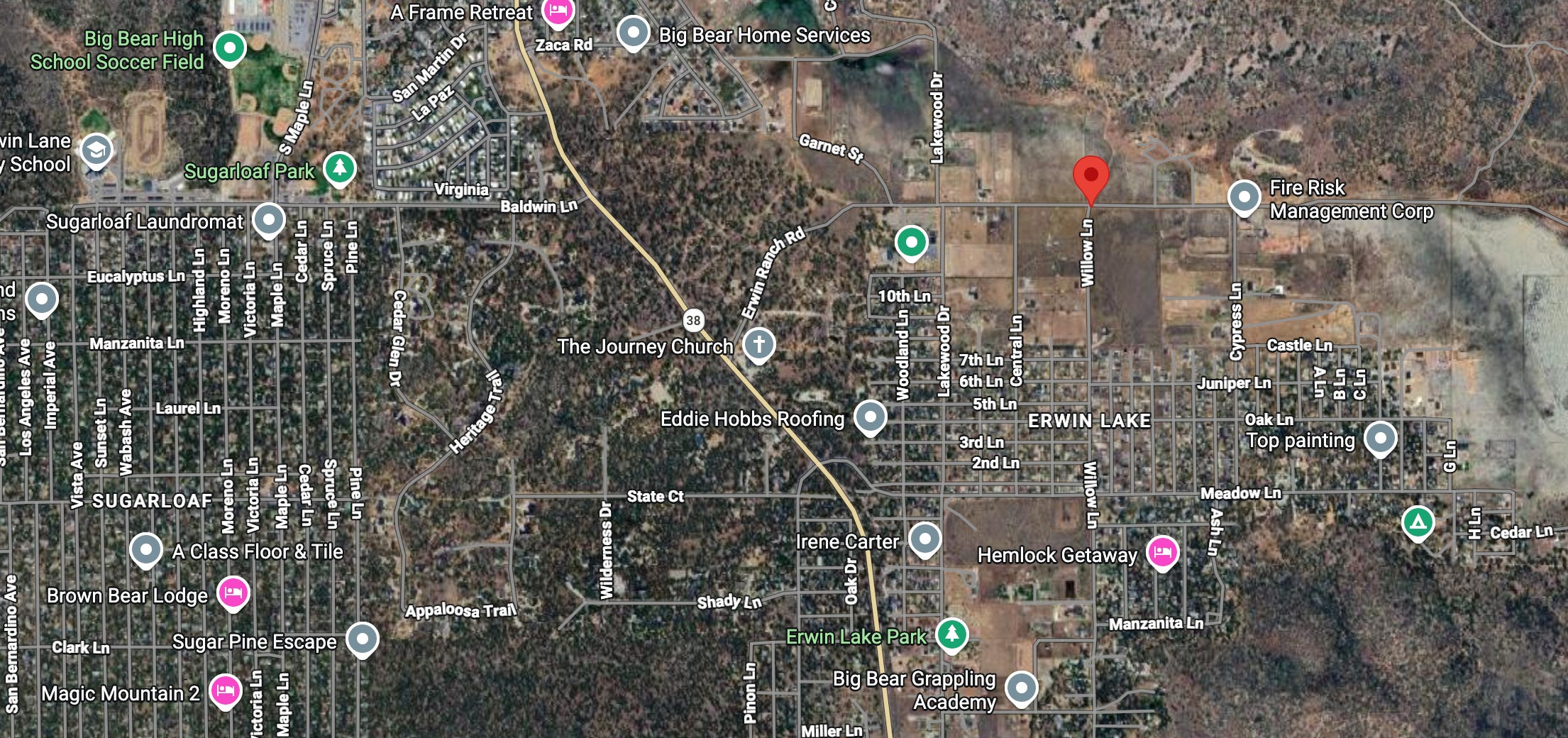
That contrast is what makes Item 203 worth watching. Developer EDF Renewables, with Bear Valley Electric Service, proposed a 5-megawatt facility on a 29.9-acre parcel in the unincorporated Erwin Lake area at the east end of Big Bear Valley, off Highway 38 — the route many Basin residents take to Big Bear. But that parcel is zoned Residential Single, one-acre minimum, so the applicant needed both a General Plan Amendment and a full zone change to Rural Living — a far higher bar than Lear faced. The Planning Commission denied it, and on Tuesday the Board is asked to uphold that denial, which staff recommend. Projects on rural-zoned vacant land move relatively smoothly; projects that require rezoning residential or community-adjacent land face a much steeper climb.
The CORE label the county used for Lear also deserves scrutiny. The Renewable Energy and Conservation Element reserves it for facilities primarily serving local users, and the staff report names Joshua Tree and Twentynine Palms as the intended beneficiaries — but at distances of 9 and 5 miles that appear to measure to city cores, not boundaries; the site is actually about 0.75 miles north of the Twentynine Palms city limit. The power feeds the SCE grid rather than specific local customers. That gap between the policy language and the reality on the ground is exactly the kind of question the Energy Ad Hoc Committee should be taking up.
Item 205 is where those questions could surface. It's a discussion item set for 1:30 p.m. on June 23, with Supervisor Rowe presenting, in which the Energy Ad Hoc Committee explores topics for further study. No staff report has been posted, so residents have no way to know in advance whether solar siting is among the topics — and what the committee chooses to pursue could shape county solar siting policy Basin-wide.
The entire Basin — particularly the unincorporated communities most exposed to large-scale energy development, including Landers, Johnson Valley, Wonder Valley, Desert Heights, Flamingo Heights, and Copper Mountain — has a stake in how the committee weighs local consistency, notice, and the “community-oriented” standard. Residents who want to weigh in can do so in person or in writing before the meeting begins.
Source: PROJ-2023-00170 (Lear Solar), San Bernardino County Land Use Services, including the Planning Commission staff report and Initial Study/Mitigated Negative Declaration; PROJ-2025-00036 (Bear Valley Solar), CEQA record; interview with Matt Shragge, Twentynine Palms Water District; Desert Trumpet reporting, March 2026; Items 203 and 205 agenda text, San Bernardino County Legistar.
Item 169 — Landers-Area Road Districts: One Zone Says Yes, Three Say No — and May Be Dissolved
This item certifies the results of mailed-ballot elections held June 6 on proposed road maintenance charge increases across four CSA 70 zones, all of which maintain dirt roads in the Landers area. The results were split, and the consequences for the three zones that voted no are significant.
First, the history that explains the increases. These zones were formed between 1986 and 1991 to maintain roughly 147 miles of dirt roads, with annual charges of $15 to $35 per parcel. Those charges were never adjusted for inflation and have stayed flat for 36 to 42 years. The county notes that if a 3% annual adjustment had been built in from the start, the charges would already sit between $70 and $100 — which is essentially what it asked property owners to approve.
Copper Mountain (Zone R-19) was the only yes: owners approved raising the charge from $20 to $75 per parcel per year, with up to 3% annual inflation adjustments, by 335 to 310 — 51.9%. That single increase lifts the four zones’ combined annual revenue from about $66,050 to roughly $178,580.
The other three voted no, two of them decisively. Yucca Mesa East (Zone R-29) rejected a proposed $30-to-$90 increase by nearly three to one (28.6% in favor). Yucca Mesa West (Zone R-26) rejected $35 to $100 (43.4%). Flamingo Heights (Zone R-20) came closest at 45.1%, rejecting a proposed jump from $15 to $90. Existing charges stay in place for all three.
Here’s the part Landers-area readers should not miss: because these three zones rejected increases now and also rejected them in 2017, the county says it will begin the preliminary steps to ask the Board whether to dissolve the three zones entirely. In practical terms, property owners who twice declined to pay more for road maintenance may find the service withdrawn rather than continued at the current level. The county says it will notify affected property owners as those proceedings move forward.
Source: Item 169 support documents, San Bernardino County Legistar.
Item 200 — Water Rate Ordinance: Basin Zones Now Set Through 2030
This is the closing chapter on the story we first reported from the June 9 agenda. The Board adopts the ordinance formally establishing the five-year water and sanitation rate schedules for the three Basin CSA 70 water systems: Little Morongo Heights (Zone F), Hacienda Heights (Zone W-3), and Pioneertown (Zone W-4).
The public hearing was held June 9. The county reported receiving only one written objection across all zones in that hearing — from a Hacienda Heights (W-3) customer — well short of the Proposition 218 majority-protest threshold that would have blocked the increases. With no successful protest, the ordinance moves to adoption here without further public input.
What that means practically: the five-year rate schedules we reported on after the June 9 meeting are now locked in. Pioneertown customers face a 61% increase in fixed monthly charges and a 92% jump in per-unit water usage rates over five years. Little Morongo Heights (Zone F) faces modest fixed-charge increases but a fund projected to run roughly $1.3 million into deficit by 2030. Hacienda Heights (Zone W-3) sees the steepest first-year usage rate jump of the three zones.
For full rate figures, see our June 9 breakdown. The ordinance adoption here is procedurally routine — but it’s the moment the increases become binding.
Source: Item 200 agenda text; see also Item 122 support documents from the June 9, 2026 Board meeting, San Bernardino County Legistar.
Item 178 — Yucca Valley Donates Land for New Fire Station 41
The Town of Yucca Valley is donating a 0.86-acre vacant parcel at 7238 Joshua Lane to the San Bernardino County Fire Protection District for the new Fire Station 41 project — at no cost to the Fire District beyond approximately $15,000 in transaction expenses including title insurance and recording fees. The parcel joins an adjacent lot the District already purchased in April 2024, and together they’ll be the site of a new station that replaces the existing one on 29 Palms Highway South.
In exchange, a companion MOU gives Yucca Valley shared use of a portion of the existing Station 41 property at 57201 29 Palms Highway South as the town’s emergency operations center, at no charge, for up to five years. That’s a meaningful quid pro quo for a town that doesn’t have its own municipal fire department and relies entirely on the county Fire District for emergency services. The deal also carries a 12-month clawback provision: the Town can reclaim the land if the District uses it for anything other than fire and emergency response — a standard safeguard tying the donation to its stated purpose.
The environmental review for the new station was completed in November 2025, so this approval is largely the land-assembly step before construction.
Source: Item 178 agenda text, San Bernardino County Legistar.
Basin-Specific Items
Items 13 and 17 — Reach Out Morongo Basin: $135,000 More for Caregivers and Older Adults. Two separate contract amendments increase funding for Reach Out Morongo Basin, the Basin’s primary nonprofit serving family caregivers and older adults. Item 13 adds $95,000 to its family caregiver support contract, bringing it to $175,000 through June 2027. Item 17 adds $40,000 to its older adult supportive services contract, bringing that one to $140,000 through the same date.
Item 115 — Waste Disposal Agreement renewals — Twentynine Palms and Yucca Valley. Nine-year extensions locking in solid waste disposal rates for the City of Twentynine Palms and the Town of Yucca Valley at 83% of the county’s posted gate rate through June 2035.
Item 134 — Donnell Hill Communications Site license — Twentynine Palms. A three-way arrangement, stacked: the Water District owns the land, the county leases it and maintains the equipment shelter and tower, and the City of Twentynine Palms now licenses antenna space from the county. The five-year agreement generates $27,029 in county revenue, including a one-time $500 administrative fee.
Item 157 — Sheriff patrol contract renewals — Twentynine Palms and Yucca Valley. Annual renewals of the Sheriff’s law enforcement contracts: City of Twentynine Palms at $6,220,995 and Town of Yucca Valley at $7,435,821 — a combined ~$13.7 million for Basin law enforcement in 2026-27, part of a $249.5 million package across 14 contracting cities and towns. This is the county’s side of contracts each town also approves on its own; we covered the cost pressures these contracts put on local budgets in our coverage of the Twentynine Palms and Yucca Valley agendas.
Item 169 — CSA 70 road charge ballot results — Copper Mountain, Flamingo Heights, Yucca Mesa. The Board certifies June 6 mailed-ballot elections on road maintenance charge increases across four Landers-area zones. Copper Mountain approved its increase; Flamingo Heights, Yucca Mesa West, and Yucca Mesa East all rejected theirs. The three failing zones now face possible dissolution — we take a closer look below.
Item 178 — New Fire Station 41 land acquisition — Yucca Valley. The County Fire District accepts a donated 0.86-acre parcel at 7238 Joshua Lane from the Town of Yucca Valley for the new Fire Station 41, which will replace the existing station on 29 Palms Highway South. We take a closer look below.
Item 200 — Water/sanitation rate ordinance — Basin CSA 70 zones (final adoption). Final adoption of the ordinance setting 2026-27 through 2030-31 water and sanitation rates for the Basin’s three CSA 70 systems — Little Morongo Heights (Zone F), Hacienda Heights (Zone W-3), and Pioneertown (Zone W-4). The follow-through from the June 9 public hearing; we take a closer look below.
Broader Items with Basin Impact
Item 3 — Mojave Desert Resource Conservation District appointment — Rowe presenting. Supervisor Rowe sponsors the appointment of Nicolette Salazar to the board of the Mojave Desert Resource Conservation District (RCD), in lieu of an election. The district is a vast special district spanning the high desert from the Victor Valley to the Arizona border, and it includes the entire Morongo Basin. The RCD has done conservation and post-fire recovery work in Basin communities, including after the Sawtooth Fire in the Morongo Valley and Pioneertown areas. The RCD develops programs for soil, water, and habitat conservation on the lands within its boundaries.
Item 44 — Student Assistance Program / Behavioral Health — Desert/Mountain Children’s Center and Mountain Counseling & Training. Contract amendments increasing the county’s Student Assistance Program, which are school-based behavioral health services for children and youth, by a combined $10.4 million across six providers countywide. Two of the six contractors serve the Basin and high desert: Desert/Mountain Children’s Center ($2,665,298 increase, to $20,789,393) and Mountain Counseling & Training ($559,295 increase, to $1,948,880). The county’s staff report does not name the Morongo Basin specifically or break out service areas by geography, but Basin school-age children receiving behavioral health services through MUSD are among the students these contracts support.
Item 122 — SB 1 Road Maintenance project list for 2026-27. Resolution adopting the Senate Bill 1 gas-tax road repair project list for the coming fiscal year, identifying 18 projects totaling $49.1 million countywide. One project is in the Basin: Aberdeen Drive and other roads in the Yucca Valley area ($2,216,000), with chip seal and fog seal work scheduled July 2026 through December 2027. Last year’s SB 1 list also included a completed Basin project: chip seal work on Amboy Road and Pole Line Road for $1,034,000.
Item 196 — CSA 70 water and wastewater maintenance at Regional Parks ($10.4M).Ten-year agreement for CSA 70 to provide preventative maintenance and emergency response for water and wastewater systems at all county Regional Parks — including Big Morongo Regional Park in Morongo Valley, the Basin’s county-owned park. The agreement covers potable water systems, irrigation, and wastewater treatment. The ten-year term is non-standard; the county’s norm is five years.
Item 204 — Floodplain regulations ordinance. Introduction of an ordinance amending the county’s floodplain safety regulations across multiple code sections. Flash flooding is a serious and recurring threat throughout the Basin. SR-62 through Twentynine Palms has been closed repeatedly by monsoon floods, most recently in July 2024, and flooding affects communities from Morongo Valley to Wonder Valley. County floodplain rules shape what gets built and what protections apply in high-risk desert communities.
Item 206 — Children and Family Services department overview (1:30 p.m. presentation). A board presentation on the structure, funding, oversight, and services of Children and Family Services countywide. Not a vote, but a window into a department whose work directly affects Basin families and an opportunity to ask where rural high-desert communities fit in the department’s service model.
This preview was produced with AI assistance, consistent with the approach described in our AI Policy. Human review is provided by The San Bernardino County Board of Supervisors Resident Review Committee, a volunteer group of Morongo Basin residents with knowledge of local government and community affairs. Committee members are known to Desert Trumpet staff and to one another, but have chosen to remain anonymous due to concerns about retaliation.
We provide this preview as a starting point for your own review of the agenda and its supporting documents, not as a substitute for them. Corrections and feedback are welcome.
Hi, new subscribers! Desert Trumpet understands you might not be interested in all of our coverage. That’s why it’s divided into separate newsletters allowing you to opt out of reporting that’s not important to you. For instance, you may want our Education news but not City Hall 29.
Here’s how to opt out: go to your Substack settings, scroll down to “subscriptions,” and select “Edit” for the Desert Trumpet. Simply uncheck the box next to the newsletters you don’t want to receive in your email inbox. You’ll still be able to access all coverage online if you change your mind.
Help us cover the Board of Supervisors — Become a paid subscriber!
Not a paid subscriber yet? Did you know that paid subscribers receive discounts on our DT Social events and invites to DT Front Porch, intimate discussions featuring local officials and notable residents?
Upgrade to a $50+ paid subscription for a 10% discount.
Upgrade to $100+ for a 25% discount.
Sustaining subscribers at the $250+ level and above receive complimentary tickets
Leave your thoughts in the comments below. Please note that we do not allow anonymous comments. Please be sure your first and last name is on your profile prior to commenting. Anonymous comments will be deleted.
This coverage is free - please share!
Figures in the public record don’t fully reconcile: the Planning Commission agenda cited “33 additional lodging units for a total of 42,” while the CEQA record referred to “32 new rooms.” We’ve given the range and flag the discrepancy; exact counts should be confirmed against the final staff report.
The requirement is Finding (c)(30) under San Bernardino County Development Code Section 84.29.035, which states that a commercial solar project "located within a city's sphere of influence" must "also be consistent with relevant city zoning requirements that would be applied to similar facilities within the city." The County General Plan's Renewable Energy and Conservation Element (Policy RE-3.4) sets the same expectation.
The notice requirement is San Bernardino County Development Code Section 84.29.040(f), "Project Notices," which directs that notice of a commercial solar application be provided to the water agency serving the project site, among others, upon acceptance of the application.
Interesting article thank you very much for the detail. When reach out 29 catch this additional funding does that mean they will provide other services above and beyond the present transportation often to people in need? What new services can we expect? I live at 2051 morongo road 29 palms how is that coded in terms of location I'm not quite sure if you could let me know I would appreciate it. Thank you very much
I can’t believe the shortsightedness of people. Even having the main dirt roads maintained a few times a year makes a huge difference in the quality of said roads. Why people would rather pay $1500 to $3000 a year on car repairs due to bad roads vs. $70 to $100 a year on their property taxes just baffles me. I have a property in Landers that is affected by this, and currently live in a Joshua Tree neighborhood that decided not to pay the tax fee back in the ‘80s to maintain a paved road. The pavement is now broken up and the only access is to drive on the left shoulder, as the right shoulder is washed out entirely. Cars have to wait at each end for the other to pass through, or navigate the broken asphalt and deep potholes.