
ON THE AGENDA: Twentynine Palms City Council, April 14, 2026
A packed agenda with big housing decisions, a Brown Act compliance upgrade, and, not on the agenda, a threat to bring back the solar discussion

After last week’s unexpected announcement that City Manager Stone James is resigning, it’s not surprising that this week’s meeting concludes with a closed session to discuss City Manager employment. James has agreed to stay on for 60 days making appointment of a replacement in lieu of a temporary solution more likely.
However, Council will need to wade through a 13 item, 312 page agenda prior to beginning the closed session. Among the items up for discussion are a regional housing trust, Joshua Tree National Park workforce housing, an A/V upgrade and extension of the regional transportation tax.
Based on this list we’d normally advise strong coffee instead of popcorn, but as z107.7 reported on Friday and we clarified on Saturday, Councilmember April Ramirez intends to request reconsideration of the E-Group Solar vote as a future agenda item toward the end of the meeting. And in an extensive Facebook thread, Ramirez has also promised to “go public with everything” in response to Desert Trumpet’s article.1 In the past Ramirez has used Council Comments to make extended statements on non-agenda items. Will Mayor Daniel Mintz be as generous with time as Steven Bilderain when he held the gavel?
The meeting begins at 6 pm at City Hall, 6136 Adobe Road. Proceedings may be viewed on demand or live streamed at www.29palms.org by clicking the “Meeting Agendas” link.
PUBLIC COMMENT
You can comment on agenda items and issues important to you at every City Council meeting. Comments on agenda items take place during discussion of that item, while comments on non-agenda items take place near the end of the meeting. The Brown Act prevents Council from commenting on non-agenda items. To comment, pick up a form at the entry desk, fill it out, and hand it to the Clerk, who usually sits just in front of the Council dais on the right.
Here’s the list of Council email addresses to write if you can’t get to the meeting — be sure to email them prior to 2 pm on the date of the meeting so they have time to read your email prior to discussion. You can also copy the clerk at cvillescas@29palms.org and ask that your letter be made part of the public record.
AWARDS, PRESENTATIONS, APPOINTMENTS AND PROCLAMATIONS
Council will open with a presentation to the Twentynine Palms High School Tennis Team and the Rotary Club for their participation in the City’s Cash for Trash recycling program. Two proclamations follow: one recognizing April 2026 as Child Abuse Prevention Awareness Month and a second recognizing April 2026 as Sexual Assault Awareness Month.
CONSENT CALENDAR
The Consent Calendar consists of items usually approved with a single vote. The public is given a chance to make public comment on these items prior to the Council motion. Fill out a comment form specifying the item you wish to address and submit it in person, or send an email in advance regarding any of the items on this meeting’s Consent Calendar.
One of the items is the warrant register, which totals $1,366,653.80. The ongoing $8,400 monthly payment to Clifford Moss LLC — the consultant overseeing Probolsky Research’s sales tax survey work — continues to appear, as do Rutan and Tucker legal fees of $128,580.59 for the period.
Other consent calendar items include the consolidation of the City’s three employee deferred compensation plans into a single plan with Empower, expected to save approximately $30,000 annually in record-keeping costs; and $50,000 from the Capital Projects Fund for safety-critical playground equipment replacement at Luckie Park and Knott’s Sky Park, where January 2026 inspections found cracked slides, corroded panels, and components that no longer meet safety standards.
8. Downtown Septic System Management Contract Renewal.
The City’s contract with San Bernardino County Service Area 70 (CSA 70) to operate and maintain the Project Phoenix septic wastewater system — serving Freedom Plaza 14-15 downtown businesses2 — expired March 31, 2026, and must be renewed. The proposed new contract runs five years through FY 2031 at a total cost of $409,233.63. A contract of this size and duration deserves more than a single-vote approval. The staff report also notes that while the downtown businesses pay wastewater rates, the majority of this cost has been and will continue to be paid by the General Fund — meaning all taxpayers subsidize the system. The amount paid by the businesses was not specified in the staff report. The package treatment facility that will eventually replace the two existing septic tanks is expected to be operational by the fourth quarter of 2026.
DISCUSSION AND POTENTIAL ACTION ITEMS
9. Council Chambers Audio and Video Upgrade for SB707.
In October 2025, Senate Bill 707 was signed into law updating the Ralph M. Brown Act and requiring local legislative bodies to provide the public with the ability to attend all open meetings via two-way audio/video by July 1, 2026. Staff has determined that the current AV system is not capable of meeting the new requirements.
Following an assessment by Geertech, an audio/visual consulting firm funded by equipment manufacturers (at no cost to the City), staff identified a single vendor — Rat Sound Systems — that meets all requirements at a cost of $21,483.92. Staff notes this covers the primary equipment only, and additional purchases from standard vendors will be needed to complete the full upgrade.
Interestingly, the act also includes provisions addressing internet failures that may disrupt meeting transmission:
In the event of such a disruption, the body must recess its open session and engage in a good faith attempt to restore service. The session must stay in recess for at least an hour or until the disruption has been addressed and remedied whichever is earlier.
The July 1, 2026 compliance deadline is firm. If you’ve ever wanted to give public comment at a Council meeting remotely via video, this is the item that makes it possible.
10. Consideration of Resolution No. 8760 Approving the Measure I Continuation Expenditure Plan.
Measure I, the half-cent transportation sales tax approved by San Bernardino County voters in 1989 is currently set to expire in 2040. The San Bernardino County Transportation Authority (SBCTA) is proposing to place a continuation of Measure I on the November 3, 2026 ballot — extending it beyond 2040 at the same half-cent rate. Over its first 30 years, the continuation is estimated to generate approximately $7.5 billion, all dedicated to transportation improvements within the county.
The funds are distributed to different areas based on population with percentages dictating the spending. For Twentynine Palms, revenues would be allocated 70% for Local Mobility (street rehabilitation, pothole repair, sidewalks, bicycle facilities, grade separations), 20% for Regional Mobility, and 10% for Operations. To receive Local Mobility funds, jurisdictions must adopt an annually updated Five-Year Plan, and five percent must initially be reserved for active transportation projects.
The plan requires approval by the County Board of Supervisors and a majority of cities representing a majority of the incorporated population. As of March 26, 17 of San Bernardino County’s 24 cities had already approved the plan. Twentynine Palms is among the remaining seven cities scheduled to act by April 14. Staff recommends that the Council approve the Measure I Continuation Expenditure Plan developed by the San Bernardino County Transportation Authority.
11. Consideration of Joint Powers Agreement Participation in the San Bernardino Regional Housing Trust.
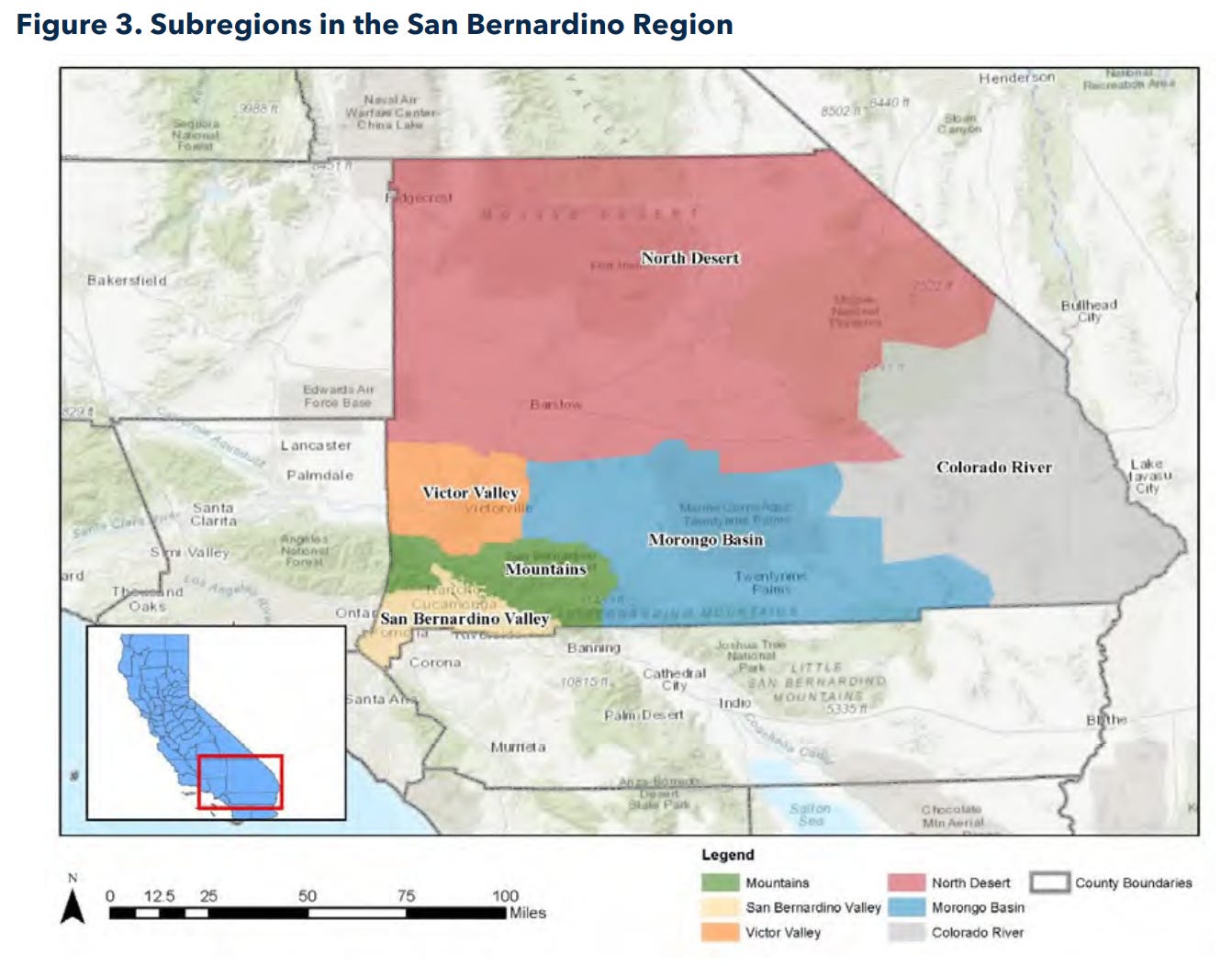
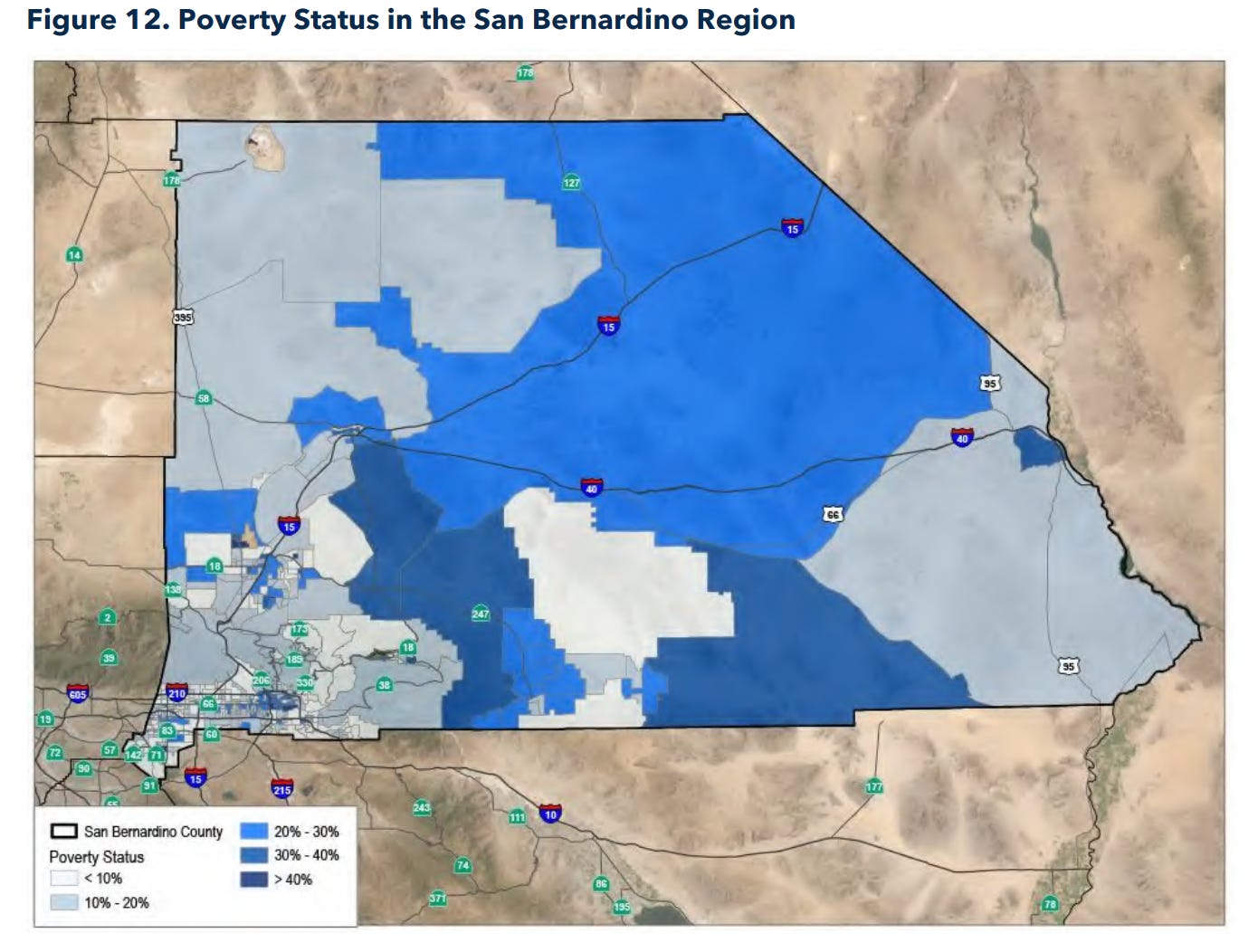
A Joint Powers Authority (JPA) is a legal entity that California cities and counties can form together to accomplish things that are difficult to do alone. By pooling resources, sharing administrative costs, and acting as a unified body, member agencies can access larger grants, attract more developer interest, and carry more weight with state and federal funders than any single small city could on its own. JPAs are common in California and are used for everything from regional transit systems to insurance pools to, increasingly, housing.
The San Bernardino Regional Housing Trust (SBRHT) is a new JPA being formed by San Bernardino County and member cities specifically to address the region’s affordable housing crisis. The goal is to raise and leverage state, federal, and private funds to support affordable housing production, preservation, and rehabilitation across the county. The JPA’s governing board will include one locally elected representative from each member agency, along with at least two housing policy experts. Annual participation costs are estimated at $10,000 to $30,000 in year one, settling to $25,000 to $40,000 per year at full capacity. 19 jurisdictions, including Yucca Valley, have joined and another five have the JPA on the docket in April.
It’s important to understand what the Trust can and can’t do on its own. It’s a gap funder — providing roughly 15-20% of a project’s total development cost alongside larger funding sources. New affordable housing in San Bernardino County is projected to cost approximately $596,000 per unit to build. The Trust is intended to be a lever to make projects financially viable and competitive for state and federal funding.
Twentynine Palms has been selected, along with Ontario, as one of two pilot project cities under the Housing Trust, with $1.75 million in REAP (Regional Early Action Planning) funds awarded to SBCOG by the Southern California Association of Governments (SCAG). The $1.75 million is seed money to help attract the larger capital stack a real project requires. The funds must be allocated to a viable project in the City by December 2026 and then fully expended within five years.
Tuesday's vote is the public-facing decision point of a process that has been underway since 2021. The City's own engagement goes back to December 2022, when it submitted a letter of interest to SBCOG. What's new is that the REAP funding has created a hard deadline — a formal Council vote is needed by April 15 or the funds will go to a different City.
In voting yes, Council would be doing two things at once: joining the JPA and implicitly confirming to SBCOG that the City can meet the December REAP deadline, thus allowing SBCOG to recommend Twentynine Palms for the funding at the May 13 Board meeting.
12. JTNPA Workforce Housing on City-owned 17-Acre Site.
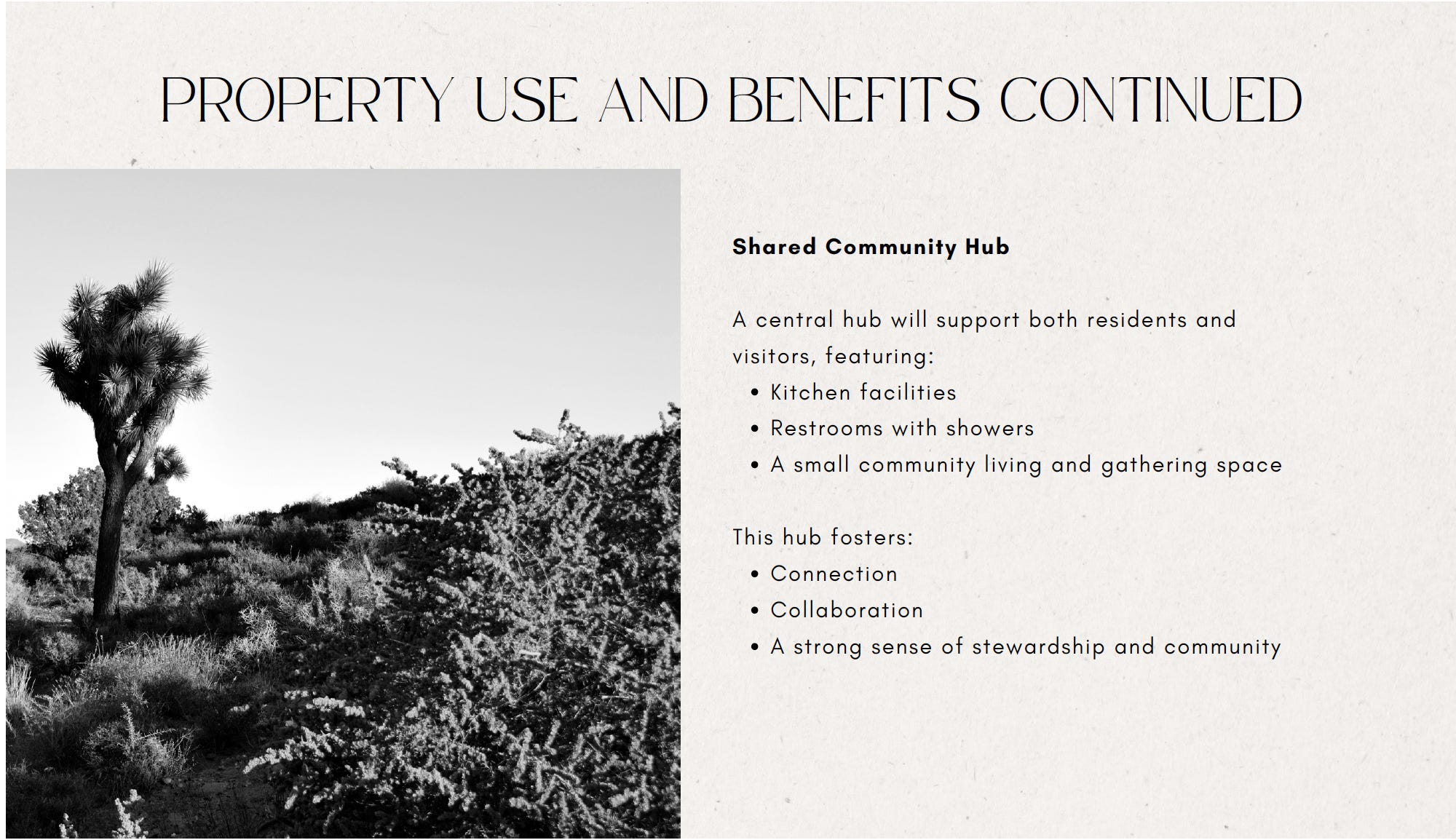
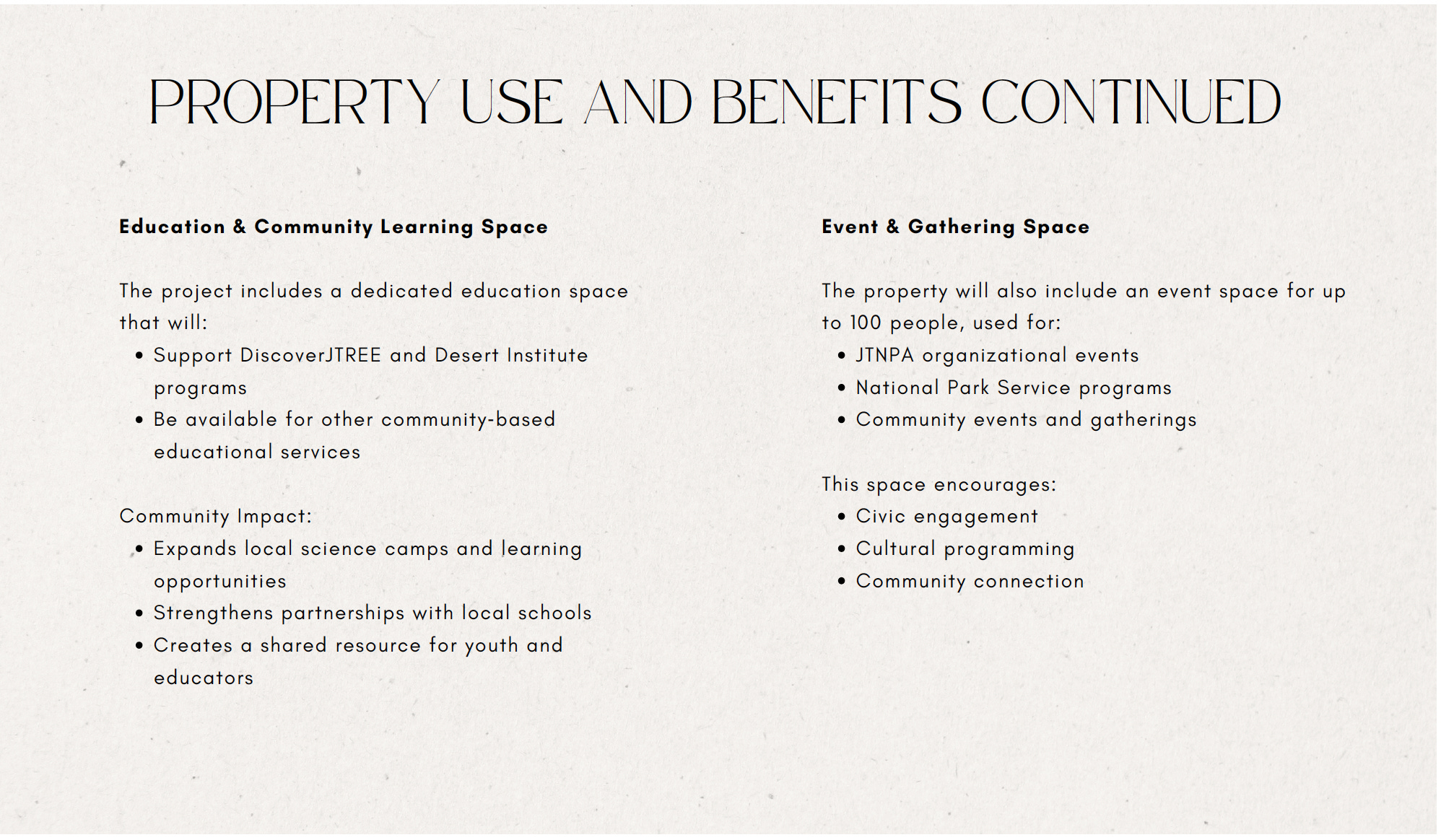
In a city that has seen more than its share of contentious development proposals — from the Ofland resort to the E-Group solar farm — this one stands out as something the community can agree on. Council is being asked to authorize staff to work with the Joshua Tree National Park Association (JTNPA) on a land lease for the purpose of developing workforce housing for National Park staff. The parcel is located near Theatre 29, west of Adobe Road, north of Foothill, and south of Sullivan.
The federal staffing crisis at Joshua Tree National Park provides important context for why the City would want to partner with the park and ensure housing stability for seasonal staff. Since the early days of the second Trump administration in February 2025, the NPS has lost approximately 24% of its permanent workforce nationally through layoffs, buyouts, and resignations — including six probationary rangers at Joshua Tree in the initial round of cuts. A third voluntary departure window opened in April 2026, with an April 12 application deadline. According to Resistance Rangers — a network of current and former NPS staff tracking and speaking out against the cuts — the agency has already lost 20 to 30% of its workforce, with further reductions anticipated. Park-specific tracking found that at Joshua Tree, 16 of 17 supervisory positions were eliminated, leaving just one person to handle seasonal hiring. Affordable housing near the park has long been out of reach for seasonal NPS employees, who tend to be on the lower end of the federal pay scale. As the park struggles to recruit and retain staff in an era of budget cuts and buyouts, access to stable, affordable housing close to the park entrance could make a meaningful difference.
That context makes the JTNPA proposal all the more timely. City Manager James met with JTNPA Executive Director Jacqueline Guevara, Director Christine Grimes, and project manager Ken Beck on January 26, 2026, and the 17-acre City-owned site — adjacent to Theatre 29 and close to the future Mojaveland miniature golf course and Palms N Paws animal shelter — was identified as a potential home for what JTNPA describes as a transformative, community-centered multi-use project.
JTNPA’s project proposal describes a development that is mission-driven, and economically supportive, integrating housing, education, volunteer support, and community gathering spaces. The housing component is central: 12 Single Resident Occupancy (SRO) units dedicated to National Park rangers and park staff. The stated benefits to the City include providing attainable housing, reducing pressure on the local housing stock, and freeing up existing rental units for other community members.
JTNPA was awarded a $75,000 planning grant from the National Park Service Foundation in 2025 specifically to design this project. Should they secure a suitable piece of land, they would become eligible to apply for a $2 million construction grant — funding the development at no cost to the City. The City acquired the parcel in April 2000, originally intending it as a future park; construction funding fell through and it has remained undeveloped ever since.
Council is being asked only to authorize the initial lease negotiations, with any final agreement returning to Council for approval.
13. Councilmembers’ Use of City Letterhead
As the staff report makes clear, the City doesn’t provide individualized letterhead for Council members — and has no policy governing when they can use the full City letterhead on their own. When a Council member wants to write a letter of support for a grant application, recommend someone for a recognition award, or weigh in on a State initiative, they have no official stationery to do it on unless they use the full City letterhead, which lists all five Council members, implying full Council buy in for the letter’s content.
The staff report outlines four possible policy directions:
allowing letterhead use when the letter wouldn’t financially or legally obligate the City
the Council member makes clear they’re writing as an individual rather than on behalf of the full Council
creating new individual Council member letterhead that doesn’t list the other members
or prohibiting individual use of City letterhead entirely unless the full Council has approved the action
The staff report focuses specifically on physical City letterhead — letters, not emails — and makes no mention of email correspondence. Whether Council chooses to broaden the discussion to cover digital communications would be up to them.
Full disclosure, Ramirez also threatened to sue the Desert Trumpet over that coverage in the same thread. If the Councilmember were to file a lawsuit, we will disclose that in future reporting.
The staff report lists two different figures, 14 and 15, for the number of businesses using the septic system
The Desert Trumpet is within $200 of meeting our $10,000 paid subscription goal!!! We need your paid subscriptions to publish the coverage you depend on. Basic subscriptions are $50 per year or $5 per month.
Become a sustaining subscriber by increasing your subscription to $100 or more per year! Want to make a one-time donation or are you able to give more than $100? Donate via Paypal!
Leave your thoughts in the comments below. Please note that we do not allow anonymous comments. Please be sure your first and last name is on your profile prior to commenting. Anonymous comments will be deleted.
Thanks for reading! This post is public so feel free to share it.