
RECAP: Twentynine Palms City Council, July 14, 2026
Dialed in (mostly): Twentynine Palms City Council rolls out remote participation amid vote to put sales tax on the November ballot

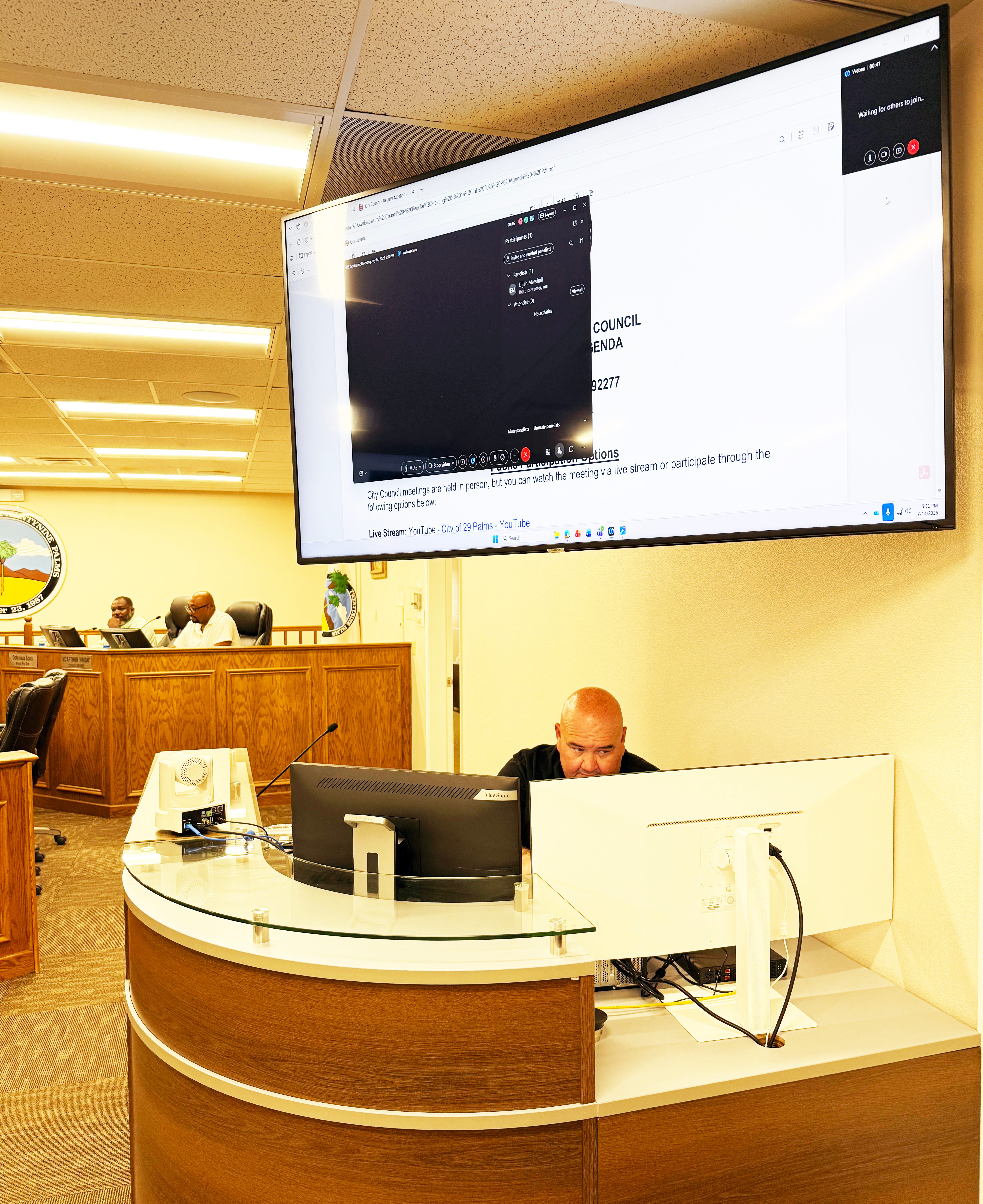
Attendees of Tuesday’s meeting walked into Council chambers and were greeted with the sight of a command center for the City’s new remote-participation technology. Director of Information Services Elijah Marshall provided trouble-shooting for the system. That there were a few glitches is to be expected from a new system.
The meeting saw a moving tribute to organizations and individuals who provide services for domestic abuse survivors, adoption of the new remote-comment policy, a wave of Councilmembers confirming reelection bids, and some very pointed public comments.
Useful links:
Meeting agenda
Desert Trumpet agenda preview
ANNOUCEMENTS, PROCLAMATIONS, AND THE CITY MANAGER’S REPORT
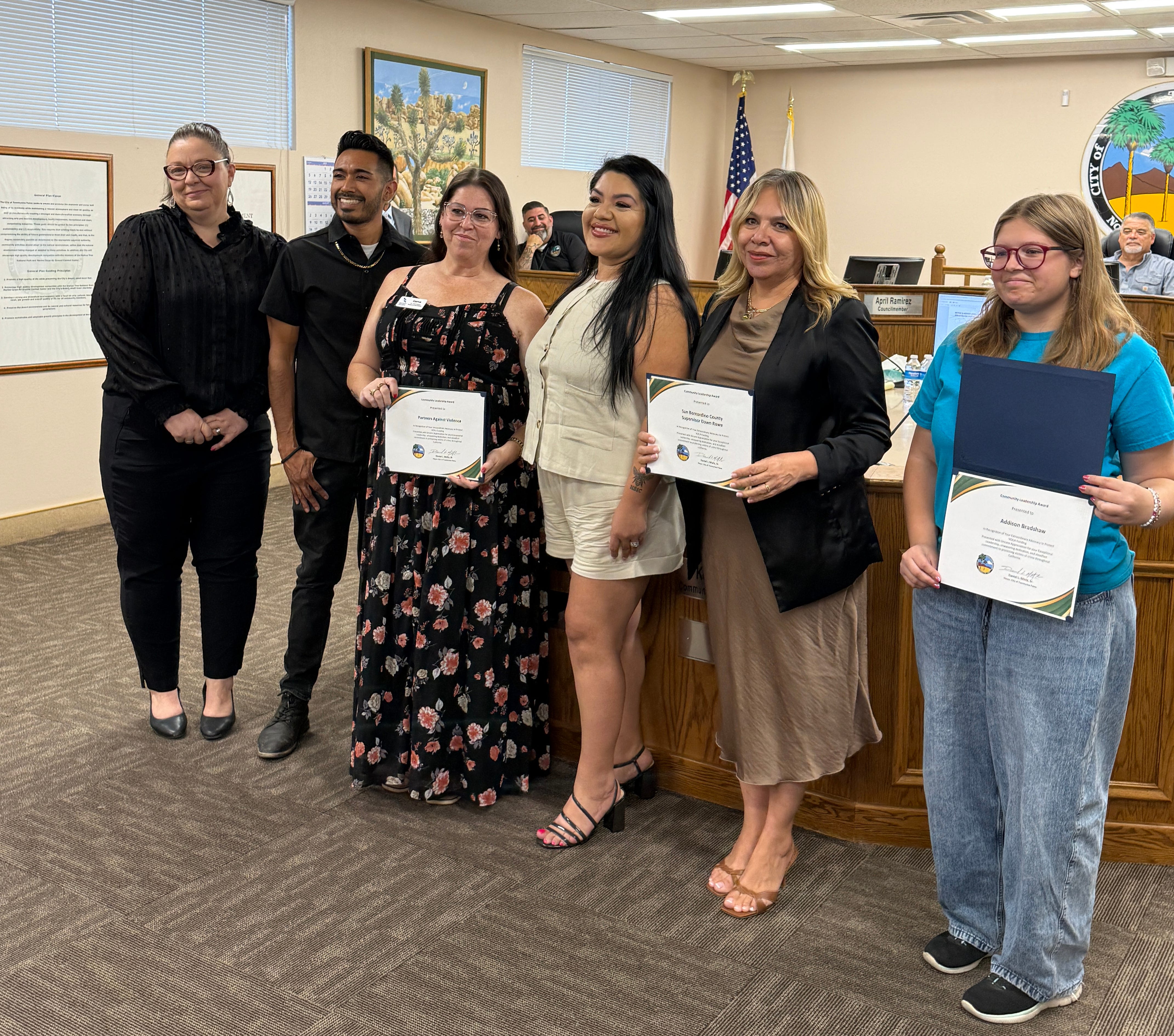
The meeting opened with Councilmember April Ramirez presenting a community leadership award recognizing a coalition that pushed back against a proposed 43% cut to California’s Victims of Crime Act (VOCA) funding.
Through relentless advocacy, bipartisan collaboration, and unwavering commitment to survivors, you turned a 43% cut turned into a $25 million one-time investment, and ultimately we finalized at a $50 million investment in the California state budget signed by the governor’s office, preserving critical services for victims and their families across our state. This remarkable achievement is a testament to the power of partnership and the belief that every victim deserves access to justice, healing, and hope.
Honored were San Bernardino County Supervisor Dawn Rowe’s office, the County’s Bureau of Victim Services, youth advocate Addison Bradshaw, and representatives of Partners Against Violence and Morongo Basin Unity Home for Domestic Violence Services, along with state senators Rosilicie Ochoa Bogh and Suzette Martinez Valladares. Partners Against Violence’s Gena Pliss told the Council
When we lose VOCA funding, we lose survivor services, and for a lot of people, those survivor services are life-saving. More than 13% of people who are sexually assaulted will think about suicide. We have a high rate of good things happening in our community with all of the VOCA funding, but when we lose that for our agency in particular, we take the chance of losing staff….When we lose staff, now somebody doesn’t have anyone to go to court with them, doesn’t have them to do counseling, doesn’t have them for those services that help them get back up on their feet.
Testing 1-2-3, Testing 1-2-3
City Manager Kevin Cole introduced the new WebEx call-in option that rolled out at this meeting, an option required by SB 707, a new state law requiring remote participation.
You may or may not know that at one time this building housed a jail, so running stuff through the ceiling sometimes is not so easy when you have to contend with some steel plates and some brick wall. And they managed to tear it all apart and put it back together with this new technology. We’ve been testing it the last couple of days. We think we got it pretty dialed in.
The system had early problems. Some remote speakers couldn’t connect, and one public commenter opposing the sales tax measure got disconnected before he could speak. The meeting paused while staff tried to fix it.
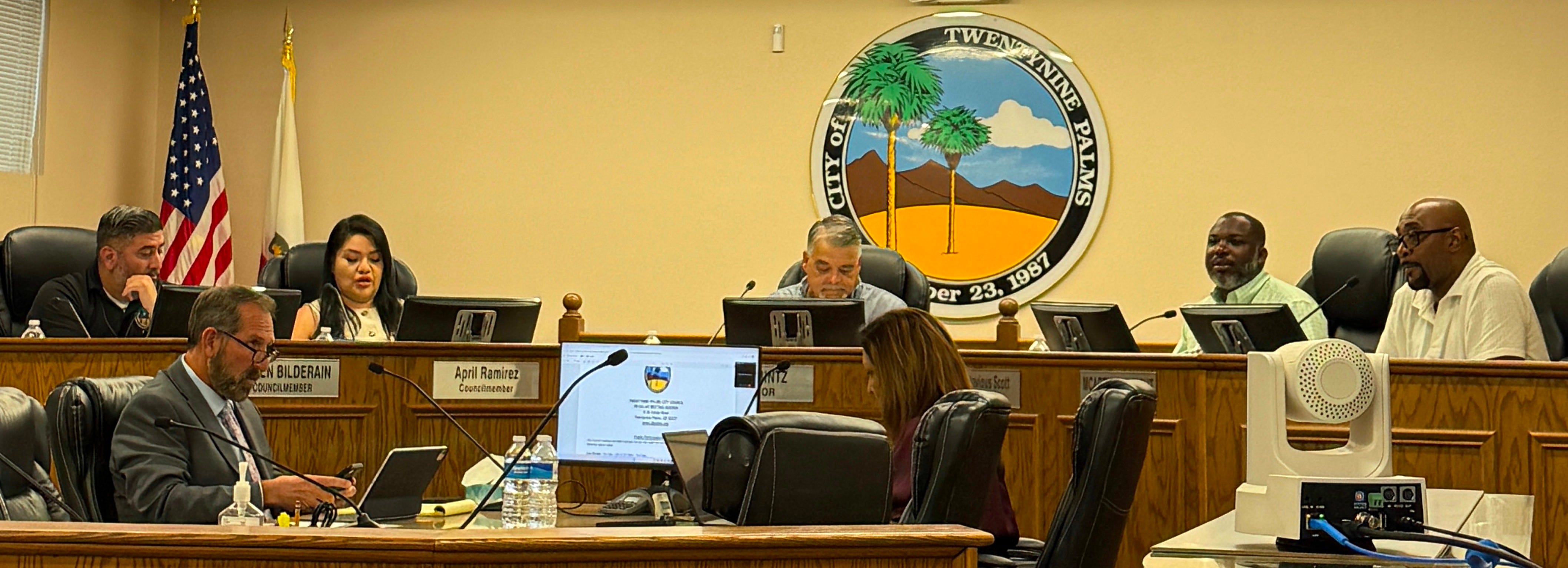
Later in the meeting, the Council formally adopted its policy implementing SB 707, which governs what happens if remote-meeting technology fails and sets rules for public speaking time.
In public comment Kimberly Zzyzx and Desert Trumpet Editor Cindy Bernard raised concerns that the policy’s time limits were ambiguous. Bernard said the policy doesn’t specify whether speaker-time limits apply per agenda item or to the entire meeting, warning that on a dense agenda the ambiguity “could read as an intentional effort to suppress public comment,” even if that isn’t the Council’s aim.
The time limit section of the policy as currently written could use improvement. Council used to complain of crickets in chambers, and now there appears to be a concern that the public is too engaged….I think that these limits need some clarification….While I understand the need to keep meeting lengths reasonable, the policy also reads as though the public is being penalized for engaging with Council during meetings through public comment.
The primary issue with the time limits is the policy fails to specify whether the number of speakers registered are per meeting, i.e. all items plus general public comment, per agenda item, or specific to general public comment. And it would be great to add clarifications to what we’re talking about when we’re talking about the number of speakers and the time limit. The policy also fails to take agenda length into account.


Zzyzx urged the Council to preserve longer speaking windows:
In the 10 years I’ve lived here, my civic engagement has bloomed. This is in part due to issues like our needs in education or California Environmental Quality Act…a number of recent developments that have had a lot of problems with how they interface with the environment that we all benefit from and have a duty to protect. When these occasions have come up where I wanted to use my civic rights and come speak on behalf of those things, I have done so much research and talked to people and really tried to put those thoughts together… And two minutes is a very short amount of time. So, with respect to the fact that I know there are issues where a great mass of people will come out to speak on behalf of something, I just wanted to throw my two cents in to say that the more time we allow people to speak on behalf of things they’re passionate about — that is important to me.
City Manager Cole said staff would “take a look” at the wording, but the Council adopted the policy as written, 5-0, without changes.
We’re kicking off our summer subscription drive! Help the Desert Trumpet reach 1600 subscribers by spreading the word!
Council Meetings Attended: All three incumbents up for re-election are running
All three council members whose seats are up this fall used their comments to make it official:
Mayor Daniel Mintz (District 3)
Mayor Pro Tem Octavious Scott (District 4)
Councilmember McArthur Wright (District 5)
Check out our recent article on for how to run for City Council and other offices. Nomination papers are due August 6.
Beyond campaign news, Council comments were dominated by the Flock camera roundtable Mayor Pro Tem Scott hosted, which Councilmembers Bilderain and Ramirez attended. Scott called the discussion “contentious at times, but fruitful,” and said it “needed to happen.” Our reporting about the roundtable is here.
Councilmember Bilderain also thanked staff for the chambers remodel and Parks and Rec for the Fourth of July celebration at Knott’s Sky Park. Councilmember Ramirez reported attending a California Public Utilities webinar and meetings with tribal leaders on ecotourism and with Morongo Unified School District. Mayor Mintz cited a busy stretch of events including the Base YMCA Marine Recognition Luncheon, the Hope Center ribbon-cutting, and the Great Race vintage car rally celebrating Route 66’s centennial passing through town on its way from Chicago to Santa Monica.
City Manager’s report: cooling center threshold drops, EV chargers still down
City Manager Cole lowered the bar for opening the city’s public cooling center this year from a heat index of 115 to 110 and said the senior center will open to the general public, not just seniors, once the National Weather Service heat index hits that mark. He did not indicate how word would spread that the cooling center would be open.
Cole also gave an update on the Freedom Plaza EV chargers: two of three fast chargers and both slow chargers are working, but the third fast charger needs a roughly $12,000 repair the City is still trying to budget for, and a separate charger at Bucklin Park has been offline for about two years. Cole cited the lack of any local repair technicians as a recurring obstacle.
DISCUSSION AND ACTION ITEMS
After the consent calendar passed 5-0 with no items pulled and no public comment, the Council designated Councilmember Ramirez as its delegate to the Cal Cities annual conference, with Mayor Mintz as alternate.
The 1% sales tax measure heads to voters
The Council voted 5-0 to send a 1% transaction and use (sales) tax measure to the November 3, 2026 ballot. One of two resolutions ordered the measure onto the ballot, the second set priorities for a ballot argument and directing the city attorney to prepare an impartial analysis.
City Manager Cole read the ballot language into the record at resident Mary Alice Amsler’s request. As written, the measure would fund:
Services for the City of Twentynine Palms residents, including those required for maintaining 911 and emergency response times, police officers and patrols, repairing streets, sidewalks, responding to floods and natural disasters, maintaining clean and safe public parks, and upgrading the animal shelter.
This would be via a 1% transaction and use tax generating roughly $2 million annually “until ended by voters,” with required audits and public spending disclosures and a local-use requirement.
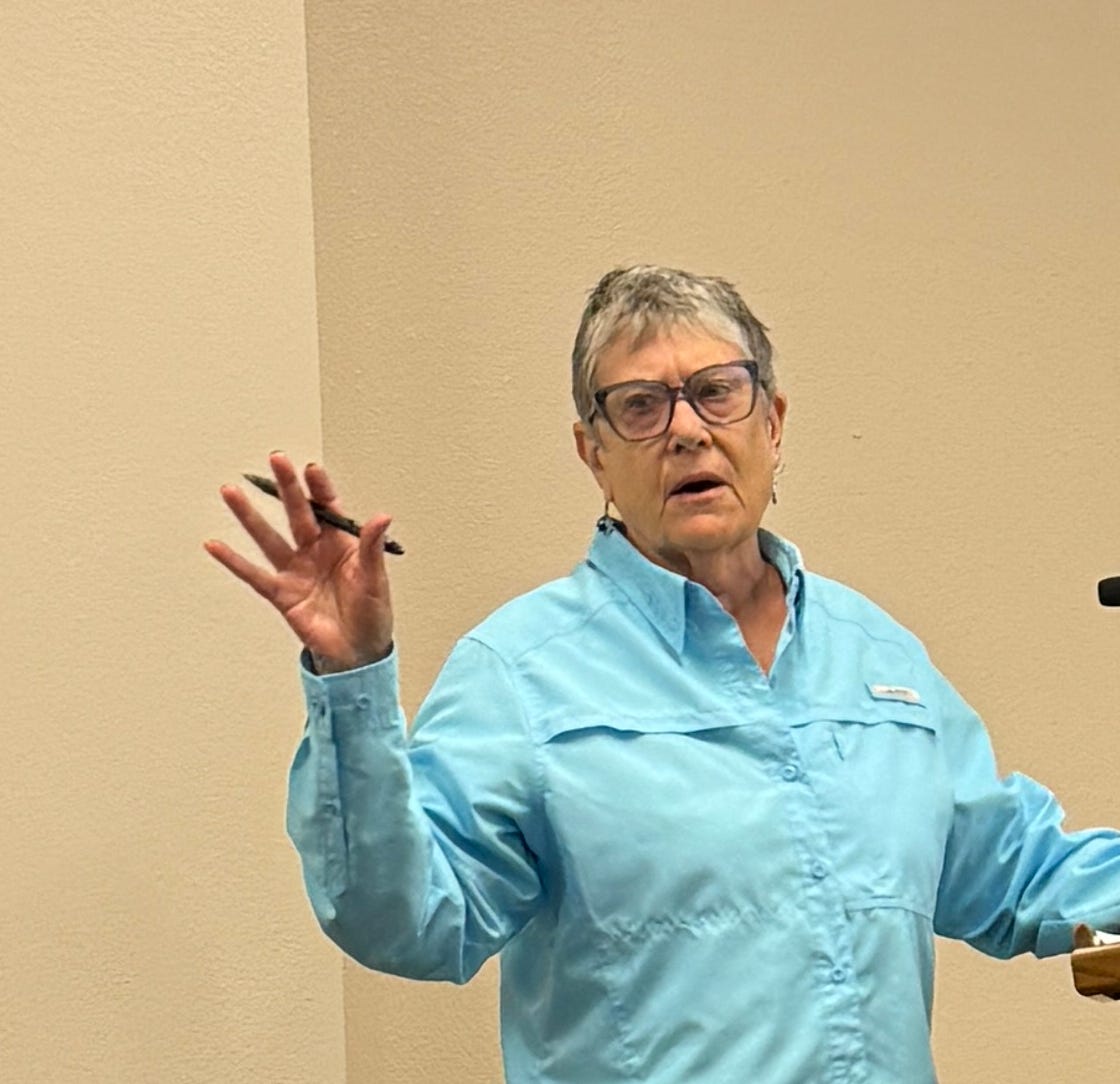
Amsler, who said she had raised the same concern at a prior meeting, argued the measure’s language remains too vague, allowing money to be spent on unlisted priorities down the line. Kimberly Zzyzx spoke in support, describing years of positive experience with city staff, including help navigating permitting and licensing for a home-based childcare program, as evidence the city’s request for new revenue is “reasonable and overdue.”
Mayor Mintz emphasized that passage of the measure would not hand the Council a blank check: any revenue would still flow through the city’s standard annual budget process, including public hearings, the same as General Fund dollars have for years. Councilmember Ramirez added that the vote wasn’t really about raising taxes so much as “giving the people... an opportunity to vote on what kind of future you want.”
FUTURE AGENDA ITEMS
A data center moratorium and an opportunity zone
Mayor Pro Tem Scott requested a future discussion on a moratorium on data centers in the city, seconded by Mayor Mintz. Councilmember Ramirez requested two items: a discussion of the city pursuing federal Opportunity Zone designation, and a discussion of reallocating funds that had been set aside for a shade structure outside City Hall, a project she said has been “sitting in limbo,” specifically to explore grant-writing options.
What is an Opportunity Zone? And what would it mean for Twentynine Palms?
Opportunity Zones are low-income areas where investors get federal tax breaks for putting money into local projects, such as housing or businesses. If Twentynine Palms were to receive this designation from the IRS, it could make census tracts within the City more attractive to outside investors.
The Treasury Department recently opened a new recommendation window, which closes on September 28, 2026. Zones have to be nominated by state governors, and the deadline for that nomination is July 20. Unless it is extended, it is unlikely that Twentynine Palms will receive a designation this year.
PUBLIC COMMENT
Mining for data with Flock cameras and mining for rare earth minerals in Music Valley
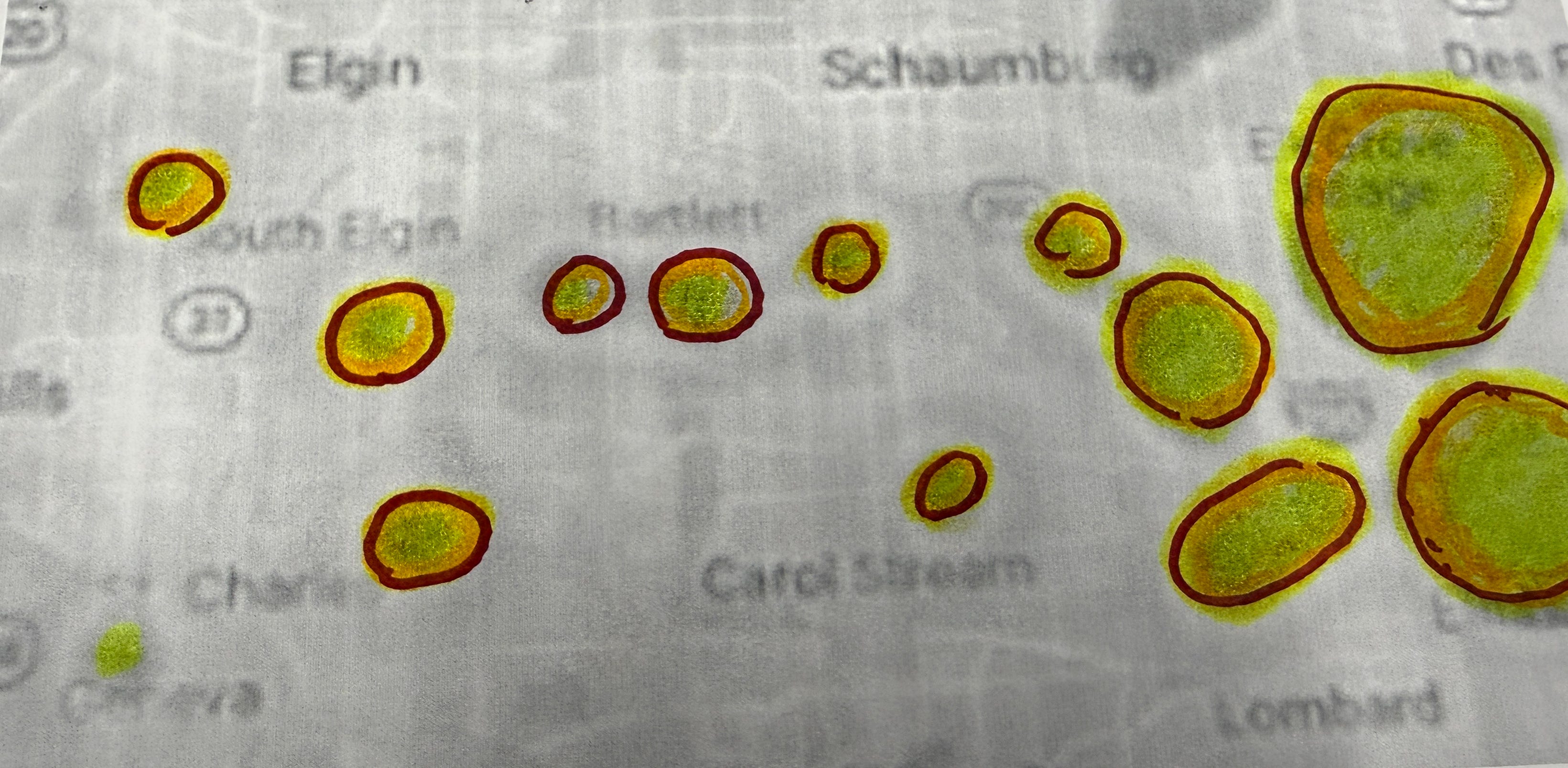
Beth Sheffield thanked Mayor Pro Tem Scott for the Flock roundtable which she said drew roughly 80 attendees, "most opposed" to the surveillance system. Sheffield explained Flock's "pattern of life" feature, which compiles a vehicle's camera hits over a chosen time window, from two weeks to a month or longer, into a heat map of where it spends the most time:
Of note, Flock did not invent the phrase "pattern of life.” It's a counterterrorism and military intelligence term for building a behavioral template of a target by tracking their movements.
She also reported that the Los Angeles Police Department will not be renewing its contract with Flock because of its concerns about how the company stores its data.
Catherine Powell echoed the thanks to Scott and asked the Council to schedule a formal discussion on the record before the city’s Flock contract comes up for renewal and raised concerns that Flock’s contract terms grant the company a perpetual license to City data regardless of the City’s own retention rules. A written comment from Heather Huguenor, read into the record by Mayor Mintz, reiterated opposition to the cameras.1


Audrey Philpott, a Hanson tract homeowner, asked the Council to place a future discussion of mining activity in the city on a future agenda, saying the issue "can substantially change the character of our city." We cover the mining issue here.
Cindy Bernard commented on the Lear Solar Project (which she recently reported on in depth), saying that it appears to violate a county ordinance requiring development in the sphere of influence to follow City zoning. Bernard said the water district was never notified prior to construction, and that the project's staff report contained factual errors, including understating the site's distance to Joshua Tree National Park.
The County knows they screwed up. They owe us. Here are a few suggestions for compensating 29 Palms residents for this violation of our sphere of influence and county ordinances. They could reopen the Lear fire station. They could provide us with the sheriff's service officer that we desperately need. It's a community solar farm that could provide credits to Joshua Tree and 29 Palms residents — perhaps we should ask those credits go to 29 only. We can insist on a community benefits package from the developer, and perhaps you have ideas as well. But we should get something for this.
Lynette Ramirez did not name names, but suggested that City Councilmembers behave with the same decorum expected of the public when it speaks before the Council.
I was recently contacted by a group that advocates for the homeless, and they were distraught after the recent raid on encampments. Two things specifically bothered them. First, certain members made a video showing the individuals’ personal items and labeling them with them as trash…. to those homeless people, that was their home or the last outfit that maybe gave them some dignity, and we’ve got to show some respect.
Ms. Ramirez also objected to the music that accompanied the video.
Second is a song that was used in the video, “Sound of the Police.”2 It’s a song about slave catchers, dirty cops, and overseers. When I asked to remove the song, perhaps replacing it with “Lean on Me,” and take down the pictures of the individual’s property, the response was to laugh about it with another constituent.
While she did not recommend censure, she said:
I’ve watched Barstow, the Apple Valley School District, Atlanta, and Hesperia censor members who have done far less than what’s happening here, and these were recent censors. Again, I’m asking this Council to put a code of conduct and ethics with actual consequences in place. As long as one does not exist, every time this Council reminds citizens to conduct themselves professionally, remember this: you’re telling the public that the rules only apply to us, but not you. Thank you.
The next City Council meeting is Tuesday, July 28, at 6 pm. Based on notices already published in the Hi-Desert Star, it appears the agenda will be packed.
Hi, new subscribers! The Desert Trumpet understands you might not be interested in all of our coverage. That’s why it’s divided into separate newsletters allowing you to opt out of reporting that’s not important to you. For instance, you may want our County news but not City Hall 29.
Here’s how to opt out: go to your Substack settings, scroll down to “subscriptions,” and select “Edit” for the Desert Trumpet. Simply uncheck the box next to the newsletters you don’t want to receive in your email inbox. You’ll still be able to access all coverage online or read them later if you change your mind.
Become a paid subscriber!
Subscribing to the Desert Trumpet will always be free. That said, did you know that paid subscribers receive discounts on our DT Social events and invites to DT Front Porch, intimate discussions featuring local officials and notable residents?
Upgrade to a $50+ paid subscription for a 10% discount.
Upgrade to $100+ for a 25% discount.
Sustaining subscribers at the $250+ level and above receive complimentary tickets
Share your thoughts in the comments below. Please note that we do not allow anonymous comments. Please be sure your first and last name is on your profile prior to commenting. Anonymous comments will be deleted.
Share this post—it’s free!
On Thursday, July 16, Mayor Pro Tem Scott announced he would not support renewal of the City’s Flock contract, saying, “My concerns are with the information provided by the vendor. Several important questions about data sharing, future software updates, and the company’s technology and policies were not answered with the clarity or confidence I was looking for.
I support giving our Sheriff’s Department effective tools to keep our community safe, and I’m open to exploring other options that balance public safety with privacy and individual liberty. Based on the information available to me today, I cannot support renewing the Flock contract.”
“Sound of da Police” by KRS-One.