
RECAP: Twentynine Palms Tourism Business Improvement District Board Meeting January 29, 2026
Funding awarded for extended deadline grant and sponsorship applications, discussion about grant criteria, and a presentation on Ancillary Live Entertainment permits.

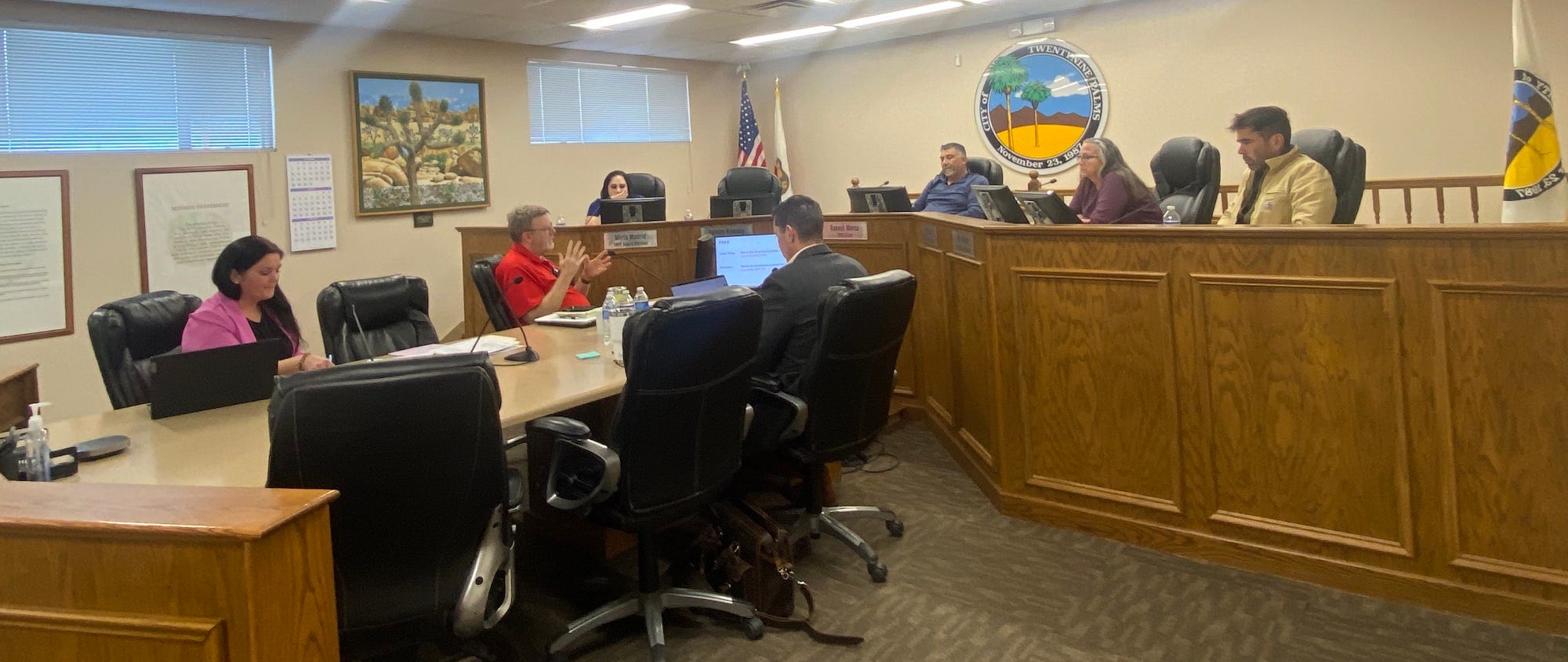
On Thursday, January 29, the Twentynine Palms Tourism Business Improvement District Board (TBID) held its first meeting of the calendar year. The main agenda items focused on discussing and making recommendations for grant and sponsorship applications received during the extended deadline period, which ended December 31. These grants and sponsorships cover events held between January and June of 2026. Overall, the board voted to fund two grant and three sponsorship applications. Public comment and discussion focused on the need for grant and sponsorship criteria to be better aligned with TBID expectations around attracting tourism and lodging to Twentynine Palms, including holding a workshop for potential applicants. Present were Chair Rakesh Mehta, and board members Maria Madrid, Liz Shickler, and Ben Uyeda. Vice-Chair Ashton Ramsey had an excused absence. This is the first TBID meeting Chair Mehta has attended since October.
Presentation on Ancillary Entertainment Licenses
The meeting opened with a presentation by Keith Gardner, City of Twentynine Palms Community Development Director, about the new Ancillary Entertainment License, which will cover live entertainment in venues like bars, hotels, restaurants, and retail establishments as long as legal occupancy and parking limits are not exceeded and noise ordinances followed. Gardner emphasized that the City is not asking venues to specify what kind of entertainment or if they will sell tickets or not but, “We’re more concerned about the venue itself being safe.” The City will further clarify application criteria and start accepting applications for ancillary entertainment licenses on March 1, 2026. The licenses will be good for a year and follow the business license renewal cycle.
Director of Marketing Update
As in each TBID meeting, Marketing Director Breanne Dusastre provided a marketing update. Her update was brief. She reported:
Website traffic is up 28% with over 11,000 monthly users.
Website updates are being made by vendor Simpleview that will enable businesses to update their own profiles, which is scheduled for a mid-February roll out.
Short-form video continues to perform well on social media, and they are shifting to emphasize “deeper storytelling” about the destination pillars, though she did not go into what was planned content-wise.
Recent national press for coverage in Forbes and Outside magazine.
Billboard campaign planning still in process, as location availability on I-10 has shifted and Dusastre is pricing locations in the Greater Los Angeles area.
The Visitor Center now has consistent Tuesday - Saturday operating hours.
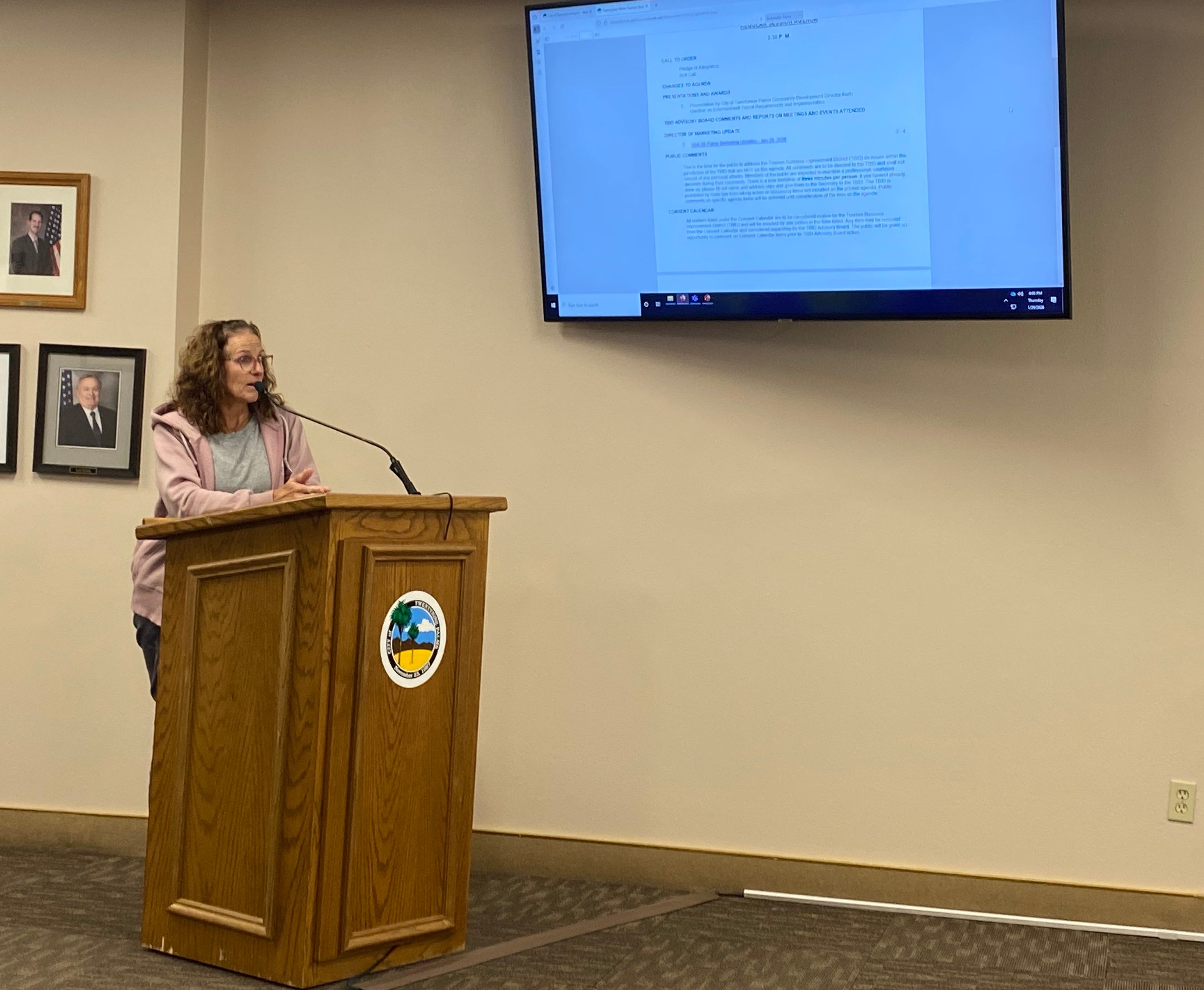
Following Dusastre’s update, during public comment Susan Peplow expressed concern that the Visit 29 event calendar only listed events through February 13 (now through February 15 as of Saturday, January 31). She also noted that businesses and lodging partners were currently locked out from making calendar updates. She noted,
As a lodging partner, as a community member, as somebody that’s a citizen, I would think that [updating the calendar] is a priority. And when Simpleview locks us out of managing our website, which we pay a fairly significant monthly cost for, I would think that would be problematic and something to look at in the future.
Board Votes on Funding for Sponsorships and Grants
After receiving only three grant and five sponsorship applications for their initial deadline of October 15, 2025, the TBID voted at their November 13 board meeting to re-open applications for events during the first half of 2026. With the extended deadline and increased publicity efforts, the TBID received six additional grant applications, though three were incomplete, and ten additional sponsorship applications.
The TBID’s budget for the 2025-2026 fiscal year is $547,843. Of that, $150,000 is budgeted for supporting events, with $30,000 specifically designated for event sponsorships. Applications are reviewed and scored by the five-person events subcommittee, which includes board members Madrid and Shickler and community members Susan Peplow, Mary Jane Binge, and Scott Clinkscales. After the initial deadline, the board awarded $20,000 in grants and $9,000 in sponsorships. Round two applications are due April 1, 2026, and so far only one proposal has been received.
Grant application review focuses on tourism impact and highlights application evaluation inconsistencies
Of the three grant applications reviewed by the grants subcommittee, two were recommended for funding:
Partial funding of $9,000 for the Stay & Play 29: The Adobe Road Art & Hop Festival in mid-June with the stipulation that if the organizer expands the event to Freedom Plaza, they will be funded for the full $18,000. The sunset festival will be hosted by the Joshua Tree Brewing Company on Adobe Road and include a local artists market, live music, specialty brewed craft beers, and a classic car show.
Partial funding of $6,000 for the Spring Equinox Flower & Wellness Retreat held at a private space in Wonder Valley in early April, with the mandate that at least 75% of the 60 participants and facilitators stay at hotels or short-term rentals within Twentynine Palms. The board was especially enthusiastic about this event due to it supporting the “Health and Wellness” destination pillar and its potential to grow.
The board declined to fund Dirt and Diamonds, hosted by DESERTRADE, due to its limited number of participants and lack of focus on bringing in significant overnight stays.
The grant recommendations were approved 4-0-1. With this additional $24,000 awarded (if Stay & Play receives full funding), in addition to the $20,000 already awarded after the initial round, the TBID now has $76,000 remaining out of $120,000 for grant applications for the second half of the year.
Public comments highlighted the need for a cleaner structure and scoring for grant applications that had a more explicit alignment with tourism outcomes. Speaking as both a lodging stakeholder and member of the grant review committee, Susan Peplow emphasized that the program needs refinement, stating,
Applicants should understand what actually supports tourism and what can realistically draw overnight visitors. If those marks are not met, [the] application should not move forward. Funds are limited [for the] fiscal year … $150,000 in sponsorships combined represents $10 million in gross lodging revenue that requires careful and strategic awards.
Peplow explained further that there are well-established, fiscally responsible events that meet the grant criteria, but do not have the intention of drawing overnight visitors, and thus the TBID receives no return on investment. She urged that the board revamp their criteria as well as oversight for scoring.
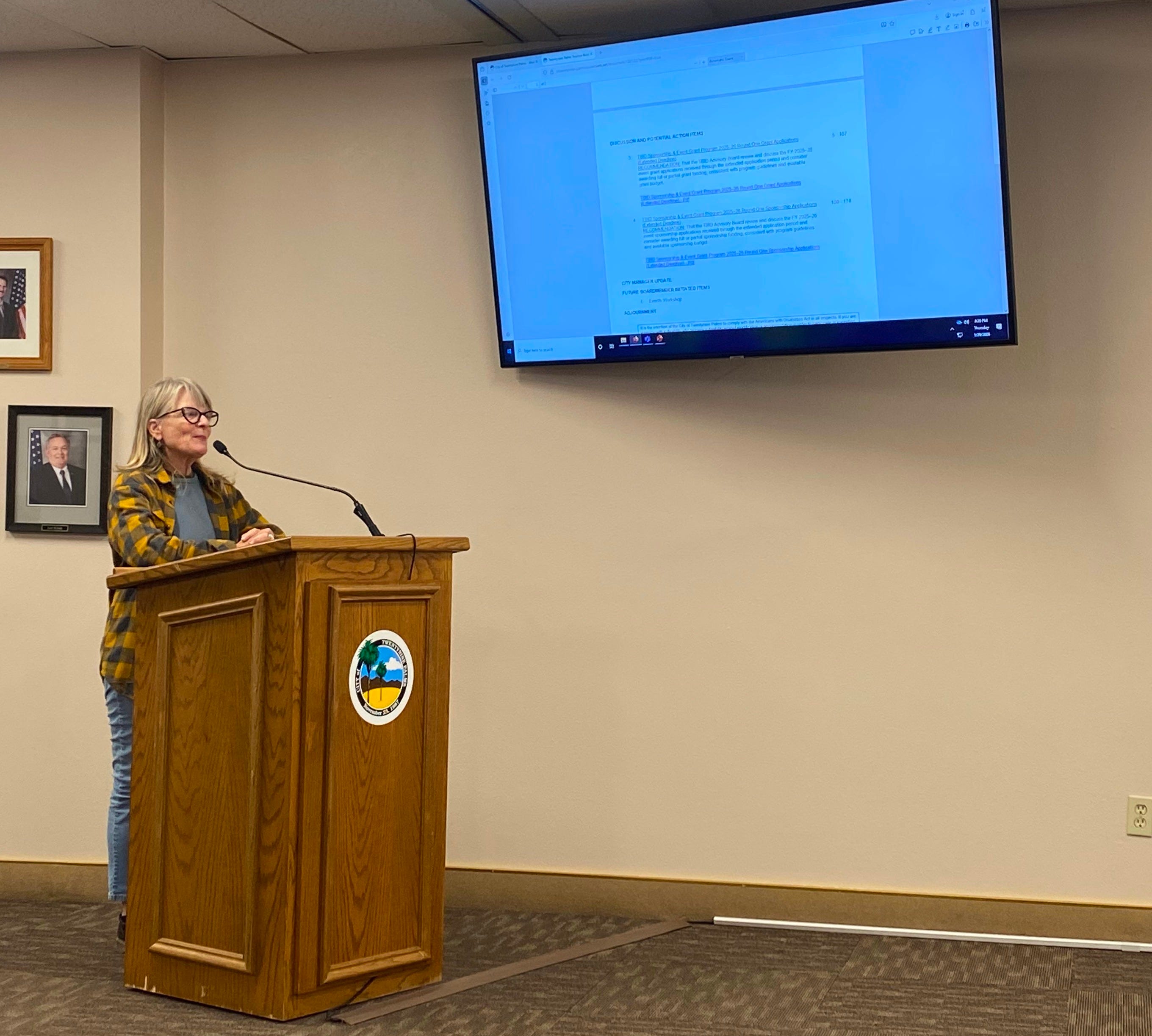
Anna Stump highlighted a disconnect between what the TBID is asking for in terms of generating overnight stays from out-of-town visitors and what event producers and arts and cultural organizations actually want to do. Stump suggested that the board hold a workshop where potential applicants could pitch ideas and the board could explain if it would, or would not fit the criteria, cutting down on time and potential disappointment. She noted,
If there was some kind of workshop where [the Planning Commission], TBID, and the PAAC could all be together to discuss what’s needed, what are you looking for, and what doesn’t fit, and it would save a lot of time and effort, and time and effort is money for the people who are reviewing and even you all.
The kind of discouragement that Stump mentioned was captured in a written comment submitted by Mary Hunter, producer of Desert Fringe Theatre and Cultural Arts Festival, which was read by Chair Mehta during the general public comment section. The festival received $3,000 of a requested $9,000 during the initial round of grant applications. Hunter expressed frustration at the necessity of paying for a business license for the festival, as well as the new contract requirements, which distributes 75% of the grant money up front and 25% after the event is complete and financial reporting is received. Hunter felt the TBID was asking her to create a bigger and better festival with a smaller amount of funding. She wrote,
This festival is a great emotional tool for Twentynine Palms, this festival takes people on an artistic journey through the city, highlighting theater, cabaret, dance, restaurant, visual arts and more, not just in one location, but throughout the city. Through cultural enrichment, the reputation of the city grows. It does not grow by asking festival producers to fill beds in hotels and Airbnbs. It works the other way around.
The public comments highlight an inconsistency in how grant funding is awarded and the criteria of “heads in beds” is applied to grant scoring and funding. Also the scoring by members of the subcommittee for grant recommendations varies widely. For example, the Stay and Play event was rated 100 out of 100 points by both Shickler and Madrid, but other review committee members rated it much lower, with scores from Clinkscales and Peplow rating it far below the minimum funding requirements.
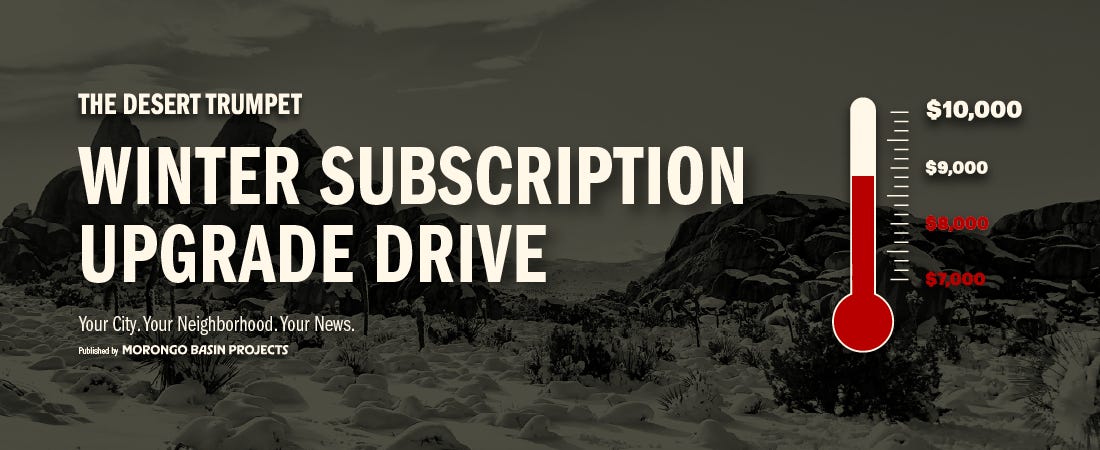
Heading into the 2026 elections, Desert Trumpet has sustained a potential 50% cut in funding. Help us provide the coverage you’ve come to expect by becoming a paid subscriber or upgrading your paid subscription today!
The conversation around the criteria for TBID funding raises larger questions about events in general. Is there value in investing in events that will raise the city’s profile as a destination over time, as Hunter suggests? Or must events clearly demonstrate their return on investment immediately through measurable impact on overnight bookings? Is such a measurement realistically possible?
Currently, the TBID has not invested in consistent measurement or surveys of visitors who come to Twentynine Palms as to what draws them there and what’s important to them. They also do not provide event producers with tools like a booking code that could help them track overnight stays more consistently. Clarifying the application guidelines and consistently applying the criteria that emphasizes overnight bookings over any other benefit could also change the type of events the TBID supports.
As has been previously reported by the Desert Trumpet, many small event producers and businesses do not have the advertising money or resources to reach markets outside of Twentynine Palms. The TBID could also rethink their role as a partner to local events and perhaps consider investing in advertising for the entire event calendar, as well as providing advertising resources to hotels, many of of which have garnered national media attention, and vacation rentals that help them advertise TBID-supported events to their audiences.

Sponsorships support new events and raises further questions about event application criteria
With the extended deadline, the TBID received ten additional applications for event sponsorships in the first half of 2026. Of these ten, three met or exceeded the scoring requirements and were approved for full funding:
$3,000 for Cosmic Connections at the Sky’s the Limit Observatory and Nature Center, supporting three lectures by NASA scientists.
$2,500 for a Holistic Health Fair organized by Friends of Historic Plaza on February 15.
$3,000 for the Hi-Desert Lo-Fi Lit Weekend, taking place March 20 to 22 including at Very Very, Hi-Desert Times, and Tin Town, featuring over 75 local, regional, and national writers, as well as musical performances.
The other applications were not advanced for a funding recommendation because most of them focused on community events that serve a local population and not to draw overnight visitors.
Gina Frangello, one of the organizers of the Hi-Desert Lo-Fi Lit Fest, spoke during public comment to provide more details on the event and emphasize the impact on Twentynine Palms businesses and lodging partners. She previously organized the Bombay Beach Literary Festival and is bringing the spirit of that festival to the Morongo Basin. She explained,
The festival is completely free, which it always has been at Bombay Beach. We definitely feel people will come because they are not being charged anything and there’s a big host of talent, both literary and musical. We plan to give [visitors] on our website lists of suggested venues, of where to stay, and to focus on the Twentynine Palms area, where my husband and I live.
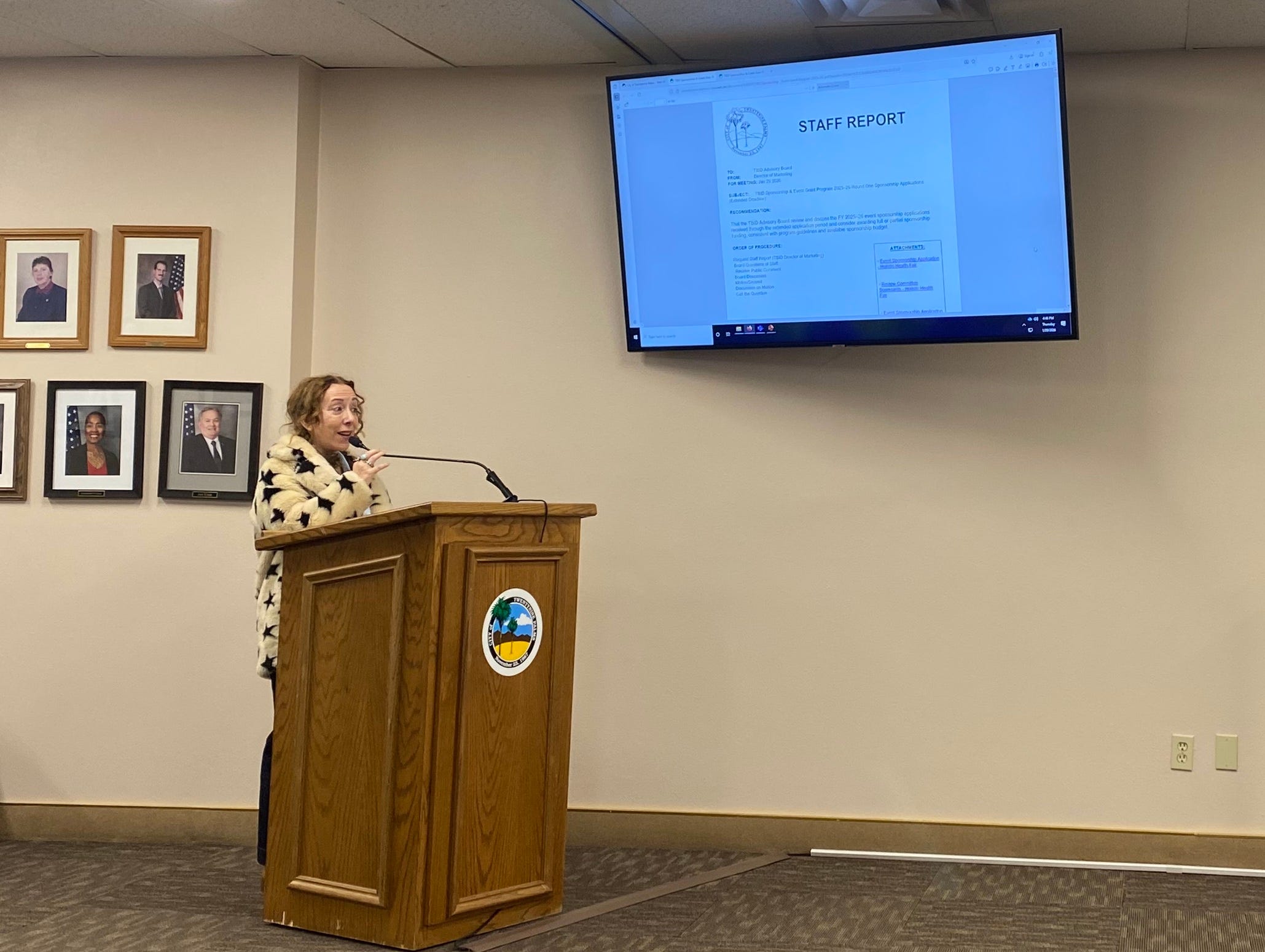
The board moved to approve full funding for each of these events, voting 3-1-1, with Chair Mehta voting against approval. Mehta mentioned that $12,000 in sponsorship funding had already been awarded and expressed concern that with the approval of an additional $8,500 in sponsorship awards, two-thirds of the $30,000 sponsorship budget would have been awarded in the first half of the year.
While summary of the sponsorship applications prepared by Dusastre reported they had previously awarded $12,000 in sponsorship funding to support five events after the initial October 15 deadline, in the Desert Trumpet’s recap of the November 13 TBID meeting and in the November 13 meeting minutes, four events were approved for a total funding of $9,000. The Desert Trumpet reached out to Dusastre for clarification and to understand this discrepancy.

When asked about the volume of applications between the first and second halves of the year, Dusastre noted that historically there have been about 30% more applications for funding for events in the second half. Chair Mehta briefly floated a 50/50 split of the budgeted funds between the two rounds, but this was previously not discussed nor part of current TBID granting policy. To apply this criteria would have been to change the ways applications were considered after they had already been received.
Board member Madrid cautioned against making current funding decisions based on future assumptions, saying, “We don’t know who’s going to apply for the fall, we’re just assuming we’re going to have a flood of people wanting to put in a request. And we have this here now. This is what we know could happen.”
Preceding the vote the board discussion highlighted the inconsistencies in both the goals of events and the sponsorship application and scoring criteria. During the discussion, board member Uyeda re-emphasized that overnight stays need to be the focus for TBID-supported events and that the discussion of applications “highlighted the weakness of the criteria.” He added, “This could be a lot simpler. This could be dollars allocated per lodging nights, which really should be the metric that we’re driving for in terms of allocation. Where the money goes is important, but what really is important for making this a sustainable endeavors is dollars allocated out for lodging.”
After Uyeda’s point, Mehta briefly considered whether the current sponsorship applications should be granted funding based on which events had the potential to generate the most lodging. However, to do so would have been unfairly altering the criteria by which the sponsorship applications were considered after they were received.
City manager update and future agenda items
The meeting concluded with an update from City Manager Stone James, who discussed the Solomon Hatch road bike path construction, transitioning to a package sewage treatment plant for downtown businesses and freedom plaza, a 1 cent city sales tax, the strategic plan, and Flock cameras1. Many of these issues were also covered in the January 27 City Council meeting. James and Dusastre also clarified that if grant funds are misused the city has the right to audit funds, and TBID grant funds must be returned if an event is cancelled, answering an earlier question by Mehta.
Board member Shickler motioned for a future agenda item to discuss grant criteria and Chair Mehta asked the events subcommittee to come up with a recommendation. Currently, the deadline for grants and sponsorship applications for the second half of the year is April 1.
Thanks to our new paid subscribers, we are at $8765 in subscriptions, just $1,235 short of our $10,000 goal. Upgrade your subscription from free to paid today for just $50 per year or $5 per month.
Are you able to give more than $100? Donate via Paypal!
Leave your thoughts in the comments below. Please note that we do not allow anonymous comments. Please be sure your first and last name is on your profile prior to commenting. Anonymous comments will be deleted.
Feel free to share this article!
Since publishing we have learned that Flock is not an acronym, but is instead the same of the company producing the cameras — Flock Safety. Accordingly we have corrected FLOCK to Flock.
Really solid breakdown of this funding tension. The Uyeda point about dollars per lodging night is smart operationally, but theres something to Hunter's argument too about cultural reputation building slow-burn value. I ran a small arts event once and the hardest part was proving immediate impact when some benefits materialze over years not weekends.