
Terms of Engagement: Being Ethically Non-monogamous
There's more than one way to build meaningful relationships


As Valentine’s Day approaches, we’re surrounded by familiar images of love — couples sharing candlelit dinners, exchanging flowers, and celebrating romance together. Whether it’s a traditional heterosexual couple or a couple that identifies within the LGBTQ+ community, these moments often reflect the same message: love is typically shown as a committed, monogamous partnership between two people.
While these representations resonate with many, they also present just one version of what is commonly accepted as traditional relationships. Many portrayals tend to center monogamy as the standard, leaving little room to explore the diversity of connections that exist beyond traditional or what is commonly named “normal.” Recognizing this broader spectrum is an important part of building understanding and openness around relationships.
After writing last month’s column, I began thinking more deeply about examples of sex positivity. I wanted to introduce the many different relationship styles that exist and explain how they differ from one another. The overarching term for these relationships—or more accurately, this lifestyle—is one in which every person involved has knowledge of and gives consent to all actions and dynamics taking place.
What Is Ethical Non-Monogamy?
Many alternative lifestyle relationships use a structure called Ethical Non-Monogamy (ENM), also referred to as consensual non-monogamy. ENM is best described as relationships in which all parties involved have agreed to having multiple partners together and separately.
There are four main key points to keeping an ethical dynamic:
Communication: Open and honest conversations about fears, jealousy, desires, relationship status, and the emotions that arise among all partners involved. It is important to allow space to resolve misunderstandings. Remember, it is not wrong to feel jealous—it is a human emotion. What matters is allowing yourself to feel it and working to understand what need is not being met.
Respect: Honoring each partner’s individual needs, boundaries, feelings, and choices. Every person involved has given consent, and that consent can be revoked if communication and respect are not being upheld. Remember, respect means that your partner’s needs have been communicated and actively addressed. Ignoring needs or failing to ask about them is not respectful and is not ethical.
Mutual Consent: All partners in a relationship must be fully aware, acknowledged, enthusiastic, conscious, soberly and freely giving consent. Consent should be discussed at the beginning of new connections and with any partners outside the established dynamic. Remember that consent isn’t only sexual, it is necessary in physical and emotional relationships. It should be given in every situation and can be withdrawn at any time by any individual. Consent should always be established before any dynamics are formed.
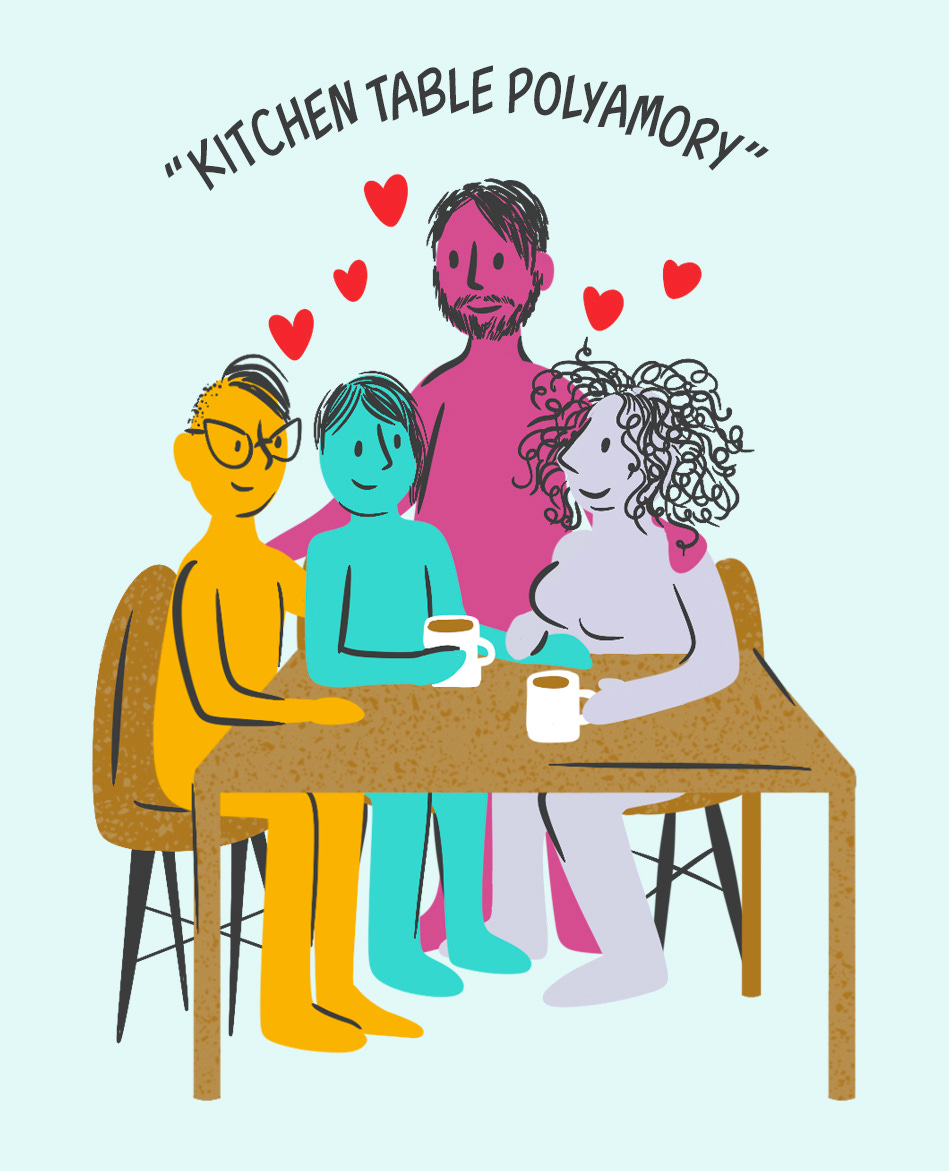
Illustration by Sara M. Lyons Boundaries: Rules, needs and expectations of all parties involved in a relationship dynamic need to be clear and specific. These ensure that what has been discussed and consented to is acceptable to everyone both inside and outside the dynamic. Remember, boundaries can be sexual, emotional, or related to time management. All boundaries should be consented to, respected, and communicated before and during all connections.
Types of ENM Relationships
There are three main types of ENM relationships commonly practiced: polyamorous relationships, open relationships, and non-traditional dynamics. In this article, we will focus on polyamorous relationships (the most commonly practiced) and cover the others in upcoming columns.
In polyamory or polyamorous relationships, there are multiple romantic/sexual relationships that have the consent of all the people involved. There are five commonly practiced types of polyamory: kitchen table, garden party, hierarchical, solo, and parallel.
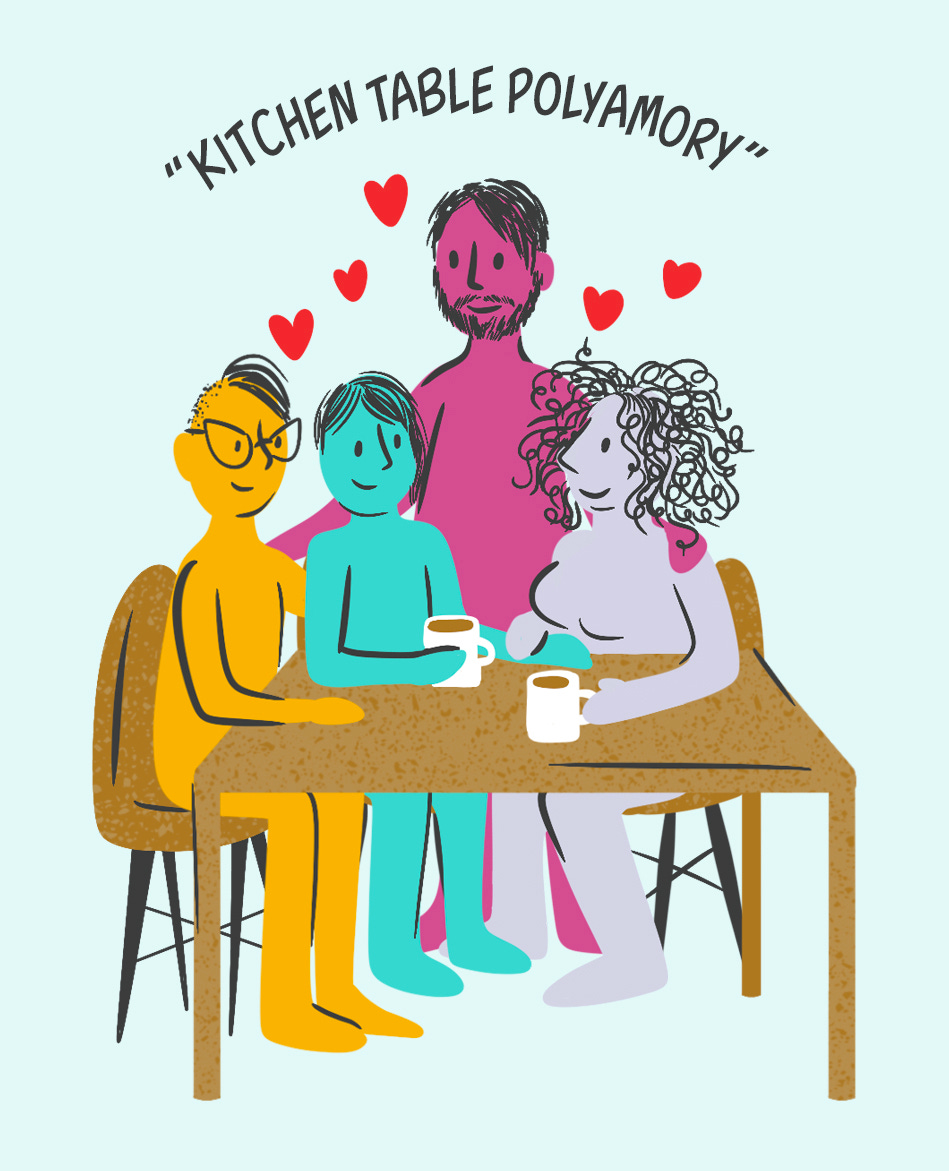
Kitchen Table Poly: The most commonly practiced form of polyamory, kitchen table poly describes relationships in which all partners within the polycule1 have some form of relationship with one another. These relationships may be romantic, platonic, emotional, sexual, and/or casual. As most commonly practiced, everyone in the polycule either all live together in a family-type setting or regularly spend quality time together. Remember, it’s called kitchen table poly because all partners can comfortably sit together at the same table, and they have a family-like relationships.
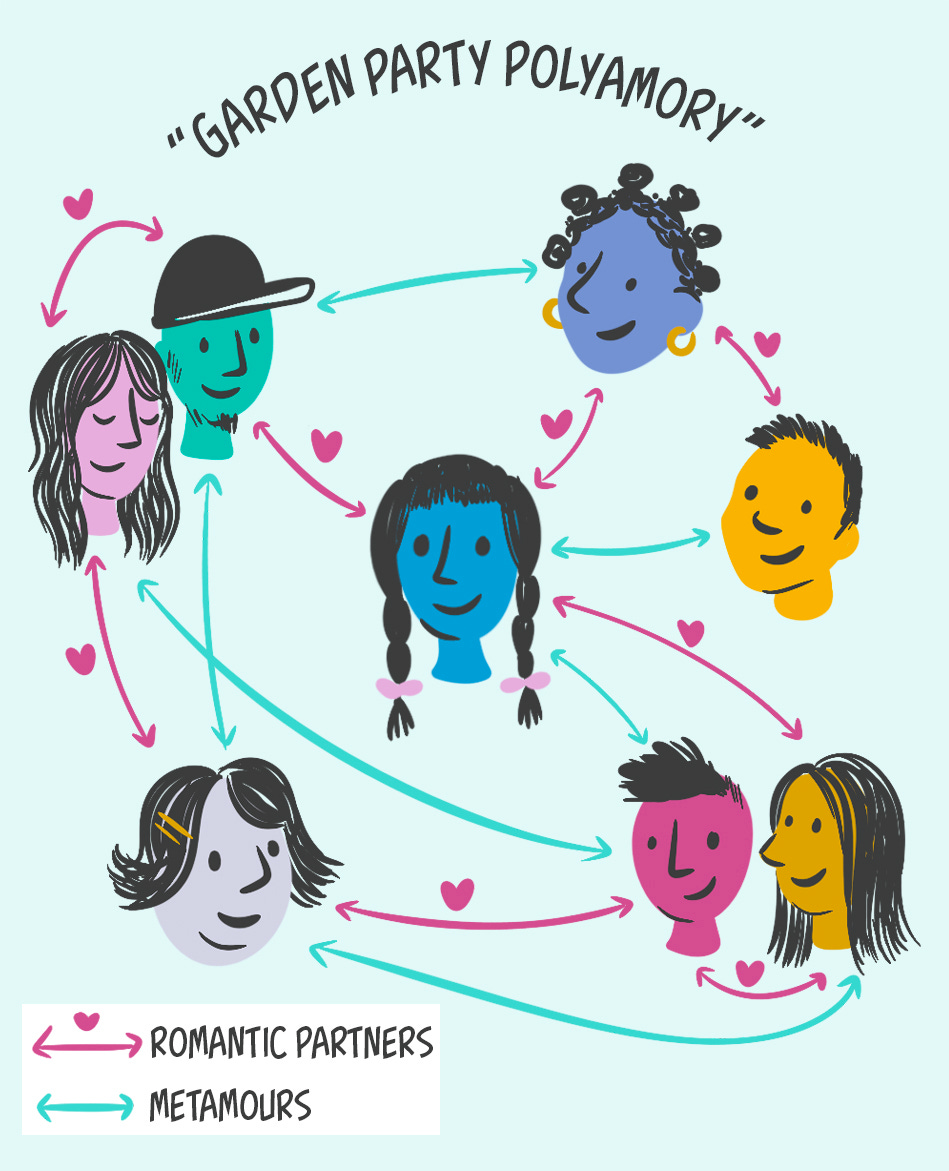
Garden Party Poly: This form differs from kitchen table poly in that not all members of the polycule have ongoing relationships or frequent communication with one another. However, on occasions that may be special or ceremonious all partners involved will interact with each other in a friendly way. Metamours—partners who share a partner but are not in a relationship with each other, effectively the partner’s other partner—maintain honest and open communication. Remember these types of relationships are differ from kitchen table, however, there are no solid rules on how someone wants to practice polyamory.
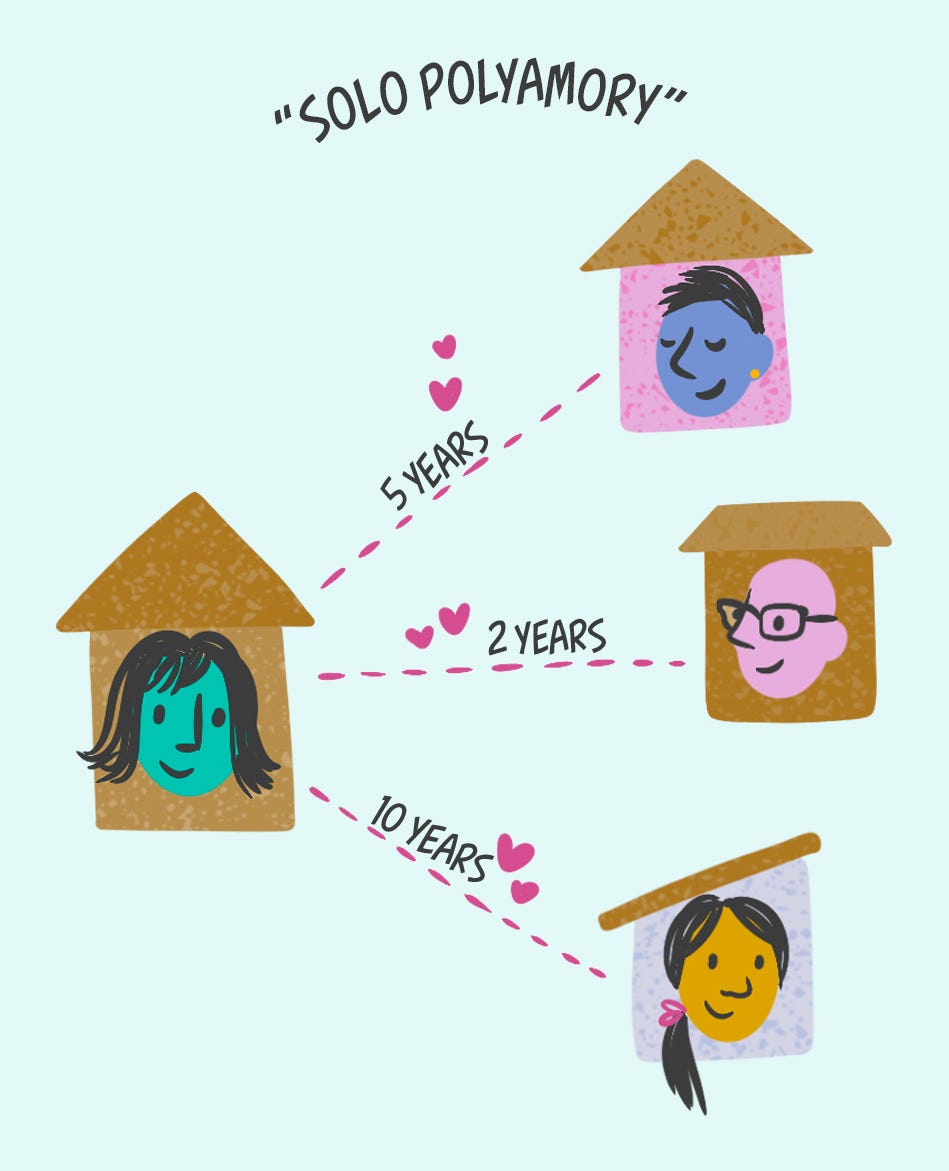
Illustration by Sara M. Lyons Hierarchy Poly: Hierarchical polyamory is a structure in which relationships are organized by levels of commitment, commonly referred to as primary, secondary, and tertiary. These levels are agreed upon in advance, and all members involved give informed consent. A common misconception is that secondary or tertiary partners are treated as less important. This is not the case—these distinctions reflect how relationships fit into someone’s life rather than ranking emotional value. Remember all dynamics and relationships must include open communications, honesty, consent, and respect
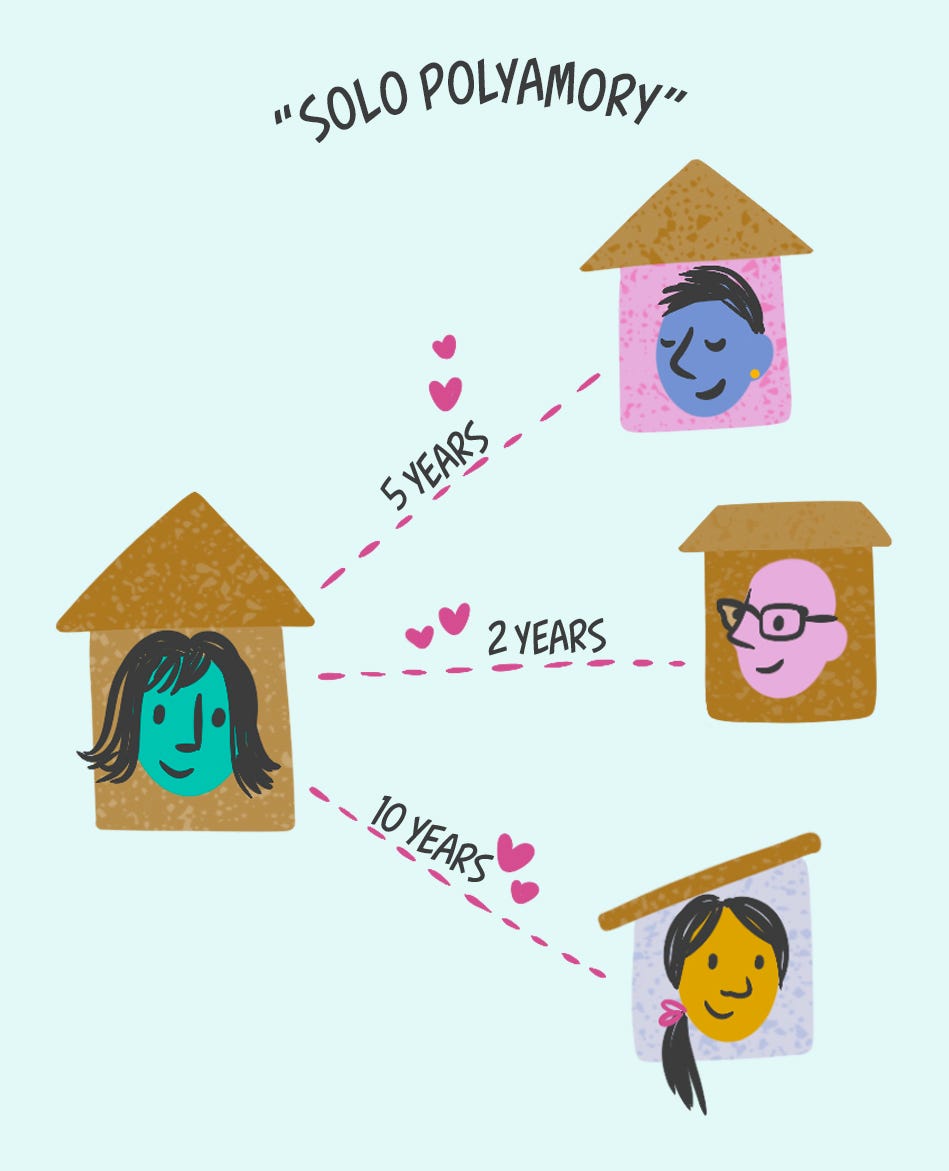
Solo Poly: Solo polyamory prioritizes independence and personal autonomy. Individuals may have multiple relationships without merging those relationships. All partners are aware of and consent to this structure. Those who practice solo poly typically do not live with partners, engage in any type of marriage or traditional relationship goals, and regard themselves as their own primary partner. Remember in solo poly, usually one partner is polyamorous and the other partners don’t necessarily engage in a poly lifestyle. It is important to understand that the practice of alternative lifestyles is open to interpretation and that practices may look different to each individual.
Parallel Poly: is similar to solo polyamory in that both value independence and self-autonomy. The key difference from solo poly is that partners maintain separate relationships without the expectation of emotional connections or interactions among metamours. Relationships with the primary partner take place like parallel lines that never cross or interact. Remember parallel is about the separateness of each partner, solo poly is about the autonomy of the primary partner.

Illustration by Sara M. Lyons

Ethical non-monogamy and polyamory show us that there isn’t just one “right” way to build meaningful relationships. What truly matters is the intention behind them—the communication, consent, respect, and care that hold everything together. What works for one person or polycule may not work for another, and that flexibility is part of what makes these relationship styles meaningful to those who practice them.
By opening ourselves up to conversations about alternative relationship styles, we create space for less judgment and more compassion—for others and for ourselves. Sex positivity encourages us to explore connection in ways that feel authentic, safe, and fulfilling. In upcoming columns, I’ll continue exploring other forms of ethical non-monogamy and what they can teach us about healthy, intentional relationships. Remember: stay safe and stay curious.
Note: This column was edited with AI assistance.

Have a question for JoJo? Leave us a voice mail with your first name at the Desert Trumpet phone line 760-362-6099, and we’ll pass it along for a future column. Voice mails will be converted to text, and the identity of callers will be kept confidential. Readers can also email questions to editor@deserttrumpet.org.
Desert Trumpet understands this content may not be for all readers. Here’s how to opt out: go to your Substack settings, scroll down to “subscriptions,” and click on or hit “Edit” for the Desert Trumpet. Simply uncheck the box next to Terms of Engagement if you don’t want to receive it in your inbox.

Thanks to our new paid subscribers, we are at $8985 in subscriptions, just $1,015 short of our $10,000 goal. Upgrade your subscription from free to paid today for just $50 per year or $5 per month.
Are you able to give more than $100? Donate via Paypal!
Leave your thoughts in the comments below. Please note that we do not allow anonymous comments. Please be sure your first and last name is on your profile prior to commenting. Anonymous comments will be deleted.
Thanks for reading! This post is public so feel free to share it.
A polycule is a group of three or more individuals who share consensual non-monogamous intimate or romantic relationships with each other.
We've received a few inquiries from people wishing to connect with others in alternative lifestyles. Jojo recommends using a website / app called fetlife, which lists events / connections by location, including munches (alternative lifestyles gatherings): https://fetlife.com/