
ON THE AGENDA: Twentynine Palms Tourism Business Improvement District, August 20, 2026
The TBID board proposes eliminating standalone sponsorships for a consolidated events program and will vote on a budget that draws on reserve funds.


At the Twentynine Palms Tourism Business Improvement District (TBID) meeting that will be held on Thursday, August 20 at 3:30 pm, two significant items are up for TBID approval. First, a consolidated Events Program that replaces the separate grant and sponsorship tracks the board has been reworking since spring. The other is the FY 2026–27 Tourism Marketing Plan and Budget. The budget draws down $275,000 in reserves, nearly the entire reserve fund, to cover a $656,872 spending plan. The agenda is here.
No fancy remote comments for TBID
TBID will not be using the new live-streaming and public-comment system for its meetings. That absence matters for the people with the most at stake: grantees, potential grantees, and local business owners who can't get away from the cash register at 3:30 p.m. on a Thursday to weigh in on potential event funding decisions. Twentynine Palms City Council recently upgraded streaming systems in Council chambers to comply with SB707, the state law overhauling the Brown Act's remote-participation rules. TBID's exclusion from that mandate is due to a gap in how the law was written.1
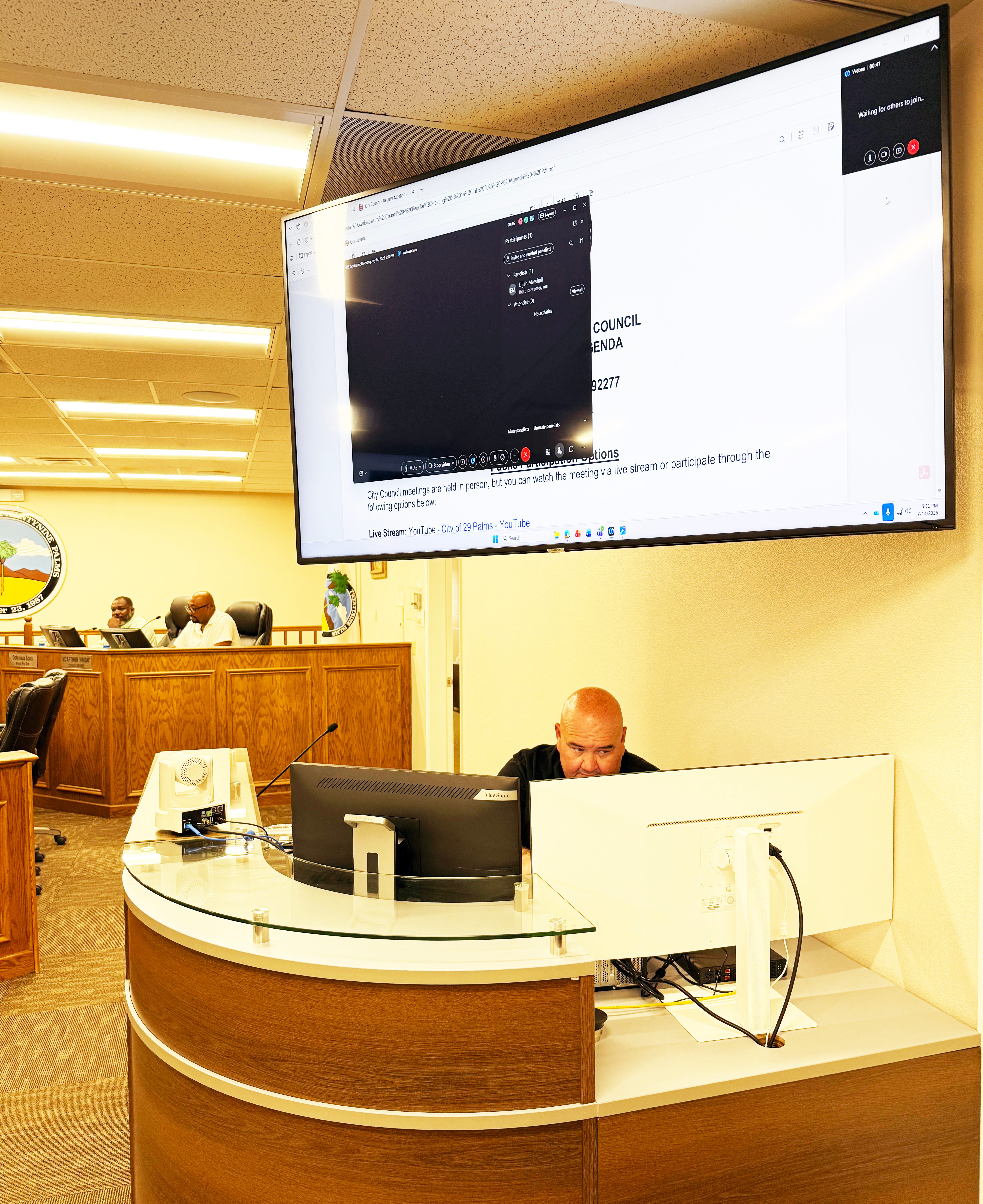
Yet, TBID is the only City-affiliated board that meets before 5 p.m. Whether or not the new public comment system is legally optional for TBID, now that a system is installed, should the city be considering remote access given that the people most interested in how grant money gets allocated are the ones least able to attend or comment on a mid-afternoon meeting?
PUBLIC COMMENT
Unlike City Council, TBID public comment on non-agenda topics is the first item, not the last. Comments on agenda items take place during discussion of that item. The Brown Act prevents the TBID board from discussing non-agenda items. To comment, just pick up a green or gold form at the entry desk, fill it out, and hand it to TBID Marketing Director Breanne Dusastre, who usually sits just in front of the dais to the left. Residents unable to attend should email letters to Marketing Director Dusastre at bdusastre@29palms.org as TBID Board members’ email addresses are not published by the City.
TBID ADVISORY BOARD MEMBER COMMENTS AND REPORTS ON MEETINGS AND EVENTS ATTENDED / DIRECTOR OF MARKETING UPDATE / CONSENT CALENDAR
The only item on this Consent Calendar is approval of the June 18, 2026 meeting minutes.
2. Proposed FY 2026–27 Visit 29 Palms Events Program
Staff and the TBID Events Subcommittee (Board Members Liz Shickler and Ben Uyeda) are bringing back a rewritten set of grant guidelines for adoption, following months of discussion that started with the May 21 meeting and continued at the June 18 meeting covered in our recap. The version in front of the board Thursday differs from both the FY 2025–26 guidelines it replaces and, in at least one respect, from the working draft discussed publicly in June.2
Sponsorships and grants are merged. The merger erases a reporting distinction, not just a funding-tier distinction.
FY 2025–26 ran two separate programs with two separate sets of rules:
Event Sponsorships ($100–$3,000 per event, 20% of the $150,000 program budget): reviewed only by the two-member Events Subcommittee, scored on a 20-point scale (four categories worth 5 points each, 15/20 to pass), no matching-funds requirement, and a post-event report requiring only a summary, photos, a description of fund use, and financial documentation.
Event Grants ($3,000–$20,000, 80% of the budget): reviewed by the full five-member Review Committee, scored on a 100-point scale (80/100 to pass), a mandatory 25% matching-funds requirement (up to 13% in-kind, at least 12% cash), and — critically — a mandatory post-event attendee survey covering visitor demographics, accommodation choices, spending in Twentynine Palms, future visit intentions, and overall visitor experience.
The proposed FY 2026–27 guidelines fold both into a single $200,000 Events Program, funding up to $30,000 per event, with every award now going through the full five-member Review Committee and the same 25%-match structure that used to apply only to grants. That’s a real accountability increase for what used to be sponsorship-tier awards. But the mandatory attendee survey doesn’t survive the merger. The new Post-Event Reporting Template lists “Optional Visitor Feedback & Survey Results” as, explicitly, optional. That’s a rollback in reporting rigor for the largest awards in the program, buried inside what otherwise reads as a reporting upgrade.3
Other changes:
The per-event cap ($30,000) is higher than either prior program, and higher than what was floated in June, when Uyeda described discussing a $5,000–$20,000 range while board members debated whether raising the cap would invite applicants to ask for the max without justifying it.
Scoring categories were rebuilt, not just rescaled. The old 100-point Grant scale broke out scoring into the following categories: Event Concept & Alignment (25), Target Audience (20), Prior Event Experience (15), Marketing Plan (20), and Budget Detail & Matching Funds (20). The new 40-point scale uses four different-named categories: Economic Efficiency, Feasibility & Track Record, Marketing, and Alignment, each worth 10 points. Target Audience and a standalone Budget/Matching-Funds score both disappear as distinct criteria; “Economic Efficiency” has no direct FY 2025–26 predecessor. The 80% pass bar is unchanged, but what’s actually being measured shifted. “Economic Efficiency” is defined as “how effectively the requested TBID funds support TBID’s goals” and its only guidance, that recurring events “may demonstrate greater economic efficiency,” is an assumption that may not play out in practice
Eligible event geography narrowed. FY 2025–26 grants could be held anywhere in the “Twentynine Palms sphere of influence,” which includes the city, Desert Heights, Indian Cove Campground and Amphitheater, the JTNP northern boundary, and Wonder Valley. Sponsorships could even go to Morongo Basin events outside that zone. The proposed guidelines require the event “or a significant portion” to be within the City of Twentynine Palms itself.
The 50–100-mile target-audience language is gone. FY 2025–26 specified attracting visitors “from 50–100 miles away.” The new guidelines just say events must target overnight visitors generally, with no distance specified.
ADA compliance moves from aspirational to mandatory. FY 2025–26 language: “we encourage... we value efforts to make events as inclusive and accessible as possible.” FY 2026–27: ADA compliance is stated as a requirement of the City funding agreement.
Non-peak season window expands. FY 2025–26 flagged only May–September. FY 2026–27 adds November–February and layers on a midweek (Monday–Thursday) emphasis.
Application workshops are written into the guidelines — TBID has already run at least one workshop informally. What's new is that the proposed guidelines formalize the practice, tying one workshop to each of the program's two funding cycles by name and date (first week of September 2026 ahead of the October 1 Round One deadline; first week of March 2027 ahead of the April 1 Round Two deadline).
Post-event reporting is reorganized into three documents — a Program Summary Report, an updated Event Budget Worksheet, and a City Post-Event Financial Report — replacing FY 2025–26's looser, differently worded requirements for each program. The structure is more consistent across award types than before. But consistency cuts both ways: FY 2025–26 sponsorships, which started as low as $100, required less reporting than the bigger event grants. Under the merged program, a small grant now carries the same reporting requirement as a full $30,000 award.
Anna Stump raised the concern in a comment on our May 25 recap that combining the programs "would be unfortunate for many local events that also support tourism," since "the grant application and reporting would be too onerous for smaller event producers." The proposed guidelines, as written, don't appear to scale reporting requirements to award size at all.
Unchanged: the 75%-pre-event/25%-post-event payment structure, two funding cycles per year, and conflict-of-interest language limited to close-relative and employer-employee relationships.
We’re in the midst of our summer subscription drive! We’re just 25 subscribers away from hitting 1600 — help the Desert Trumpet reach our summer goal by subscribing today!
What the revision still doesn’t address — and one thing it quietly removes. The FY 2025–26 guidelines specified the Review Committee’s makeup by name: “a five-member Review Committee, including the two-member TBID Events Subcommittee” — meaning two of the five seats were explicitly reserved for sitting board members (currently Shickler and Uyeda). The proposed FY 2026–27 guidelines drop that requirement, referring only to a “five-member Review Committee” with no mention of who sits on it or how those seats are filled. The underlying practice may well continue unchanged, but the written requirement that used to guarantee it is gone.
The guidelines also still don’t define a substitution mechanism for the Review Committee when a member recuses, as has happened on past panels. Nor does the conflict-of-interest standard address reviewers who compete with an applicant (a lodging-owner board evaluating other lodging owners’ events); it only covers family and employment ties.
The board’s own practice recently went further than what’s outlined. At the April 23, 2026 meeting, funding for the Area 29 Galactic Gathering, organized by local business association Rediscover 29, had to be tabled for lack of quorum because Board Members Shickler and Ramsey, both paid Rediscover 29 members, were required to recuse. It passed the following month, 3-0-2, with both still recused. That’s not a relationship the published guidelines mention at all.
Other business relationships that could trigger the same kind of conflict, such as vendor, contractor or landlord-tenant arrangements, also go unaddressed. If the board is already recognizing conflicts beyond family and employment, wouldn’t formalizing standards for business relationships make sense?
No standard method for assessing heads in beds
The subcommittee also does not appear to have suggested a standardized, cross-event method for verifying projected versus actual room nights — an idea (a shared booking code or link) that came up in June discussion. Applicants still self-report room nights and hotel partnerships going in, and self-report lodging results coming out, with no common verification tool across events and no longer even a mandatory visitor survey to back-up that self-reporting.
The Joshua Tree Half Marathon: TBID requires promoting 29 Palms, but not naming it as the location
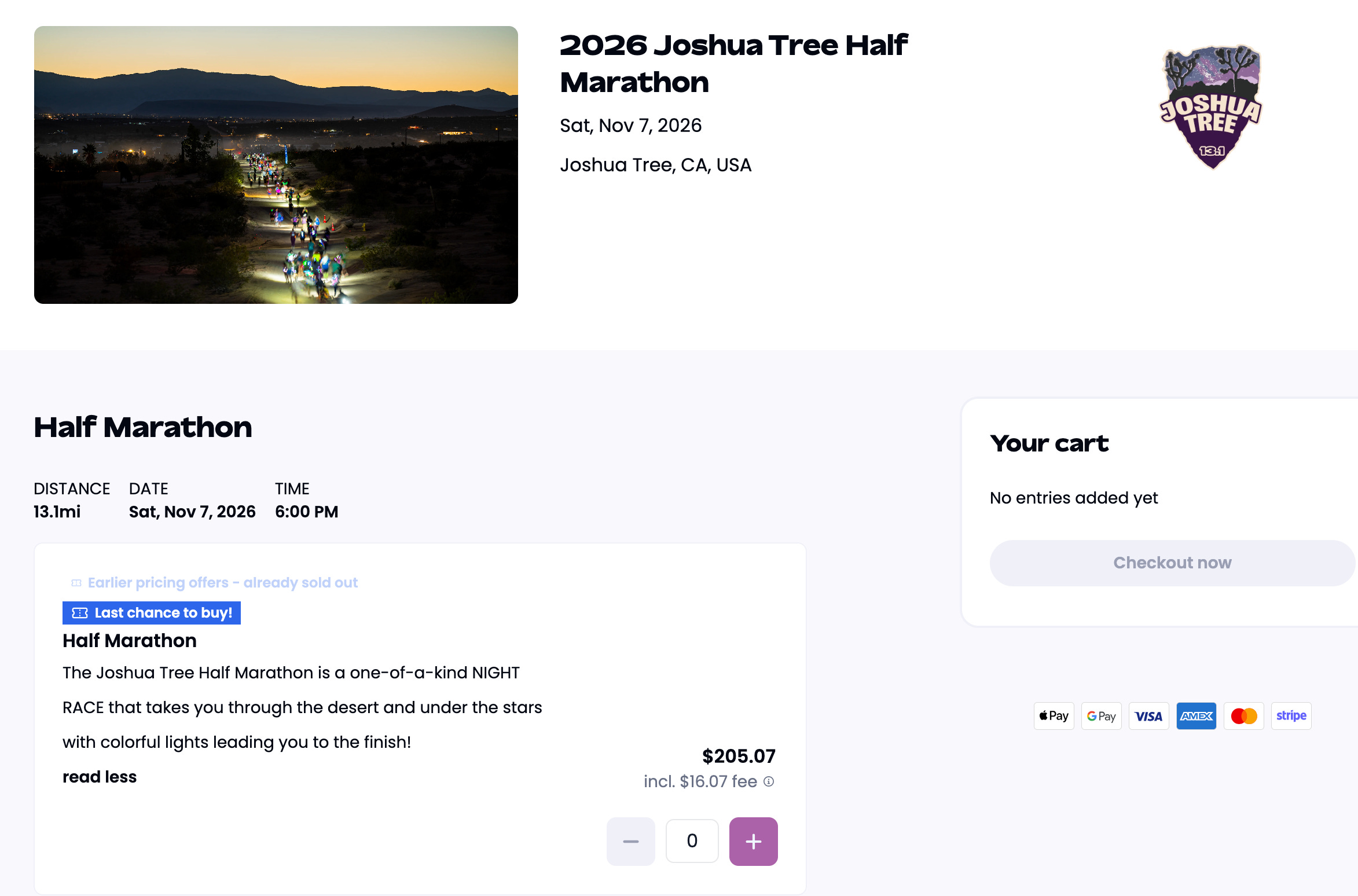
The revised guidelines require funded events to market TBID stakeholders: featuring the Visit 29 Palms logo, linking to the lodging page on Visit29.org, tagging Visit 29 Palms on social media. What they don't require is that an event or venue’s stated location be listed as Twentynine Palms if it is located within the City.
The board has already tried to fix a version of a similar problem once: at its December 18, 2025 meeting, facing a near-identical complaint about the same race when it was hosted at Joshua Tree Lake Campground and funded only as a sponsorship, the board passed a motion requiring any application involving that venue to commit in writing to emphasizing Twentynine Palms lodging, food, and beverage partners.
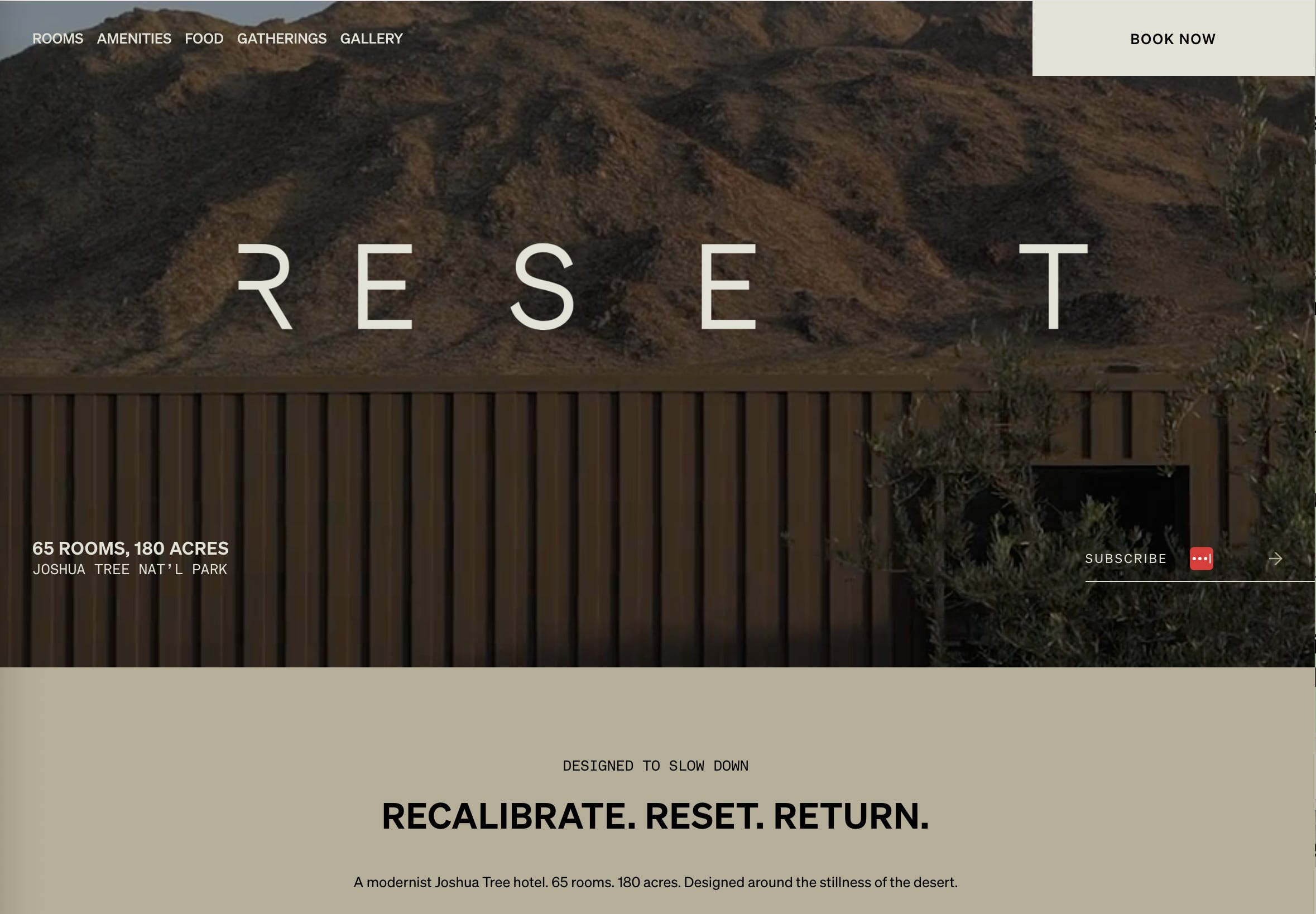
For FY 2025–26’s second round, the race relocated its host venue to RESET Hotel, inside the city, and part-owned by Board Member Ben Uyeda, making it grant-eligible for the first time. It became the top-scoring application and received the full $20,000 grant, approved April 23, 2026 with Uyeda recusing due to his ownership stake in the venue.
Yet the event’s public ticketing page still lists its “Location” as “Joshua Tree, CA, USA,” and that’s not just the race organizer’s framing. RESET’s own homepage brands itself the same way, describing itself as “a modernist Joshua Tree hotel” despite its own street address sitting in Twentynine Palms. The hotel anchoring a Twentynine Palms event, markets itself as being in Joshua Tree. Will the new guidelines finally require funded events and venues to say “Twentynine Palms” if they are located in Twentynine Palms?
3. Proposed FY 2026–27 Visit 29 Palms Tourism Marketing Plan and Budget
This item will get its own in-depth treatment from our regular TBID reporter, Eleanor Whitney, after the meeting, including the marketing strategy, SWOT analysis, and branding sections, which carry over largely unchanged from prior years’ plans and deserve the same scrutiny our 2025–26 budget analysis gave them. What follows here is a quick numbers-first summary to flag what’s changed and by how much.
Total planned expenditures: $656,872, up from $547,843 adopted in FY 2025–26 — about a 20% increase.
Revenue side: $375,000 in projected TBID assessment revenue (about 7% above the FY 2025–26 adopted figure), plus $275,000 drawn from reserves — up sharply from the $200,000 in reserves budgeted (but not used) last year. That reserve draw covers nearly 42% of total planned spending.
Events Program funding jumps to $200,000, as detailed above — up from $150,000 combined grants-and-sponsorships in FY 2025–26.
Internet/digital marketing nearly doubles, from $40,570 adopted to $78,300 proposed — the single largest percentage swing in the line-item budget, tied in the narrative to the annual renewal cycle with Simpleview (now operating as Granicus) the website vendor.
Broadcast media spending actually drops, from $69,440 adopted to $60,000 proposed, but the packet never defines what "Broadcast Media" includes, and it's not clear whether billboards are part of it. The narrative Marketing Channels section bundles billboards in with radio under a combined "Out-of-Home & Broadcast" heading, but the budget table has no separate out-of-home or billboard line at all — "Broadcast Media" is the only place that spending could be sitting, if it's here at all. Notably, TBID's own December 18, 2025 meeting recap described a separate out-of-home budget of $70,000 for that same fiscal year, including $35,000 specifically for billboards — a figure close to, but not identical to, the $69,440 "Broadcast Media" line in this packet. Whether that's the same money described two ways, or a genuinely separate pool that's disappeared from this budget entirely, isn't clear from the packet as presented.
A second part-time staff position is added, nearly doubling part-time salary spending from $19,000 to $34,720, to support Visitor Center operations alongside the existing Director of Marketing.
Regional print ads rise modestly ($15,000 to $17,000); trade conventions spending is cut ($10,000 to $5,000); a new $2,000 line appears for electronic equipment.
District conversion from the 1989 Law to the 1994 Property and Business Improvement District Law is referenced again as a "top organizational priority" in the plan's executive summary, after being paused in 2025 and not actively pursued so far this year. No line item for conversion consulting appears in the FY 2026–27 budget table as presented, unlike the $24,000 Civitas Advisors line in the FY 2025–26 budget, leaving it unclear whether that work is funded elsewhere in this budget or genuinely paused again despite the stated priority.
The meeting is scheduled to conclude with a City Manager update and proposals for future agenda items. None are currently listed.
CIndy Bernard was a member of the TBID grants subcommittee in early 2024 and participated in the development of the initial TBID Sponsorship and Events Grants program.
This article was produced with AI assistance, consistent with the approach described in our AI Policy.
Hi, new subscribers! The Desert Trumpet understands you might not be interested in all of our coverage. That’s why it’s divided into separate newsletters allowing you to opt out of reporting that’s not important to you. For instance, you may want our Education news but not City Hall 29.
Here’s how to opt out: go to your Substack settings, scroll down to “subscriptions,” and select “Edit” for the Desert Trumpet. Simply uncheck the box next to the newsletters you don’t want to receive in your email inbox. You’ll still be able to access all coverage online if you change your mind.
Leave your thoughts in the comments below. Please note that we do not allow anonymous comments. Please be sure your first and last name is on your profile prior to commenting. Anonymous comments will be deleted.
This coverage is free - please share!
SB707 requires two-way remote access only from "eligible legislative bodies": city councils, county boards of supervisors, and large special districts meeting specific population, employee, or revenue thresholds. TBID doesn't clear that size bar. It also doesn't qualify for the law's other new category, "eligible subsidiary body," which lets purely advisory committees meet fully remotely, because that category is only available to bodies with no final say over contracts or fund allocations, and TBID has real, final authority over both. TBID falls outside SB707's new rules not because it's a low-stakes advisory committee, but because the legislature didn't anticipate a body with genuine budgetary authority that's neither a city council nor a large special district.
Reporting on the TBID Sponsorship and Events grants and Marketing Plan and Budget draws heavily on prior articles by regular TBID writer Eleanor Whitney
Grant program comparisons are drawn from the FY 2025–26 Visit 29 Palms Sponsorship and Event Grant Program Guidelines and from a grant-scoring audit submitted to the board as public comment for the April 23, 2026 TBID meeting.