
RECAP: Twentynine Palms Planning Commission, December 16, 2025
Maintained roads list discussed, proposed zoning changes in the General Plan, and easing City hurdles for small businesses

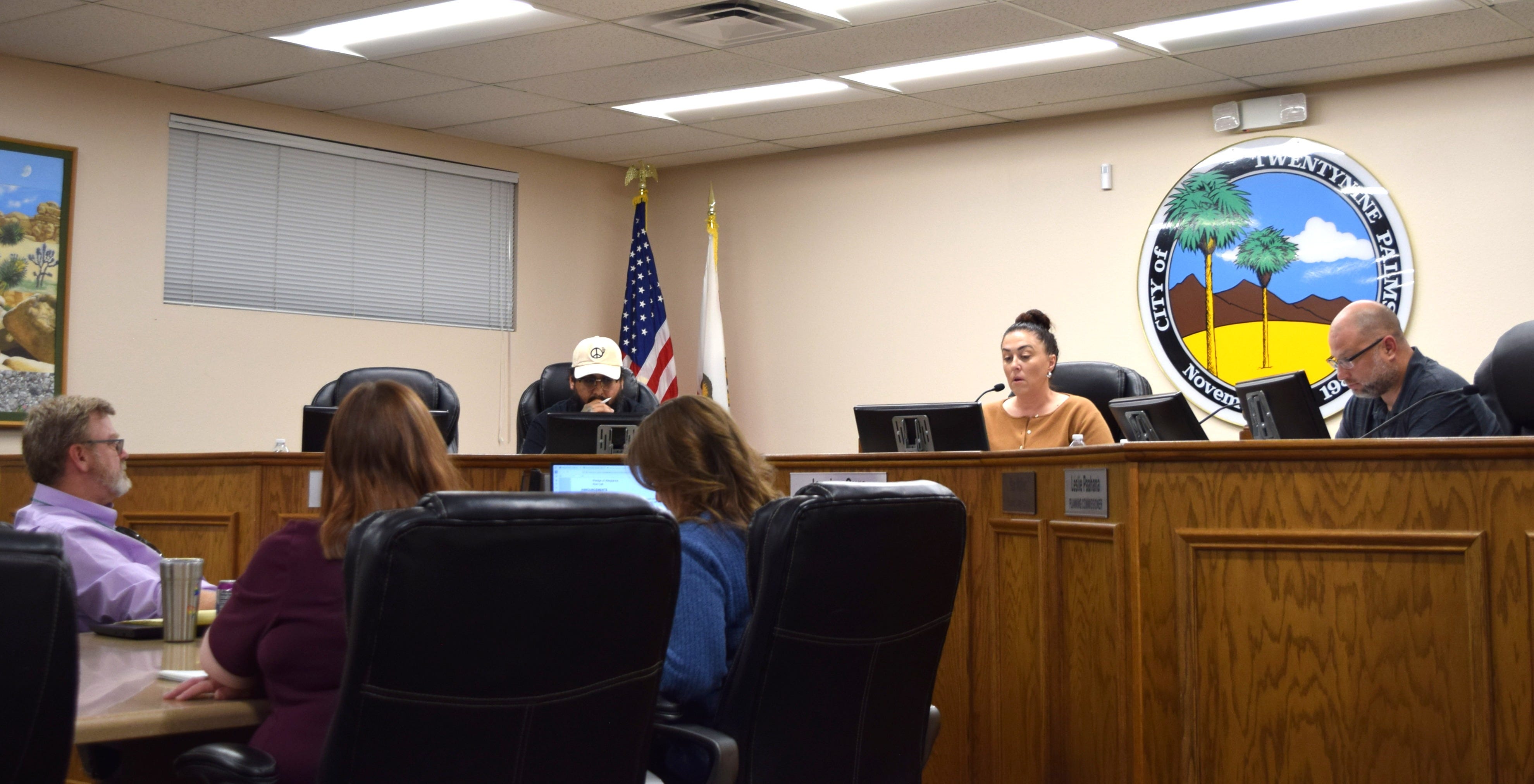
They say brevity is the soul of wit, or in this case, a thirty-minute Planning Commission meeting. Tuesday’s meeting was short, sweet, and to the point, with Commissioners Krushat and Paahana having excused absences, three attendees from the public and no public comment. Chair Jessica Cure, Vice Chair Alex Garcia, and Commissioner Max Walker efficiently sorted through three study session discussions.
Topics included the initial stages of updating the General Plan, potential updates to the City’s list of maintained roads, and language simplification of the business permitting process, with discussions led by Community Development Director Keith Gardner.
The meeting’s agenda is here; our agenda preview is available here. Because this meeting involved study sessions, which are typically unrecorded by City administrators, video footage of the meeting is limited to the first six minutes of the meeting.
PUBLIC COMMENTS
None
CONSENT CALENDAR
The only consent calendar item was approval of the November 4 meeting minutes, approved 3-0.
COMMISSION COMMENTS AND REPORTS OF MEETINGS ATTENDED
Commissioner Max Walker thanked the City’s Parks and Recreation Department for their Holiday Light parade, which took place Friday, December 2, at Freedom Plaza. Vice Chair Garcia reported attending the holiday market the day after the parade, while Chair Cure had no meetings to report.
COMMUNITY DEVELOPMENT DIRECTOR UPDATES
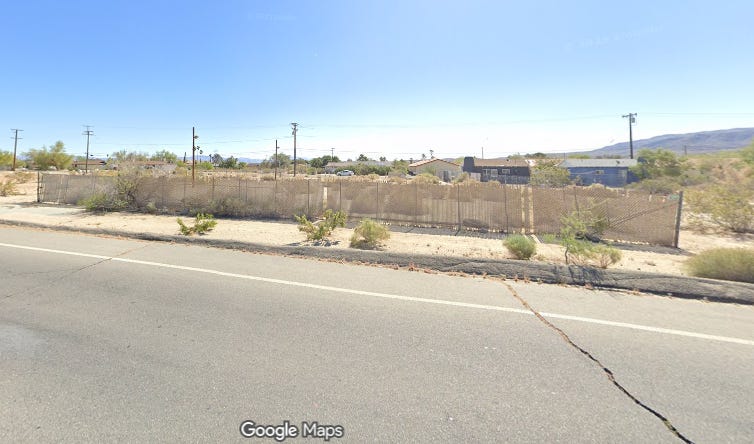
Community Development Director Keith Gardner provided one update to the Commission on an Administrative Use Permit (AUP) that a property owner had recently applied for. AUPs are typically approved by the Community Development Director after being announced to the Planning Commission. Following that process, Gardner said he intended to approve this AUP for an 8-unit private parking garage for a private residence off South Adobe road. This location is close to the San Bernardino County Fire Department Station 44, just down the road from Tortoise Rock Casino.
Chair Cure confirmed with Gardner that the area was zoned as residential. “Much larger than a typical parking garage,” Gardner said the parking garage would be 4,000 square feet and intended for private use. Commissioners had no objections, so the AUP will be approved.
STUDY SESSION
Update for Maintained Road List
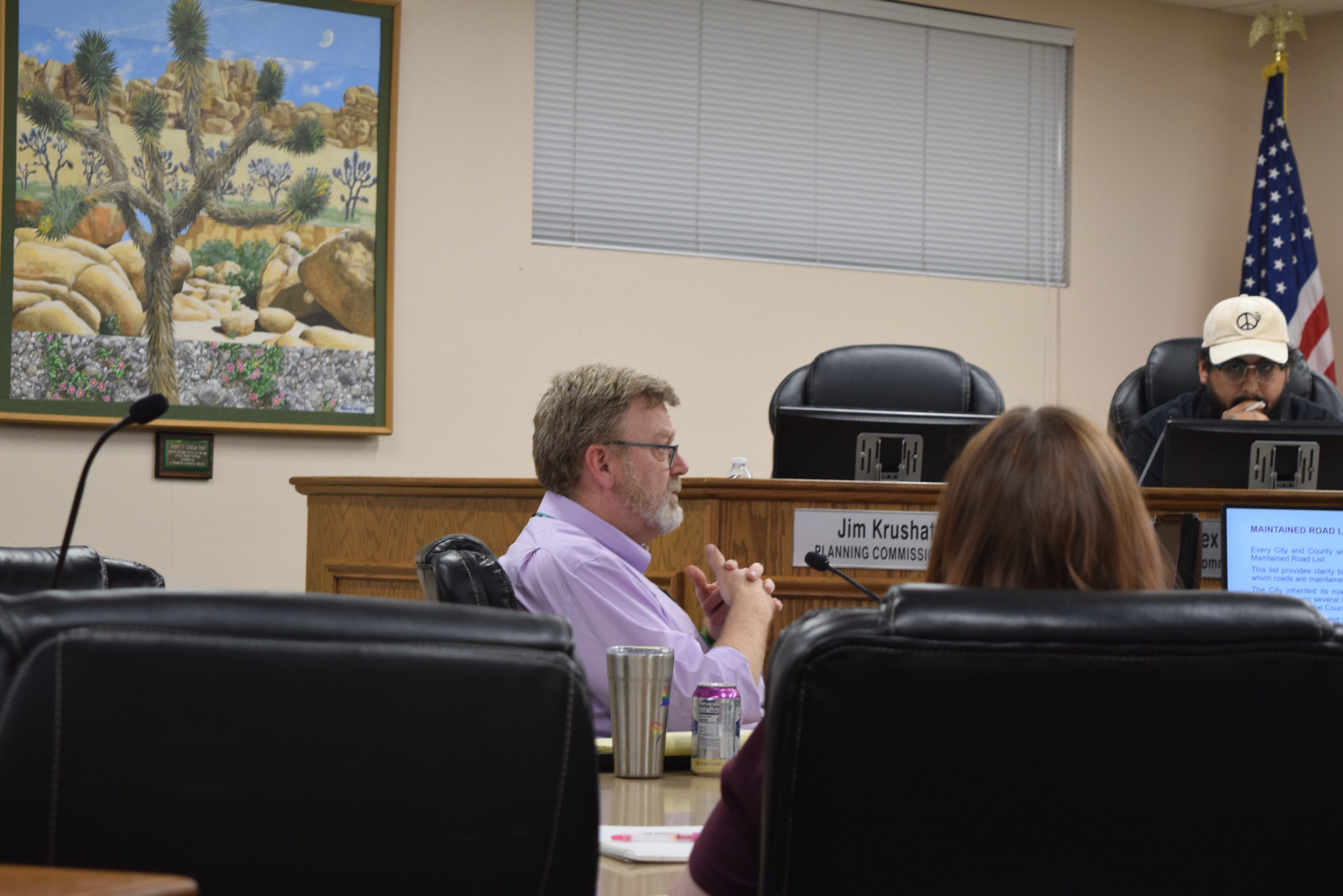
Development Director Gardner opened by noting that approval of the list of City-maintained roads is not up to Planning Commission and does not fall under the Commission’s jurisdiction, meaning this study session was merely informative.
The City inherited its maintained roads list from the County of San Bernardino when it incorporated in 1987. Lists of all maintained and unmaintained roads, which are tracked by the Public Works department, are available on the City website. City Staff reviewed which roads are maintained by the County, CalTrans, and the State of California, and is seeking to formalize its roads list.
We have historically maintained things by practice, but we’re now formalizing this. That way it is going to be mapped and it’s going to be available for public review. So that way, there’s going to be no question as to what the city maintains and what the city doesn’t maintain.
Gardner said the process for adding a road to the list will be up to City Council jurisdiction, not Public Works or the City Engineer. For a road to be added to the list of City-maintained roads, all rights to the road must be dedicated to the City, the road must be paved and maintained up to City standards, with costs dependent on how wide and long the road is.
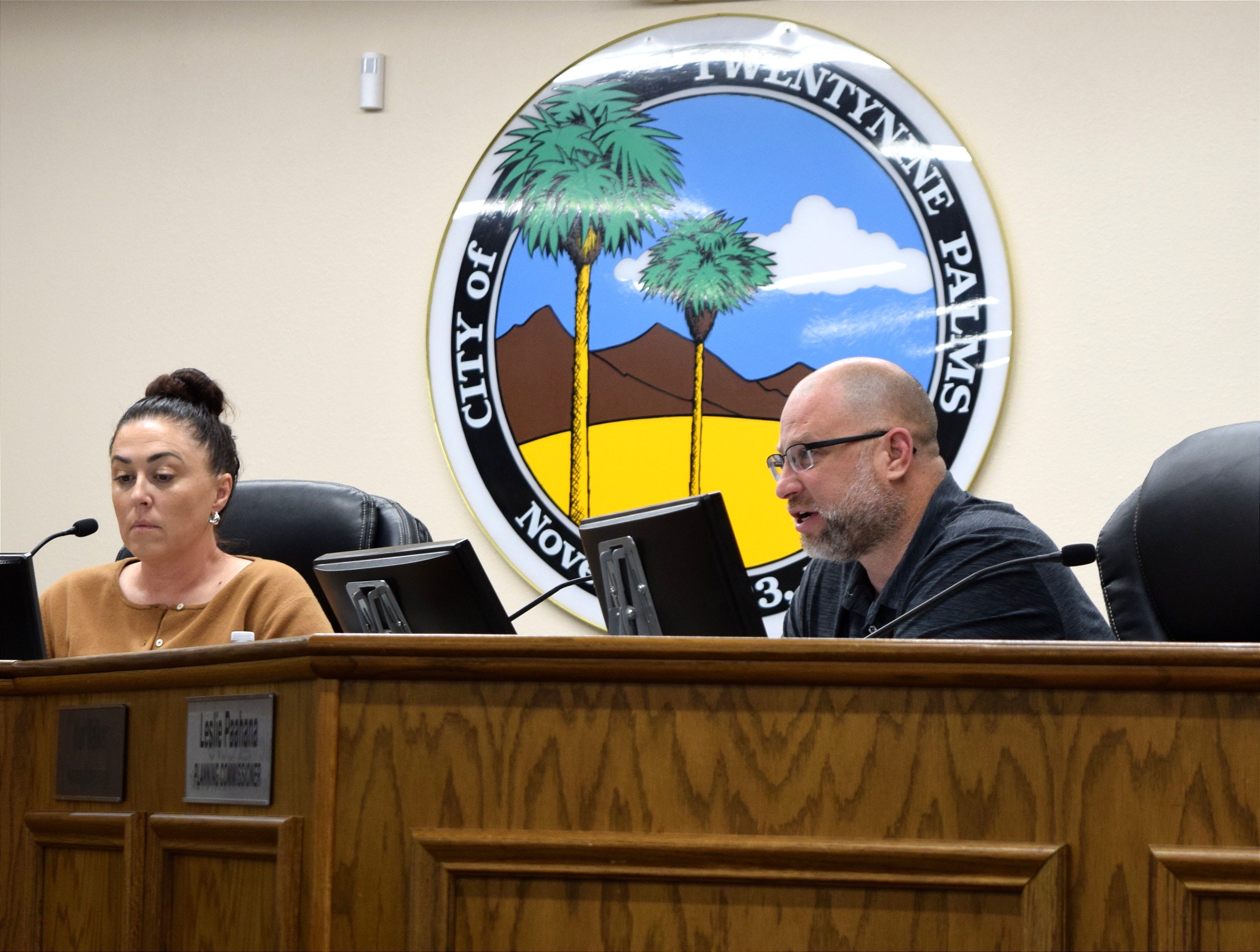
Commissioner Walker asked how much the City spends a year on maintaining roads. Gardner responded “I don’t have that number in front of me, quite honestly, but it’s a huge part of Public Works budget.”
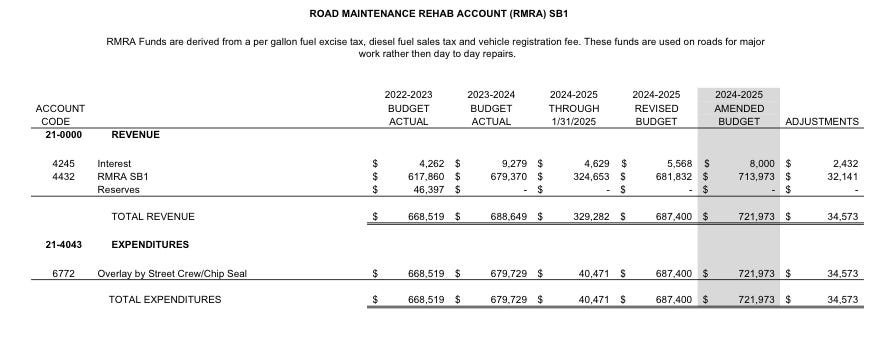
The City budget for ‘24-’25 Fiscal Year is available here. The City uses multiple funding pools to source money for road repairs, not just the Public Works budget. For instance, last fiscal year, the city spent $721,973 on street overlay and chip seal repairs using money from its Road Maintenance Rehab Account, which is part of the California Senate’s Road Repair and Accountability Act of 2017 (SB1).
In FY ‘24-’25, $787,622 was spent using funds from the California Gas Tax. According to the published budget, funds must be spent on street repair and maintenance within the roadway, and cannot be used to widen or extend a road.
Gardner emphasized that city staff conducted months of research on its list of maintained roads:
We want to avoid any sort of confusion in the future about, “hey, this dirt road should be paved,” Well, it’s private property.
After no comments from the public, Chair Cure commented on the process saying “That makes it very transparent, which I think is the hard part.”
Update on Thought Process of Updating the General Plan
In August, City Council received a report from Community Development Director Gardner on a potential approach to updating the General Plan. At the time, Councilmember Daniel Mintz, who is now mayor, said that the last General Plan update in 2012 had cost the City upward of $1 million.
As part of the City’s initial stages in reviewing its General Plan, which is updated every 15 to 20 years, the Community Development Director is suggesting some potential zoning changes to reduce costs.
The General Plan includes five guiding principles, covered in our agenda preview and in our August 26 Council Meeting recap, and addresses eight elements: Land Use, Circulation, Housing, Safety, Conservation and Open Space, Recreation, Equity and Social Justice, and Noise.
The steps that City staff is taking to update its General Plan are outlined as follows, according to the staff report provided in the agenda:
Staff conducted research into the ownership of parcels within the City limits to identify which parcels are owned by government agencies, utility companies, and other entities.
Staff then researched privately-owned parcels in City limits and determined if they were consistent with their respective land use designations. For example, staff researched which parcels are commercial buildings in residential zones, and if lot sizes matched their zoning designations. A neighborhood between Lee Road and Kern Boulevard, for instance, contains one-acre residential parcels despite being zoned for 2.5 acres.
Staff will now draft recommendations for changes in land use, and present them to each Councilmember in each respective district. The staff report notes that other elements of the General Plan, such as the Circulation Element and Recreation Element are largely contingent on “assumptions made in the Land Use Element.”1
Once step 3 is completed, the City will begin to engage with outside consultants to conduct other work necessary to updating the General Plan.

Thanks to our new paid subscribers we are $300 closer to our $10,000 goal! Upgrade your subscription from free to paid today for just $50 per year or $5 per month
Gardner is suggesting that land owned by utility companies, such as Southern California Edison and the Twentynine Palms Water District, have their zoning changed to reflect their utility use. He also suggested that federal lands adjacent to Joshua Tree National Park be changed from residential to open space conservation.
There’s a lot of areas in the southeast side of town that have open space in residential land use districts that are owned by the National Park Service or the federal government. We think that, at least as a first flush, we can put that into Open Space Conservation now we have that zone and just simply recognize it as not developable. This is conservation area. This is adjacent to the National Park.
The Land Use Element itself contains long-range plans for development within the City boundaries and surrounding sphere of influence (SOI) areas, and identifies “the preferred distribution and extent of residential, commercial, industrial and public uses.”2
The General Plan chapter on land use is 117 pages and opens with the following:
This Land Use Element of the General Plan describes the general location, type and intensity of development. It also identifies the distribution of land uses throughout the City.
Commissioner Walker was in favor of this approach:
I do agree we need to think through some of these other things to make the zoning match what’s in the real world.
Gardner highlighted that much of the current zoning was inherited by the City from San Bernardino County through the City’s incorporation process in 1987.
The way counties work in general is any one area that they don’t have a lot of activity, they just paint it as one zone across the whole area. And Riverside County does it, San Bernardino County does it. But we are our own city now, and we can take a closer look at some of these parcels and make recommendations.
Gardner noted one caveat: the State of California’s Housing Element requires that removing residential zoning from one area means adding it to another. “We’ll have to figure out a way to make up for those units somewhere else, somehow,” Gardner concluded.
Possible Updates on Allowable Land Uses
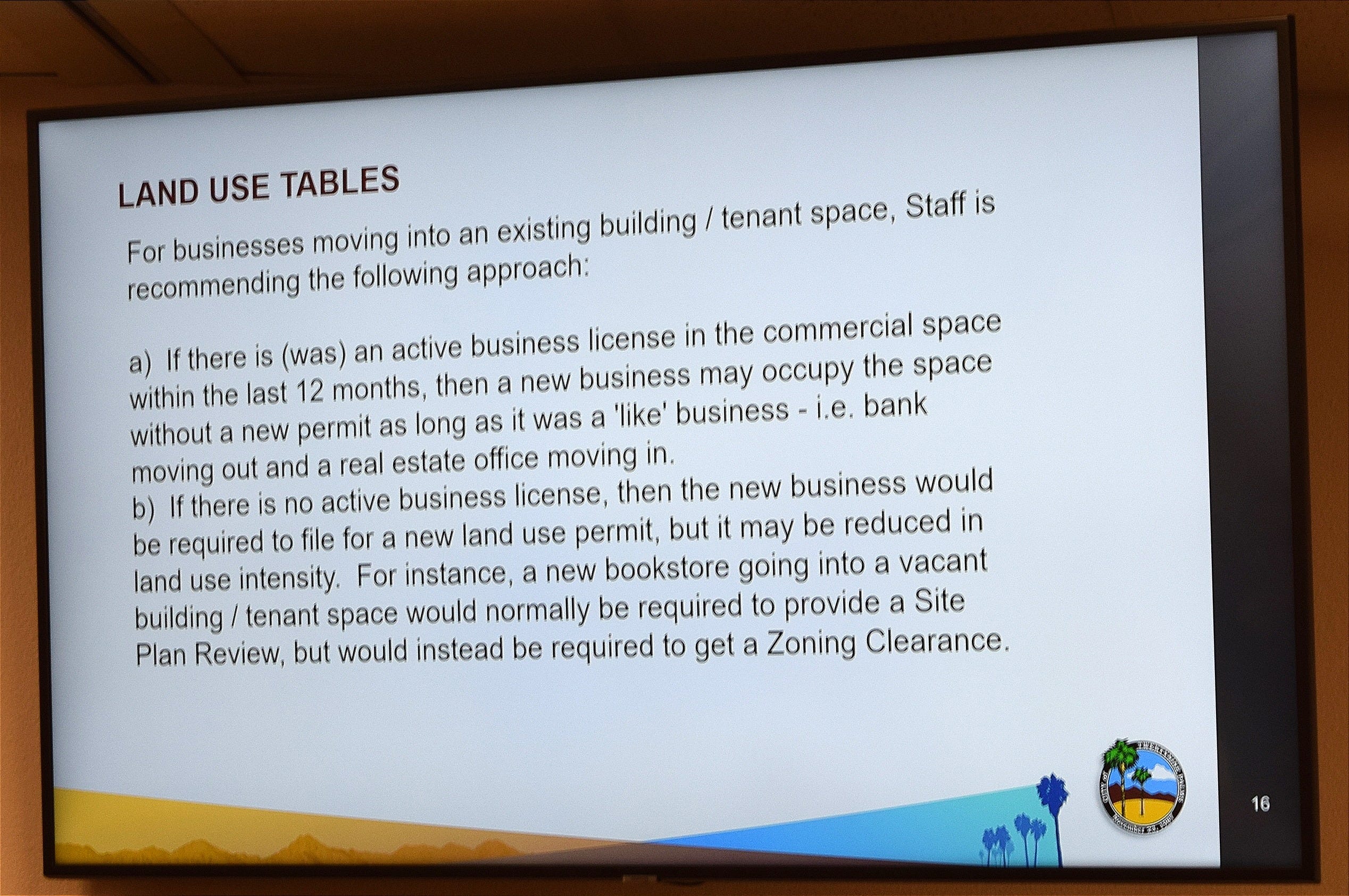
“We’re going through the exercise of reviewing all of the listed allowable uses across every single zone,” said Gardner. The City Municipal Code, as written, contains tedious language that can make the permitting process arduous for small businesses. He noted:
For instance, here’s a whole listing of repair services, and it goes into fuel repair, home appliances, and for whatever reason, there’s a furniture refinishing versus furniture reupholstery second line items. We think there’s room for some consolidation and simplification of language here.
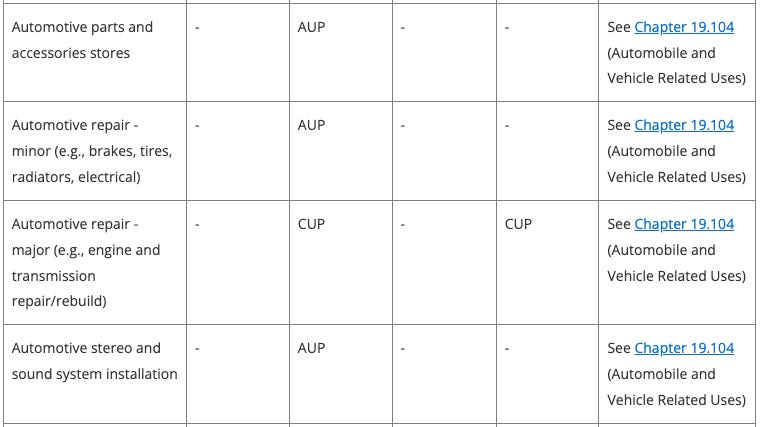
Another example above shows verbose language in automotive repairs, which distinguishes between brake installations, stereo installations, and car accessory sales even though they all require the same level of permit- AUP. City staff is suggesting language simplification, such as categorizing all of these under a “General Automotive” category instead, while engine repairs, which require a more comprehensive CUP, will remain as is.
Conditional Use Permits (CUP) cost $5,000 and are reviewed by the Planning Commission while Administrative Use Permits (AUP) cost $2,500 and are reviewed by the Community Development Director. Zoning clearances are at no cost and are reviewed by staff.
For businesses that are moving into existing buildings, City Staff is suggesting businesses be allowed to use the business permit of the previous occupant through a zoning clearance process, at no cost, rather than making them purchase a site plan review at a cost of $1,250.
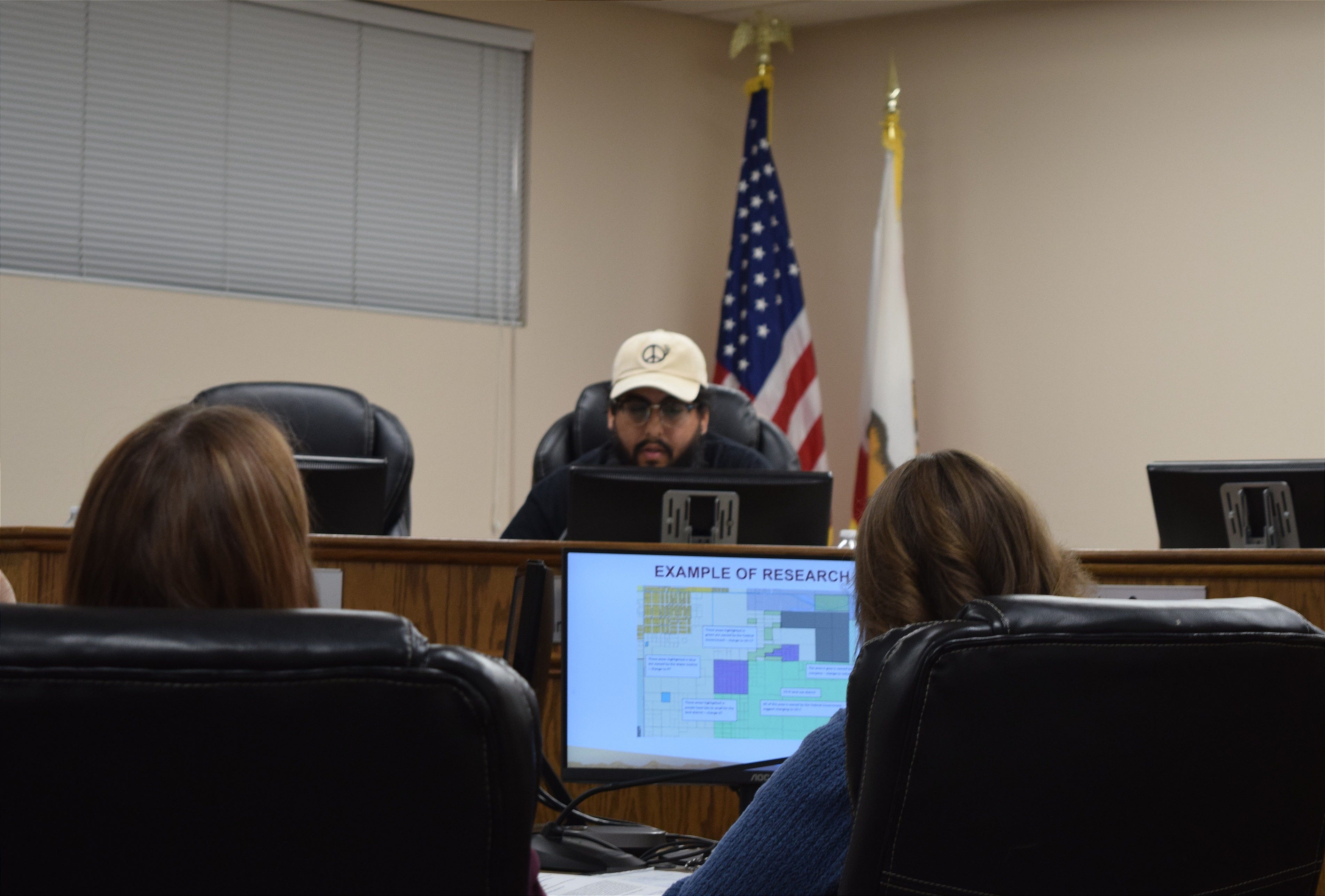
All three Commissioners were in favor of this language cleanup process. Chair Cure clarified that ADA compliance and other inspections such as septic adherence would still be subject to site review. Commissioner Garcia said this will be beneficial particularly for restaurants:
I think it’s really beneficial, especially with restaurants out here. You know, we see a lot of restaurants closing down, another one taking that place. Imagine that overhead to start a restaurant here and hopefully making enough money to sustain through our busier seasons, or even in our slower seasons….This is extremely helpful.
The next Planning Commission meeting will take place January 20, 2026.
Leave your thoughts in the comments below. Please note that we do not allow anonymous comments. Please be sure your first and last name is on your profile prior to commenting. Anonymous comments will be deleted.
Feel free to share this article!
Going into the 2026 elections, Desert Trumpet has sustained a potential 50% cut in funding. Help us provide the coverage you’ve come to expect by becoming a paid subscriber or upgrading your paid subscription today!
We are facing a potential $30,000 loss in funding for 2026. Would you care to donate more than $100? Our Paypal account is up and running!